

Third Sunday of Easter [May 5, 2019] John 21:1-19
 If we observe the Gospel readings of the past days and Sundays, we will notice that most of them are speaking about the risen Christ’s appearances to His disciples. One unnoticeable yet interesting feature in these stories is that of the presence of food.
The two disciples who walk to Emmaus, invite Jesus to have a dinner. Jesus takes the bread, says the blessing, breaks it, and gives it, and He disappears. The two disciples come to their senses, and realize He is Jesus [Luk 24:30]. When Jesus appears to the Eleven and other disciples, they are terrified. To dispel their doubt on His resurrection, Jesus presents His body and eats the fish given to Him [Luk 24:42]. And in today’s Gospel, Jesus invites His seven disciples to a breakfast at the shore of the Lake of Tiberias. After another miraculous catch, Jesus prepares bread and fish for the disciples who are no longer baffled by the appearance of their Master [John 21:13].
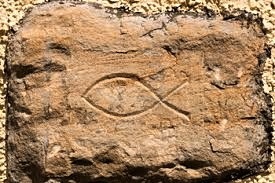
We may ask, “Why bread and fish?” These are simple food that are often available at Jewish household. Yet, looking deeper, bread and fish possess a profound meaning. Bread and fish are earliest symbol of Christ and Christians. Bread, especially the breaking of the bread, is the technical biblical name for the Eucharist. In the Acts of Apostles, the first Christians gather around the apostles for the teaching and breaking of the bread [Acts 2:42]. On a Sunday, Paul leads the community of Troas in worship as he preaches and breaks bread [Acts 20:7]. Fish, in Greek, is “Ichthus” and it stands for “Iesous Christos Theos Hyios Soter”, meaning Jesus Christ God Son [and] Savior. The symbol of fish was scattered inside catacombs of Rome as a sign of Christian gathering in time of persecution.
The question lingers: why does the risen Lord ask for food and invites the disciples to eat? Firstly, eating food is one of the most basic activities of human being. It points to our biological functions that sustains our bodily life and growth. The spiritless body neither consumes food, nor the bodiless spirit enjoys meals. Jesus shows His disciples that his resurrection is not a matter of spiritual enlightenment, but truly a bodily reality. His disciples neither see a spirit floating in the air, nor simply believe that their Teacher is alive in their hearts. The tomb is empty because Jesus, including His body, has risen.
Secondly, eating together does not only satisfy our tummy, but it also brings people closer together. While we are enjoying food, we cannot but share our thoughts and hearts to each other. Eating together builds not only the body, but also the dialogue and community. One of my favorite activities in the convent is the meal time, not because I am fond of eating, but we share a lot of stories and opinions. We practically speak about anything under the sun, from the latest movie, Avenger Endgame, the current political issues, to theological discussion on St. Thomas Aquinas. We also tell our joys, concerns and worries in our ministry and our future as a community. Simple food, yet great bonding.
Upon the simple reality of eating together, Jesus builds His community. In a shared meal, He retells His stories of painful passion and shameful death, and unearths its profound meanings especially as the fulfillment of the Scriptures. The events of his death used to be absurdity and loss of hope, but in the dining table, the risen Lord restores the faith, hope and love that go dim.
Jesus leaves us the Eucharist, the breaking of the bread, the sacred meal. Like the first disciples, it is here that we discover the risen Lord who shares His body as a spiritual food, and His Word as the meaning of our life. In the Eucharist, we are assured that the worst of this world does not have the last say, and the battle against absurdity has already been won.
Deacon Valentinus Bayuhadi Ruseno, OP
 In Medio Ecclesiae