

First Sunday of Advent [C]
November 28, 2021
Luk 21:25-28, 34-36
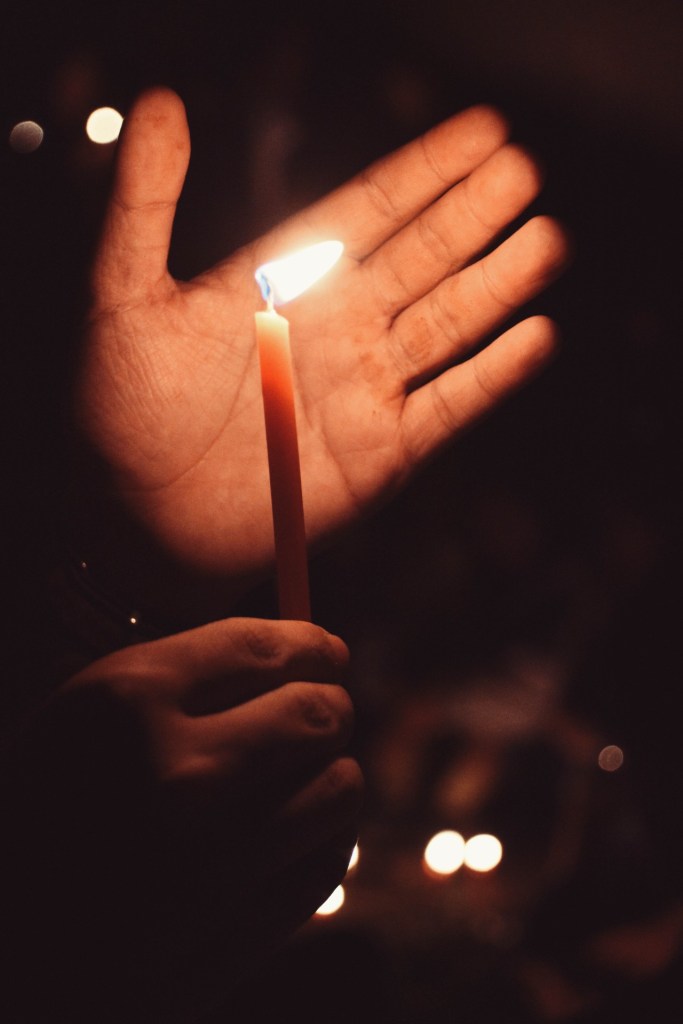
We are entering the season of Advent. The word of Advent comes from the Latin word ‘Adventus’ meaning ‘coming.’ Thus, from its name, we easily understand that it is the season dedicated to preparing ourselves for the coming of Christ. Generally, Advent makes us ready for the joyful celebration of Christmas, the Birth of Jesus Christ in Bethlehem two thousand years ago. Yet, this season is also reminding us of the second coming of Christ at the end of time, Parousia. This is the reason that the Church chooses the Gospel that speaks about the coming of the Son of Man at the end of time today.
While it is true that we do not know when the hour is, and perhaps it will not be happening during our lifetimes, it remains true that all of us will die and face a private judgment before God. Some of us will experience dying moments, but some others will not have the privilege to pass through this dying stage. Thus, the Advent season is called for all of us to always be ready. How are we preparing ourselves?
Jesus provides us with His precious instructions. The first step is that we must be aware of inordinate attachment to worldly pleasures, drunkenness, and excessive worriedness. Worldly pleasures are not evil in themselves, and in fact, there is part of God’s good creation. What makes them dangerous is when we are addicted to them, and making them our priorities, instead of God. Drunkenness is dangerous because we intentionally intoxicate ourselves. When we are under the influence of alcohol, we become irrational, and we are open to many sins. We are also warned of excessive worry. Anxiety is not a mortal as drunkenness, but it greatly inhibits our spiritual growth towards God. Our anxiety shows our lack of faith in God and excessive reliance on ourselves.
The second step is to train and strengthen ‘our spiritual muscles’. Jesus gives us specific instructions: keep vigilant and pray. Doing vigil is basically fasting from sleep. To have a good rest is surely a pleasure, but we intentionally deprive ourselves of it so we can provide more time in prayer. This is a kind of fasting that is intimately related to prayer, and purposedly to train our spiritual strength amid sleepiness and human weakness. In fact, a vigil is one of the most favorite forms of prayer among the saints. After the night prayer with the community, St. Dominic de Guzman often stayed at the chapel and spent more time in prayer. Some brothers who witnessed his vigil reported that St. Dominic often prostrated himself before the altar in the form of a cross or wept for the poor sinners at the feet of the altar. Yet, it was recorded also that he fell asleep and spent the night inside the chapel with the Lord. Through years of spiritual practices, his spiritual strength grew exponentially, and he was known as the indefatigable champion of the faith. His spiritual strength manifested excellently in his dying moment. At his dying bed, he said to his brethren, “Do not cry for me. I will be more useful when I am in heaven.”
Thus, from Jesus, we have twofold preparation to welcome Him: to detach from earthly pleasures and concerns and to grow in prayer and holiness.
Valentinus Bayuhadi Ruseno, OP
 In Medio Ecclesiae