

Third Sunday of Advent [A]
December 14, 2025
Matthew 11:2-11
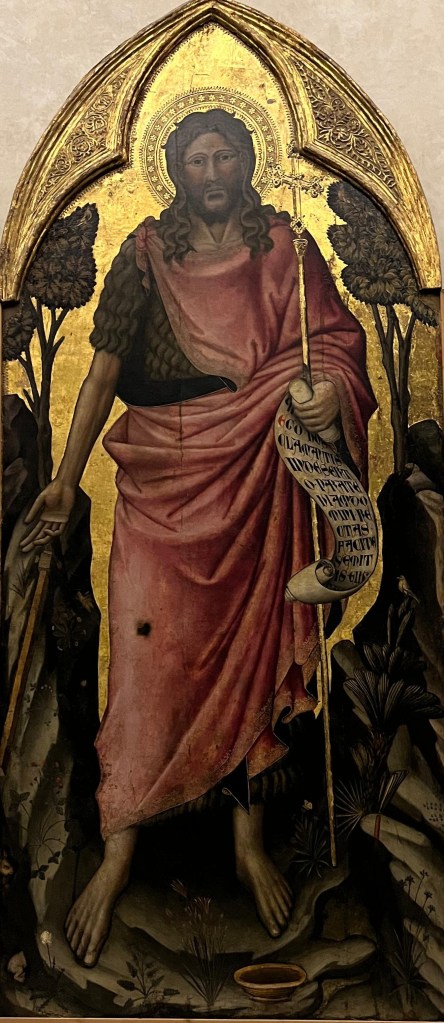
John the Baptist sends his disciples to ask Jesus a pivotal question: “Are you the one who is to come, or should we look for another?” This moment reveals a profound uncertainty in John—a man who had dedicated his life to preparing the way for the Messiah. Why, then, does he doubt?
For Christians today, Jesus’ identity is clear. Yet what is evident to us was not always obvious to others, even to someone as faithful as John. A fundamental reason many struggles to recognize Jesus as the One is that He often does not meet human expectations.
John’s situation illustrates this. He had devoted himself entirely to God’s mission—to herald the coming of the Messiah. But after challenging Herod to repent, he finds himself imprisoned and in mortal danger. In that dark hour, he wonders: Had he fulfilled God’s will, or had he labored in vain? God had already revealed Jesus’ identity to John at the Jordan (Mk 1:9; Mt 3:13–17; Lk 3:21–22; Jn 1:29–34) yet doubt lingered. Jesus did not fully align with John’s expectations.
What were those expectations? Like many Israelites, John may have awaited a Davidic Messiah—a political liberator who would unite Israel, overthrow Roman rule, and restore national glory. Or perhaps John expected someone who mirrored his own ascetic lifestyle: a figure of severe simplicity, fasting, and prophetic austerity. Yet Jesus did not come as a nationalist rebel, nor did He live like John. Instead, He pointed to the works He performed: “The blind regain their sight, the lame walk, lepers are cleansed, the deaf hear, the dead are raised…” (Lk 7:22). These were divine acts, signs that authenticated His mission, even if He did not fit human preconceptions.
From John’s story, we learn a powerful lesson: God remains God, whether He meets our expectations or not. Indeed, God often does not conform to our limited images of Him. This invites us to continually examine our own expectations and adjust them in light of His revelation. It is humbling to realize that even John the Baptist—the greatest of prophets—experienced uncertainty and held expectations that needed refining.
As we grow spiritually, we are called to seek God more than we seek our own desires. This requires honest reflection: What are our expectations of God? Are they drawing us closer to Him or pushing us away? We believe God is good, but how do we expect that goodness to manifest? Does it mean we always get what we want? That our prayers are answered exactly as we wish? That we will be spared from suffering? And when God does not meet our expectations, how do we respond? If we become unhappy, frustrated, angry, or even embittered, the problem may lie not with God, but with our expectations. This season of Advent invites us once again to purify our expectations and allow God to be our God.
Rome
Valentinus Bayuhadi Ruseno, OP
Questions for reflection:
What expectations do I hold about God? How do I envision God working in my life? How do I respond when God does not meet my expectations? Are my expectations drawing me nearer to God, or are they creating distance?
 In Medio Ecclesiae