


Fifth Sunday of Lent. March 13, 2016 [John 8:1-11]
“The woman replied, ‘No one, sir.’”
 In time of Jesus, women were not standing at the same level with men. Crudely speaking, women were considered to be the property of men. Except for several outstanding female figures in the Bible like Deborah, the judge, and Judith, the warrior, the ancient Jewish women had to live under the patriarchal domination. The Bible is not loud at the stories of abused and battered women, but we can safely assume that the exploitations took place here and there.
Our today’s Gospel is rarely seen as the story of woman being exploited by the some group of Jewish and religious male, but this was what really happening. The Book of Leviticus has regulated that both the male and female adulterers shall be put to death (Lev 20:10), but the Pharisees only forcefully brought the woman. Their goal was crystal-clear: to trap Jesus, and the rest were means to it, including if they had to use and stone the woman. Here lies the fundamental reason why women always turn to be victims of abuses and violence: the objectification and depersonalization of women. The adulterous woman lost her personhood and became a tool of the Pharisees in achieving their objective. I guess the same underlying motive influence men of different generations. Heartless men change women into their sex objects, cheap labors, or step stone to success.
Jesus got to stop this. Not only He need to save the woman victim, but he had to challenge the corrupt mentality of male abusive domination. He then wrote on the ground. Now, this has been subject of debate and discussion for centuries, and nobody really knew what Jesus wrote. My wild imagination would tell me that he wrote, “Guys, where is the adulterous man?” Jesus read their evil intention not only to Him about to the lady. They were planning for the death for both Jesus and the woman, and the Law says that the murderers and those who pre-meditated on murder shall be put to the death (Lev 21:14). Surely, killing is graver evil than adultery. When Jesus said, “Let the one among you who is without sin be the first to throw a stone at her,” Jesus exposed their malicious motivation to kill Him and the woman. The scribes and the Pharisees also deserved death and they should throw the stone to themselves. Losing the battle, they left Jesus and the woman.
Yet, the story does not end there. Jesus had one more mission. After being objectified and depersonalized by her sin and the violent men, Jesus restored her dignity by giving back her voice. Jesus did not unveil her name, but Jesus allowed her to speak for her own. She answered Jesus, “No one, sir.” Indeed, no men shall make her a mere object and no one shall degrade her anymore. She is the beautiful daughter of God and she will remain to be so.
We are living two millennia after Jesus, yet a lot of women still fall victim to this objectification and depersonalization effort of the Evil one. As Jesus fought for the woman, we shall to fight for the women around us. If Jesus was able to expose the subtle form of woman’s exploitation, we shall too expose the various forms of abuses around us. If Jesus restored the dignity of the woman, we shall too respect the dignity of woman around us.
Br. Valentinus Bayuhadi Ruseno, OP

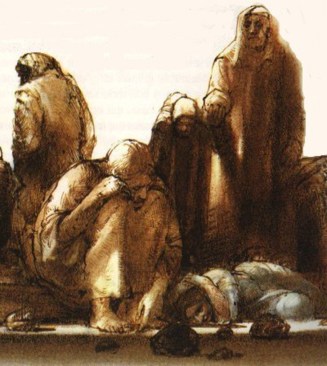 Dalam masa Yesus, perempuan tidak memiliki posisi yang sama dengan lelaki. Mereka bahkan dianggap sebagai barang kepemilikan kaum adam. Kecuali beberapa tokoh perempuan dalam Alkitab seperti Deborah dan Judith, perempuan Yahudi masa lalu harus hidup di bawah dominasi patriarki. Alkitab juga tidak banyak menjabarkan kisah perempuan korban kekerasan dan pelecehan, tapi kita bisa berasumsi bahwa dengan mentalitas patriarki ini, kekerasan dan eksploitasi berlangsung di berbagai tempat.
 The Parable of the Prodigal Son is one of the most moving stories of Jesus and has been regarded as the all-time favorite. The parable is so beautiful that it moved one of the earliest heretics, Marcion of Sinope, to single out the Gospel of Luke as the only valid Gospel. Why does the parable gain such honor among Jesus’ parables? I guess one of the reasons is the unexpected twist of event appears in the parable. Like when we watch movies in the cinema, flat and predicted plot of movies will cause boredom, but movies with sudden and unforeseen twists often create breath-taking excitement. The twist of the parable is that the Mercy of God that goes beyond any human expectation and limitations.
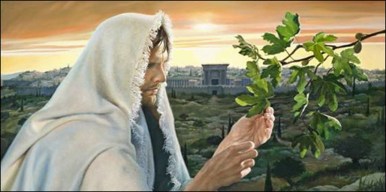 The heart of the parable of the Good Gardener is God’s Mercy. Not only He is merciful, but He is the Mercy itself. Pope Francis fittingly wrote that the name of God is Mercy. God cannot but be merciful. We are like the tree that was fruitless and useless, but God gave us a second chance. Jesus, our Holy Gardener, even exerts His utmost effort to take care of us, making sure that grace of God in constantly pour upon us.
 Inti dari perumpamaan tentang Pengurus kebun yang baik adalah kerahiman Allah. Tidak hanya Allah penuh dengan belas kasih, tetapi Dia adalah belas kasih itu sendiri. Paus Fransiskus dengan tepat menulis bahwa Nama Allah adalah Belas Kasih. Karena Ia adalah Sang Belas Kasih, tindakan pertama-Nya terhadap kita manusia adalah berbelas kasih. Walaupun kita seperti pohon ara yang tak membuahkan hasil dan tidak berguna, tetapi Allah memberi kita kesempatan kedua. Dan tidak hanya kesempatan baru, Yesus, sang pengurus kebun kita yang suci, bahkan memberikan upaya maksimal-Nya untuk merawat kita, memastikan bahwa anugerah Allah terus-menerus tercurahkan kepada kita.
 For St. Luke, Jesus is a man of prayer. Luke fondly wrote in his Gospel that Jesus would pray before the decisive events in His life and mission. Jesus prayed the whole night before he chose His disciples (Luk 6:12). One of the reasons why Jesus cleansed the Temple of Jerusalem was that He was well aware of the main function of the holy Temple: House of Prayer (Luk 19:46). He reminded his disciples to pray especially in facing trials and tribulations (Luk 21:36). Before He was embracing His passion and death, He prayed at the garden (Luk 22:44). Finally, enduring a brutal torture, He saved His last breath even to pray for those who have crucified Him (Luk 23:34).
 Bagi St. Lukas, Yesus adalah seorang doa. Lukas menulis dalam Injilnya bahwa Yesus berdoa sebelum menghadapi peristiwa-peristiwa penting di dalam hidup dan misi-Nya. Yesus berdoa sepanjang malam sebelum ia memilih murid-murid-Nya (Luk 6:12). Salah satu alasan mengapa Yesus membersihkan Bait Allah Yerusalem dari berbagai malapraktik adalah bahwa Dia sangat menyadari fungsi utama dari Bait Allah ini: Rumah Doa (Luk 19:46). Dia mengingatkan para murid-Nya untuk berdoa terutama saat menghadapi cobaan dan penderitaan (Luk 21:36). Sebelum Ia menghadapi sengsara dan wafat-Nya, Dia berdoa di taman (Luk 22:44). Akhirnya, saat Ia berada di kayu salib, Dia menyimpan nafas terakhirnya bahkan untuk berdoa bagi mereka yang telah menyalibkan-Nya (Luk 23:34).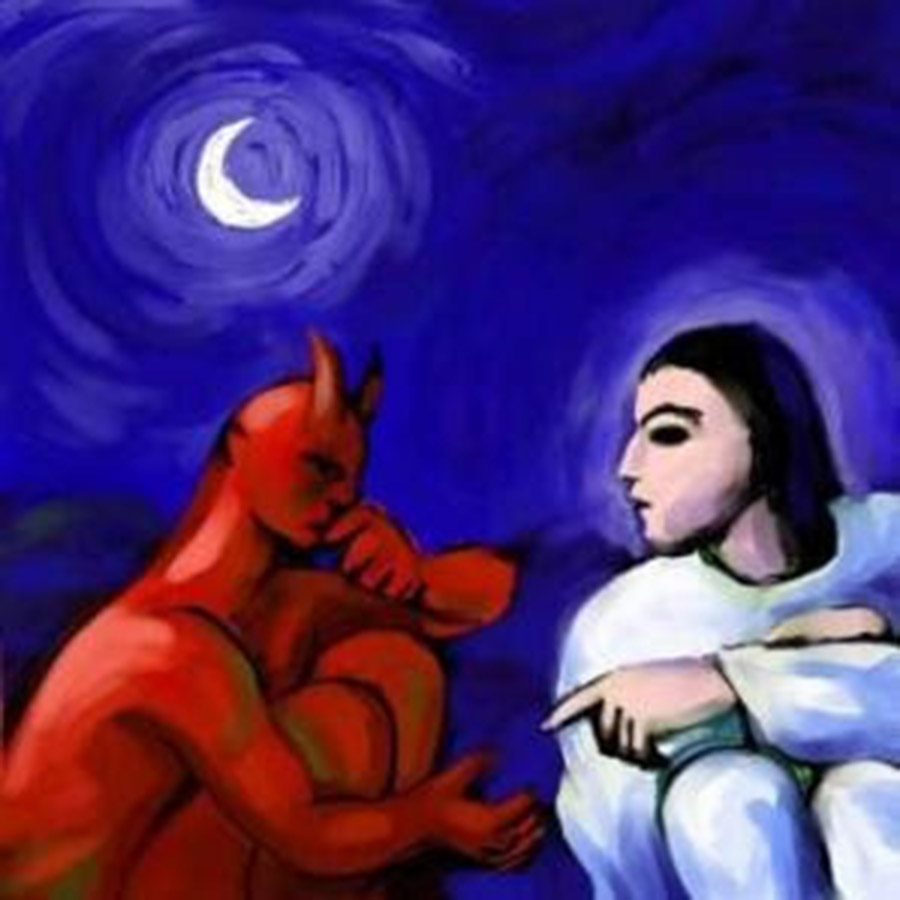
 Today’s Gospel shows us that the Holy Spirit led Jesus to the desert. Yes, the Holy Spirit will not spare us from the desert! The desert experience can be anything that spells dryness and emptiness in our lives and souls. Out of nowhere, a seminarian enters into a desert as he is feeling unexplainable meaninglessness in his chosen vocation. A mother begins to experience exhaustion in fulfilling her difficult mission to rear her children. Through her journals, it was revealed that even holy person like Mother Teresa of Calcutta went through ’the eclipse of God’ when she did not sense the presence of God for almost 10 years in her life.
 Injil hari ini menulis tentang Roh Kudus yang membawa Yesus ke padang gurun. Ya, Roh Kudus akan membawa kita ke padang gurun juga! Gurun bisa diartikan sebagai kekeringan dan kekosongan dalam hidup dan jiwa kita. Seorang frater tiba-tiba masuk ke pengalaman gurun dan ia merasa kehilangan makna dan semangat di dalam panggilannya. Seorang ibu mulai mengalami kelelahan dalam mengemban misi yang sulit untuk membesarkan anak-anak nya. Melalui tulisan-tulisannya, terungkap bahwa bahkan orang kudus seperti Bunda Teresa dari Kalkuta pun harus melalui ‘Allah yang diam’ ketika dia tidak merasakan kehadiran Allah selama hampir 10 tahun dalam hidupnya.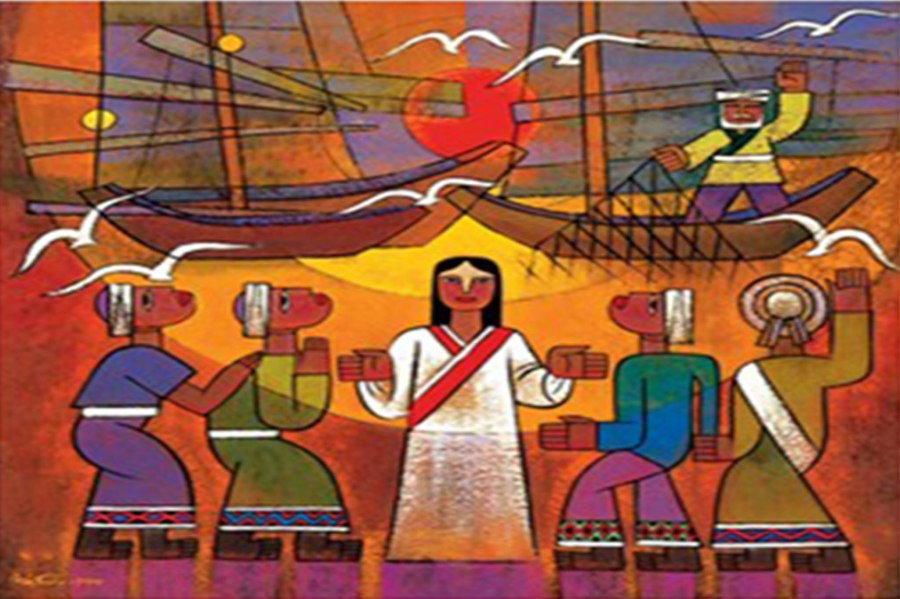
 nd taught the crowds from the boat of Simon (Luk 5:3).”
 In Medio Ecclesiae