


Fourth Sunday of Easter. April 17, 2016 [John 10:27-30]
“My sheep hear my voice; I know them, and they follow me (Jn 10:27).”
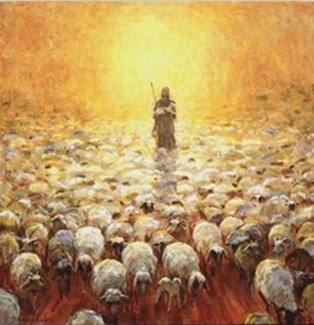 One of the loveliest images of Jesus is the Good Shepherd. It is even more beautiful when we try to bring ourselves to Palestine in the time of Jesus. Life as a shepherd is tough and tiresome. Grass was scarce and the sheep constantly wondered. Since there was not protective fence, the shepherd was bound to watch his sheep for all time, otherwise the sheep would go astray. The terrain in Judea was rough and rocky, and these forced the shepherd to exert extra energy. Not only constant, shepherd’s duty was also dangerous. Wild animals, especially wolfs, were ready to attack and devour the meek sheep. Not only wild predators, robbers and thieves were eager to pirate the sheep.
The sheep in Judea were raised primarily for wool. Thus, the shepherd shall live together with his flock for years. No wonder if he knew well each individual sheep, its characters, and even its unique physical features. He would call them by name like ‘small-feet’ or ‘large-ears’. Because of the intimate bond between the two, the sheep were so familiar with the voice of the shepherd. H.V. Morton, a bible scholar, once narrated his encounter with two shepherds who shared the same cave to shelter their flocks at night. How would they sort them out? In the morning, one shepherd stood some distance and simply voiced a peculiar sound. His sheep recognized the sound immediately, and they ran toward him, while the sheep belonged to the other shepherd remained in the cave!
Good shepherd is a symbol of providential care, sacrifice, and true love. No wonder if ancient Israelites saw God as their shepherd. Psalm 23 is one of the loveliest poems in the bible, describing God as the Good Shepherd. Remember that some great leaders of Israel were actually shepherds. Moses was tending to his father-in-law flocks when he was called by God in the burning bush (Exo 3). David also was taking care of his father’s sheep when Samuel came and anointed him king (1 Sam 16).
Jesus understood this and He took this identity upon himself. Not only any shepherd, He is the Good Shepherd. He knows us individually as unique and precious. He takes care of us constantly, and search us if we go astray. He protects us from any harm and danger. Even He is willing to give up His life just to save us.
Now, we are not merely animals just like any other sheep. We are human being, with intellect and freedom. To be the sheep of Christ takes another profound form. It means that we are also called to become a good shepherd. A priest is a good shepherd to his faithful. A husband or wife is a good shepherd to each other. Parents are good shepherds to their children. Fr. Gerard Timoner, OP, our provincial, once reminded us that ‘brother-shepherding-brother’ should be our spirit of our formation.
Being a good shepherd is never easy, just like Christ, we shall give our all to others. But, only in giving ourselves that our lives finds its meaning. John Maxwell, leadership guru, once said that the success of man is not how many people serve him, but how many people whom he serves. Meanwhile Zig Ziglar, great American inspirational speaker, reminds us that we can get everything in life we want if we help enough people get what they want. Fundamentally, we were created in the image of God, and if our God is the Good Shepherd, we are the image of the Good Shepherd. It is our purpose and mission in life to be a good shepherd and grow our sheep.
Br. Valentinus Bayuhadi Ruseno, OP

 Salah satu citra terindah Yesus adalah Gembala yang Baik. Citra ini bahkan lebih indah ketika kita mencoba untuk melihat situasi Palestina pada zaman Yesus. Hidup sebagai seorang gembala adalah sulit dan melelahkan. Rumput terbatas dan domba akan terus berkelana. Karena tidak ada pagar pembantas, gembala akan memantau domba-dombanya sepanjang waktu, jika tidak, domba akan hilang. Medan di Yudea kasar dan berbatu, dan ini memaksa gembala mengerahkan energi ekstra. Selain itu, tugas gembala juga berbahaya. Hewan liar, terutama serigala, siap untuk menyerang dan melahap domba. Tidak hanya predator liar, perampok dan pencuri juga ingin membajak domba-dombanya.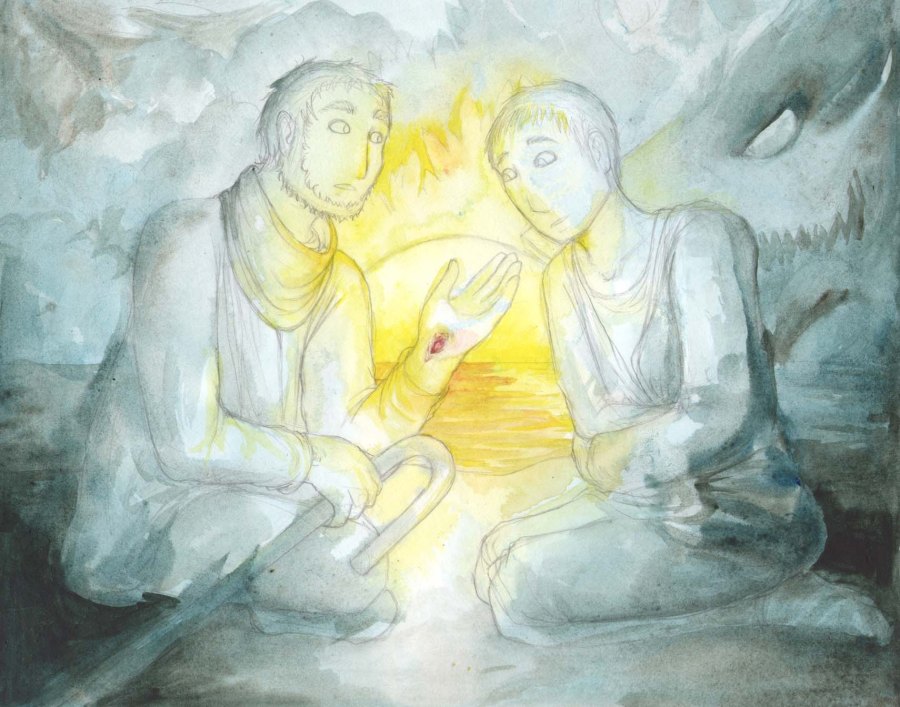
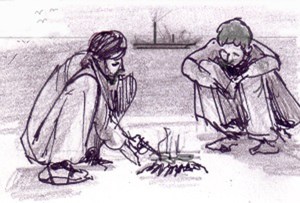 Reading today’s Gospel in original Greek, we get to appreciate more the dialogue between Jesus and Peter. In English translation, both Jesus and Peter expressed themselves in the same word ‘love’, but in Greek, the word Jesus employed is ‘agapao’ while Peter’s is ‘phileo’. ‘Agapao’ or ‘agape’ refers to unconditional and radical love that every Christian should exemplify. This love is based on freewill and discipline, not just affections. This love empowers to love, to forgive and to have mercy even to our enemies. While ‘phileo’ or ‘philia’ is the reciprocal love of friendship. It is coming from both natural liking as well as firm decision. We make friends with whom we feel close, yet we exert also efforts to get close and understand them. As an old adage say, ‘friend in indeed is friends indeed.’
 Membaca Injil hari ini dalam bahasa Yunani, kita bisa lebih menghargai dialog antara Yesus dan Petrus. Dalam terjemahan bahasa Indonesia, baik Yesus maupun Petrus mengungkapkan diri dalam kata yang sama ‘mengasihi’, tapi dalam bahasa Yunani, kata yang Yesus gunakan adalah ‘agapao’ sementara Petrus adalah ‘phileo’. ‘Agapao’ atau ‘agape’ mengacu pada kasih tak bersyarat dan radikal. Kasih ini didasarkan pada kehendak bebas dan disiplin, bukan hanya afeksi dan emosi. ‘Agape’ memberdayakan kita untuk mengasihi, mengampuni dan berbelas kasih bahkan kepada musuh-musuh kita. Sementara ‘phileo’ atau ‘philia’ adalah kasih persahabatan yang resiprokal. Kasih ini datang dari naluri alamiah dan juga kehendak bebas. Kita bersahabat dengan siapa kita merasa dekat, namun kita juga mengerahkan upaya untuk mendekati dan memahami mereka. Sebagai pepatah tua mengatakan, ‘Friend in need is friend indeed.’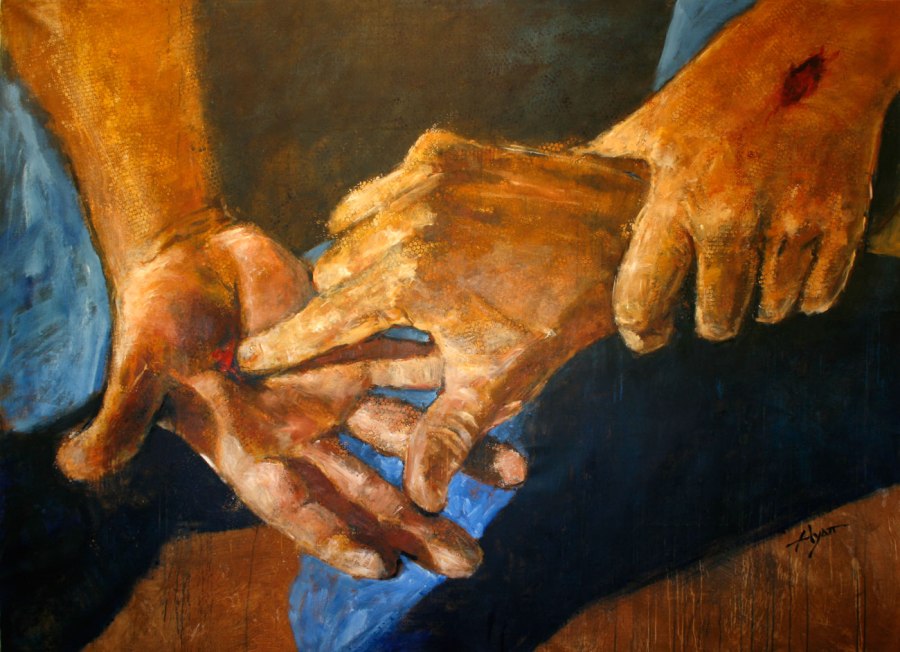
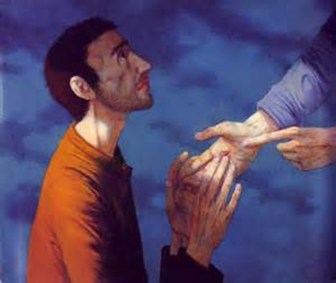 The request of Thomas was a bit strange. To recognize the risen Lord, Thomas demanded that he would be able to touch the wounds of Christ. But, why did Thomas look for the wounds of Jesus? He could have asked to see Jesus’ face, or to touch Jesus’ nose. He had been Jesus’ disciple for some years, and surely, Thomas would not have any difficulty to recognize Jesus. Why wounds?
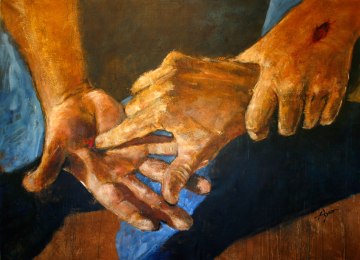 Di dalam Injil hari ini, permintaan Thomas agak aneh. Untuk mengenali Tuhan yang bangkit, Thomas menuntut bahwa dia harus menyentuh bekas paku di tubuh Kristus. Tapi, mengapa Thomas mencari luka-luka Yesus? Dia bisa saja meminta untuk melihat wajah-Nya atau menyentuh hidung-Nya. Dia adalah murid Yesus yang hidup bersama Dia selama beberapa tahun, dan tentunya, Thomas tidak akan memiliki kesulitan untuk mengenali Yesus. Lalu, mengapa luka-luka Yesus?
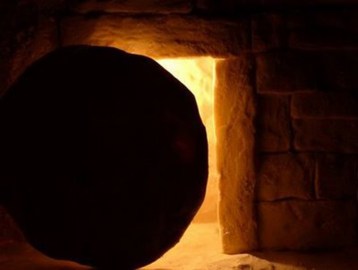 What do you see inside the empty tomb? Seeing the empty tomb, Mary Magdalene was at lost, terrified and confused. Where is Jesus? Is He moved to the other tomb? Is someone stealing His Body? Peter, the leader of the apostles, did not understand the empty tomb and went home puzzled. All things were so depressing. Jesus was betrayed, denied, tortured, crucified and now he is missing!
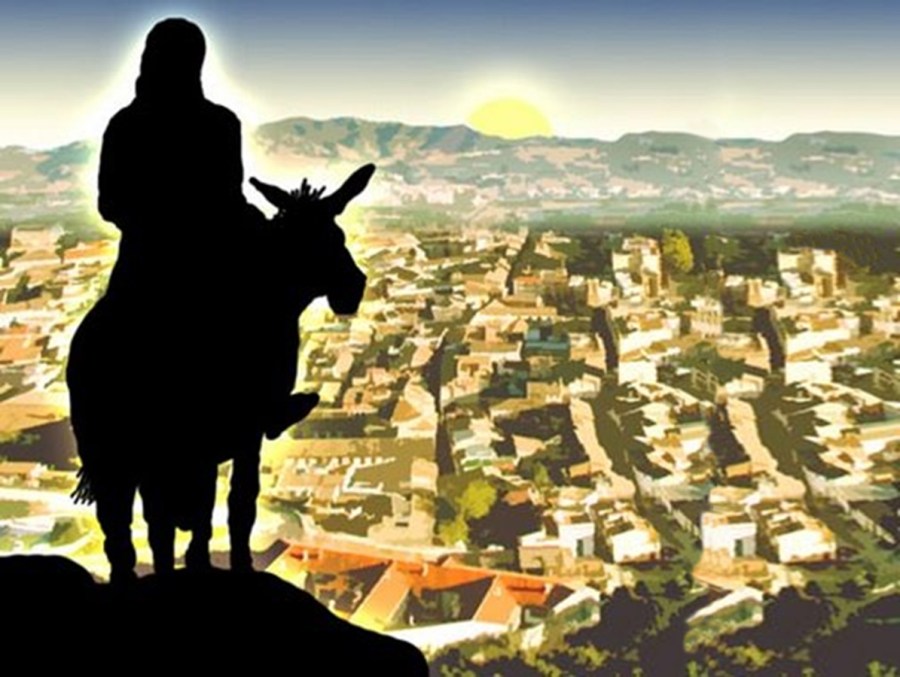
 Palm Sunday or Jesus’ entrance to Jerusalem marks the beginning of the most important drama of the Gospel, the drama of the Holy Week. The memory was so significant to the early Christians that the episode was recorded in all four Gospels (Mat 21:1-11, Mark 11:1-11, and John 12:12-19), though with some different emphases. Why was Jesus’ entrance to the ancient city Jerusalem so significant?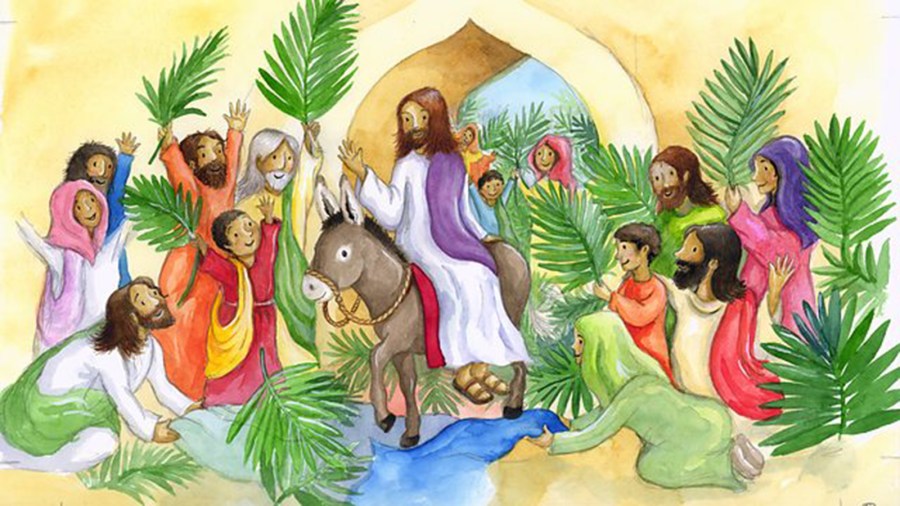
 Minggu Palma atau disaat Yesus memasuki kota Yerusalem menandai awal dari drama yang paling penting di Kitab Suci. Ini adalah drama Pekan Suci. Memori ini begitu signifikan bagi Gereja Perdana, sampai-sampai episode ini tercatat di keempat Injil (Matius 21:1-11, Markus 11:1-11, dan Yohanes 12:12-19). Pertanyaannya adalah: Mengapa Minggu Palma begitu penting bagi kita?
 In Medio Ecclesiae