

Second Sunday of Advent [C]
December 5, 2021
Luke 3:1-6
On the second Sunday of Advent, we encounter John the Baptist. He is one of the most prominent and impactful figures in the Gospel. The four evangelists mentioned him and often described him as a fearless man who even dared to challenge the most powerful man in Galilee, Herod Antipas. From the desert, he went and positioned himself in a strategic position in the Jordan valley. That was the major passageway that connected Jerusalem with the rest of Israel, and John seized the moment to preach the coming of Messiah. We could imagine his strong voice thundered throughout the valley and shook every heart who listened.
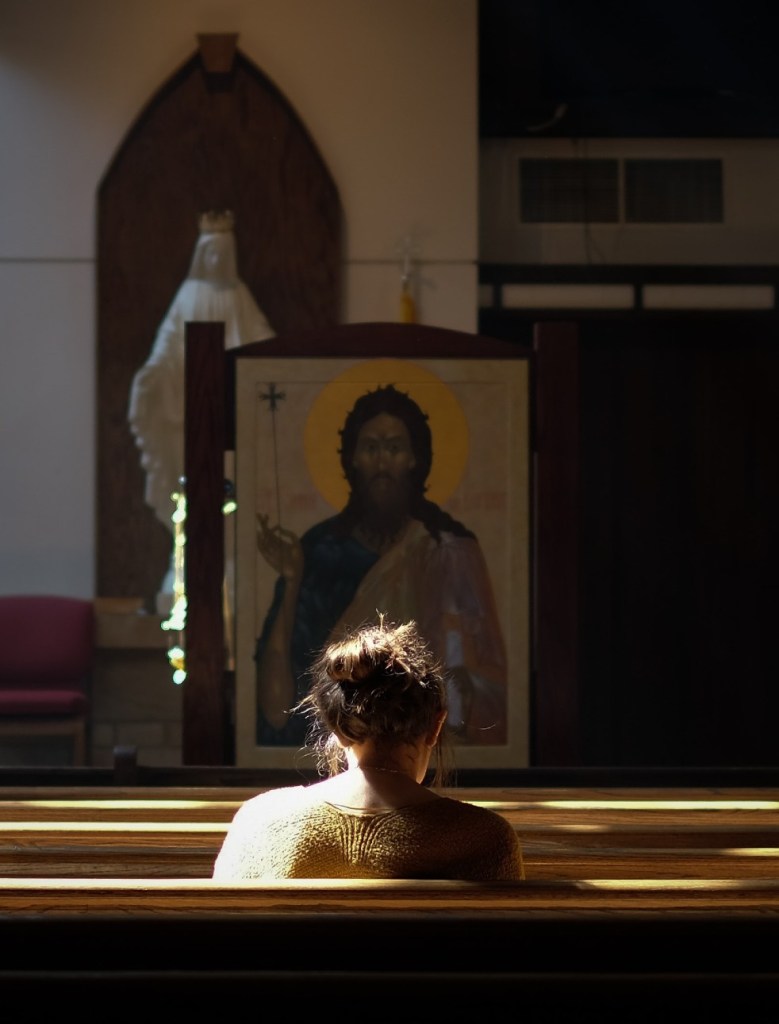
The Messiah is coming, and His way must be prepared. Yet, one does not prepare His arrival with a red carpet, a flower garland, or a grand musical parade. He will not come and check the honor guards. He does not need external preparation but demands internal transformation. Thus, John shouted with a loud voice, “Repent!”
One question may keep us wondering: why did John baptize people? To baptize means to wash with water and washing oneself with water was a common Jewish ritual to cleanse oneself from ritual uncleanliness. Jewish pilgrims would wash themselves before they entered the Temple of Jerusalem, and there were many small pools for this purpose called ‘mikvah’. One tradition recognized that John was coming from a Jewish sect named Essenes. This group was famous for its strict adherence to the Law of Moses. In fact, they had an extreme measure when it came to ritual purity, and they would take a ritual bath several times a day. If this tradition is true, John knew too well how important baptism was.
However, John did not simply repeat the old Jewish purification ritual. In fact, He revolutionized it. John baptized people with water as an external sign of internal repentance. For John, it would be useless if people go to the Temple and perform various rituals, but their hearts are far from the Lord.
John the Baptist brings to mind the core of Advent: the spiritual preparation for the coming of Jesus. We recognize that Advent is the season of preparation for Christ’s coming, but often, we do not know how exactly to prepare. Sometimes, we are spending our time and money to buy gifts, to prepare Christmas decorations, and to plan for holidays. Sometimes, we are busy practicing for Christmas services, or ready ourselves for parties and celebrations. Yet, if we forget to prepare spiritually, we may lose everything.
The liturgical color of Advent is purple, and the very same purple that we use in the Lenten season. If the purple in Lent means the color of repentance, the purple of Advent has the same character. As John the Baptist reminded the people of his time to prepare the way for the Messiah by change of hearts, the Church also calls us to prepare the coming of our Lord with repentance and spiritual exercises.
Valentinus Bayuhadi Ruseno, OP
 Christmas is fast approaching, and the Church is inviting us to reflect on the story of the Annunciation. Allow me to once more focus on the Blessed Virgin’s Fiat. To appreciate her answer to God’s will and plan, we need to see at least two things. Firstly, it is her historical and social context. Secondly, it is the language analysis of her response.
 Natal semakin dekat dan Gereja mengundang kita sekali lagi untuk merenungkan kisah Kabar Sukacita. Izinkan saya untuk sekali lagi fokus pada “Fiat” atau jawaban Ya Perawan Maria [Fiat sendiri berasal dari bahasa Latin, artinya “terjadilah”]. Untuk mengerti lebih dalam jawaban Maria atas kehendak dan rencana Tuhan, kita perlu melihat setidaknya dua hal. Pertama, konteks sejarah dan sosialnya, dan kedua adalah analisis bahasa dari tanggapan Maria.
 This Sunday is special. We are still in the season of Advent, and yet we see a different liturgical color. It is a rose color [not pink!]. This beautiful color symbolizes joy and hope, and it is in line with the spirit of the third Sunday of Advent, the Gaudete Sunday. Gaudete is a Latin word meaning “Rejoice!” The name is rooted in the introit or the opening antiphon of the Mass, from Phil 4:4-5, “Rejoice in the Lord always; again I will say, Rejoice. 5 Let your gentleness be known to everyone. The Lord is near” In the second reading, St Paul reiterates the motif, “Rejoice always. Pray without ceasing. In all circumstances give thanks, for this is the will of God for you in Christ Jesus. [1 The 5:16].”
 Minggu ini cukup istimewa. Kita masih dalam masa Adven, namun kita melihat warna liturgi yang berbeda. Itu adalah warna mawar atau merah muda. Warna indah ini melambangkan kegembiraan dan harapan, dan ini sejalan dengan semangat Minggu Adven ketiga, Minggu Gaudete. Gaudete adalah kata Latin yang berarti “Bersukacitalah!” Nama ini berakar pada introit atau antiphon pembukaan Misa, dari Filipi 4: 4-5, “Bersukacitalah senantiasa dalam Tuhan! Sekali lagi kukatakan: Bersukacitalah! Hendaklah kebaikan hatimu diketahui semua orang. Tuhan sudah dekat !” Dalam bacaan kedua, Santo Paulus mengulangi motif yang sama, “Bersukacitalah senantiasa. Tetaplah berdoa. Mengucap syukurlah dalam segala hal, sebab itulah yang dikehendaki Allah di dalam Kristus Yesus bagi kamu. [1 Tesalonika 5:16]. ”
 On the second Sunday of Advent, we are reading from the beginning of the Gospel of Mark. After all, this is the beginning of liturgical year B, and it is fitting to start with the first chapter of Mark. Yet, unlike Matthew and Luke, Mark has neither infancy narratives nor the childhood stories of Jesus. Mark commences his Gospel with John the Baptist, who announces the repentance and the coming of Christ.
 Pada Minggu kedua Adven, kita membaca dari awal Injil Markus. Kita ingat bahwa ini adalah awal dari tahun liturgi B sehingga awal Injil Markus adalah bacaan yang tepat. Namun, tidak seperti Matius dan Lukas, Markus tidak memiliki narasi kelahiran maupun kisah masa kecil Yesus. Markus memulai Injilnya dengan Yohanes Pembaptis yang mewartakan pertobatan dan kedatangan Kristus.
 We are entering a joyful season of Advent. The first Sunday of Advent is also the beginning of the liturgical year of the Catholic Church. Advent is from the Latin word “adventus” meaning “the coming.” From this name alone, we can already deduce the purposes of this lovely season. It is to prepare us for the coming of Jesus, yet we must not forget that the Church teaches us that there are two comings. The first coming is two thousand years ago in Bethlehem, as a baby at Mary’s hands. The second coming is Jesus’ arrival at the end of time as the glorious king and the judge.
 Kita memasuki masa Adven. Minggu pertama Adven juga merupakan awal tahun liturgi Gereja Katolik. Adven sendiri berasal dari kata Latin “adventus” yang berarti “kedatangan”. Dari nama ini saja kita sudah bisa menyimpulkan tujuan dari masa liturgi yang satu ini. Masa Adven mempersiapkan kita bagi kedatangan Yesus, namun kita tidak boleh lupa bahwa Gereja mengajarkan kita bahwa ada dua kedatangan Yesus. Kedatangan pertama terjadi dua ribu tahun yang lalu di Bethlehem, sebagai bayi kecil di tangan Maria. Kedatangan kedua adalah kedatangan Yesus di akhir zaman sebagai raja dan hakim yang mulia.
 In Medio Ecclesiae