The Scribes of the Kingdom

17th Sunday in Ordinary Time [A]

July 30, 2023

Matthew 13:44-52

The Scribes are often perceived as the bad guys. Together with the Pharisees and the elders, the scribes are often arguing and disagreeing with Jesus. Yet, interestingly, Jesus mentions the scribes of the kingdom of God. So, what is precisely the scribes? Are they the bad guys or the good guys? What does Jesus mean by ‘the Scribes of the Kingdom’?
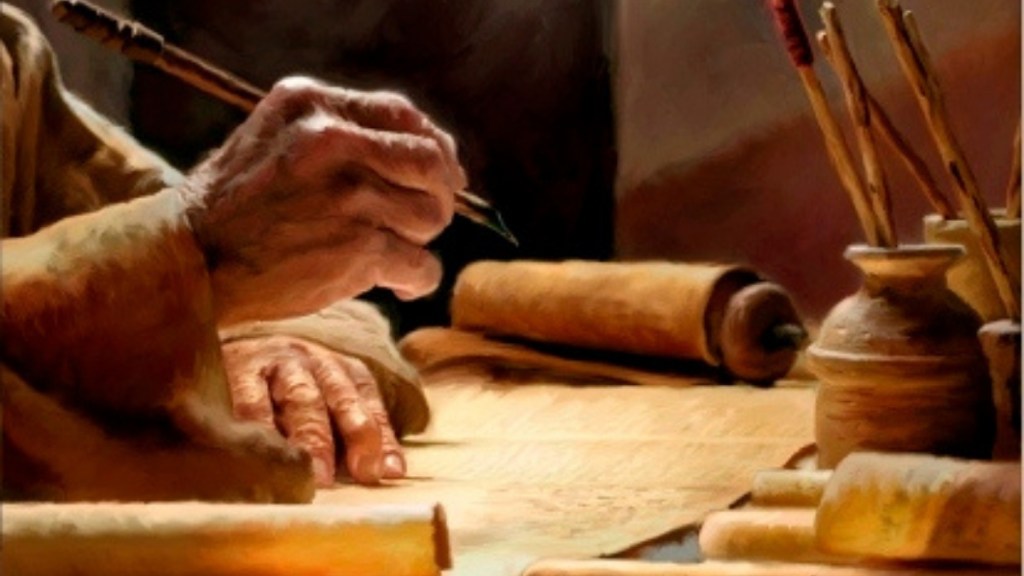
Scribes [in Greek: γραμματεὺς, grammateus] are unique professions in the ancient time. When most people were illiterate, and the writing material was scarce, the scribes played an essential role in keeping the record and passing down the written history. Being a scribe is not only about the ability to read but also highly specialized skills to write efficiently using ancient materials [stone tablets, animal skins, papyrus]. Most scribes worked for the royal court as they wrote various official documents and recorded the chronicles. Since, in ancient times, the royal officials and the religious leaders were often the same persons, the scribes also were tasked to write and copy sacred texts. 

In the time of Jesus, the Israelite scribes were highly specialized professionals in reproducing Torah scrolls and the prophets’ writings. They would form a small community and write sacred texts together. While they wrote, they would read the text aloud and, thus, avoid unnecessary errors. To copy the holy texts is their sacred duty. But not only reading and writing the text, the scribes also read, discussed and interpreted the meaning of the sacred text. With this privileged access to the sacred text, they also read and taught the Torah to the people of Israel. Scribes did not form a single organized group but joined existing groups like Pharisees, Sadducees and Essenes, or they decided not to be unaffiliated to any group. From here, we know that scribes were not homogenous. Some may disagree with Jesus at some point, but on some issues, they may agree. 

Then, Jesus mentioned ‘the scribes of the Kingdom’, who are these people? At the first level, these are the apostles of Jesus and other disciples. They are the ones who are responsible for writing the New Testament. Matthew and John are apostles, while Mark is the disciple of Peter and Luke is the companion of Paul. They also interpreted and preached the Old Testament as fulfilled by Jesus Christ.

However, at the second level, the scribes are all of us. Nowadays, we have easy access to the Bible. We are called not only to hear and read the word of God in the scriptures but also to understand it more profoundly and share it with others. While some people are taking the more prolonged and more intense study of the scriptures, like priests, bible scholars, and catechists, all of us are also called to take part in the scribes’ responsibility. 

I am happy that more Catholics are taking an interest in Bible Study. Some take a formal classes or attend seminars. Some make commitments to read Bible every day. Yet, scribes are not only someone who read and study the sacred text but also one who share and preach it. Thus, the challenge is how we are to share the word of God and take part in the mission of the Scribes of the Kingdom.

Valentinus Bayuhadi Ruseno, OP

The Kingdom of God

16th Sunday in Ordinary Time [A]

July 23, 2023

Matthew 13:24-43

One of the most fundamental themes of Jesus’s preaching is the Kingdom of God [in Matthew, it is called ‘the kingdom of heavens’]. Yet, what is the Kingdom of God? Where is this Kingdom? Why is it central to Jesus’ preaching and mission? 

What is the Kingdom of God? A kingdom is precisely a kingdom because it possesses a king or monarch as its highest authority. If we change its supreme leader into a president or prime minister, it ceases to be a kingdom and turns into something else, like a republic. Thus, the presence of a king in the Kingdom of God is non-negotiable. Who, then, is the king of the Kingdom of God? The answer is obvious: God Himself. Since Jesus is our God, then it is not hard to say that Jesus is the king of the Kingdom of God. Many new testament passages speak of this Kingdom of Jesus (see Eph 5:5; 2 Pet 1:11). Jesus himself acknowledged that He is the king of this Kingdom (see Luk 22:30).

Now, after we know the king of this Kingdom, we need to determine who the subjects are. After all, a king is not a king without the people whom he governs. Many will instantly answer that the members of the Kingdom are all who believe in Jesus. Yet, it is not as simple as that. If we observe other kingdoms or nations, to be a citizen of a particular Kingdom or country is not enough that we ‘believe’ that he is a citizen. He must undergo required procedures that make him a citizen, like processing certain legal documents, etc. More than that, it is imperative for a citizen to obey the law of the country. Otherwise, he will be punished accordingly.

Therefore, it is the same with the Kingdom of God. To become part of the Kingdom, we must undergo the required procedure. In the case of the Kingdom of God, it is the sacrament of baptism (see John 3:3-5). Yet, to be a good citizen of the Kingdom, we must not stop a baptism. We are expected to know and follow the laws of the Kingdoms. We are called to obey the words of Jesus, our king. We cannot call ourselves good Christians, good citizens of the Kingdom of Heaven, if we keep breaking the laws.

Another aspect of the Kingdom of Heaven that we must not overlook is that it is not yet ‘perfect’. Some may think that since it is the Kingdom of God, it must be super powerful, full of good things, and has no suffering. Yet, Jesus reminds us through His parables that God allows bad things to inflict the Kingdom of God on earth. God is like the landowner who allows the weed to grow together with the wheat in his field. Some may expect the Kingdom to grow strong like a cedar seed that will develop into a strong and majestic one. Yet, Jesus told us that the Kingdom is like a mustard seed, the smallest seed that will grow into ugly shrubs.

Through Jesus’ parables, we must not be surprised if bad things are happening even after we become citizens of the Kingdom. We are expected not to be shocked to experience pain and suffering as members of the Kingdom. God allows these bad things to happen as part of His plan for us.

Valentinus Bayuhadi Ruseno, OP

The Sower and His Mysterious Way

15th Sunday in Ordinary Time [A]
July 16, 2023
Matthew 13:1-23

There is something strange with Jesus’ parable.
The sower is committing something outrageous as a farmer. The sower is wasting his seeds. He lets the seeds fall into the pathway, Rocky grounds, and thorns, places that will surely kill them. If the seeds are the farmer’s lifeline, he kills himself. Why does the sower do something seemingly useless and even stupid things?

To find the answer, we must understand the purpose of Jesus’ parables. Many believe that parables are simple stories Jesus uses to convey and simplify His teachings. That is why one theologian defined parables as ‘heavenly teachings in worldly stories.’ To a certain extent, it is true, but it does not capture the entire purpose of the parable. When Jesus was asked, ‘Why did He teach in parables?’ Jesus answered, “This is why I speak to them in parables, because ‘they look but do not see and hear but do not listen or understand (Mat 13:13).” Jesus utilized parables not to reveal His teaching, but to conceal His teachings. Why? Jesus made it clear that by using parables, only those who believe Jesus will see through the parables and learn the messages, while those who do not believe will only be puzzled.

Now, how do we make sense of the sower who is seemingly wasting his seeds? Again, the key is belief in Jesus. We are invited to read this parable from the lens of faith. If the different kinds of soils represent the condition of our souls, and the seeds are God’s word, then who will be the sower? For us believers, the answer is obvious. The sower is God Himself. Now, if we know all the meanings of the characters and elements of the parables, we can make more sense of the story. God sends His words not only to one kind of soul but to all souls. Why? Because He loves all souls and wants all souls to come to salvation. God loves us, even those who do evil things, those who do not know Him, and those who hate Him.

He sends His sunlight and rains for all of us, though we are ungrateful. He provides many good things in our lives, even though we take them for granted. Ultimately, He sends Jesus, His Word made flesh, to save us sinners. For He so loved the world so that He sent His only begotten Son, so that who believed in Him may not perish but have eternal life (John 3:16). God, the divine sower, does not measure things in worldly economic terms, but loves us gratuitously.

However, we must forget that we have to do our part also. We are invited to transform our souls into fertile soil. Perhaps, in the beginning, minds and hearts are hard, full of rocks of doubts, or filled with thorns of anger. But God gives us freedom and the grace of repentance to change our hearts into the good ground where the Word of God may grow. Some of us may have a fertile heart, but we must not be negligent but continue to enrich our soils so that the word of God may bear fruits abundantly.

What kind of soils are we now? Do we recognize God’s works in our lives? What do we do to receive the word of God and allow them to grow and bear fruits?

Valentinus Bayuhadi Ruseno, OP
Jesus’ Yoke

14th Sunday in Ordinary Time
July 9, 2023
Matthew 11:25-30

I am incredibly blessed to be given to opportunity to study my doctorate in Sacred Scripture (Biblical Theology) in Rome, at the very heart of the Catholic Church. Let me share why I chose the specific field and how my love for the Word of God began. And it is closely related to today’s Gospel.

When I was still in the Novitiate (the beginning of my religious life), I read this particular verse in which Jesus said, ‘Come to me, all of you who labor and are burdened, and I will give you rest. Take my yoke… for My yoke easy and my burden is light (Mat 11:28-30).” A yoke is an instrument men or animals use, like oxen or donkeys, to carry a burden. The yoke usually is carried on the shoulders. Initially, I imagined that we had our yokes to carry, burdensome. This yoke represents various unnecessary burdens and problems in our lives. Then, Jesus asks us to remove this unnecessary yoke and take up the yoke that Jesus has prepared for us. So, it is essentially about ‘changing’ or ‘transferring’ of the yoke. Jesus’ yoke is lighter than our yokes; therefore, it is lighter and gives us rest.

However, a priest still studying for his doctorate in Sacred Scriptures visited us once. He shared some of his knowledge with us, and at one point, he told us about the yoke. In ancient Palestine (like in many places), there was a type of yoke that two men or animals could carry. The yoke is designed to distribute the burden to both shoulders equally. Thus, when Jesus said, ‘Take my yoke…” Jesus did not simply give us the yoke, but He shares the yoke and carries together with us. Then, when we are tired, Jesus will take much of the burden so that we may find rest.

The priest’s explanation was simple because I am familiar with this type of yoke as I used to see it when I was little. Yet, when he connected to Jesus’ yoke and found rest, it blew my mind and captured my heart. There is something more than what meets the eye. The Word of God is rich and fascinating. If a simple word like ‘yoke’ can have a profound meaning, it must also be true with other words, sentences and realities in the Bible. Then, I began reading a lot of commentaries and explanations on various biblical verses. The more I learn, the more I am drawn into the bottomless yet beautiful mystery. As I progressed in my vocation, I decided to focus my study in this field.

Does the story of Yoke end in my discovery in Novitiate? No! As I entered my theological studies, I discovered one particular catholic theology: the theology of participation. This theology teaches us that God is indeed the principal agent of redemption, but He does not treat us just as passive recipients. He made us active participants in His work of salvation. Yes, Jesus died and rose for us, but we also need to participate in this mystery of redemption by faith, hope and charity.

Then, as I connect it to the ‘yoke,’ the theology of participation makes even more sense. If we carry our yoke by ourselves, it is nothing but dead weight. But, when we participate in the yoke of Christ, our burdens will be lighter and have spiritual value. Yes, we cannot often escape many burdensome situations in our lives, but when we unite them to Jesus’ cross and faithfully carry them, they become spiritual blessings.

What is our daily yoke? Do we carry them alone? Do we offer them to the Lord? Do we participate in Jesus’ Yoke?

Valentinus Bayuhadi Ruseno, OP

To Receive a Prophet

13th Sunday in Ordinary Time [A]
July 2, 2023
Matthew 10:37-42

Jesus said, “Whoever receives a prophet because he is a prophet will receive a prophet’s reward,” At first glance, this statement seems usual, but at a closer look, there is something extraordinary. A prophet of God will receive his reward, but should not a person who welcomes a prophet gains something less? After all, that person simply provides a temporary shelter, perhaps water and food; indeed, he does not labor as hard as the prophet. Then, why did Jesus insist that the host of a prophet shall receive a prophet’s reward?

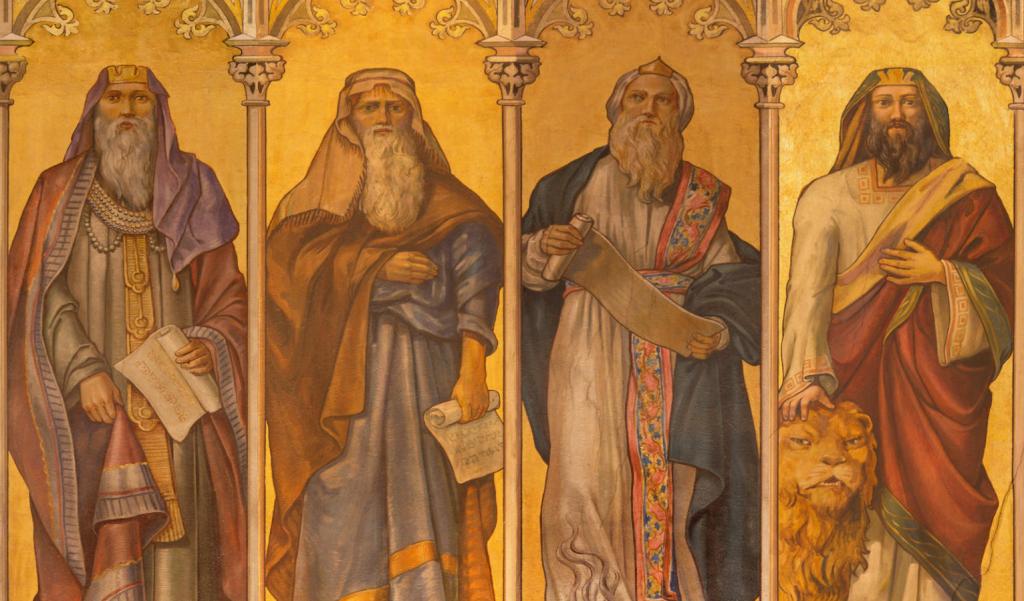
TThe neo-gothic fresco of big prophets Isaiah, Jeremiah, Ezekiel, Daniel by Leopold Bruckner from end of 19. cent. in Saint Nicholas church.

To understand the main reason behind Jesus’ extraordinary statement is that we need to know the roles of God’s prophets. A prophet, or in Hebrew נָבִיא (nabi), is a person who receives a gift/charisma to speak on behalf of God. In everyday use, the prophet foretells the future, but when it comes to the prophets of God in the Bible, predicting the future is only one aspect of their roles. The fundamental role of the prophet of God is to remind the people of their covenant with the Lord God and foretell the ugly things that would happen if they persisted in their sins. Thus, prophets of God are synonymous with the preachers of repentance.

Amos spoke against idolatry in Bethel. Elijah confronted wicked kings and queens. Jeremiah preached against injustice and evil deeds committed by Judah. John the Baptist criticized Herod Antipas for marrying his brother’s wife. These are several famous names in the Bible, but they sufficiently tell us what true prophets are. They speak the truth, and truth can be very inconvenient. Thus, many do not like true prophets and even persecute them. Jesus Himself told us, “A prophet is not without honor except in his own country and in his own house (Mat 13:57).”

It is not easy to receive a true prophet. It is hard to accept someone who speaks inconvenient truths about us. We naturally like people who praise and adore us, but we hate people who remind us about our wrongdoings. However, if we open ourselves and welcome the prophet of God into our lives, we receive the prophet’s reward. Yet, again, what is the prophet’s reward?
We may see the answer in the story of Jonah. He preached against the city of Nineveh. The people welcomed and listened to him. They repented, and they survived the disaster that would befall them. The Nineveh was saved because they accepted Jonah. Thus, the prophet’s reward is none other than salvation. As the prophet is saved when he faithfully preaches God’s word to the people despite rejection and persecution, the people will also be saved as they receive the prophet and repent.

Jesus invites us not only to be a prophet who speaks the truth and fidelity to God but also to be someone who accepts a prophet of God in our lives. Receiving is not only welcoming them into our houses but, more fundamentally, listening to their words and being moved toward God. How are the prophets in our lives? Do we reject them, or do we welcome them? What is the inconvenient truth they say that is for us to accept?

Rome
Valentinus Bayuhadi Ruseno, OP

Fear

12th Sunday in Ordinary Time [A]
June 25, 2023
Matthew 10:26-33

Fear is one of the most basic and primitive human emotions. Fear can be defined as an emotional and physiological reaction to perceived dangers or threats. In humans and many animals, an archaic part of our brain called the amygdala plays an important role in regulating fear. When potential threats to our lives are perceived, the amygdala releases stress hormones like cortisol and adrenalin. These hormones heighten our alertness and strengthen our bodies, and thus, increase our chances of survival. The amygdala (and its fear) is responsible for our survival.

However, there is a big problem. Our brains, unlike animal brains, are much more complex and advanced. Amygdala is just a very small part of a bigger system. As our intellect goes sophisticated, our understanding of fear is getting complicated. We are afraid not only of physical danger before our eyes, like fire, explosion, and venomous animals but also of potential threats and dangers that do not exist yet. Here comes the problem. We fear something that is not a real danger or even something that is not real. This fear manifests in different forms like ‘overthinking,’ ‘staying in your comfort zone,’ and ‘insecurity.’ This fear paralyzes us and even suppresses our authentic growth.

How does Jesus teach us about fear? We often read in the Gospel that Jesus said to His disciples, “Do not fear!” Yet, what does it mean ‘to have no fear’? Does it mean Jesus wants us to repress our emotions? Does Jesus instruct us to be reckless and disregard fear altogether? Today’s Gospel gives us a deeper insight into Jesus’ teaching on fear. Jesus said, “And do not be afraid of those who kill the body but cannot kill the soul; rather, be afraid of the one who can destroy both soul and body in Gehenna.” Jesus did not ask us to be numb to all kinds of fear but rather to know what or who we must truly fear.

Jesus knows well that fear is fundamental emotion of a human person. Fear serves the critical purpose of survival; without it, the human species would have ceased to exist long ago. Thus, distinguishing between the real objects of fear and the fake ones is imperative in properly handling our fear. However, Jesus reminds us that we are not simply earthly beings but primarily beings created for God. Consequently, we must fear the most things that will separate us from God. Yes, we are naturally afraid of those things that harm our bodies, but we must fear those things that harm our souls more, even if these things give us comfort and security from bodily harm. Jesus’ teaching is in harmony with Old Testament’s wisdom: one must fear the Lord (see Ecc 12:13; Psa 34:9). We do not fear the Lord because He is fearsome, but we fear that we may lose Him for eternity.

Now, it is our time to reflect and evaluate our lives. What are the false objects of fear in our lives prevent us from growing and loving God and our neighbors? Do we fear more those things that harm our earthly lives or those that put us away from eternal life? Are we ready to face our fear for the sake of Jesus?

Rome
Valentinus Bayuhadi Ruseno, OP

Why We Believe in the Holy Trinity

The Most Holy Trinity

June 4, 2023

John 3:16-18

On Sunday after Pentecost, the Church celebrates the mystery of all mysteries, the Most Holy Trinity. Doubtless, this truth is most challenging to understand, let alone to explain. Yet, why does the Church insist on teaching this and even celebrate the mystery? Why doesn’t the Church teach something more straightforward than the mystery of the Trinity, and perhaps, the Church could have gained more followers?

The Church cannot change the teaching of the Holy Trinity. Why? It is the truth of the Gospel! Had the Church proclaimed watered-down versions of God, the Church would be in grave error and lose its identity as the Church founded by Christ. In fact, there have been attempts to change this mystery since the beginning of the Church’s history. Some theologians proposed that God is one, but He appeared in different modes when dealing with creation. He was the Father when He created the world, the Son when He saved it, and the Holy Spirit when He sanctified it. This teaching is traditionally called modalism. The Church rejected this teaching.

Another teaching says that the Father is the only God, while Jesus (and the Holy Spirit) are not divine, and thus there is no ‘Trinity’. One of the proponents of this view is Arius of Alexandria from the fourth century AD. He said that Jesus was not divine, but a created being gifted with superpowers. In his own words about Jesus, “There was time that he was not.” At that time, it was a huge controversy, and the simplicity of his teaching attracted a lot of people. The Church declared it a false teaching, and because of that, the Church had to endure persecution. Many faithful chose death rather than renounce the mystery of the Holy Trinity.

Why don’t we go for the simpler teaching of God? Why does the Church stand for the highly complex and difficult truth of the Holy Trinity? Simple teachings may be attractive and easy to accept, but it does not mean that more complex teachings are automatically false or irrelevant. For example, addition and subtraction are foundational and simplest in mathematics, but the same mathematics also contains complex algebra and geometry. Does it mean we can easily ignore algebra and dismiss it as false because it is too complex to understand? Certainly not! The truth does not change even if we do not like it or ignore it. The truth remains, even though we try to water it down.

For the Church, the mystery of the Holy Trinity is not just any truth but the truth of all truths and the mystery of all mysteries. In fact, it is the truth that saves. Studying mathematical truths can help us in building houses and, thus, improve our lives, so researching and living the ultimate reality, the mystery of the Trinity, can bring us closer and closer to eternal life. However, the opposite is also true. If we believe and teach the wrong understandings of our God, this may lead us astray and put our souls in a precarious situation. This is why we constantly believe, teach, and live the mystery of the Holy Trinity.

Rome

Valentinus Bayuhadi Ruseno, OP

The Holy Spirit and the Gift of Tongue

Pentecost [A]
May 28, 2023
John 20:19-23 [Acts 2:1-11]

The day of Pentecost is also called the day of the outpouring of the Holy Spirit upon the Church that Christ has just established. As the Holy Spirit came down to each disciple in the form of tongue like fire, the disciples began to speak different languages as to proclaim God’s great deeds. Many people call this miraculous ability to speak different languages in the day of Pentecost as ‘the gift of tongue’. But, did the disciples truly receive the gift of tongue? What is the gift of tongue all about? And, what did exactly happen to the disciples?

Firstly, why does it call as the gift of tongue? Luke, the author of the Acts of the Apostles, described what happened to the disciples. after they had received the Holy Spirit, they began to speak other languages (Greek: ἕτεραι γλῶσσαι – eterai glossai). The word ‘glossa’ in Greek can mean both tongue (the instrument of speech) and language itself. Thus, if the disciples received the gift of tongue, it means they receive the gift of language.

Secondly, what language did the disciples speak? Contrary to some popular beliefs, the disciples did not speak some unintelligible languages or language of the ‘spirit’ or of the angels. They uttered normal human languages. But, what language did the disciples actually say? We can say that the disciples were speaking new languages. Some disciples may speak Greek, others may say in Latin, other still may speak other Mediterranean languages of that time. Yet, there is another theory. It says that the disciples remained speaking in their native language, most probably Galilean Aramaic, but those who were present heard them in their own native languages. This is properly speaking, not really gift of tongue, but the gift of hearing or the gift of translation. The Holy Spirit ‘translated’ the words of the disciples in the hearers’ ears.

The gift of the Holy Spirit in the day of Pentecost is indeed remarkable, but what is it for us? In reality, most of us do not have this kind of extraordinary gift of tongue. I have been in Rome for almost one year, and spent all the time to study Biblical languages, Hebrew and Greek. Yet, after almost a year, I am still struggling with these languages. I wish the Holy Spirit come down during the day of Pentecost and suddenly I could speak Hebrew and Greek!

While it is true that most of us do not have the gift of tongue, but it does not mean we do not possess the Holy Spirit of Pentecost. In fact, if we only focus on the gift of tongue or the gifts of the Spirit, we may miss the entire point. The Pentecost is about the Spirit that gives new birth to each disciple that they become a new person in Christ. As new creations, they now have the courage to preach ‘the mighty deeds of God’.

Pentecost means we allow the Holy Spirit enter into our lives and inspire us to share the Gospel of Jesus Christ in our own particular ways. When we teach our children to pray and bring them to the Church, it is a Pentecost. When some of us volunteer as catechists and even involve in teaching the catechumens, it is a Pentecost. When we do our best to resist the ways of the world, and follow Jesus, it is a Pentecost.

Blessed Pentecost!

Valentinus Bayuhadi Ruseno, OP

Jesus and the Holy Spirit

Sixth Sunday of Easter

May 14, 2023

John 14:15-21

Jesus makes its clear, “If you love me, you will keep my commandments (John 14:15).” Thus, when we genuine love Jesus, it is never enough to simply shout, “Jesus, I believe in You!” or say, “Yes, I love You, Lord!” To love Jesus means that we are committed to observe His laws, follow His teachings, and imitate His examples. Why is to keep Jesus’ commandment fundamental for us Christians?

To get the answer we must go back and understand the Old Testament better. For the Israelites, the Law of the Lord (Hebrew: Torah) is not only important, but also precious, identity-forming, and salvific. It is precious because God Himself crafted and gave the laws to the Israelites in Mount Sinai. It is even more precious because the Law became the fundamental sign of Israel’s covenant with the Lord. By keeping the Law, Israel gradually formed their identity as the people of God. By observing the Law, they longer worshiped other deities, but the Lord alone. By living the ten commandments, they lived no longer like other people surrounding them, who committed atrocious acts like child-sacrifice, various sexual perversions, and other immoral behaviors.

However, what makes this Law truly precious is there is salvation for those are faithful to the covenant and who devoutly keep the Law of the Lord. Because of this, the Israelites recognized that the Law is neither arbitrary nor burdensome, but the proof of God’s love for them. Therefore, to repay God’s love, there is no other better way than observing God’s Law faithfully. From this Old Testament background, we now recognize why it is fundamental to keep Jesus’ commandment as a sign of our love for Him. As the people of the Old Testament observe the Law as their way to show fidelity and love to the God, the Giver of Law, so also, we keep Jesus’ commandment as our way to express our love and faithfulness.

Yet, we admit that to keep Jesus’ Laws is much difficult that we often imagine. To control and moderate our anger is already very difficult, but Jesus instructs us to forgive those who wrong us. To love our own relatives and friends are already tough, but Jesus commands us to love those we consider enemies. To keep marriage intact is challenging, but Jesus teaches that marriage cannot be dissolved by man and couples are expected to be faithful until death.

How is possible to love Jesus if to keep His commandments seem impossible? It is indeed impossible if we rely on our own strength, but it is made possible with God’s power. That’s why after Jesus taught, “If you love me, you will keep my commandments.” Immediately, He promised to send the Holy Spirit, the Paraclete or in Greek, “Parakletos.” This exceptional word comes from two more basic Greek words, “para” means “at the side,” and “kaleo” means “to call.” Thus, “parakletos” can be understood as someone who is called to be at our side, especially in times of need. The only way, we love Jesus and keep His commandments is through the help and power of the Holy Spirit.

As we are moving closer to the day of Pentecost, the day of the Holy Spirit, we are invited to deepen our relationship with the Holy Spirit. We continue to ask His assistance and grace that enable us to do the impossible: to keep His commandments and to love Jesus.

Rome

Valentinus Bayuhadi Ruseno, OP

Why Gate

Fourth Sunday of Easter [A]

April 30, 2023

John 10:1-10

Today is the fourth Sunday of Easter and traditionally it is also called as the Good Shepherd Sunday. This is for an obvious reason. The Gospel reading tells us about Jesus who introduces Himself as the gate of the sheepfold and the Good Shepherd. The other readings also point the image of God as the good shepherd, like the world-renown psalm 23, “the Lord is my shepherd.”

When Jesus proclaims that He is the gate of the sheep, it means that only through Jesus, we, His sheep, may find true rest and salvation. Yet, why did Jesus call himself a gate? Is not being a good shepherd already sufficient for us? The answer lies on the life and duties of a shepherd in the time of Jesus. One of the main purposes of a shepherd is precisely to become a ‘gate’ to the sheepfold.

A sheep is generally an animal who stays at the field rather than inside the stable or barn. Thus, to gather and protect the sheep during the night, the shepherds built a stone enclosure as high as 1.5 meter (around 5 feet) at the open field. The size of the enclosure would surely depend on the volume of the sheep. Then, generally it had only one passageway, and what made this passage unique is that the shepherd would station himself at the access way during the night both to prevent the sheep from going out and to protect the sheep from wild animals that tried to enter. From the point, the shepherd must be alert and vigilant for thieves who would jump over the enclosure wall and harm the shepherd. From here, we know that the shepherd is literally the gate of the sheepfold. At the morning, the shepherd would call his sheep and they would follow him to him as they were going out through the gate and marching to the green pasture.

Jesus is the gate of the sheepfold. This means that only in Him and through Him, we find true safety from the real dangers coming from the evil ones (symbolized as ‘wild animals’ and the ‘thieves’). While it is true that living in this world, we are constantly facing dangers in the forms of sickness, financial crisis, mental and relational issues, and other physical harms, the only danger that can have eternal consequence is one that destroys our souls. There are no other beings working relentlessly to harm our souls except the devil and his minions. Facing these extremely dangerous spiritual enemies, we can only rely in Jesus, our shepherd and gate.

Again, we need to be reminded that cases of demonic possessions, harassment and infestation are extraordinary ways. The ordinary and usual ways to harm our souls is through temptations to sin. Thus, only in Jesus and through the means He has given us through His Church, we find our true security from the onslaughts of the evil one. Through regular and pious reception of the Eucharist, we continue to graze in ‘spiritual green pasture’. Through the sacrament of reconciliation, the Good Shepherd once again brings us, the lost sheep, to the fold. Through various spiritual exercises, like devotions, fasting and almsgiving, we are growing in sensitivity to our Shepherd’s voice as well as the voice of our enemies. Only in and through Jesus, the gate of the sheepfold, we find our true security and peace.

Rome

Valentinus Bayuhadi Ruseno, OP