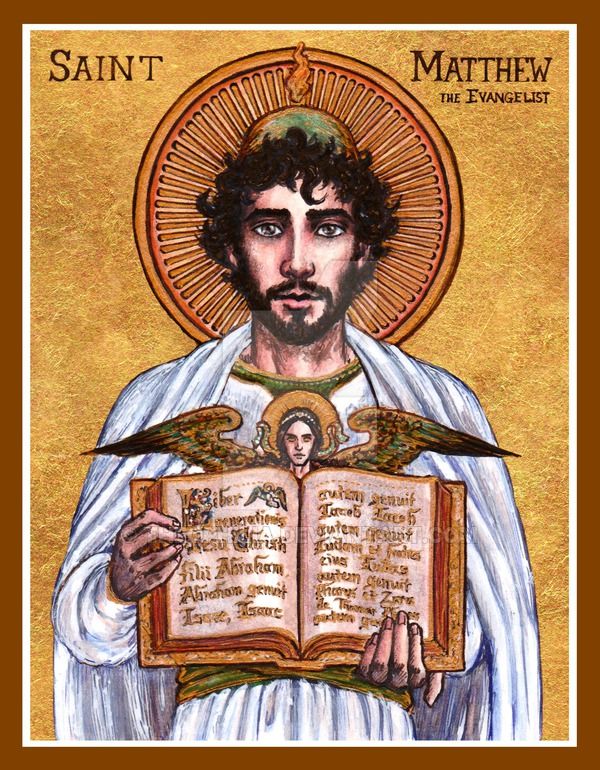
You are the Light of the World

5th Sunday of Ordinary Time [A]
February 5, 2023
Matthew 5:13-16

After Jesus opened His sermons in the Mount with the Beatitudes, He proceeded with explaining the identity of His disciples. “You are the light of the world.” Why did Jesus call His disciples as the light of the world? Light is one of the important subjects in the Bible. Going back to the story of creation, one of the first things God created was light. “There will be light! And there was light (Gen..).” Yet again, why light is such essential topic in the Bible?

photocredit: Andrew Bui

It has something to do with human nature itself. Humans are basically the creatures of light. Our lives are dependent of light around us. The most important is the light of the sun, but also lights come from other sources both natural or artificial. We need light to navigate our world. working, moving, reading, using our gadgets are some activities that are dependent of light. Our eyes, are one of the most sophisticated organs in our body, are essentially good receptors of light. Not only light is basic for our navigation and activities, but it is also fundamental for our biological growth and functioning. Proper sun’s light helps in generating some essential chemicals in our body, like vitamin D and hormone dopamine. Some studies show that lack of sun light may cause depression, decrease of cognitive functions and disruption of wake-sleep cycle (circadian rhythm).

God who created us as well as the light, perfectly knew the relation between human beings and light. Thus, Jesus called us light of the world. Like light to our bodies, it is our mission to help others around us to navigate their lives into true happiness (please check my reflection last week on happiness) and grow into genuine maturity and holiness.

But, how do we become a light of the world? Jesus gave the answer, “Let your light so shine before men, that they may see your good works and give glory to your Father who is in heaven (Mat 5:16).” We are expected to do good works for others, and good works can take many different shapes. In Catholic traditions, we have seven corporeal and spiritual works of mercy. These are feeding the hungry, clothing the naked, caring for the sick, instructing others in faith, reminding others to repent from their sins, and praying for the living and dead. We can also start our good works from home and family, like feeding our children with health food, and instructing our children in faith and morality.

However, we must be careful also because being a light, the temptation is to shine and attracted others to ourselves, rather than guide them to Christ. We must be reminded that our light is so that others may ‘give glory to our Father who is in heaven’. The second danger is that we are running out of gas. We felt tired after doing a lot of good works. The solution can be as simple as taking proper rest and sleep, or maybe we need to rearrange our priorities in life. Yet, spirituality, we must remember that the true light is Christ Himself. He said, “I am the light of the world (John 8:12).” We are lights of the world because we are in Christ and participating in and reflecting His light (see Gal 2:20). We shall never forget to unite ourselves in true light through our prayers and the sacraments especially the Eucharist.

Rome
Valentinus Bayuhadi Ruseno, OP
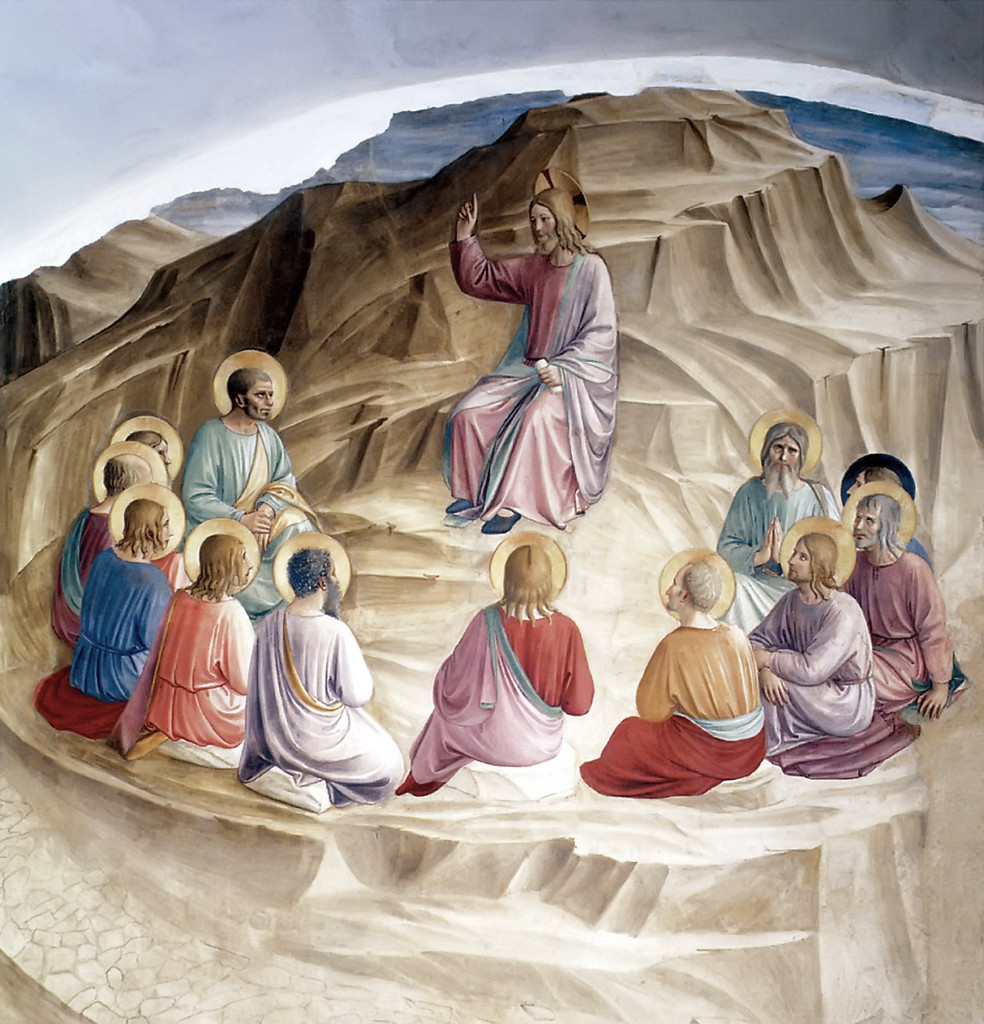
The Beatitudes: True Happiness and Where to Find It

4th Sunday in Ordinary Time [C]
January 29, 2023
Matthew 5:1-12

Jesus began His teaching ministry with the Beatitudes. The Church has recognized that the Beatitudes are not just any teaching of Jesus, but ‘at the heart of Jesus’ preaching’ (see CCC 1716). The Beatitudes are foundational because they answer the most basic longing of any man and woman: desire for happiness. If we want to be genuinely happy, then we need to live the beatitudes.

However, if we read it carefully, we may realize that the instructions in the Beatitudes are counter-intuitive with our desires for happiness. We believe that having more possessions makes happy, but Jesus says that happiness is for the poor in spirit. We want to laugh and feel ‘happy’ but then, Jesus says happiness is for those who mourn. We know that being powerful and having the ability to control others make us feel fulfilled and ‘happy’, but Jesus says happiness is for those are meek, merciful as well as the peacemakers. We desire to be freed from all difficulties in our lives, but Jesus says that happiness is for those are persecuted for the sake of righteousness. Beatitudes does not make any sense.

Again, if we go back to the Old Testament, we discover that if the Israelites are faithful to observe the Law, they will be blessed with land, prosperous harvest and cattle, many children, and protection from the enemies. In fact, if the Israelites are breaking the laws, they will be cursed and thus, losing all these blessings (see Deu 28). Jesus’ Beatitudes is not even in line with these Old Testament’s blessings, but Jesus reverses the order!

What really happen? Is Jesus out of His mind? Fortunately, the Church provides us the answer, “[Beatitudes] take up the promises made to the chosen people since Abraham. The Beatitudes fulfill the promises by ordering them no longer merely to the possession of a territory, but to the Kingdom of heaven… They express the vocation of the faithful associated with the glory of his Passion and Resurrection (CCC 1716-7).”

Through Beatitudes, Jesus teaches us that the true happiness does not stop here on earth but must reach its destination in God alone. As followers of Christ, sometimes we receive an earthly blessing, but sometimes, we experience earthly ‘curses.’ Yet, these are temporal, and not the most important. In fact, material blessings may become a curse if we become addicted to it and do many evil things to acquire them. And our misfortunes and sufferings here on earth may turn to be a spiritual blessing, if we endure patiently and unite them to the Passion of Christ in our prayers.

Does it mean we cannot work to become rich and successful? Surely, we must work and be successful in life, but in the ways that are pleasing to the Lord. If we neither steal, nor cheat, then our works and material possessions are true blessings.

Does it mean we must passively receive our sufferings and injustice? Not at all! We have to do our best also to fight injustice among us and alleviate sufferings. In fact, just be silent in the face of evil is not only stupid, but also makes us a participant in that evil. Yet, we know also that sometimes, there are certain hardships that no matter we do, they remain. These are our crosses, and we shall bring them to Jesus.

Through Beatitudes, Jesus reminds us that our desire for happiness is coming from God, and thus, only God alone can fulfill it.

Rome
Valentinus Bayuhadi Ruseno, OP

John and Jesus

3rd Sunday in Ordinary Time (A)
January 22, 2023
Matthew 4:12-23

Matthew, our Evangelist, indicated that Jesus began His public ministry after John the Baptist was arrested. Why did Jesus take this decision? There are several reasons. The first one is that Jesus fulfilled what John himself has prophesied, “He must increase, but I must decrease (John 3:30).” John was highly popular, and many people followed him and considered him as a prophet of God, but his ministry came to a halt after he was imprisoned because he reprimanded Herod who married his brother’s wife (Mat 14:1-12). As John was no longer able to preach, Jesus came and bring the Good News.

Another interesting reason is that John serves as a mirror to the life and ministry of Jesus. What John did and experienced, would be done and experienced by Jesus, but with much greater scale. John’s conception was miraculous, because Zacharias and Elizabeth were deemed to be too old to have a child. Jesus’ conception was even unparallel because He was conceived by the power of the Holy Spirit and born of the virgin Mary. John had great followers and disciples, and also many people followed Jesus, and some became His close disciples. Both John and Jesus preached repentance, but the distinction is also clear. John preached to prepare the way of the Lord, while Jesus preached to build His Kingdom of God.

John baptized as an outward sign of inner repentance, while Jesus granted true forgiveness of sins. John authenticated his messages through his lifestyle, Jesus proved His Gospel through unprecedented miracles and mastery of the nature force. Both John and Jesus were persecuted and executed because they preached the repentance and truth, and thus, offended the authority. However, Jesus resurrected and ascended into heaven, while John, who is already in heaven, is still waiting for his resurrection of the body.

When I met Fr. Gerard Timoner, our Master of the Order, in Rome, he told me this interesting fact about John and Jesus. John’s birthday is June 24 while Jesus is December 25. What is fascinating is not only the date is six months apart, but also the natural phenomena happening around those dates. John’s birthday is near to summer solstice. It occurs when the tilt of the Earth’s axis is most inclined towards the sun, resulting in the longest period of daylight for the year. Yet, after this solstice, the days are growing shorter and shorter. Meanwhile Christ’s birthday is near winter solstice, the shortest day of the year. Yet, after this solstice, the days are growing longer and longer. These phenomena also fulfil what John said, “He must increase, but I must decrease”

What is for us? As we begin our journey through the Ordinary Season, we are called to be like St. John the Baptist. We are to mirror Christ in our lives. We may have different vocations in this world, like laity, married persons, priests, or religious women, but in our way of life, we are to reflect Christ. Do other people see Jesus when they see us? Do we bring peace, repentance, and truth to others like Jesus does? Are we leading others to Jesus and not be tempted to draw people to ourselves?

Valentinus Bayuhadi Ruseno, OP

Why John did not know Jesus

2nd Sunday in Ordinary Time [A]
January 15, 2023
John 1:29-35

Reading through today’s Gospel, we may have some questions in our minds, “why did John call Jesus ‘the lamb of God who takes away the sin of the world?’ and ‘why did John say that he did not know Jesus and Jesus was before him?’ we know for sure that John was a relative of Jesus and, in fact, he was born six months ahead of Jesus. In this reflection, I will no longer write about the identity of Jesus as the Lamb of God because I have talked about it two years ago [kindly check my reflection dated January 17, 2021]. Thus, we try to answer the second question.

We know from the Gospel of Luke that Mary and Elizabeth, the mother of John, were close relatives, and Mary even spent around three months at the place of Elizabeth and Zachariah, her husband [Luk 1:39-56]. The birth of John and Jesus are even closely linked. Sometimes, I stumble upon a religious art depicting John and Jesus were playing together as little children. Surely, this is coming from the imagination and creativity of the Christian artists. Then, why did suddenly John say ‘he did not know Jesus’?

The answer may be discovered in the early life of John recorded in the Gospel of Luke. Luke writes that John grew strong in the Spirit, and he was in the wilderness until the day he appeared publicly to Israel (see Luk 1:80). Thus, John may hear about Jesus from his parents, but it is most likely that they were never personally met because John was in the wilderness since he was very young. Why wilderness? How could a young child survive in the wilderness? A number of scholars suggest that John, as young boy, entered one of the Essences communities. The Essences are the Jewish religious group that flourished in the time of John, and they were well-known for their strict adherence to the Law of Moses. They were also famous because they lived as communities in the wilderness.

Another interesting thing is that John said that Jesus was ‘before’ him. Yet, John was born earlier than Jesus. Here, John was not referring to the chronological date of birth and biological age. By divine inspiration, John testified that Jesus has existed even before him, and in fact before everything else. This is consistent with the prologue of the fourth Gospel (see John 1:1-14). Even before Jesus was born into the world, He was already with the Father and the Holy Spirit for all eternity. John the Baptist recognized the divinity identity of Jesus.

What do we learn from John’s testimony? Many of us may know little about Jesus. We may celebrate His birthday every year and recognize His face (because of the shroud of Turin), and be familiar with some His stories and teachings, but we do not know much about Him. Even for many biblical scholars and theologians who spend almost their lives to study Jesus’ life, Jesus remains a mystery. Here is the consolation: even John, Jesus’ relative, does not know much about Jesus!
It is true that John knew very little about Jesus, but what he recognized is the most fundamental, that is, Jesus was before him. In short, Jesus is divine. Surely, I am not saying that we must stop getting to know Jesus, and simply believe that He is divine. In the contrary, we are invited to know Him better and deeper, and at the same time, we must not lose sight of the fundamental: His divine identity. Otherwise, we can easily fall into a temptation that Jesus is anything, but divine. In our study, we can discover that Jesus is a great prophet, a wonderful healer, a powerful exorcist, a righteous teacher, but if we fail to acknowledge His divinity, everything will be in vain.

St. John the Baptist, pray for us.

Rome
Valentinus Bayuhadi Ruseno, OP
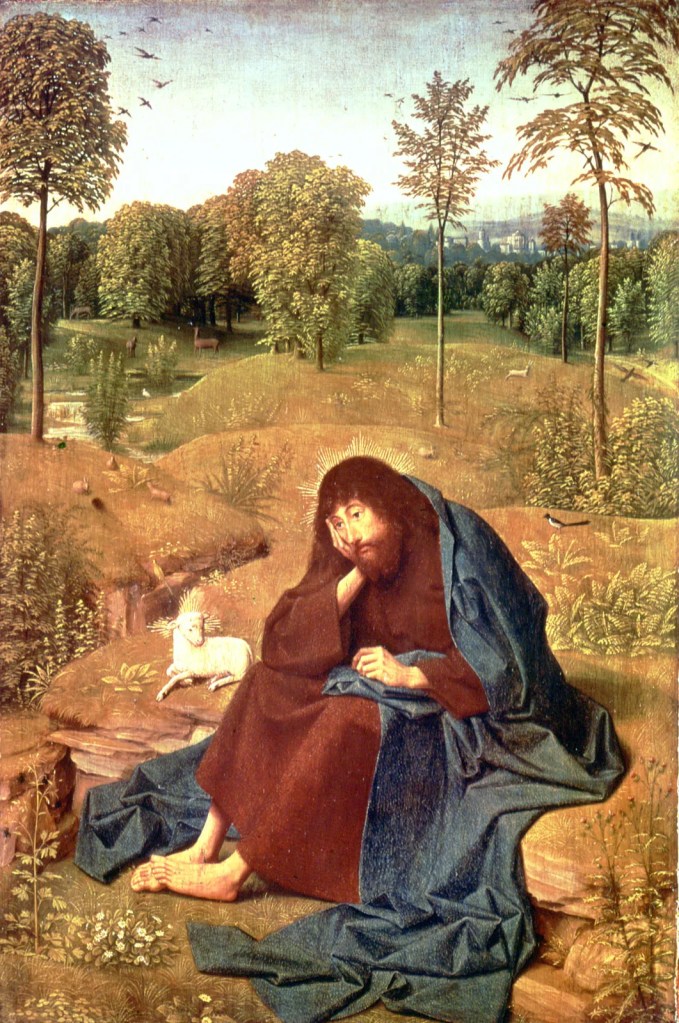
Gold, Myrrh and Frankincense

The Epiphany [A]
January 8, 2023
Matthew 2:1-12

The story has what it takes to be magical. It begins with a long and adventurous journey of people searching for a great treasure, the new-born King. There is also a mysterious star that guides them. Then, the antagonist, in the person of Herod, appears. He seems to be a helpful and sincere guy, but secretly hides his evil intention and plot to destroy the true King. Here comes the twist. The main characters discover their King in the most unexpected way: a little child in a humble house with His poor family, yet He is also Emmanuel, God-with-us. Then, for the finale, the Magi barely escape the mad king as they are warned in a dream and return to their own countries through a different and safer way.

Matthew is a genius storyteller, and allows us, his readers, to be part of the story. Most of us can easily identify ourselves with the Magi. He also leaves some elements ‘incomplete’ so that we may fill them in with our interpretation and imagination. One of those is the Magi’s gifts. Why do they offer gold, frankincense, and myrrh?

One of the earliest answers comes from St. Irenaeus (ca. 200 AD). He said that the gifts represent the identity and mission of Christ. Gold is one of the most precious and expensive metals, and this is for His kingship. Frankincense is a resin from a particular plant and is commonly used for religious ritual, and this is the symbol of His divinity and priesthood. Meanwhile, myrrh is a spice used in burial (see John 19:39), and this points to His death and human nature. St. Thomas Aquinas in his commentary on Matthew explained that these gifts served practical purposes. Gold is to support the Holy Family, who was poor. Myrrh may be used to warm the baby’s body, and frankincense to remove the stench.

Another interesting interpretation is that gold, myrrh, and frankincense are materials used in ancient alchemy and sorcery. Magi (from ‘magos’ and the root word of ‘magic’) were believed to be involved in magical activities, but when they discover Jesus, they decide to give up these things and find a new way in their lives. Thus, these gifts represent the conversion of the Magi to true faith.

However, I am personally inclined towards the simplest interpretation. The Magi offered these items because these gifts were the most precious things in their possessions. They offered the best they had to the true King. This is a fitting gesture of honoring a king as well as worshiping God. In the Bible, acts of worship involve offering the best we have to God. The Magi discovered the true God and worshipped Him. This transformed their lives and brought them joy and salvation.

The story of Epiphany tells us that the human race has a purpose, that is to find its God. We are extremely blessed because we have discovered our God. Yet, the question is: do we wish to worship Him? What will we offer to Him? Are we willing to give the most precious things in our lives? Do we desire our lives to be transformed? Until we offer our gold, myrrh, and frankincense, it is not yet a glorious ending.

Rome
Valentinus Bayuhadi Ruseno, OP

Mary and her Motherhood

Solemnity of Mary, the Mother of God [A]
January 1, 2023
Luke 2:16-21

After eight days (octave) we ponder the mystery of our Savior’s birth, we turn our eyes to the woman who gave birth to the Savior. Therefore, exactly on January 1, we celebrate the solemnity of Mary, the Mother of God. It is once again an opportunity to clarify some misconceptions about this important dogma, as well as to deepen our understanding on her motherhood.

photocredit: Fra Angelicum

The title mother of God for Mary does not mean that she is a god-mother who created other deities. Neither she is a goddess-wife of God the Father. The Church always teaches that Mary is not a god, but a human being. To understand better, we look closely the word ‘mother’. A mother is someone who has a person in her womb and eventually give birth to that person. Mary had the second person of the Trinity in her womb, and in due course, gave birth to Him. Thus, as simple logical conclusion, Mary is the mother of Jesus, the Second Person of the Trinity. In short, Mary is the Mother of God.

However, being a mother is not only about getting pregnant and giving birth. A true mother is a woman who also raises, nourishes and educates her children. Mary did not stop when she gave birth to Jesus in Bethlehem. She did not leave Jesus on the manger and went away. She did not abandon baby Jesus to the Magi or to Herod’s army. With Joseph, Mary protected, nurtured and ‘made big’ Jesus. In fact, Mary was faithful to follow Jesus to His cross and tomb.

How did Mary perceive her identity as a mother? We recognize that when Mary received Jesus in her womb, she was entering extremely perilous situations. She could lose her life because people may stone her, or Herod’s soldiers may arrest and kill her. She endured the life of exile in Egypt, and had to contain with life of poverty. But, did she regret her decision?

The answer we can get from Mary’s song, ‘Magnificat’. “My soul magnifies the Lord, and my spirit rejoices in God my Savior… (Luk 1:46–47)” In Hebrew language, the term ‘my soul’ or ‘my spirit’ is another way to say ‘I’. Thus, Mary said, “I magnifies the Lord, and I rejoices in God my Savior.” Interesting to note is the word ‘magnify’ or literally ‘make big’. What does it mean ‘Mary makes big the Lord’? The Greek word is ‘μεγαλύνω (- megaluno)’ and it is related to Hebrew word ‘גָּדַל’ (- gadal) which means to become physically mature. Therefore, what Mary said is that she physically nourishes the Lord in her womb as well as to make sure the Lord grow into maturity. And in her role as a mother of the Lord, she rejoiced exceedingly.

Mary becomes an antithesis to modern toxic maternity. In our time, many separate sexualities with pro-creation, and even consider fertility as disease. Many see being a mother and having a child are unnecessary burden that must be avoided and disposed. Mary saw things the opposite way. Despite life-threatening situations, Mary accepted her motherhood as integral part of her identity as woman. She saw Jesus in her womb as great blessing, and her participation in God’s will. She knew well only when she fulfilled God’s plan, she found her true joy.

Happy Mothers’ Day!
And
Happy New Year!

Rome
Valentinus Bayuhadi Ruseno, OP
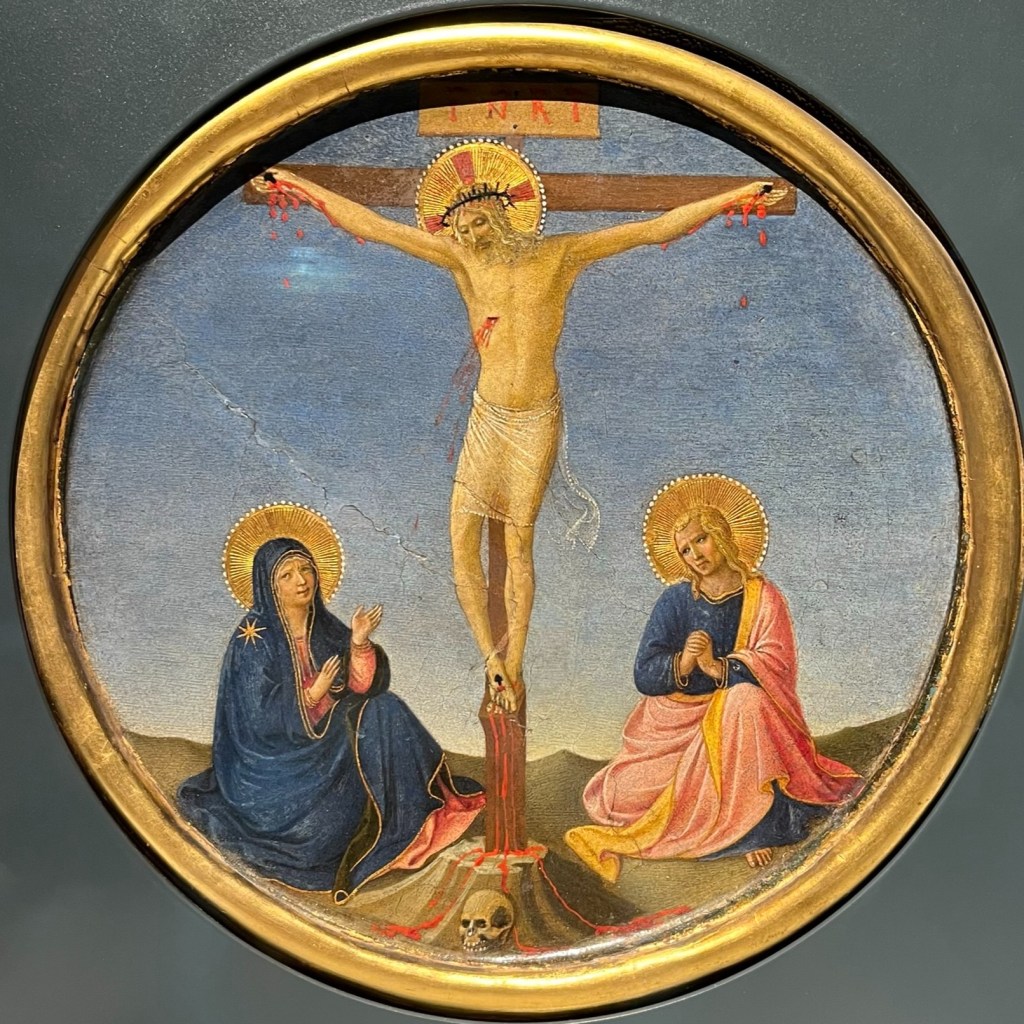
To Name God

4th Sunday of Advent [A]
December 18, 2022
Matthew 1:18-24

To name and to have a name is unique to human beings. To name someone or something is not just a sign of intellectual capacity, but it is also an exercise of authority. When you name someone, in certain way, the person is under your influence. When someone calls our names, immediately and automatically, our attention is drawn to the caller. Surely, we have the choice to set aside this call, but the closer that person to us, the harder it gets to ignore the call. When my mother calls me, my body instinctively moves towards her and listen to what she has to say. That’s how powerful my mother is!

photocredit: Jamie Street

The power of naming belongs primarily to God. In the story of creation, when God named something, it came to existence. When He said, ‘light’, the light came to being. Since God named all creations and brought them into existence, He has the absolute authority over all creatures. Yet, in His providence, God shared this power of naming to men and women. As the authority was shared to humans, they also possessed authority over other creatures.

However, this power is not absolute. Human persons cannot name something beyond them, like angels and surely, God Himself. Thus, to name God is one of the most elusive things in the Old Testament. The patriarchs, Abraham, Isaac, and Jacob have attempted to ask His name, but they failed. The closest one is Moses when he asked the name of the Lord in Sinai, and the Lord answered, “I am who I am” (Exo 3:14). It is like saying, ‘none of your business’. God Himself put as a second commandment, “You shall not take My name in vain.” (see Exo 20). Thus, when the Israelites read the Bible and discovered the holy name of God ‘יהוה’, they would prefer to pronounce ‘Adonai’ (my Lord) or ‘ha-Sem’ (the name). Even, the pronunciation ‘Yahweh’ is an interpretation.

However, as we begin the story of the New Testament, something unexpectedly happened. Joseph and Mary were given the authority to name not just any creature, not just any man, not just any baby. They were to name God-become-flesh, the Creator Himself. They shall name Him Jesus, because ‘He will save His people’. Indeed, the name Jesus is related to the Hebrew word, “יְשׁוּעָה” (roughly: yesuah), meaning ‘salvation or victory’.

The naming of Jesus becomes the breakthrough between God and humans. God does not only want men and women to participate in the work of creation and the authority over lower creatures, but God wishes that we take part in the work of salvation. The former is at the natural level, but the latter is supernatural. As God shared to Joseph and Mary the task to name Jesus, our salvation, so also, Jesus shared to His Church is to name the grace that brings redemption.

When a man and a woman promise fidelity and totality to each other in the name of the Lord, God himself binds them until death, and grace of holiness flows in their marriage and family. When a priest offers the mass, and says the words of consecration, the bread and the wine become the real body and blood of Jesus, and God is truly present among us (Emmanuel). When a priest pronounces the words of absolution, and the penitent is truly asking God’s mercy, the forgiveness of sin takes place. When parents bless their children in the name of the Lord, God’s blessing remains with the children.

Rome
Valentinus Bayuhadi Ruseno, OP

Virtue of Patience and Advent

3rd Sunday of Advent [C]
December 11, 2022
James 5:7-10

St. James advised us in this Advent Season, “Be patient, brothers and sisters,
until the coming of the Lord (Jam 5:7, second reading).” Why do we need to be patient, especially in this season? If we go back to the time of St. James, we will understand better this advice. During the early Church, there was a strong sense of Jesus’ second coming, and the same time, the Church was facing persecutions from different fronts, from the pagans and the Jews as well as internal conflicts. Thus, the Church’s members were truly eager to welcome the Savior’s second coming. Yet, He did not came as early as expected, and thus, some Christians became impatient and were complaining. Even some began to lose its faith. Here, St. James give his word: patient.

photocredit: Jon Tyson

The word used by St. James is ‘μακροθυμέω’ (makrothumeo). Interestingly, it is not adjective, but a verb. Patience is not simply passively waiting and receiving, but this virtue is proactive and dynamic. Often, we think that patience means that we cannot do anything, but endure our hardships. But, it is not always the case. While bearing our trials, patience empowers and transforms us into better persons, and even leads us to holiness.

St. James used the prophets of the Old Testament as his models. Many prophets prophesized the coming of Messiah, Jesus Christ, but they knew that this would not happen in their lives’ times. Even, many prophets were persecuted, even martyred. According to the traditions, Isaiah was sawed into two by evil king Manasseh, and while Jeremiah was murdered in Egypt. Yet, did they stop prophesying? No, they actively engaged in their missions until the end.

We are living two thousand years after the early Church and St. James, and our world has changed and been significantly different. However, the virtue of patience remains relevant and arguably, needed more than ever. We are living in the world filled with instant mechanisms, digitalization and automation. Surely, these are something good as to facilitate our lives. Yet, it also poses a danger to our mentality. As we are used to instant processes, we easily become impatient especially when we did not get the result we desire. We get disappointed, we get upset, and we complain. When our lives are full of complains, we become bitter and unhappy. Sometimes, prolonged bitterness will lead to mental problems.

Before I went to Rome for my study, I was serving the parish in Surabaya. Some young people came to me and began to share their problems. Surely, there were serious problems that required professional assistance, like medical doctor, psychiatrist or lawyer. However, in most of the cases, they were unhappy with their lives because they were impatience. I would invite them to see a bigger perspective in their lives, and count the blessings in their lives. Then, suddenly, they would realize their lives are full of blessings, and their problems were actually exaggerated. In one hand, we just do not have the endurance to bear the sufferings, and the on the other hand, we do not have the patience to articulate the blessings, to discover how God works in our lives.

To appreciate lives, we need patience. We have to spend time and energy with God in prayer, to read and reflect the Word of God, and to perform small yet consistent good works. We may not see the second coming of Jesus in this Advent, but with the virtue of patience, we will be able to see the coming of Jesus in our hearts every day.

Rome
Valentinus Bayuhadi Ruseno, OP

The Scriptures and the Advent

2nd Sunday of Advent [A]
December 4, 2022
Matthew 3:1-12
Rome 15:4-9

For the second Sunday of Advent, the Church has chosen for us a text from St. Paul as our second reading. It is the last part of St. Paul’s letter to the Romans. In a simple sentence, Paul gave an essential purpose of the scriptures. He wrote, “For whatever was written previously was written for our instruction, that by endurance and by the encouragement of the scriptures we might have hope (Rom 15:4).” Let us unpack together this verse as we journey through the Advent season.

photocredit: Jonathan Sanchez

At the time of Paul, 27 books of New Testament as we know now has not yet come to existence. Thus, when Paul mentioned ‘scriptures’ or ‘what was written previously’, he was referring to the books of the Old Testament. These books were originally part of Hebrew Bible, but also accepted, used, and considered sacred by the early Church. Why so? This is because Jesus read, preached, and fulfilled these books. Jesus handed down these scriptures to the apostles and gave them the authority to teach them in His name. This is the reason that we do not throw away the books of the Old Testament, even though, they do not speak directly about Jesus Christ. Yet, it is also important that though we keep and read the Old Testament, we must read them not as a Jewish person, but as followers of Christ and the members of the Church.

Now, Paul explained two fundamental functions of the Scriptures: for instructions and encouragements. The first is instructions, and the Greek word here is ‘διδασκαλία’ (didaskalia), and its literal meaning is ‘teaching’. Thus, through the words of the Scriptures, God teaches us. When a teacher teaches his students, the aim is that the students may have wider and deeper knowledge. As we read and study the scriptures through the guidance of our shepherds, we know God better and deeper, who He is, what His plans for us, and what is His relationship to us.

The second is the encouragement. Paul believed that the words of the God in the scriptures do not only teach, but also encourage us. The original word used by Paul is ‘παράκλησις’ (paraklesis), and it has a range of meanings, but the basic meaning is something or someone that assists us in facing difficulty. Through the words of the Scriptures, God is supporting, encouraging, consoling us in time of trials. From here, we know one of the best things to do in troubled moments is reading and meditating the scriptures.

However, these two goals, instruction, and encouragement, are leading us into a bigger purpose: ‘hope in Christ’. Without hope, the Bible are simply object of research and studies, but it will not bring closer and more intimate friendship with Jesus. Without hope, the bible only contains an encouraging and sweet words, but it never makes us persevere and grow in trials.

The Advent season gives us time to listen to various texts of the Old Testament (both in Sunday and weekly readings) and how these readings are eventually fulfilled in the coming of Christ. And once again, I would like to invite all of us, to spend more time to listen to the words of God this Advent season as our spiritual practice. Aside reading from the Gospel of Matthew, I recommend reading the book of Isaiah for this advent Season.

Rome
Valentinus Bayuhadi Ruseno, OP

Matthew and His Gospel

1st Sunday of Advent (A)
November 27, 2022
Matthew 24:37-44

The season of Advent marks the beginning of the Church’s liturgical year. This time, we enter the year of Matthew (year A) because on most Sundays of this year, we are going to listen and reflect together the texts from the gospel of Matthew. Now, since we will journey together with Matthew, let us be familiar with this evangelist and his gospel.

The origin, composition and authorship of this gospel have become a subject of endless speculation and debates among the modern scholars. However, the long tradition of the Catholic Church has firmly held that apostle Matthew is the author, and many ancient witnesses, like St. Irenaeus (c. 130 – 200), St. Clement of Alexandria (ca. 150-215) and Bishop Eusebius of Caesarea (c. 260 – c. 340) testified that Matthew is indeed the writer.

An interesting characteristic on Matthew’s Gospel is that its Jewish character. It is believed that the original readers of Matthew are the early Jewish Christians. Matthew quoted a lot from the Old Testament (around 60 times). He placed them from the beginning to the end, from ‘… they shall call Him Emmanuel.’ (Mat 1:23, cf. Isa 8:10), to ‘Eli, Eli lema sebachtani (Mat 27:46, cf. Ps. 22:1).’ Not only from Old Testament, but Matthew also used the Jewish traditions at the time of Jesus, like the tradition about Moses’ chair (Mat 23:2). Clearly, Matthew wished to teach that Jesus is the fulfillment of God’s promises in the Old Testament. As a Catholic philosopher and theologian, Peter Kreeft, summarizes the Gospel of Matthew as ‘A Gospel from a Jew, for the Jews about the Jewish Messiah.’

However, despite being very Jewish, Matthew remains firm that Jesus is not only the Savior of the Jews alone, but for everyone. Only in Matthew, we have the story of the Magi, the representatives of the nations that came and worshiped baby Jesus (Mat 2). In Matthew also, Jesus instructed the disciples, “Go therefore and make disciples of all nations, baptizing them in the name of the Father and of the Son and of the Holy Spirit (Mat 28:19).” It is from Israel, for the world.

Another character of Matthew is that it is the Gospel of the Church. Certainly, the other three gospels are also for the Church, yet only in Matthew, the word ‘Church’ (Ecclesia) comes from the mouth of Jesus. Firstly, it is when Jesus would establish His Church on Peter (Mat 16:13-20) and secondly, when Jesus taught fraternal correction among the members of the Church (Mat 18:15ff). The Gospel turns to be the foundation charter of our Church, the Church Jesus has founded. No wonder why this Gospel becomes favorite of many saints.

Going back to the life of Matthew, we know that he was a former tax collector. Jesus called him and he got up, left everything, and followed Jesus. Yet, he did not really leave everything. He brought along his intellectual and scribal capacity that he used as a tax collector and utilized it to write the Gospel and to bring people closer to Jesus.

The season of Advent prepares us for the coming of Jesus, and the invitation is what we shall offer to Jesus when he comes. If Matthew was giving his life and his skill in writing to Jesus, what shall we offer to Jesus in this Advent season?
In this Advent also, I am inviting you to read the entire gospel of Matthew. Let us spend one chapter for each day of this season, as part of our spiritual exercise.

Rome
Valentinus Bayuhadi Ruseno, OP