Pleorexia

18th Sunday of Ordinary Time [C]
July 31, 2022
Luke 12:13-21

Jesus is reminding us about the danger of greed. The word greed in New Testament Greek is πλεονεξία [pleorexia]. The root word is ‘pleora’ and it means ‘full’ or ‘abundant’. Certainly, there is no problem with fullness or abundance. Yet, the word ‘pleorexia’ also includes the ending ‘-xia’, and this ending signifies a problem. Like the word ‘anorexia’ that indicates eating disorder to the point of starving oneself, so ‘pleorexia’ is also a serious disorder. It is sickness in relation to abundance. Unfortunately, unlike anorexia that is recognized as illness that must be treated and healed, greed is considered a normal behaviour and sometimes, celebrated.

photocredit: Josh Apple

In our materialistic world, we are brainwashed that the purpose of life is to have more, to achieve more, and to conquer more. The more you have, the more successful you are as a modern man. Afterall, to possess a lot of money and belongings make our lives easier and pleasurable. Our societies and economics are designed to favour those who have more and can spend more. When we have money to spend, we may enjoy VIP treatments in many places from an exclusive nativity ward to an high-end burial place. To have more also means prestige and popularity. We are wearing branded yet excessively expensive cloths, and using latest gadgets. All these are to show that we are prestigious ones. As we can see, the way of the societies operate makes us believe that greed is normal and in fact, desirable treat.

Jesus reminds His disciples that one’s life is not about possessions, and He reveals the true nature of greed: it is disorder. From the parable of the foolish rich man, Jesus uncovers the disease that many of us are afflicted from. The desire to have possessions as well as be blessed with abundance are not evil in itself because as long as we live in this world, we need this earthly goods. The problem comes when we desire them excessively or seek them as the end of our lives. Why do we desire them excessively? It goes back to our own fallen ego. Like our first parents who desired to possess the forbidden fruits for themselves, we also seek earthly goods for our benefits and pleasures.

Any disorder or illness needs to be treated and healed. The first step is to recognize that we are plagued by this greed. Like any illness, if we do not see greed as problem, we simply see it as normal and refuse to treat it. The second level is to pray to God for healing. The root of greed is our fallen nature, thus, we need God’s grace to heal our wounded souls. Third step is to make a habit to thank the Lord for all the earthly blessings we receive. We recognize that all things come from God and go back to Him. When God bless us with this earthly goods, we remember that these are means for our salvation and His glory.

Valentinus Bayuhadi Ruseno, OP
Teach us to pray

17th Sunday in Ordinary Time
July 24, 2022
Luke 11:1-13

Luke tells us that the prayer ‘Our Father’ comes from Jesus’ mouth because His disciples are requesting Him to teach them to pray. Why do they ask this kind of request? As Jewish people, prayer has to their daily routine. Good Jewish man and woman would recite ‘Shema’ prayer at least twice day. During Sabbath, they would gather in the local synagogues to pray and read the Torah. For those living in Jerusalem, praying, and offering sacrifice in the Temple are their daily pious habit. Then, why are they still asking Jesus how to pray?

The first reason is that they observe that their Teacher is a prayerful person. In the Gospel of Luke, Jesus prays often and has a prayer habit. After whole-day teaching and healing, He would go to a secluded place and pray. The disciples may be curious on what Jesus’ prayer is. The second reason is that Jesus’ disciples hear that John the Baptist teaches his followers to pray. If John instructs his disciples on prayer, why not Jesus? Afterall, Jesus is greater than John the Baptist. Jesus gladly grants the desire of His disciples, and He teaches them on what to prayer [the Our Father] and how to pray [to relate God as our loving Father].

For many of us, prayer is something taken for granted. We pray everyday, and in different moments in our lives. On the top of that, we have also personal devotions like rosary, divine mercy chaplet, visiting the adoration chapel, and many others. Surely, we go to the Church every Sunday to pray and worship God. Prayer is just instinctive and natural to us.

However, if prayer and relation to God is natural to us, why do we need to ask the Lord to teach us to pray? Though prayer and reaching out to God is part of our nature, we still do not have a clue how to approach God properly. In prayers, we ask God almost everything. We request for good health, successful careers, protection from dangers, even for the right spouse. But, do we ever ask the Lord that we will be able to pray well and pleasing to God. Before we ask for anything else, our first prayer is to ask the Lord to teach us to pray according to His will.

The reason why we get disappointed, angry and even give up in praying to God is that we pray the wrong way. We may believe prayer is just another instant way to get we want, or prayer is a means to bribe God. Perhaps, we see God as a game master, and we see prayers as coupons. The many the coupons, the better the prize. Sometimes, we forget to pray to the true God, but simply to our personal idea and reflections of god.

Jesus invites His disciples to understand prayer in the right way. It is a relationship with a loving and wise Father. He knows what we need and what we want, and these things He will give according to His wisdom. God desires us to approach Him in prayer because He seeks loving and intimate union with us. He is ready to bestow the greatest gift for those who seek, the gift of the Holy Spirit, which is the gift of holiness and the gift of friendship with God.

Do we ask the Lord to teach us to pray? Do we desire what God desires? Do we knock for the gift of the Holy Spirit?

Valentinus Bayuhadi Ruseno, OP

Don’t be Distracted!

16th Sunday in Ordinary Time [C]

July 17, 2022

Luke 10:38-42

Martha and Mary of Bethany are often related to two modes of existence in the Church. Martha is the symbol of active or apostolic life, while Mary is the embodiment of the prayer and contemplative life. This tradition has very old root. It goes back to the third century AD, to theologian called Origen (see Fragments of the Gospel of Luke, 171). St. Gregory the Great in the sixth century affirmed this tradition and added the reason: “While both activities are essential to Christian living, the latter is greater than the former. For in heaven the active life terminates, while the contemplative life reaches its perfection. (Moralia, 2,6).” St. Thomas Aquinas of the middle age even gave nine reasons why contemplative life is better than active one! (see ST.II.II. q.182 a.1).

While respecting the long Catholic traditions, the text gives us a hint why Mary chose the better part. Jesus said to Martha, “Martha, Martha, you are worried and distracted by many things; there is need of only one thing. [Luk 10:41-42, NRSV]” Martha was not doing something wrong, and she was serving Jesus. In fact, she was performing her duty as a good host to Jesus. However, by doing so many things, Martha got distracted. Her attention was pull away from the very person she should give most. This is precisely the danger of active life. It distracts us from Jesus.

Meanwhile Mary was sitting at the feet of Jesus and listening to Jesus. The phrase ‘sitting at the feet of someone’ is a biblical technical term for ‘being a disciple of someone’. Like for example, Paul introduced himself as a student of Gamaliel, “At the feet of Gamaliel I was educated strictly in our ancestral law and was zealous for God… [Act 22:3].” Mary chose the better part because she dedicated herself as the true and faithful disciple. She gave her attention, her mind and heart, to Jesus and His words. One of the greatest joys of a teacher is to know the student is listening attentively and able to understand the lessens well.

From Martha and Mary, we learn a deeper meaning of discipleship. Living in this world, we are unavoidably living active lives. We are living in the world where the relation between people and technologies become more and more seamless. Modern people are more concerned with the WIFI connection rather than their mental health. With the pandemic, we discover new mode of life, like ‘WFH’. This even blurs the distinction between work zone and personal and family space. We also face the new mode of worship, ‘the online mass’. This surely hazes the distinction between the sacred and the mundane. Though the faithful start coming back to the parishes, many bring along this ‘online mass’ mentality, and even more distracted during the celebration of the Eucharist.

Certainly, we have so much homework to do. Aside from disciplining our minds and heart during the prayer time and Mass, we also instill a new culture in our lives. We can fill our day with short yet meaningful prayers: at the beginning of the day, before meals, before going to work, before and after our work, when we arrive home, when we bless our children, before we go to sleep. Pray the angelus also. Let the Lord fill in our minds and heart with His presence through the day, and let make our day holy.

Valentinus Bayuhadi Ruseno, OP
We are the Seventy

14th Sunday in Ordinary Time [C]
July 3, 2022
Luke 9:1-12, 17-20

In today’s Gospel, Jesus is sending His seventy disciples for a mission. Yes, we are reading it correctly; it is not just twelve disciples, but seventy. While we are used to the celebrated mission of the Twelve, Luke informs us about the less famous mission of the seventy. We are not sure who are these people. Perhaps, Matthias, who would replace Judas, was among them, but the rest we are almost clueless. However, for sure, these are people who have the same commitment, dedication, and passion like the big names, Peter, John, Andrew, and Matthew. These are the people who let ‘the dead’ bury their dead parents [see Luk 9:59]. These are the disciples that follow Jesus, leave everything and are willing to be dispatched into a difficult mission to preach the Kingdom, to heal the sick, and to drive out the demons.

photocredit: Jun Sahagun

We might also ask why seventy? If Twelve apostles represent the twelve tribes of Israel, what will the seventy signify? Surprisingly, when we go back to the Old Testament, seventy is also a significant figure. It is the sum number of the descendants of Jacob who migrated to Egypt [Gen. 46:27]. It was the number of the elders who were elected to help Moses in his task in leading Israel and to offer sacrifice in the wilderness [Exo 24:1]. Thus, seventy become the symbol of both Israel itself and the leaders of Israel. According to Jewish tradition, seventy is also the number of nations that came down from Noah [see Gen 11]. By choosing and commissioning His seventy disciples, Jesus sends His message to the world that He is establishing His New Israel with its leaders, and this Israel will include all people from all nation.

The story of the seventy disciples reminds us that the disciples of Jesus are not just the twelve. They are many others who have the same level of commitment like the Twelve yet somehow forgotten. While the Twelve represents the well-known figures of the Church like the pope and the bishops, the seventy bring to mind the nameless yet countless priests, religious men and women, and laity who are tirelessly building up the Body of Christs.

Some priests are popular among the laity because of their stormy preaching or funny homily, or actively engaged in social media, but they are countless priests who dedicate their lives to serve God’s people in the rural areas, in the middle of the tropical jungles, or in secluded islands. Perhaps, many of us do not even recognize the name of the priests who baptized us, who made us children of God! Surely, we possess Catholic laypeople who are influential in the society. We are proud of them because they are successful statesmen, businessmen, professionals, athletes, or entertainers that fearlessly acknowledge their Catholic before the public. Yet, the majority of the lay people are serving the Church and the societies without much noise. Perhaps, we do not recognize the names of catechists who teach us faith, or of Sunday School teachers who prepare us for the first communion. Definitely many of us are Catholic parents who dedicate our lives to raise God-fearing kids, but sometimes, misunderstood and unappreciated by our own children.

Our works and service may not be recognized in the eyes of the world, yet Jesus says, ‘do not rejoice because the spirits are subject to you, but rejoice because your names are written in heaven.’ Afterall, holiness is a quiet yet meaningful journey.

Valentinus Bayuhadi Ruseno, OP

Anger and God’s Wisdom

13th Sunday in Ordinary Time
June 26, 2022
Luke 9:51-62

Anger is integral part of human emotions. Since it is part of our humanity, anger as our emotion is God’s gift. Yet, just like other God’s gifts to us, anger serves both as a blessing or a curse. It goes back to our decision to how we will express it.

Photocredit: Miguel Bruna

In today’s Gospel, James and his brother, John were infuriated that Jesus, their beloved master, was not welcome by the Samaritans. They even claimed, “Lord, do you want us to call down fire from heaven to consume them? [Luk 9:54]” We are not sure whether James and John literally had the power to send fire from heaven, or it is just an expression that they would retaliate in a violent manner. Yet, Jesus rebuked them, and worse things were averted.

Yet, who are these Samaritans and why were Jesus’ disciples so irritated with them? The Jews and the Samaritans shared a long and yet problematic history. It begins with 10 Israelite tribes that seceded from the Kingdom of David after Solomon passed away. They formed the Northern kingdom, and later, their capital was at Samaria. While two tribes who were loyal to the David’s line, called themselves the Southern kingdom. Unfortunately, in 722 BC, the Assyrian empire came and crushed Samaria. Many of them were exiled to Assyria, and the empire brought people from other nations to settle in former Northern kingdom’s land. Thus, the interactions between the foreign immigrants and the Israelite remnants were unavoidable. Israelites from the South recognized the Samaritans as foreigners, mixed breeds, or idolators, while the Samaritan continued to believe that they are the remnants of the 10 tribes of Israel. In time of Jesus, the Samaritan would harass the Jewish pilgrims going to Jerusalem, while the Jewish people refused entry to their towns for the Samaritan.

With the long enmity and sour incident, James and John had the right to get angry, but why then did Jesus rebuke them instead? It is interesting to note that in the future encounters, Samaritans would receive Jesus and believe in Him [John 4; Act 8]. Jesus knew well that Samaritan was not a hopeless case, yet more importantly, anger-turn-violence is not the solution. Jesus recognized anger is integral to our human nature, but violence brings more anger. It is vicious cycle.

Often, we only know violence as expressions of anger. Some of our parents disciplined us using harsh words, and sometimes physical violence. A husband uses his violence to dominate his control over his wife. In the schools, sometimes, we find other students who bully us. When we are online, we read all kind of cursing, body shaming, and vulgar words and pictures. In the workplaces, people with higher positions vent their wrath to those who are in the lower position. Abortion is one of the most brutal act of parents to their unborn babies.

How then do we prevent our anger turning violence? Firstly, we need to recognize and own our anger. Do not suppress it because suppression is another kind of violence towards ourselves. Secondly, we ask what the root of our anger is. Is it justifiable? Or is it coming from our pride? Thirdly, we think for the best options to express our anger. Surely, it is not easy, especially when violent ways are deeply rooted in our characters. Yet, we can always rely on God’s grace, and start with small and simple steps.

Valentinus Bayuhadi Ruseno, OP

The Real and Saving Presence

The Solemnity of Corpus Christi [C]
June 19, 2022
Luke 9:11-17

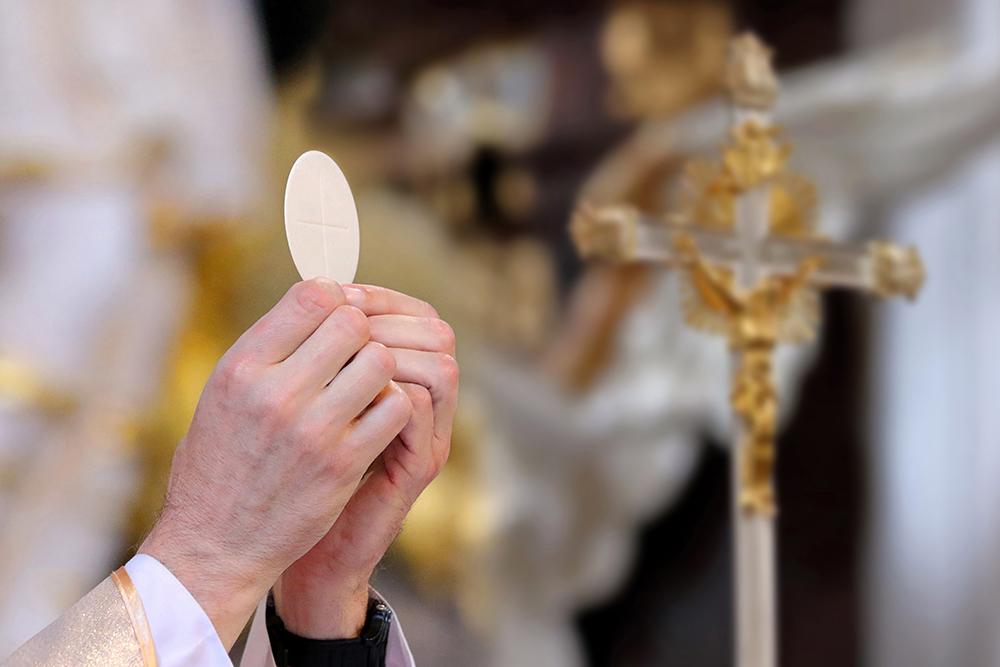
The feast of Corpus Christi draws our intentions into the one of the greatest mysteries. In the Eucharist, especially when the priest says the words of consecration and lifts the bread and the chalice of wine, the greatest miracle takes place before our eyes. The sacrifices are no longer bread and wine, but the Body and the Blood of our Lord Jesus Christ. Since the living body and blood cannot be separated from humanity of Christ, we receive the entire humanity of Jesus. Sine the humanity of Jesus cannot be severed from His divinity, we have the entire humanity and divinity of Christ. In the Eucharist, we partake the totality of Christ.

How is it possible? The greatest minds the Church has ever had tried to explore the mystery. St. Thomas Aquinas has distilled the saints and the genius before him, and he came up with a fancy term, ‘transubstantiation.’ Simply put, the substance of bread and wine are changed into the substance of the Body and Blood of Jesus, while the old appearances remain. When we ask ‘what is it?’ we no longer answer bread and wine, but the Body and Blood of Christ, despite what we see is the appearance of bread and wine. How is it possible? The only answer is miracle!

It seems like non-sense, but our faith tells us that nothing is impossible for God. If God could and did create the universe [or multiverse], if God could fashion the hierarchy of angels, if God is sustaining sub-atomic particles and prevents them going back to nothingness, if God could make a miracle called life, God can easily bend time and space and be present in the Eucharist.

In fact, this is the greatest miracle. In the Gospel, Jesus performed miracle of the multiplication of bread for five thousand men. Jesus’ miracle is just second to the miracle of manna in Exodus, where God provided food for thousand Israelites in the desert for forty years. Yet, even these miracles fail in comparison to Eucharist. Why? While the miracle of Manna in Exodus and the multiplication of bread in the Gospel are off-the-chart miracles, they primarily address human biological needs, or bodily hunger. The Eucharist, in the other hand, does not primarily solve the world hunger, but fills the deeper spiritual hunger.

The more fundamental question is why? As Jesus promised, “Those who eat my flesh and drink my blood have eternal life, and I will raise them up on the last day [John 6:54]” The Eucharist is for us and for our salvation. God so loves us to the point that He became a man like us, and not only becoming a man, He offers His life as a sign of His most profound love. Yet, for Him, the cross is not enough. He keeps giving His body and blood, His total self to us. There is no greater love that to lay down one’s life for one’s friends [John 15:13], and Jesus offers His life again and again in the Eucharist. This is how much God loves us!

Valentinus Bayuhadi Ruseno, OP

Trinity: the Basic and the Mystery

Trinity Sunday [C]
June 12, 2022
John 16:12-15

Sunday after the Pentecost Sunday is dedicated to the Most Holy Trinity. it generally turns to be the most dreaded Sunday for many preachers. The truth is indeed difficult to understand, to the point that many priests have neither courage to preach nor proper knowledge to explain. Yet, the Church insists that once a year we go deeper into the mystery of all mysteries, the truth of all truths. Thus, we begin with simple question: why Trinity?

photocredit: Mark Jennings

The answer is not difficult. It is the Truth! It is the Truth that God Himself reveals to us through the Scriptures and the Tradition. Why not teaching a simple concept about God, why giving the people a high complex understanding of God? The simpler truth is not truer than the more complex truth. A simple additional is not truer than sophisticated calculus. In fact, oversimplistic truth can lead to errors.

There are at least three basic errors or heresies about Trinity. The first one is polytheism. Christianity is not polytheistic religion. Trinity is not three gods or tritheism. The holy Trinity is one God in three divine person. The second error is modalism. This teaches that there is only one God and He uses three ‘modes’ of existence or appearance. God appears to be the Father when He created, to be the Son when He saves us, and to be the Holy Spirit when He sanctifies us. It is like a water. Sometimes, water is in the state of liquid, but it can be also solid or gas. Thus, the distinction of the divine persons are not real. The third and final heresy is Arianism. This teaching comes from Arius, a priest of Alexandria, in the fourth century. Simply put, Arius taught that Father is the only true God, while the Son and the Holy Spirit are real, but not the true God.

So, how do we get the correction understanding of Trinity? To help us, we shall need a little help from the Fathers of the Church who employ the terms ‘nature’ and ‘person.’ They seem complicated, but they are actually not. Nature answers the question ‘WHAT is it?’ while person answers ‘WHO is it?’ For example: what is Joseph? Joseph is a man. Who is that man? He is Joseph. Joseph’s nature is human, and Joseph is a person.

Let us apply this to God. What are the Father, and the Son and the Holy Spirit? One God. They are not three gods, because the divine nature cannot be divided, and each possesses the divine nature perfectly. Who is this God? The Father and the Son and the Holy Spirit. One divine What in three divine Whos!

The truth is a hard to swallow, but we continue to live and honor this greatest mystery because in the end, we are going to live in this divine love of the Holy Trinity.

Valentinus Bayuhadi Ruseno, OP

Holy Spirit and Birth of the Church

Pentecost [C]
June 5, 2022
John 14:15-16, 23-26

The Pentecost is the traditional day of the birth of the Church. If the many scholars agree that Jesus’ crucifixion and death falls on April 4, 33 AD, the date of resurrection is April 6 of the same year. From here, we can trace the date of the first Pentecost. Fifty days later is May 25, 33 AD. So we have the date! Yet, the more fundamental question is why do we consider Pentecost as Church’s birthday?

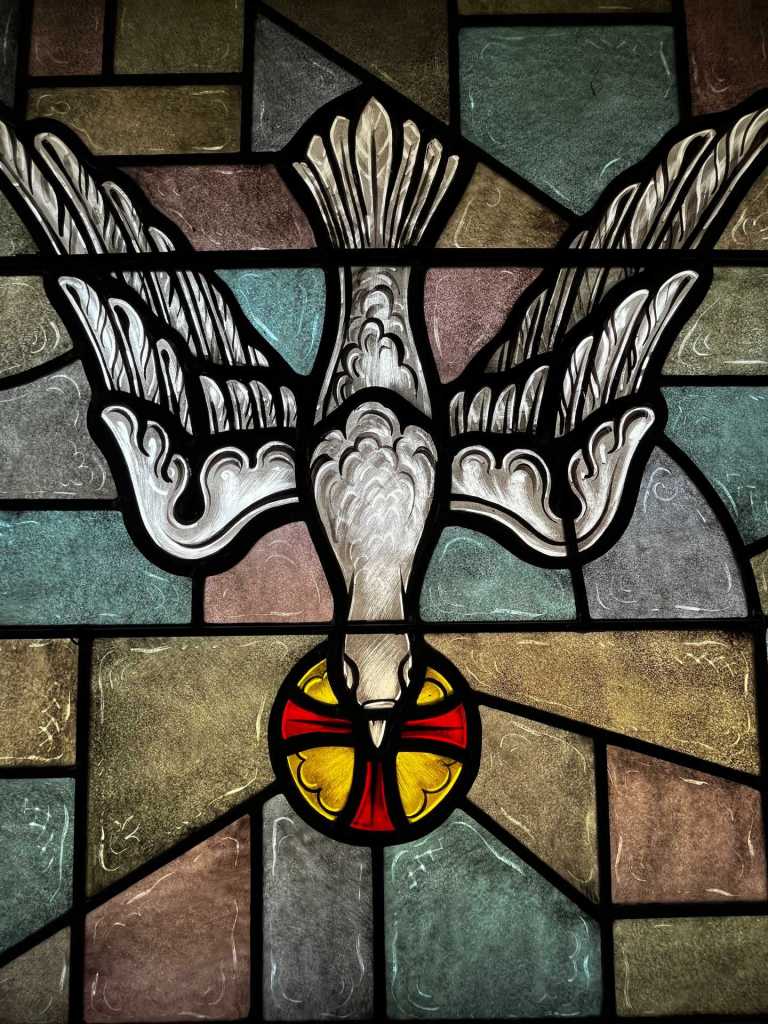
The main reason is the Holy Spirit. During the day of Pentecost, the Holy Spirit filled the disciples’ hearts and the minds with His divine presence and His gifts. The first gift is preaching the Gospel of Jesus Christ. The gift of speaking in different languages is indeed amazing, yet before this miracle, the Holy Spirit empowered them to share the Good News.

If we try to look back, the disciples were terrified and confused. Jesus, their beloved teacher, and the expected Messiah was suddenly arrested, and swiftly condemned to death. Jesus’ followers were scattered, and the community of disciples was broken. One betrayed Jesus, another denied Him, and the rest were running away like cowards. Even, after they received the news of resurrection, they kept afraid and were even more puzzled. Jesus had to come in person to show the proof of the resurrection as well as to forgive them, to strengthen them, and to teach them the meaning of His passion and resurrection. However, despite the risen Lord’s presence, there remained an innate fear and uncertainty of their future.

When the promised Holy Spirit came, courage and wisdom entered their hearts. The Spirit empowered them to break out from the prison of fear, and to preach that Jesus Christ is Lord. We look at Simon Peter. When his personal safety was threatened, he was quick to deny His beloved master, not only twice, but thrice. Together with other disciples, Peter hid themselves from the Jewish authorities in the upper room. He even had a difficult time to understand the meaning of resurrection. However, after the outpouring of the Holy Spirit, cowardly Simon turned to be a new person. Before the people, he fearlessly proclaimed that Jesus is the Savior and God. During the day of Pentecost, he preached and three thousand people who listened to him became believers!

Surely, it is not only Simon Peter, but also other disciples, and thus the Church. From the day of Pentecost, the disciples did not only stay in Jerusalem, but they went to different places in around the world. Peter went to Rome, Andrew became a missionary to Greece, Thomas reached as far as India. Without the Holy Spirit, the disciples had not dared to go and preach; without preaching, there would not be new disciples; without growth, there would not be the Church. This is the reason that the day of Pentecost is the birthday of the Church.

Yet, the Holy Spirit does not stop working at the first Pentecost. He continues giving us growth to us, the Church. Through the baptism we received the Spirit Holy that makes us children of God. During the confirmation, the Holy Spirit transforms us to be the courageous witnesses of Christ. In the Eucharist, the Holy Spirit comes and brings us the Body and Blood of Jesus. If we believe that Jesus is the Lord, it is the Holy Spirit. If we keep believing in Jesus, despite many difficulties, it is the Holy Spirit. If we are able to forgive our enemies, it is the Holy Spirit. If we are able to stay faithful to our vocations, it is the Holy Spirit.

Valentinus Bayuhadi Ruseno, OP

Why do we obey Jesus?

6th Sunday of Easter [C]

May 22, 2022

John 14:23-29

There are at least three reasons why someone obeys. The first reason is that fear, and fear is a potent motivation. Fear commonly becomes the foundation of master-slave relationship. Slaves do things because they are afraid of their master’s punishments. They fear the pain, and yet paradoxically, they turn to be dependent to their master as they would do anything their masters order without much thinking. Sometimes, we see God as a kind divine master of slaves, and we obey God’s word and rules because we are afraid of punishments. In turn, we become rigid also to others who fail to do God’s commandments or Church’s precepts.

photocredit: Austin Kehmeier

The second reason is profitability. Benefit or profit is another strong drive of life. Profit-oriented motivation usually is reflected in business relationship or contract. People follow their boss or the contracts as long as it is profitable. The moment it is no longer beneficial for them, they stop obeying. They either go disappointed or get angry. Sometimes, we treat God no more than just a business partner or a company boss, and we go to Him when we feel beneficial for us. We pray when we have troubles and want God to fix everything in instant. We go to the Church when we need to feel blessed. Yet, when we do not get what we what, either we are frustrated or get angry.  

The ultimate reason is love. This motive is extraordinary because unlike fear and profit, love gives us neither external punishment nor rewards. Love flows from within and fills others with goodness. Relationship based on love can be seen in friendship. Genuine friends care and do good for one another, but they do not fear each other neither seek only the personal benefits. True friends stay in times of troubles, and true friends remains despite getting nothing in return. They simply know what the right things to do, and they do it for the sake of their friends. Thus, ‘friends in need are friends indeed.’

Jesus understands this dynamism very well, and thus, He does not call His disciples ‘slaves’ but ‘friends’. “You are my friends if you do what I command you [Jn 15:14].” The true drive in obeying and faithful to Jesus is love, and not fear or profit. Why? Because our God is neither cruel master that looks for mistakes nor a boss who constantly monitors our performance. Our God is love.

 Love begets love, and love demands love. Jesus loves His disciples to the end, and His only demand is to love Him to the end. Yet, the paradox is one cannot coerce true love. Despite Jesus binds us with the commandment of love, He does not force, and because of that, there is always possibility of betrayal and denial. However, despite these ugly possibilities, Jesus continues loving us because He cannot deny Himself who is love.

We are primarily slaves nor employees of God, but we are His friends of Jesus. Thus, we ask God for the necessary grace to live our identity as good friends of Christ.

Valentinus Bayuhadi Ruseno, OP

Why Love

5th Sunday of Easter [C]
May 14, 2022
John 13:31-35

Jesus is giving His disciples a new commandment: to love one another. This is not just a recommendation, advice, or suggestion. It is a commandment, and therefore, it is a must to do. What is more interesting is that Jesus consciously connects His New Commandments with the old ones: the Ten Commandments. What are the connections and why does Jesus make this new commandment?

photocredit: Jon Tyson

If we go back to the historical context of the giving of the Ten Commandments, the Israelites were just miraculously freed from Egypt, and they camped at Mount Sinai. There, God came and offered His covenant: The Lord will be their God, and Israel will be their people. Then, God gave the Ten Commandments and other laws as the basic constitutions of what it is to be the people of God. By obeying and living these Commandments, they were going to be the holy nation. They were a nation different from other nations, but a nation separated for God.

Fast forward to Jesus’ Last Supper, Jesus gives the New Commandment. Connecting with the Old Testament, Jesus’ commandment is not just a must to do, it is also our constitutive identity as Jesus’ disciples. This is the commandment that makes us different from the rest. No wonder Jesus explains to His disciples, “By this everyone will know that you are my disciples if you have a love for one another [John 13:35].” This is the commandment that makes us holy, set apart from the others and for Jesus.

However, to love is tough. To love someone means we become vulnerable, and we are open to the possibility of getting hurt. We are betrayed by people we love and trust, our friends, our spouse, our brothers, and our children. I am a priest for barely three years, but living in Surabaya, one of the major cities in Indonesia, I have to listen to a good number of people with broken relationships in marriages and families. I am saddened by the terrible situations that they have to endure, and I cannot help much. Sometimes, people must bear the painful consequence of broken relationships throughout their lives. Wounded by betrayal, we tend to build walls around our hearts, and our capacity to love is gradually dwindling.

Why does Jesus insist on love, to the point of making it the new commandment? The answer is that love is who Jesus is. ‘Love one another as I have loved you!’ Jesus loved His disciples, but after the Last Supper, a disciple betrayed Him, another denied Him, and many were abandoning Him. The people He loved dearly, crucified Him. Yet, Jesus was never a helpless victim. He entered His suffering willingly, and He transformed His death into an act of total self-giving. Jesus knew that His disciples would do terrible things, but He chose to celebrate an intimate Last Supper with them. He forgave people who crucified Him. He gave His dying love to His mother and the beloved disciple. Even death does not stop Him from loving. He has to rise again and bring forgiveness and peace to His disciples. He then sends His Holy Spirit as a sign of His abiding love.

To love fully and sacrificially is our identity as Jesus’ disciples. Though loving is often tough and sometimes, heart-breaking, love is who we are as God’s image. There is no way to heaven except the way of love.

Valentinus Bayuhadi Ruseno, OP