Christ, the King of Our Lives

The Solemnity of Our Lord Jesus Christ, King of the Universe [B]
November 21, 2021
John 18:33-37

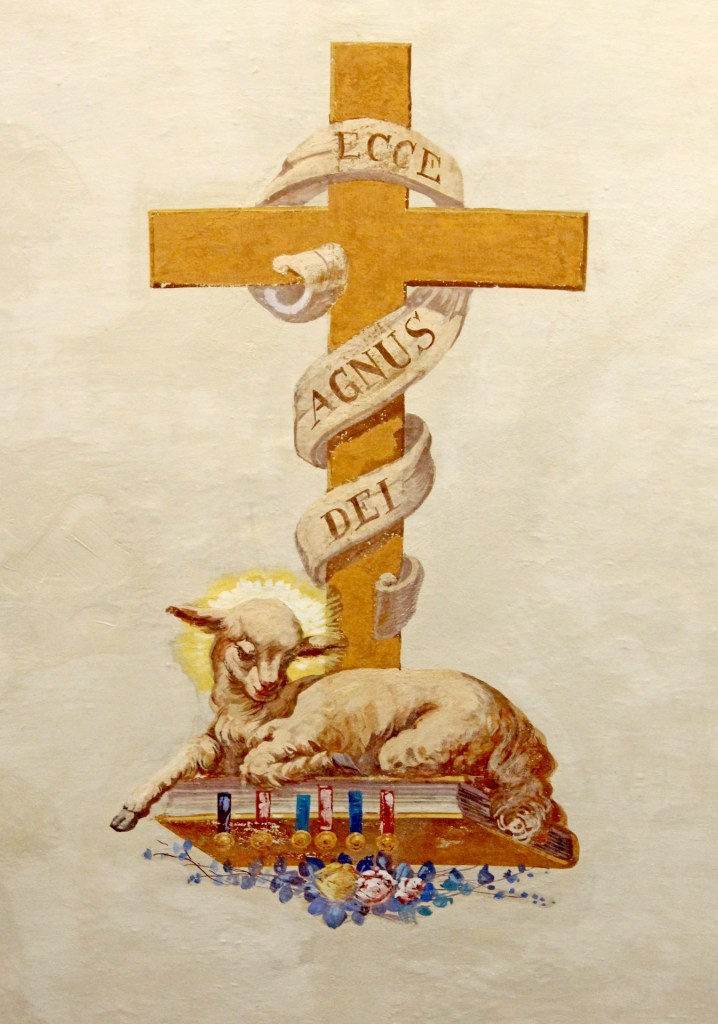
Christ the King Sunday is the ultimate Sunday of the Liturgical Year. The feast is a fitting reminder for all of us that, in the end, Jesus is our king. Yet, we do not have any idea what it means to be a subject to a king for many of us. Some may have kings or queens as their heads of state, but ordinarily, they do not involve in our daily lives. In fact, we have only very few absolute monarchs in the world, like the Sultan of Brunei, King of Saudi Arabia, and the Pope!

Living in modern societies, we cherish and value personal freedom and autonomy. We fight for our fundamental rights, and we go to the courts to demand justice. The violations of human rights are considered serious crimes. We decide how we want to be governed by electing our desired public officials. We choose where, how, and with whom we want to live. Those who want to limit our freedom are tyrants and dictators. Thus, when we celebrate the feast of Christ the King, this royal title of Jesus does not mean too much for us. We can easily relate to Jesus as our friend and brother, but not Jesus as our king.

Yet, in the Gospel, Jesus as a king is one of His most fundamental identities. Jesus is called the Christ, meaning the anointed one, and this title refers primarily to a king like King David. Jesus begins His ministry by building the Kingdom of God and chooses twelve apostles as the new tribes of Israel. His actions only make sense if Jesus is the king of that kingdom. In today’s Gospel, Pilate asks Jesus whether He is a king, and Jesus gives His affirmative answer. On the cross, the repented criminal says to Jesus, “remember me when you come as a king!” In fact, on His cross, His identity is written, “Jesus King of the Jews.”

What does it mean to have Jesus as our king? Why does it matter to us? The answer is that it is all that matters. Jesus is not only a king, just like any other kings, but He is also the author of our being. He designs our nature that we will only arrive at our true purpose in God. Thus, accepting Jesus as our king, and living according to His plans, is our sure path to true glory and happiness.

The devil knows this too well, and he seduced our first parents to believe that they can be ‘gods’ without God. The same strategy is still employed today, and we are made to think that freedom apart from God is what we need. We are trying to control everything in our lives, boost our egos, and play little gods. Yet, this is the source of our frustration, worries and unhappiness. Only when we die to ourselves and once again allow Jesus to reign in our hearts, we are the freest and authentic.
Live Christ the King!

Valentinus Bayuhadi Ruseno, OP
photocredit: Daniel Gutko

Repentance and the End of Time

33rd Sunday in Ordinary Time [B]
November 14, 2021
Mark 13:24-32

We are nearing the end of the year. We are in the middle of November, and we are going to end 2021. At the same time, we are at the 33rd Sunday in Ordinary Time, and next week, we will celebrate Christ the King, the ultimate Sunday of the Liturgical year. Thus, the Church provides us with the Gospel that speaks about the end.

Danie Franco

Jesus was with his disciples on the Mount of Olive just at the east side of Jerusalem, facing the Temple. One of His disciples claimed that the Temple was magnificently built, and indeed, it turned to be one of the ancient wonders. The building was constructed by putting together thousand massive stones. One stone block could even reach more than 10 tons. Not only imposingly grand, but it was also majestic. The gold and precious stones adorned this holy structure. No wonder if people would expect that the Temple would last forever.

However, Jesus disagreed. He pronounced His judgment over Jerusalem, and the Temple would be burned and destroyed just within a generation after Jesus. Indeed, Jesus’ judgment became a reality when in 70 AD, Titus and his Roman army besieged and eventually razed Jerusalem to the ground. Josephus, a Jewish historian, narrated that a hundred people were crucified every day during the siege and people inside the city resorted to cannibalism to survive. The Temple was burning, and after some time, the most beautiful edifice in ancient times was nothing but ruins and rubbles.

Why did Jesus pronounce such terrible judgment to the city of Jerusalem, to the sacred place in Israel? Jerusalem, especially the elders, rejected Jesus, and refusing Jesus means to deny God Himself. This was not, however, that the first time. In the Old Testament, the prophets kept warning the Israelites to return to God. However, most of the time, Israel, represented by its kings and priests, declined the call and even persecuted the prophets of God. The Kingdom of Israel was eventually facing its judgment. The Assyrian empire decimated the northern kingdom in 721 BC, and the Babylonian empire exiled the southern kingdom in 587 BC.

Jesus was not acting like a pessimistic prophet of doom. Jesus resurrected the message of the prophets. The message of the Gospel is repentance. We are called to believe in Jesus, which is not only in our lips but also in our lives. Jesus criticized the religious leaders in His time, both the priests and the laity. They performed their religious duties for a show but secretly committed crimes against the poor of Israel. If we fail to repent, we might court the same disaster.

Often, I hear some people say, ‘I will confess my sins when I am old.” Or, “I do not need to change because when I am dying, I will receive the anointing of the sick, and I will go to heaven.” This kind of thinking is dangerous. Why? Firstly, it is an abuse of grace, a severe sin. Secondly, if we do not repent now, the more obstinate, we become, and the harder it is to get out from our vices.

Jesus’ judgment might be about the end of Jerusalem and the world, but the core is about repentance here and now.

Valentinus Bayuhadi Ruseno, OP
Photocredit: Danie Franco

God will not be Jealous

31st Sunday in Ordinary Time [B]
October 31, 2021
Mark 12:28-34

A few days ago, I gave a seminar on the rosary, and I received a tricky question, “What if our devotion to the Blessed Virgin Mary make us love Mary than Jesus?” Honestly, my instinctive reaction was that our love for Jesus should be greatest to anyone or anything. I could not be wrong with that answer. However, the same question bothers me. If to love Jesus is the only thing matters, why should we love His Mother, why we should honor St. Joseph, His foster father, and why should we serve His Church? Then, I realized that with this logic, I could say that a husband does not have to love his wife totally, just Jesus; a mother does not have to take care of her children fully, just Jesus; a priest does not have to serve his people committedly, just Jesus. This logic may be misleading.

photocredit: Francesco Alberti

Today’s Gospel tells us Jesus, who teaches us the first of all commandments: To love God with all our hearts, with all our souls, with all our minds, and with all our strength, and secondly, to love our neighbors like ourselves. Interestingly, Jesus does not say only to love God with what we have is enough. He adds the second commandment: love our neighbors, and the Second Law is inseparable from the First Law. The key is that to love our neighbors is part and parcel of loving God.

Our love for the Blessed Virgin Mary, like our love for our family and friends, is not in opposition to Christ. St. Joseph, St. Padre Pio, St. Dominic are not competing with God in winning our loves. Our love for our neighbors is an expression of the love of Jesus. St. Bernard of Clairvaux, in his treatise ‘On the Love of God’, wrote that the highest kind of love is to love ourselves and others for God’s sake. To put it simply, the more we love the Blessed Virgin, the more we love our family, and the more we love Jesus. If we go deeper into the Bible, we will discover that God is love [1 John 4:8]. God is not competing with your family and friends and feeling jealous when sometimes you prioritize your kids. God is the love that binds us with our loved ones. The more we authentically love our neighbors, the greater God is our hearts.

How do we apply this truth in our daily lives? Indeed, there are times, we need to choose between God and other things, like the state. St. Thomas More, when he was about to be executed, said, “the king’s good servant, but God’s first.” Yet, these are exceptional cases. Most of the time, to love God and to love our neighbors go together. During Sundays, we can bring our children to the Church and worship together as a family. Every night, couples can spend time together in prayer of thanksgiving. In October, families, and communities can pray together the rosary. We are growing closer to each other, closer to our Mother, and even closer to God.

Valentinus Bayuhadi Ruseno, OP

True Vision

30th Sunday in Ordinary Time [B]
October 24, 2021
Mark 10:46-52

The story of Bartimaeus is arguably one of the most compelling and beautiful stories in the Gospel. It speaks of a man crushed by unimaginable hardship who relentlessly seeks redemption and meaning in his life. He has to live with blindness and has been struggling with darkness his entire life. Things get worse as a society, and perhaps his family rejects him as a failure. Instead of getting proper help as a person with disabilities, he must face the cruel reality of discrimination. To survive, he must beg from those people who go in and out of the city of Jericho. I do not think that Bartimaeus is some lazy guy who squanders the government’s social program. He is genuinely a victim of an oppressive system. He is the wrong man in the wrong place and at the wrong time.

photocredit: ryoji Iwata

When Jesus is passing by, Bartimaeus does what he does best: to beg. He recognizes Jesus as the Son of David, the long-awaited Messiah, and begs for pity. Jesus hears his cry for help and calls him. However, something is interesting takes place. Jesus asks him, “what do you want me to do for you?” at first glance, the question seems silly. Of course, Bartimaeus longs to see! Yet, why does Jesus ask that question despite the apparent fact?

Jesus certainly knows what Bartimaeus needs, yet Jesus, as a good teacher, guides him to articulate his deepest desire. Then the miracle happens on a much deeper level. Bartimaeus no longer calls Jesus, ‘Son of David,’ a royal Messiah, and powerful king, but he addresses Jesus as ‘Rabouni’ [my teacher]. Bartimaeus is not simply longing for a perfect 20/20 vision, but fundamentally an intimate communion with Jesus: from a respectful yet distant relation between king and his subject to a warm and empowering friendship between a master and His disciple.

Thus, Bartimaeus’ second request, ‘I want to see,’ must be understood in this light. When his eyes are opened, the first person he sees will be no other than Jesus, his beloved master. His vision is meaningless unless it is to see Jesus. His deepest desire is to see Jesus and to be with Jesus. No wonder if the story ends with Bartimaeus following Jesus in His way.

The story of Bartimaeus is impactful and classic because his story is ours as well. We are blinded by many things that make our souls destitute and lamentable. We are chasing things that impoverish our spiritual lives. We may have the best the world can offer, but we know that we are missing something.

Beato Carlo Acutis famously said, “We are born original, yet many die as photocopies.” We are all born as God’s beautiful and unique image, but as we grow as ‘photocopies’ of celebrities, we watch on TV. We are looking up to social media influencers who parade their sports cars and wealth. We are imitating ‘charismatic’ public figures who do not live virtuous lives. We are blinded and soon die as ugly ‘photocopies.’ Thus, following the lead of the excellent teacher, we need to articulate what our deepest longing in this life is. Hopefully, like St. Thomas Aquinas, we will be able to say, “Nothing but you, O Lord!”

Valentinus Bayuhadi Ruseno, OP
photocredit: ryoji iwata

The Greatest Power

29th Sunday in Ordinary Time [B]
October 17, 2021
Mark 10:35-45

James and John are seeking second-most prized positions in the kingdom. To be seated at the king’s right and left means to co-reign with the king himself. Going back to the Old Testament, one who was seated at the right of King Salomon was no other than his queen-mother, Bathsheba. The king himself highly respected the queen-mother, and she was wielding considerable power [1 Sam 1 – 2].

photocredit: jasmin staab

What makes this episode more intriguing is that James and John attempt to grap this position by the shrewd plot. They go directly to Jesus and seize the opportunity when the rest of the disciples are busy with other things. Indeed, when the other disciples are aware of their plot, they become indignant. Why? They also desire the same spot and the power it brings.

Why is it that the disciples are obsessed with power and position? Why do we want power so badly? Simply put, power is the ability to control oneself and others. When we can do what we need to do and what we want to do, we are powerful. When we can control and influence others, we are even more powerful. When we are powerful, we are in control, and when we are in charge, we feel good about ourselves. No wonder if we want power.

Is power something terrible? Not at all! Like other things in this world, power may serve a good purpose. With power, we can perform things that make us grow and achieve our fullest potential. With power, we can help others, and the community achieves progress, prosperity, and the common good. With power, we can prevent others from harming themselves and others. However, like other earthly things, power is susceptible to abuse. The same power can be used to manipulate and destroy ourselves and others.

Jesus understands well the dynamics of power. He does not teach that power is evil, nor something to be eliminated. Instead, He points out the true purpose of power. Jesus shows that power is not about having military might or economic forces. The genuine use of power is to serve one another. Jesus even goes one step further that the freest and most powerful man is the one who freely gives up his life so that others may have life to the fullest. True power is not about having and accumulating more power and control but giving and empowering others. Power corrupts when inside our hearts are slaved by sins.

What is impressive about power is that practically everyone has it. Now, it is up to us to use this power to serve others or to destroy them. A mother may exercise her power over her baby in her womb by taking care of the baby, but the same mother may use her power to destroy and abort it. A priest can exercise his power to sanctify his people and educate them in the ways of the Lord, or he can use them to gain a more comfortable life and even popularity. Jesus reminds us that there is no greater power than one who freely offers his life so that others may live to the fullest.

Valentinus Bayuhadi Ruseno, OP
photocredit: jasmin staab

Jesus and the Rich

28th Sunday in Ordinary Time
October 10, 2021
Mark 10:17-27

When the rich man begged for eternal life from Jesus, He mentioned the two most fundamental tenets of the Jewish religion: the ‘Shema’ and the Ten Commandments. Shema is the first Hebrew is ‘Hear O Israel, the Lord is God, the Lord alone…” [Deu 6:4]. Shema has become a basic prayer and creedal statement for the Jewish people since Jesus’ time. A good Jew will recite ‘Shema’ at least thrice a day. Jesus slightly modified Shema when He said, “…Only God alone is good.” Jesus also recited the Ten Commandments, at least the second half of it. Jesus emphasized the rich man’s obligations to do good and avoid harm to others.

Jesus seemed to tell the man that living the Shema and doing the Lord’s commandment was what he needed to do to gain eternal life. However, there was an intriguing twist in the story. The rich man said that he had done that since he was young. Now, instead of feeling satisfied with his accomplishment, he felt something remained missing. Despite doing what the Law required and believing in one true God, he did not find what he was honestly longing for. He expected Jesus to give him the answer, the missing link.

Jesus recognized the sincerity of the man and loved him. Jesus offered him the final piece that would solve his life’s puzzle: to follow Jesus. Yet, through His divine wisdom, Jesus was able also to identify one enormous obstacle to follow Jesus and gain eternal life. This man was attached to his wealth. Thus, the solution was to radically detach himself from the wealth, like ‘camel through an eye of a needle.

Is wealth evil? Not at all! Material possessions are good because this too is created by God and God’s blessing. St. Paul reminded us that evil is not the richness itself but the love of money [1 Tim 6:10]. Wealth is good if it serves as a means to an end and not the end itself. Jesus allowed Himself and His ministry to be supported by resourceful men and women.

To follow Jesus means using our wealth to serve God and help others, especially the poor. To follow Jesus means that we recognize that richness is God’s blessing to be shared. To follow Jesus is acknowledging that pursuit of earthly possessions without God is bound to lose God, the source of all wealth.

However, following Jesus and making our other priorities like money, fame, and success as means rather than the end is a radical choice. These earthly possessions often give us an instant pleasure and feeling of security. With a lot of money, we can do what we want and have what we desire. Yet, these pleasures and security are nothing but a mirage. In 2008, the financial crisis hit many countries hard, and many economies collapsed. Pope Emeritus Benedict XVI reminded us, “those who seek success, career or money are building on sand.” True, wealth without God is nothing but a ‘sand’.
We seek first the Kingdom of God, and the rest will follow. We follow Jesus first, and the other things will fall into place.

Valentinus Bayuhadi Ruseno, OP
photocredit: vince gx

Why Jesus Hates Divorce

27th Sunday in Ordinary Time
October 3, 2021
Mark 10:2-16

Some people accuse the Church of being old-fashioned because Catholic marriage is a monogamous and permanent union. We are denounced for being insensitive and inflexible to various marriage problems that rock the spouses and demand divorce. The Catholic Church is blamed for the unhappy marriages because we refuse to hear the demands of the post-modern societies.

photocredit: Sandy Millar

However, many forget that divorce, adultery, infidelity, and domestic violence are older than Jesus and the Church He founded. These awful things have been taking place since the dawn of humanity. What is old-fashioned and causing unhappiness is nothing but sin. Jesus’ teaching on marriage is radical because He bulldozes various thick walls of sins and returns to the original plan for God.

When the Pharisees tested Jesus and brought up the issue of divorce, they would expect that Jesus would like to take a side either with the conservative view of divorce or the more relaxed one. After all, Moses permitted divorce. Yet, Jesus seized the moment and dropped the bomb. He did not take a side, but He revoked Moses’ permit on divorce. Jesus knew well that Moses had been forced to issue that regulation because of the hardness of hearts.

Jesus reminded the Pharisees of the original plan of God for men and women. By quoting the Book of Genesis, Jesus taught that man and woman could find true happiness neither in ‘animals’ nor things nor manipulate another man or woman. Jesus, as the creator of marriage, reiterated that only by ‘leaving their father and mother’ and ‘be one with his wife’ can a man be one whole body. This is a powerful language that man and woman can find true wholeness by giving themselves totally to each other.

Monogamous marriage is a divine and human institution to protect and encourage spouses to give their lives entirely and love radically. Husbands are invited to become more mature men and assume the role of protector, provider, and leader. Wives are called to be more loving and to become someone who genuinely nurtures and educates. As they give each other more, the more they grow and the more they rediscover themselves, and the more they find greater joy.

With more mature and loving couples, marriage becomes the best place to grow for our children. It is where they are received, protected, and loved. Here, they learn the first best values in their lives: love, fidelity, justice, commitment, and sacrifice.

Some people say that this kind of marriage is too complicated and too beautiful to be true. Yet, it is pure and simply beautiful. What makes things in marriage complicated and challenging is sin. Domestic violence creates deep and traumatic wounds, and our children may grow as violent adults. Adultery destroys fidelity and trust and forms the children into someone who is distrustful. Divorce injures human relations permanently and leads our children into turmoil.

While it is true that marriage life can be extremely tough, husbands and wives are not never alone. God who calls them into communion will provide the necessary grace. And with God’s grace, even the trials and hardship in marriage can turn into an occasion of love and growth.

Valentinus Bayuhadi Ruseno, OP

Hell is Real [so also Heaven]

26th Sunday in Ordinary Time [B]
September 26, 2021
Mark 9:38-43, 45, 47-48

For Jesus, hell is real. Jesus talks about hell with no hold barred. Jesus is unrestrained to tell what He hates deeply: hell and what causes people to go there. Like His contemporary, Jesus calls this awful reality ‘Gehenna.’ The word Gehenna itself comes from a Hebrew language that means ‘the valley of Hinnom’. What’s impressive, it was a real place located south of Jerusalem. People of Jerusalem and environs would dump their garbage and waste there and burn them. The fire was unquenched, the odor was unbearable, poisonous smoke filled the place, and things were decaying. What was more ominous was the same place had been a place of idolatrous worships and child sacrifices in the Old Testament’s time [2 Kgs 23:10]. Because of these, the prophets cursed the site and gradually became the epitome of a damned place.

Jesus used two powerful symbolism to explain what took place there: “their worm does not die, and the fire is not quenched.” Some thought these two things were happening in hell, but the Church recognizes that these imageries speak deeper. Worms are animals that are mainly responsible for the body’s decomposition. Inside the tomb, the worms feast on the dead body. Fire surely can be excellent and beneficial, but fire can also be the source of destruction and pain. If in Gehenna, these worms do not die and fire does not cease, this symbolizes perpetual corruption and misery.

Jesus loathed hell because it was diametrically opposed to God and His plan. If heaven is the union with God, then hell is the separation with God. If there is one thing that cuts our relationship with God is sin. Thus, no wonder that Jesus was furious with those who cause others to sin and our tendencies to evil. Jesus precisely came to the world to save us from hell, but if we deliberately sin against God, then we render His crucifixion and death useless.

Jesus uses the metaphor of amputation to save our souls from sin. Jesus teaches us that sins are like gangrenous wounds that will gradually spread throughout the body and destroy it entirely. It may start with small things, but it slowly grows big. A drastic measure has to be taken to save a life. We need to cut it before it goes wild and uncurable. What makes this sin even heinous is not only gangrenous but also highly contagious. Innocent yet spiritually weak may quickly get infected. No wonder Jesus is even more indignant with people who spread these spiritual diseases.

We need to cut it with true repentance and humble recognition that we are sinners. We escape hell by saying no to ourselves daily and saying yes to God. We return to grace by asking God’s mercy and His forgiveness in sacramental confession. We heal our wounds through a life of humble prayers. We start our journey to heaven by carrying our crosses daily and by loving deeply and truly.

Valentinus Bayuhadi Ruseno, OP

Jesus and Little Children

25th Sunday in Ordinary Time [B]
September 19, 2021
Mark 9:30-37

Among many animal species, human infants are the most vulnerable. After birth, some animals can survive on their own and even go hunting. Human babies left by themselves will surely die. The little children depend on their parents, and their weak bodies are the most susceptible to various illnesses. Without balanced nutrition and proper medical treatment, infants will not grow into perfect maturity but will experience stunted growth, develop chronic sicknesses, and even die early. Being an infant and a little child is the weakest stage of human development.

photocredit: isaac quesada

Without enough care and protection from adults, children may fall victim to domestic violence and various abuses. Young boys and girls have to miss education and work in dangerous places without enough rest and payment. Some even were abducted and sold into slavery or became sex slaves. In war-torn areas, the boys are recruited into child soldiers and forced to commit atrocities and murders.

Our world surely has improved and become a better place for children. With national and global efforts to combat child abuses, we hope that our children will grow into a better version of our generation. Now, let us go back to the time of Jesus. We can imagine that conditions were a lot worse for children. The infant mortality rate was extremely high, and children with stunted growth were numerous. We can also imagine many children lost their parents early due to famine, disasters, and wars. Many had to wield a sword and either kill or be killed. Worst among all, children were caught and sacrificed to the false gods. These were the worst time to live for children.

Thus, Jesus’ gesture to welcome and embrace little children is a revolutionary. Jesus’ instruction to His disciples that they need to receive and serve children in His name is radical. The disciples do not truly serve others until they serve the weakest link of our society. Jesus Himself understood how it was to become a little one. He was part of a low-income family of Joseph and Mary. He was born in a dirty cave full of animals. He experienced being weak and vulnerable at the hands of Mary and Joseph. Perhaps, little Jesus occasionally got hungry because Joseph might not bring enough food. Perhaps, Jesus had to help his foster father as a carpenter at an early age. Thus, Jesus boldly taught that to welcome a little child is to welcome Him.

This radical teaching has a great implication. The Church firmly teaches the sanctity of life and defends the lives of little children, even the unborn. Following the teaching of Jesus, we strongly oppose abortions or the killing of babies. Since the beginning, many religious men and women have built shelters for orphans and cared for their educations. Many also are involved directly in tracking and exposing child trafficking. More than that, the Church is putting a lot her effort into forming and protect the Christian families and preparing men and women to become fathers and mothers because we believe family is the best place to welcome children and ensure their upbringing.

To accept little children is to accept Jesus, and to love these little ones is to love Christ.

Valentinus Bayuhadi Ruseno, OP

The Impossible Demands

24th Sunday in Ordinary Time [B]
September 12, 2021
Mark 8:27-35

We encounter another Jesus’ hard saying. Jesus gathered His disciples and other people who wished to follow Him and said at least three conditions if they committed to Him and His mission. These three are “deny yourselves, carry your crosses and follow Me!” These requirements are genuinely challenging and demanding for all Jesus’ disciples from every age and place. Yet, what do these conditions mean for Jesus’ first followers?

The first condition is to deny ourselves. This means to say no to ourselves, but what does it mean for Peter, James, John, and those who listened to Jesus for the first time? Considering the historical context, many Jesus’ disciples and followers expected Him to be the Messiah-like King David, a brilliant general, a politically dominant king. Jesus would march against the Roman forces and triumphantly trample them. Yet, Jesus introduced Himself as the Messiah who would suffer and die. Therefore, those who wanted to follow Him must say no to the very ideal and expectation they held dear, not to the initial reason they look for Jesus.

The second condition is to carry their crosses. This usually means that we need to endure various hardships and sacrifices in following Jesus faithfully. However, for Simon, Andrew, and the rest of the disciples, the cross had no other meaning but to face one of the most gruesome capital punishments in human history. They literally must die in horrible ways in following Jesus.

The third condition is to follow Jesus. This ordinary means that we must not only say we believe in Jesus, but we need to live up also to His teachings and commandments. Jesus told his disciples on another occasion, “But the one who hears and does not act is like a man who built a house on the ground without a foundation [Luk 6:49].” However, for Matthew, Philip, and His other first disciples, following Jesus means walking with Jesus toward Jerusalem. In this city, Jesus would confront the Jewish authorities and the Roman colonizers and have a final showdown with the forces of darkness. To follow Jesus means that the disciples began their way of the cross.

Basically, Jesus was asking His disciples to offer their lives and die. This is a crazy demand, yet what more insane is that His disciples literally followed Him. They gave up the idea of the triumphalist Messiah and embraced Jesus as the suffering servant of the Lord. They decided to travel with Jesus to Jerusalem and witnessed how their Master crucified and died. Finally, they carried their crosses and faced horrible deaths. Simon Peter and Andrew were nailed on the cross like their Teacher, and the rest shared the same lot. How is this impossible?

The answer is that though Jesus’ demands are almost humanly impossible, God gives necessary grace to fulfill these conditions. As the Lord told Paul, “My grace is sufficient for you, for power is made perfect in weakness [2 Cor 12:9].” Without supernatural help, our frail humanity will stand a chance. If then, the apostles who relied on God’s grace could offer the lives for Christ and attain eternal life, it is now our turn to allow God’s grace to work in us so God may do great wonders in us, and we finally receive the fullness of life.

Valentinus Bayuhadi Ruseno, OP