The Holy Spirit and Us

Pentecost Sunday [B]

John 20:19-23

May 23, 2021

The Pentecost is the feast of the Holy Spirit. We are celebrating the descent of the Holy Spirit upon the Church, and this event commences the age of the Holy Spirit. With the help of the Holy Spirit, the disciples slowly grew and gradually expanded into the biggest community in the world. However, among the three divine persons, the Holy Spirit is often left behind and sometimes misunderstood. Surely, this reflection does not and cannot cover the entire subject of pneumatology, but it offers us a little piece of information that hopefully will lead us to gratitude.

Firstly, Faith in Jesus Christ is fundamentally a gift of the Holy Spirit. St. Paul reminds us that without the help of the Holy Spirit, we will not believe in Jesus as our Lord and God [see 1 Cor 12:]. To believe in a creator and almighty God may not be difficult because our mind can discern His existence. However, to believe in the God who took the human nature in the womb of a humble woman, and eventually suffered death on the cross is just beyond human ordinary reasoning. This Jesus did not stop on the cross, but He rose from the death, and decided to be present sacramentally and really in the Eucharist. The God of the universe become a small white host! Without this supernatural gift of the Holy Spirit, it is naturally impossible to have this extraordinary faith. Yet, for those who have the gift of faith, believe in Jesus seems as natural as breathing. 

Secondly, the Holy Spirit animates and strengthens the Church here on earth. Often, we mistakenly thought that the Holy Spirit only functioned when someone begins speaking in tongue. Yet, the Holy Spirit’s roles are more much massive and fundamental that. The Holy Spirit strengthens us in the time of trials. That’s why we ask for the gift of fortitude. The Holy Spirit enlightens us when we are having hard time in understanding our faith and the meaning of life. That’s why we ask for the gift of understanding. These are just two of seven gifts of the Holy Spirit! The Holy Spirit inspired the writers of the Sacred Scriptures that they were empowered to produce the Word of God. And, only the Holy Spirit can make the sacraments the means of God’s grace.

Thirdly, the Holy Spirit is the source of our holiness. The Holy Spirit does not only make the beginning of our faith possible; He does not only sustain and nourish our growth in hope, but He also gives spiritual fruits. For us who are persevering and relying on the Holy Spirit, we enjoy the fruit of the Holy Spirit: love, joy, peace, patience, kindness, generosity, faithfulness, gentleness, self-control [see Gal 5:22]. In fact, the eternal bliss in heaven is a gift of the Holy Spirit. We recall that the only sin that will not be forgiven is the blasphemy against the Holy Spirit [see Mat 12:30]. The Church has taught us that this sin is the final impenitence [CCC 1864]. If we obstinately reject the works of the Holy Spirit within us, we throw insult to the Holy Spirit, and if until our dying breath, we close our hearts to Him, then salvation is lost.

The Holy Spirit is in the beginning of our journey of faith, He is present along the way and He grants the final gift of salvation. Praise be to the Holy Spirit!

Valentinus Bayuhadi Ruseno, OP
Sanctified

7th Sunday of Easter [B]
May 16, 2021
John 17:11b-19

John chapter 17 is traditionally called Jesus’ prayer as a high priest. This prayer was in the context of the Last Supper and just before His passion and death. Jesus prayed to the Father and interceded for His disciples and all of us who believe in Him. It was a beautiful and powerful prayer.

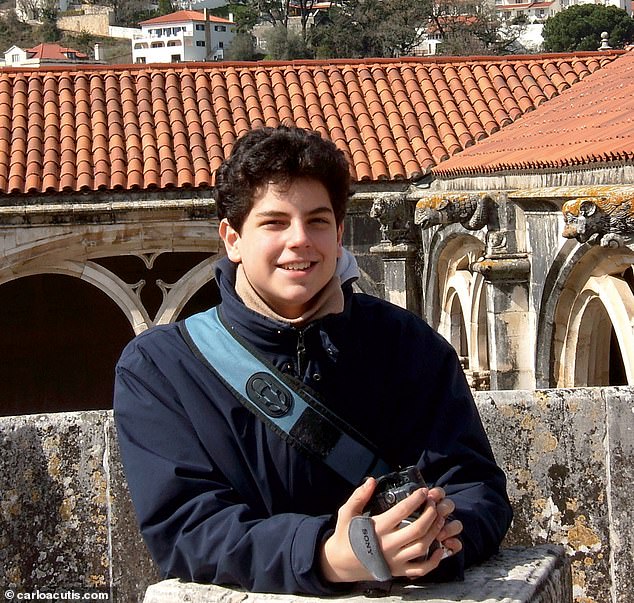
Bl. Carlo Acutis


One interesting subject that Jesus asked from the Father is that Jesus did not plead that the Father took the disciples from the world but rather to protect them from the evil one. We remember that Jesus was soon returning to the Father in the ascension, but Jesus did not want them to follow Him yet. Instead, Jesus then asked the Father to sanctify the disciples in Truth.


To sanctify is to make holy. Often our understanding of being holy is limited to those people who already in heaven. We call them the saints or the holy men and women. Yet, the fundamental meaning of ‘to be holy’ is ‘to be set apart’. In Biblical Hebrew, the word for holy is “Kados”, and it has the same meaning. Therefore, to be sanctified means to be set apart for purposes. For example, holy water is not just ordinary water because it has been blessed and set apart from everyday use like drinking or washing. It is now only for religious purposes.
In His prayer, Jesus was sanctifying His disciples. Jesus was making His disciples holy, and He was setting them apart from this world, for the Truth. Though the disciples were in the world, they no longer belonged to the world. They were consecrated to the Truth that is Jesus Christ Himself [see John 14:6]. The disciples belonged to Jesus. Thus, they remained in the world, not because they enjoyed and attaching themselves to the world, but they were to preach the Truth and bring Jesus.


Jesus’ prayer is not only for His apostles two thousand years ago but for all of us. When we are baptized, we have been set apart from the world and for God. We belong to God. Yet, the same baptism makes us share in the mission of the apostles. We remain in the world because God sent us to bring Christ to more people.
However, the temptation is that we often forget how we are and believe that we are part of the world rather than belong to Christ. We are not only simply in the world, but we become too worldly. We become too attached to the world and busy with many temporal affairs. Indeed, I am not suggesting that we all enter the monasteries or turn to be hermits. We remain in the world as who we are now, as parents, spouses, workers, teachers, students, yet in all of these, we bring Christ. Thus, holy parents do not mean those who pray in the chapel 24/7, but who raise their children with dedication and bring them to Christ. Holy workers are not those who come to workplaces and mediate the whole day, but those who work hard and honestly.


We remember Blessed Carlo Acutis. He loved to go to Mass and pray the rosaries, but He was an ordinary student and a computer geek. He used his passion for the computer to establish a Catholic website to spread the devotion to the Holy Eucharist. If Carlo Acutis can do it, why can’t we?

Valentinus Bayuhadi Ruseno, OP

Three Ways to Remain in Christ

Fifth Sunday of Easter [B]
May 2, 2021
John 15:1-8

Jesus said, “Remain in me, as I remain in you. Just as a branch cannot bear fruit on its own unless it remains on the vine, so neither can you unless you remain in me [John 15:4].” To remain in Jesus is not just an option but a necessity to bear fruits of eternal life.


The question is how we are going to remain in Jesus? We can do at least three ways. Firstly, we need to remain in His Word. Jesus said, “You are already pruned because of the word that I spoke to you. [John 15:3].” How can we remain in Jesus if we do not know Him? How can we know Him if we do not read His stories and teachings in the Bible? That is why St. Jerome famously said, “Ignorance of the Scriptures is ignorance of Christ.” Often, we, Catholics, are accused of not reading the Bible enough. While the accusation might be false, the invitation to read and reflect on the Bible remains true. Reading Scripture may be challenging, but it has its precious rewards.


Secondly, we remain in Him through the sacraments, especially the Eucharist. Jesus said, “Whoever eats my flesh and drinks my blood remains in me and I in him [John 6:56].” We face a difficult time because of the pandemic, and many people are deprived of the Holy communion. None can replace the sacramental union with Christ in the Eucharist. As a priest, I am saddened by the situation, but at the same time, I am glad because ‘absence makes the heart grows fonder.’ Often, I see some of the faithful shed their tears when they receive the Body of Christ after a long absence. The pandemic forces us to reflect more profound on the meaning of the Eucharist in our lives. Sometimes, we need to learn from the saints. Bl. Alexandrina da Costa of Portugal consumed nothing but the Holy Eucharist for 13 years until her death. The bread of life truly nourishes the soul, and when the soul is healthy, the body will manifest this vigour.


Thirdly, we remain in Christ by staying in the Church. Jesus is the vine, and we are the branches, and because of one vine, all the branches are closely interconnected. One branch does not live for the sake of itself but the entire plant. One healthy branch can contribute to the wellbeing of the whole ecosystem, and at the same time, another branch may require more nutrients and support from other parts of the plant. This is why I will encourage people to be part of a community and be active in the local Church. The Church has extremely diverse communities within her. There are groups based on age. There are communities based on spiritual traditions and devotions. While it is true that being part of a community may be difficult sometimes, it also provides the opportunity to grow and love.


These are three ways that we may remain in Jesus, and Jesus remains in us. We continue to grow and bear fruits for the glory of God.

Valentinus Bayuhadi Ruseno, OP

The Holy and Good Shepherd

Fourth Sunday of Easter [B]

April 25, 2021

John 10:11-18

Often, we associate vocation with the vocation to the priesthood or religious life, become a priest, or become a religious sister. However, Jesus, the Good Shepherd, does not only call a few sheep to follow Him, but the entire flock. Jesus invites everyone to follow Him, and thus, everyone has a vocation.

The fourth Sunday of Easter is commonly known as the Good Shepherd Sunday. The reason is that every year, the Church always chooses the Gospel from John, especially chapter 10 [year A: John 10:1-10; year B: John 10:11-18; year C: John 10:27-30]. In this chapter, Jesus introduces His identity as the Good Shepherd. This Sunday is also famously called the Vocations Sunday. In 1964, Pope Paul VI established the World Day of Prayer for Vocations on the fourth Sunday of Easter. Why ‘Vocations Sunday’? The word ‘vocation’ comes from the Latin word, ‘vocare’ that means ‘to call’. In the same Gospel, Jesus says that the shepherd ‘calls’ his sheep by name and they hear his voice [see John 10:3-4].

Generally, in the Church, we have the clergy and the laity. The clergies are those who received the sacrament of Holy Orders or ordination. Under this group are the deacons, priests, and bishops. Meanwhile, those who do not receive the ordination are the laity. Under this distinction, we have married people and those who remain single for the Lord. There is also a special category, that is people with vows. Traditionally, we have three vows or promise to God, the vow of obedience, the vow of chastity and the vow of poverty. Christians who professed vows usually belong to communities [technically called institutes of consecrated life] like the Order of Preachers, the Society of Jesus, and many others. When a laywoman professes vows, she becomes a religious sister of a specific community like Sr. Maria, OP. When a priest has vows, he is called a religious priest, like Fr. Joseph, OFM. A priest who does not profess vows and attached to a diocese is called a diocesan priest. Indeed, these categories are oversimplified and fail to do justice to many other forms of lives within the Catholic Church. The point is that the Good Shepherd is calling all of us to follow and to be with Him. It is a universal call to holiness.

Yet, what is holiness? Does it mean when a man is ordained to be a priest, he is automatically holy? Is wearing a religious habit a sign of holiness? Is constant prayer and piety manifestation of holy persons? If holiness is following and becoming one with the Good Shepherd, then to be holy is to live and act like the Good Shepherd Himself. What, then, is the main character of the Good Shepherd? Jesus tells us, “The Good Shepherd lays down His life for His sheep [John 10:15].”  The Good Shepherd is ‘Good’ because His love is radical and sacrificial.

To be holy is to love radically and sacrificially, and true love is performed every day in every way possible. Holiness is when a man works hard every day for his family. Holiness is a mother who cares for her baby and ready to lose her sleep every night. St. Theresa of Avila used to say, “Know that if you are in the kitchen, God walks among the pots and pans.”

Valentinus Bayuhadi Ruseno, OP

The Glorious Body

Third Sunday of Easter [B]

April 18, 2021

Luke 24:35-48

Miracles are rare occurrences, but some are even rarer and more precious than others. Miraculous healings are exceptional but coming back to life after death is even extraordinary. However, there is one miracle that is wholly unique and incomparable: resurrection. Yet, what makes resurrection different from other miracles?

Resurrection presupposes death or permanent separation between body dan soul. Thus, resurrection is the reunion of body and soul. Our Gospel today informs us that Jesus showed His disciples His body as well as His wounds. He wanted to show them that what disciples experienced in the upper room was not an illusion or fantasy. They did not see a ghost or disembodied spirit. What they encountered was a living human body.

Moreover, the wounds prove that the resurrected body of Christ is the same as the crucified body. He was not an imposter! Jesus even asked for food and ate the baked fish. He acted just like an ordinary living person, and the disciples should not be afraid anymore but believe.

However, Jesus’ resurrection is fundamentally different from what happened to Lazarus [see John 11]. Lazarus was dead, but Jesus raised him from the dead, but Lazarus would eventually face death once more. What happened to Lazarus is usually called ‘resuscitation.’ Meanwhile, Jesus was raised from the dead and will die no more. The resurrected Christ will no longer experience death because He received no ordinary body. His body was a glorious one. It is the same body that Jesus received from Virgin Mary, the same body that walked in Galilee, the same body that preached to the disciples, and the same body that was tortured, crucified, and buried in the tomb. Yet, the divine power has transformed this body.

What makes this glorified body unique? Firstly, this body is immortal. Secondly, it is no longer experiencing suffering like pain, sickness, or aging. Thirdly, the body will be subjected to the laws of nature and freed from the limitation of time and space. This explains why Jesus was able to enter the locked upper room [see CCC 645]. Fourthly, the body can change its appearance. This explains why the disciples often did not recognize the risen Lord. Resurrection does not only about the reunion between the soul and the body but about the body glorified and sanctified for eternal life.

The reality about the resurrection amplifies the fundamental truth about our bodies. The Book of Genesis narrated that God created the physical world as something good. Human persons, including their bodies, were blessed, and called ‘very good.’ God plans that His magnificent creation will not go to waste in death and decay. He wills that this amazing and blessed body continue to exist for eternity and become part of His marvelous heaven.

From this realization, do we prepare our bodies for heaven? Do we abuse our bodies with unhealthy lifestyles? Do we use our bodies to honor God in prayer and good works? Do we destroy our body, the Temple of the Holy Spirit, with vices and addictions? Do we offer our bodies as a living and pleasing sacrifice to God?

Valentinus Bayuhadi Ruseno, OP

Doubt and Faith

Second Sunday of Easter [B] – Divine Mercy Sunday

April 11, 2021

John 20:19-31

Thomas, one of Jesus’ apostles, was celebratedly called ‘the doubter.’ His skeptical attitude sprang when he was absent from the Sunday’s gathering, and he missed the most important event that took place on Sunday: Jesus’ resurrection. From here, we can learn an important lesson: do not be absent on Sunday’s mass!

Being skeptical or doubtful is part of our human nature. In fact, a certain level of skepticism is healthy and necessary. When we encounter unusual claims or information, we do not immediately trust them and put a certain skeptical distance. The doubt invites us to investigate and verify the veracity of the claim. When all reasonable doubts are removed, we can be sure of the truth.

Specific claims indeed must not be accepted at face value and be verified. If a man is accused of stealing, he has the right to the legal proceedings, and based on the evidence, the competent judge will pronounce the verdict. Not only in the court of law, fields of science also have rigorous methods to prove a hypothesis. The Church also adopts the same attitude. When the Church receives a claim that a person has seen the Lord or the Blessed Virgin Mary, she will investigate it. Is the person having a mental problem or simply hallucinating? Is the evil spirit involved? Is the private revelation going against the Church’s teachings? After clearing the reasonable doubts, the Church shall declare her position on the claim.

Going back to Thomas, at first, Thomas’ doubt seemed to be a reasonable one since he heard a spectacular claim from his brothers. As a Jew, Thomas may believe in the resurrection of the dead, but this would take place at the end of time. Jesus’ resurrection was unexpected. Thus, Thomas demanded proof, and it was given. However, if we see Jesus’ words to Thomas, “…do not be unbelieving [Gr. apistis] but believe [John 20:27].” Jesus pointed out that what happened to Thomas was not a simple and honest doubt but willful disbelief. While genuine doubt can be removed through reliable processes to achieve an objective truth, belief, on the other hand, is a free decision to accept that specific claim to be true. The problem is that what one believes does not always correspond to the objective truth.

Thus, when someone already decided to accept a particular claim as his subjective truth, he will not give up on the claim, however erroneous it is. Ideally, our belief corresponds to the objective reality. St. Thomas Aquinas puts it that the truth is the correspondence between the mind and reality.

After Jesus showed Thomas His wounds as evidence of His resurrection, Jesus moved to the next and most crucial step. He asked Thomas to believe. Thomas eventually accepted the truth of resurrection as his own. Jesus is indeed Lord and God, but only when Thomas received the truth as his own, could he say, ‘my Lord and my God.’

One way or another, we may reflect Thomas. We may learn the Catholic faith’s truth since we are young, but do we honestly believe them? We may confess Jesus is our God, but do we trust Him in times of trials and difficulties? We may say that God has redeemed us, but do we live more like the redeemed people?

Valentinus Bayuhadi Ruseno, OP

Easter Joy

Easter Sunday [B]

April 4, 2021

John 20:1-9

photocredit: Larm Rmah

Jesus has risen! Alleluia! He is indeed alive, and we have reason to celebrate and rejoice exultantly. From Palm Sunday till Good Friday, we have witnessed the most excellent drama at the center of our faith. Jesus was received as a king by his people, who would eventually condemn Him. He gave up His body and blood to His disciples and brothers, who ultimately sold, betrayed, denied, and abandoned Him. He was innocent, yet He was condemned as a criminal and suffer horrible death on the cross. He is God, but He was buried just like any man. Yet, these dreadful things are not the end of the story. There is a marvelous twist! He rose from the dead and conquered death—his love triumphs over hatred and sin.

The good news is that Jesus’ story is real. His story is radically different from the box-office-hit movies like the Marvel series. The Avengers may dramatically defeat Thanos and resurrected the missing half of humanity, but they remain the great work of fiction. Jesus is real, as even more real than all of us. And because He has risen, our faith in Him is not in vain. We are saved, and we are redeemed. This is the unshakable foundation of our joy! Blaise Paschal, a Catholic French Philosopher, once commented, “Nobody is as happy as a real Christian.”

Yet, what does it mean to be joyful in our world now? Many of us are still struggling with pandemic covid-19, and we are not sure when this will end. Some of us are losing our beloved ones, and others must face an uncertain future due to economic meltdown. We are becoming more unsure of our lives. What should be joyful? We need to see that joy of redeemed people is not simply fleeting good feelings or outbursts of emotions. If we know this kind of sensation in the Church, we may get disappointed.

To have faith in Jesus means we believe that our lives will eventually make sense in Jesus. Thus, our joy is coming from following Jesus, participating in His drama of love and redemption, including in His cross and death. Jesus’ suffering is not the suffering of a helpless victim but a courageously loving man. Jesus’s death is not the death of a sore loser but a total sacrifice of the lover. Jesus loves us to the fullness, and absolute love demands death. In Christ, our suffering is not a sign of our weakness but our radical love. Our joy is following from the truth that we discover that in Christ, we are created beyond ourselves, but for the infinite love, for God Himself.

In this time of crisis, we may endure more uncertainties, but we may have this moment to die to our illusion that wealth, position, and power can save us. In this time of trials, we may face more hardship, but we can turn this opportunity to love deeply and even to offer ourselves in Christ.

On March 27, 1996, seven Trappist monks were kidnapped from the monastery of Tribhirine, Algeria, by the extremist group. All eventually murdered. They had been warned to leave the monastery as Algeria’s situation worsened, but they refused to go because they wanted to be with the people they served. Brother Christian, the leader, wrote in a letter, “I am certain that God loves the Algerians and that He has chosen to prove it by giving them our lives. So then, do we truly love them? Do we love them enough? This is a moment of truth for each one of us and a heavy responsibility in these times when our friends feel so little loved.”

Happy and Blessed Easter to all of you!

Valentinus Bayuhadi Ruseno, OP

The Colt

Palm Sunday of the Lord’s Passion [B]

March 28, 2021

Mark 11:1-10; Mark 14 – 15

Palm Sunday marks the beginning of the Holy Week, a most sacred week in our liturgical year. This year’s celebration may be different from other years because of the pandemic, but this does not stop us from having a solemn and meaningful celebration. One of the usual questions people ask about the celebration of Palm Sunday: “Why did Jesus ride a donkey?” Jokingly I replied, “well, an online taxi was not yet available during that time!”

The standard answer to this question is that Jesus would like to show Himself as a meek and humble king, rather than a power-lust and war freak general who rides a stallion. This answer is correct, but it does not give us a complete picture. If we try to go deeper into Mark gospel alone, we will unearth the Old Testaments’ fulfillments.

photocredit: laura gariglio

The choice of the colt is deliberate on the part of Jesus because He is fulfilling the prophecy of Zachariah. In essence, the prophet Zechariah foretold that someday a gentle, yet victorious king will enter Jerusalem, riding a colt [see Zec 9:9]. Yet, there are more!

If we go back to the Old Testament, we will find a king of Israel who indeed rode this humble animal. He was Salomon, David’s son when he was ascending to his throne [1 Kings 1:33]. By riding a colt, He signifies that He is the new Salomon ascending to His new throne, the cross.

Mark is telling us also that people are spreading their clothes also before Jesus. Going back to the Old Testament, we also discover a king of Judah whose ascension to the throne received this kind of gesture also from the people. His name is Jehu [2 Kings 9:12]. Aside from that, Mark is informing us that people welcome Jesus with leafy branches. Again, if we go back to the old testament, green branches were used to receive Judas Maccabeus, who retook Jerusalem from the enemy’s hands [2 Mac 10:7]. Jesus is indeed a gentle king, but He is also a victorious conqueror of His enemies. One more thing is that Mark added the expression ‘… our Father David…” David is undoubtedly not one of the Israelites patriarchs [Abraham, Isaac, and Jacob]. Still, the people of Israel recognized king David as the nation’s father, a king that protects and provides for his people.

From here, we can draw a stunning conclusion on this Palm Sunday. Jesus is riding on the unridden colt to show that He is Messiah King in the line of David, in the likeness of Salomon and Jehu, as well as a victorious king who will conquer His enemies. Yet, there is something even remarkable. Mark gives us a unique detail: this colt is untamed and untrained. Jesus’ choice to ride this wild animal shows His mastery over wild beasts and nature. He is not just the king of Israel, the king of humankind, but He is a king of all nature. Indeed, a colt is a good ride for the king of the universe.

However, we must not be happy too soon. There are more secrets to be opened and more prophesies to be fulfilled as we enter the drama of Holy Week.

Valentinus Bayuhadi Ruseno, OP

The True Glory

5th Sunday of Lent [B]

March 21, 2021

John 12:20-33

Traditionally, the Gospel of John is divided into two major divisions: the Book of Sign [chapter 1-12] and the Book of Glory [Chapter 13-21]. The book of Sign focuses on the public ministry of Jesus and presents the seven signs of Jesus. In John’s Gospel, Sign is a technical term for a miracle. Jesus’ signs begin with changing water into wine in Cana and reaching its culmination in raising Lazarus from the dead. Meanwhile, the book of Glory tells us how Jesus is glorified. The second part starts with Jesus and his disciples in the Upperroom and culminates in His Passion, death, and resurrection.

Today’s Gospel is coming from John chapter 12, and this chapter serves as a transition between the Book of Signs to the Book of Glory. This is also why the Church selected this reading: to prepare us to enter the Passion Sunday or the Holy Week.

One powerful lesson that we can see in today’s Gospel is how Jesus perceived His Passion and death. Undeniably, He would be crucified and die a horrible death. Crucifixion is a monstrous punishment reserved only for heinous criminals or violent rebels against the Romans. Crucifixion is dreadful because its purpose is to prolong the agony of the condemned before they met their death. On the cross, people are treated even lower than the animals. This is the kind of death that Jesus embraced.

Yet, in John’s Gospel, he did not see His crucifixion as a mere human event but divine providence. Jesus calls His crucifixion the glorification of the Son of Man. Jesus’ view does not only reverse the perspective of the cross but radically transform it. His crucifixion is not just something good or positive, but it is the victorious summit of His life. Jesus declared that the cross is the time of a judgment against the devil, the ruler of the world. Jesus also claimed that the cross is when people from all nations gather as one and receive salvation.

Does it mean Jesus simply dismisses His human side and acts ridiculously tough before the suffering of the cross? Jesus also recognized and admitted His human emotions. We know that Jesus manly faces the horror of His death in the garden of Gethsemane, yet when Jesus was firm to do the Father’s will and to love until the end.

From here, we can learn a profound lesson from Jesus. In following Christ, we might face trials and hardship in life, yet trusting in God’s providence, we can embrace them as our moment of glorification. Trusting in God’s providence is not running from the harsh realities of life, but in fact, it presupposes that we embrace all our humanity. It is not running but resolutely accepting it.

We can always see the lives of our saints. St. Agatha could easily escape death, but she refused to deny Christ and braved the horrifying tortures and death. Her torturers cut her breasts, and she was burned alive. In the eyes of the world, her death was senseless, but for them, it is sharing in the suffering of Christ, and thus, sharing in His Glory.

Valentinus Bayuhadi Ruseno, OP

Photocredit: marcio-chagas

The Serpent, the Manna and the Eucharist

Fourth Sunday of Lent [B]
March 14, 2021
John 3:14-21

Today’s Gospel presents us with one of the most cryptic sayings of Jesus, “Just as Moses lifted up the serpent in the desert, so must the Son of Man be lifted up, so that everyone who believes in him may have eternal life.” To unpack this, we cannot but go back to the Old Testament, especially the Book of Numbers.

In the book of Numbers chapter 21, we will discover Israelites’ story in the desert who complained about God’s given food. They even called Manna from God as the wretched or even worthless food. Indeed, this ungrateful act brought upon themselves a terrible punishment. The seraph serpents assaulted and killed many Israelites. Aware that they were perishing, the Israelites begged for mercy. God instructed Moses to make a bronze serpent and mount it on a pole for people to see. Those who had been bitten saw the bronze serpent and recovered. With this story as a background, Jesus presented Himself like the bronze serpent. He would be lifted on the cross so that those who see Him and believe will receive eternal life.

Yet, there are more! We notice that the reason behind this punishment is that the Israelites failed to appreciate the bread from heaven and even called it worthless. Indeed, that was an act of ingratitude, but it was also an act of the desecration to the heavenly bread itself. No wonder that the punishment was so severe. Interestingly, Jesus pointed out that the Manna in the desert is a type of Eucharistic bread that He would give [see John 6:48-50]. Thus, the incident in Number 21 teaches us a hard lesson about what will happen if we dishonor not only any God’s gift but also the most precious gift, the Body of Christ in the Eucharist.

The one responsible for the death of the Israelites was the seraph serpents. This serpent was not an ordinary snake like cobra or python. The word ‘seraph’ or the ‘burning one’ reminds us of the seraphim, one of the higher echelons of angelic beings. Aside from that, the image of a serpent that attacked humanity brought us to Satan’s first assault against Adam and Eve. The attack against the Israelites in the desert was not merely a natural phenomenon but supernatural. The devil himself wreaked havoc on the people of Israel.

If we connect the dots, we will see the relation between the Manna, the serpent, and the bronze serpent. When the Israelites desecrated the Manna, the seraph serpents broke loose and began their onslaught. The Manna was not only nourishing the Israelites but also protecting them from spiritual harm. If Manna in the desert is a type of the Eucharist, the serpent is the devil, and the bronze serpent is Jesus crucified, we can move one step further. Every time we desecrate the Eucharist, we do not only insult God but also open the gate of hell and let diabolic power overpower us and our societies. This desecration can only be remedied by true repentance and the cross of Jesus.

If we see ourselves, our families, and our communities are falling apart and becoming an easy target of the devil, the root is that we fail to honor the Eucharist. Like the Manna that protected the Israelites against the serpents and nourished them along their journey, the eucharist is our bulwark against the onslaught of the devil, and it is our spiritual food that nourishes and strengthens us in this earthly journey.

Valentinus Bayuhadi Ruseno, OP

photocredit: Maria Ostwalt