

30th Sunday of the Ordinary Time [A]
October 25, 2020
Matthew 22:34-50
 The question is, “what is the greatest law?” Once again, the historical and religious context is important. When Jesus and the Pharisees discuss the Law, they are speaking about particular Law. It is neither criminal law nor international law. It is the Law of Moses, the Torah, which points to Moses’s five books. According to the tradition of the Rabbis, the Torah contains 613 specific laws. Thus, the Pharisee is questioning Jesus on the most important among 613 commandments.
For the Jewish people, the answer is not difficult and even expected. The most fundamental law among the laws is the Ten Commandments. It is the first set of laws given to Israelites through Moses in Sinai. The traditional belief holds that the Ten Commandments are traditionally by order of importance, meaning the first is the most essential, and the last is the least essential. Therefore, the first among the Ten Commandments is the greatest among the 613. It says, “I am the Lord your God… there is no other God beside me [Exo 20:2-3].”
However, Jesus escapes the expectation and reconstructs His own answer that will be the moral foundation of Christianity. Jesus’ answer is, “You shall love the Lord, your God, with all your heart, with all your soul, and with all your mind…You shall love your neighbor as yourself.” Though the answer is unusual, it remains orthodox because the source is also the Law of Moses. To love the Lord with our all is rooted in the Jewish basic prayer “Shema” [see Deu 6:4-6], and to love our neighbors as ourselves is springing up from the book of Leviticus [19:18]. What Jesus does is He radically changes the orientation of the Law of Moses. Instead of limiting ourselves to the prohibitions of the Ten Commandments, Jesus sets love as its direction. Love is seeking the goodness of the beloved, and love never stops until we are united to our beloved. To obey the 10 Commandments is foundational, but that is the minimum, and Jesus teaches us not to stay at the boundaries but to go beyond till we are united with God and others in God.
Before, I thought the commandment of Jesus was nice and lovely words. I love God by going to the Church every Sunday, especially during Christmas and Easter, and I love others by occasionally helping them or giving a donation to the poor. But I realize something a bit off. Jesus never says, “this is my greatest recommendation or advice.” What Jesus tells us, “This is the greatest commandments!” Law is meant to be obeyed, and here, we are dealing with the biggest laws! To love the Lord with our all is not optional. It is a must, and to love our brothers and sisters is not based on our convenience, but it is a divine obligation. To love God, neither not a part-time job nor to love our neighbors is our pastime. It is either all or nothing. That is Jesus’ greatest commandments.
Valentinus Bayuhadi Ruseno, OP
photo: josh Appel
 To understand today’s Gospel, we need to make time travel to the time of Jesus. The Jewish people in the first century AD Palestine were not free people, and they were subject to the Roman empire. Being subjects, they were required to submit heavy taxes. This money would eventually use to pay the army that maintained “the security” of Palestine. Naturally, paying taxes was one of the most irritating and politically charged issues. “Why should I pay for my own oppression?”
 To understand the parable, we need to see the surprising elements that Jesus offers. Firstly, this is no ordinary wedding, but the royal wedding of the king’s son. Surely, people in the royal list are honored and privileged guests, but they refuse to come, decline the invitation twice and even mistreat the king’s servants. What they do are unthinkable! They fail to see how precious the invitation and rather choose their own trivial business. They are like throwing insult to the king who has honored them. No wonder, the king punishes them.
 The vineyard owner in today’s parable is extraordinary. He knows that the tenants are greedy and corrupt, and if I had been the owner, I would have expelled the tenants right away. Yet, this owner is doing the opposite. He keeps sending His envoys and pleading with them, to the point of giving his own son, the true heir. This vineyard owner must be crazy! Yet, that is how much merciful, and patient God is. However, that is not the end of the story. The thing is if we keep abusing God’s mercy, His justice will eventually prevail.
 Reading the entire Matthew chapter 21, we will get the sense of the parable of the two sons of the vineyard owner. Jesus just entered the city of Jerusalem and was welcomed by the people with a shout of “Hosanna” and palm branches. Then, he proceeded to the Temple area to cleanse it from the malpractices plaguing the holy ground. Thus, the elders and chief priests, the one who was in charge of the Temple, questioned Jesus, “who are you? By what authority do you act and teach?”


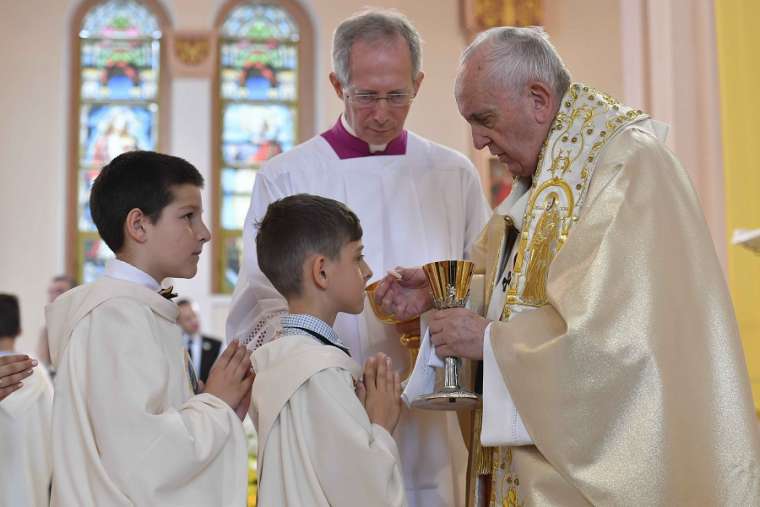 Last Sunday, we listen to the confession of Peter on the true identity of Jesus. Here, Simon received a new name, the keys of the kingdom and the authority to bind and to loosen. He became the prime minister of the kingdom, the first pope. However, today, we witness the dramatic turn around. When Jesus foretold about His incoming passion, Simon reactively put his Master aside, and rebuked Him. As a response, Jesus expressed harshly,
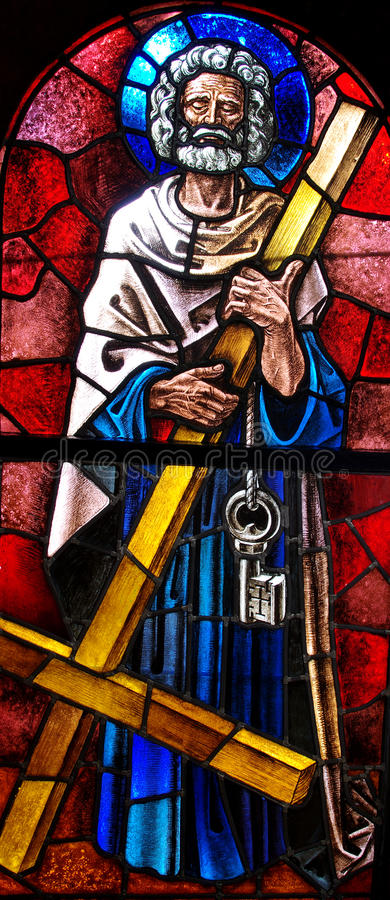 Today’s Gospel speaks volume about the new identity and roles of St. Simon Peter as the leader of the college of the apostles, and thus, the leader of the Church. He is the chosen foundation rock upon which Jesus built His Church. He is the prime minister who holds the keys of the kingdom of God. He is the chief priest who is responsible for the Temple of God. He is the chief Rabbi whose teachings binds the entire faithful. These are the bigger-than-life privileges and one may wonder, “Among the disciples, why was he chosen? Did Jesus know that he would deny Him three times?”
 In Medio Ecclesiae