

Nineteenth Sunday in Ordinary Time [August 12, 2018] John 6:41-51
Amen, amen, I say to you, whoever believes has eternal life. I am the bread of life. (Jn 6:47-48)
I am currently having my pastoral clinical education in one of the hospitals in the Metro Manila. Aside from visiting the patients and attending to their spiritual needs, we also have processing sessions guided by our supervisor. During one of the sessions, our supervisor asked me, “Where is the ultimate source of your preaching?” As a member of the Order of Preachers, I was caught off guard. My initial reaction was to say our deeply revered motto, “Contemplare, at contemplata aliis tradere (to contemplate, and to share the fruits of one’s contemplation).” He pressed further and asked what is behind this contemplation. I began scrambling for answers. “Is it study? Community? Or prayer? He said that those were right answers, but there is something more basic. I admitted I am clueless. While he was smiling, he said “It is faith.”
His answer is very simple and yet makes a lot of sense. We pray because we have faith in God. We go to the Church because we have faith in the merciful God who calls us to be His chosen people. As for myself, I entered the Dominican Order because I have faith that generous God invites me to this kind of life. We preach because we trust in the loving God and we want to share this God with others.
I have spent years studying philosophy and theology at one of the top universities in the Philippines, but when I meet the patients with so much pain and problems, I realize that all my achievements, knowledge and pride are coming to naught. How am I going to help patients having troubles to settle hospital bills with astronomical amount? How am I going to help persons in their dying moments? How am I going to help patients who are angry with God or disappointed with their lives? However, as a chaplain, I need to be there for them, and the best preaching is in fact, the most basic one. It is not preaching in the forms of theological discourse, philosophical discussion, and a long sermon or advice. To preach here is to sharing my faith and to receive their faith. I am there to be with them, to listen to their stories and struggles, to share a little humor and laughter, and to pray together with them. To pray for them is the rare moments that I pray with all my faith because I know that only my faith I can offer to them.
In our Gospel today, we read that some Jews are murmuring because they have no faith in Jesus. Yet, Jesus does not only call them to simply trust in Him, but also to literally eat Him because He is the Bread of Life. The faith in the Eucharist is indeed a tipping point. It is either the craziest of the crazy or the greatest faith that can move even a mountain. As Christians who believe in the Eucharist and receive Jesus in every Mass, we are tremendously privilege and challenged to have and express this faith. However, when we fail to appreciate this meaning and beauty of this faith, and only receive the Bread of Life in a routinely and mechanical fashion, we may lose altogether this faith.
As people who go to Church every Sunday and receive the Eucharist on a regular basis, do we truly believe in Jesus the Bread of Life? Does our faith empower us to see God in the midst of our daily struggles and challenges? Do we have faith that we can share when it matters most?
Br. Valentinus Bayuhadi Ruseno, OP
 To say “Amen” is something usually we do in prayer. Commonly it is used to end a prayer. Our biblical prayers like Our Father and Hail Mary are usually concluded by amen. In several occasions, amen is mentioned more often. One of my duties as a hospital chaplain is to lead a prayer of healing for the sick. I always ask the family and friends who accompany the patients to pray together. Sometimes, they will say amen at the end of the prayer. However, some others will utter several amens within the prayer, and in fact, some people will say more amens than my prayer! In several occasions, amen is utilized outside the context of prayer. Preachers with a charismatic gift will invite their listeners to say amen. Surely, it is a good technique to keep the listeners awake!
 Unlike the other Gospels, the Gospel of John does not have the story of the Institution of the Eucharist on the Last Supper. However, it does not mean John the evangelist does not write anything about the Eucharist. In fact, John includes the most sublime discourse on the bread of life in his chapter 6. The chapter itself is relatively long, and the Church has distributed it into several Sunday Gospel readings (from today up to August 26). This discourse on the Bread of Life begins with the lovely story of Jesus feeding the multitude.
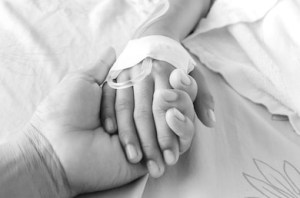 I am currently having my clinical pastoral education at one of the hospitals in Metro Manila. It has been one month since I started my pastoral visits. Since then, I have encountered people in different stages of illness. Many of them are fast recovering, some are taking more time to get cured, but some others have to face serious conditions. It is my ministry as a chaplain to accompany them in their journey of healing. I feel immense joy when I can witness their healing process, from one who is weak on the bed, to one who is standing and ready to leave the hospital.
 Our Gospel today speaks of the mission of the Twelve. They are sent to perform the threefold task: to exorcise the evil spirits, to heal the sick and to preach repentance. This threefold missionary duty reflects Jesus’ mission also in the Gospel according to Mark. To facilitate their preaching ministry, they need to travel light. No extra baggage, no extra burden. They need to travel two by two as a sign of communal and ecclesial dimension of the mission. They shall depend also their sustenance on the generosity of the people. And, when they face rejection, they shall shake the dust off their feet as a symbolic judgment against those who reject them. In ancient time, the Jews shake the dust off their feet when they reenter the Israel soil from the Gentile territories, as a sign of disowning and disapproval of the Gentiles nations.
 When Jesus teaches in the synagogue in Nazareth, the listeners are amazed by his wisdom. Jesus speaks like a mighty prophet. However, the people soon make a background check on Jesus, and they realize Jesus’ identity and his family background. Nazareth is a small rural town in Galilee, and everyone knows everyone in this kind of setting. The people of Nazareth know Jesus as a son of a carpenter, and himself a carpenter. They are familiar also with Jesus’ family and relatives.
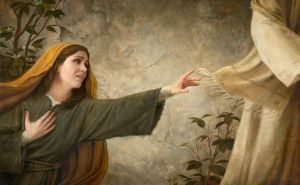 Today’s Gospel seems to be just another healing miracles of Jesus, but if we read it closely, the story of the healing of the woman with hemorrhage is extraordinary tale of faith. We are not sure what kind of hemorrhage she suffers, but the fact that she bears the sickness for 12 years, spends a lot for the medication, and does not get any better, means it is pretty serious, if not terminal. During this time, the physicians are extremely rare, and expectedly, the patients need to spend a lot of money. The woman may come from a wealthy family, but she is impoverished because her prolong sickness. The woman is losing her life and facing despair. I am currently assigned as an associate chaplain in one of the hospitals in Metro Manila, and my duty is to make pastoral visit to these patients. I encounter some patients who are suffering from certain health conditions that drain all their resources, and it seems the situation does not get any better. I realize the story of the woman with hemorrhage is not only her story happened in the far past, but it is also our stories here and now.
 Today we are celebrating the birth of John the Baptist. Two figures emerge as the protagonists of our today’s Gospel, Elizabeth, and Zachariah. Luke describes the couple as “righteous in the eyes of God, observing all the commandments and ordinances of the Lord blamelessly. (Luk 1:6)”. But, they have no child. The possibility to have a child is close to zero as Elizabeth is perceived to be barren and Zachariah is already old. In ancient Jewish society, children are considered to be a blessing of the Lord and a source of honor, and barrenness is a curse and shame.
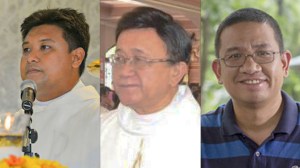 The Catholic Church in the Philippines is once again in profound grief after one of her priests was mercilessly murdered. Fr. Richmond Nilo, from the diocese of Cabanatuan was shot several times just before he celebrated the mass at a chapel in Zaragoza, Nueva Ecija. His body was laying on the floor at the foot of the image of Blessed Virgin, soaked with blood. Another disturbing and painful image. He becomes the third priest losing his life in a bloody attack in the past six months. On December 4, 2017, Fr. Marcelito Paez was ambushed in Jean, Nueva Ecija. Just a few weeks ago on April 29, Fr. Mark Ventura was also gunned down moment after celebrating the mass. We may also include Fr. Rey Urmeneta who was attacked by a hit man in Calamba, Laguna. He sustained a bullet in his body, yet he survived death.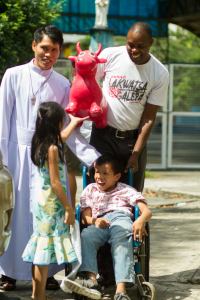
 In Medio Ecclesiae