

3rd Sunday in Ordinary Time (Feast of Sto. Niño in the Philippines) January 21, 2018 [Mark 1:16-20*]
“Come after me, and I will make you fishers of men (Mar 1:17)”

Jesus begins His public ministry by calling His first disciples to follow Him. In ancient Palestine, to become a student of a particular teacher means to follow him wherever he goes and stays. In fact, the Greek words used is “deute hopiso”, that means “come after me” because the disciples are expected to literally walk few steps behind Jesus. No wonder, that when the four first disciples, Peter, Andrew, James and John, are called, they have to leave practically everything behind, their works, their family and their hometowns. Thus, to become Jesus’ disciples are a radical commitment that entails great sacrifices.
However, if we bring back the life of radical discipleship to our time, who among us will be able to follow that call? How many among us will be willing to leave behind our work, family, and hometown for the sake of Christ? Not many. Only a few people are entering the monasteries or the convents. Even, those who are already members of religious congregations, we are allowed to keep in touch with their family. I myself am able to have a vacation every year and visit my family. It seems that the total discipleship remains a far-reached ideal for many of us.
While it is true that this kind of life is genuinely difficult and rare, yet we believe that the life of a true disciple is also available for all of us. The Gospel tells us that the first disciples leave many things behind, but actually, the disciples do also bring something with them when they decide to walk after Jesus. They carry “themselves”, the totality of their own persons. Within this person are their characters, knowledge, skills, ideals, and dreams. In short, they also carry with them their profession, their family, and homeland. This is why Jesus does not only call Simon, Andrew, James, and John to follow Him, but He also is going to make them “the fishers of men.” Jesus knows that these guys are one of the best fishermen in the Galilee, and now Jesus invites them to offer the best they have for God’s purposes. To follow Jesus is not leaving everything behind as much as offering ourselves to the Lord.
When St. Dominic de Guzman preached against the heresy in the Southern French, he left the comfort of his church in Osma, Spain. Yet, when he preached, he brought along all the skills and knowledge he learned as a canon in Osma, and as a student at the University of Valencia. He left everything and yet, paradoxically, he brought everything when he founded the first religious Order that was dedicated for preaching in the Church.
We may not be able to leave our family, our profession, and hometown because we are responsible for the lives of our family and relatives, but with the same spirit, we can radically follow Jesus, by offering ourselves for God’s purposes. As parents in the family, what do we give to God, which may build a solid Christian family? As part of the Church, what do we surrender to Jesus, which may help her growth in the world? As members of society, what do we offer to the Lord, which may contribute to a just and growing society?
Today, the Church in the Philippines is celebrating the feast of Sto. Niño, or the Child Jesus. The image of Sto. Niño is the first to be introduced to the Filipino people, and His intercession has been very instrumental to the evangelization of this country. We pray to Sto. Niño that our self-offering may bear fruits wherever we are sent and live.
Br. Valentinus Bayuhadi Ruseno, OP
*the reading is taken from the 3rd Sunday of Ordinary Time

 Balthazar, Melchior, and Gaspar, as the tradition called them, were neither Jews nor baptized Christians. In Greek ancient manuscripts of the Gospel, the word used to describe them is ‘magos’, meaning ‘someone with magical power’ or ‘magicians’, and practicing magic is detestable in the eyes of the Jews (2 Chro 33:6). Even the Catholic Church herself prohibits our engagement with any kind of magic (CCC 2116). Yet, we cannot be sure what kind of magic they craft, but one thing is certain that these Magi read the sign of times and follow the star. Because of this, they are called as one of those ancient astrologers, star-readers who predict the human behaviors and the future.
 Some of us may wonder why the Church places the celebration of the solemnity of Mary, the Mother of God on January 1, or on the New Year. One may guess that the Church wants us to attend mass on the first day of the year, so as to start the year right. For those who wish to have a long holidays, it might be pretty a kill joy, but for some of us who wish to be blessed for the entire year, it is a nice thought. Yet, surely there is something deeper than that.
 Today, the Church is celebrating the feast of the Holy Family. Saint Joseph and the Blessed Virgin Mary are man and woman regarded as the holiest among mortals. And the center of their family is Jesus, the Son of God. They are not only one holy family among others, but they are the perfection of the Holy Family. Looking at our own families, we realize we are nothing to compare to this Holy Family. We are called to be holy like them, but we continue to struggle and fail. Nobody among us is immaculately conceived like the Virgin Mary. No woman among us gives birth to the Son of God through the power of the Holy Spirit. Many of us surely love to sleep, but who among us like St. Joseph, receive genuine appearance of the Angel in our dream? Despite our best efforts, we keep hurting each other, failing each other, and are far from the ideal example of the Holy Family.
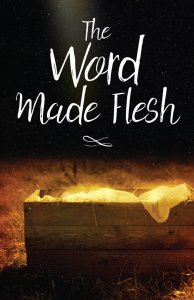 Christmas is one of the most joyous events in the Church and the world. But, what makes us happy this Christmas? Is it only about partying? Is it all about buying gifts? Is it about family gathering? Is it about fulfilling our obligation of going to the Church? Is there something more than these? Immersed in many celebrations, merriment, spending, and holidays, we often forget the main reason behind Christmas. We all know Christmas is the birthday of Jesus Christ, but what is the meaning and significance of this birth for us? Let us stop for a while and reflect on the Gospel of John.
 Luke has a poignant and unique way in narrating the story of the Annunciation. He deliberately places the story of Zachariah and of Mary side by side, and lets his readers see both stories in comparison. The first story speaks of a holy man who serves in the Temple. Zachariah is a symbol of the ideal Israelite who stands at the center of the holy ground. The second story speaks of an ordinary woman who lives in Nazareth, a small town far from the center. In a patriarchal society, Mary is a symbol of the poor and marginalized Israelite who is pushed to the peripheries. Angel Gabriel appears to both, and God does marvelous deeds for both. Yet, the Annunciation to Mary turns to be far more excellent. The Angel greets Mary with the title of honor, the highly favored one, while the angel does not even greet Zachariah. The Angel makes Zachariah mute because of his doubt, but he assures Mary when she is confused. The conception of John the Baptist is done through natural means, while the conception of Jesus in the womb of Mary takes place through the supernatural way. Zachariah and Elizabeth represent the outstanding God’s marvel in the Old Testament like when God opened the womb of Sarah, the wife of Abraham, and Hannah, the mother of Samuel, despite their old age and barrenness. Yet, what happens to Mary surpasses and outshines these Old Testament miracles.
 In the Fourth Gospel, John the Baptist has an important role. It is not only to baptize, but to become a witness. He is to witness to the light, to the true Messiah, to Jesus Christ. When the priests, Levites, and Pharisees from Jerusalem, come to him , and interrogate him to clarify his identity, he makes it clear that he is not the Messiah, not even the prophet, but rather enigmatically saying “a voice that cries in the desert.” It seems it is an easy thing to do for John. Questions are thrown at him, and he simply gives straight and confident answers. Yet, looking deeper into the reality, it is actually the opposite.
 Today, we read the beginning of the Gospel according to Mark. Among the evangelists, only Mark explicitly introduces his work as the “Gospel”. The English word “Gospel” simply means the Good News, or in original Greek, “Evangelion.” Commonly, we understand a gospel as a written account of the life and words of Jesus Christ. The Church has recognized four accounts as canonical or true Gospel. We have Gospel according to Matthew, Mark, Luke, and John.
 In Medio Ecclesiae