

Twelve Sunday in Ordinary Time. June 25, 2017 [Mathew 10:26-33]
“What I say to you in the darkness, speak in the light; what you hear whispered, proclaim on the housetops (Mat 10:27).”
 St. Francis of Assisi once said, “Preach the Gospel all time. When necessary, use words.” He correctly points out that preaching is not only the job of the priests in the pulpit, or lay preachers in the prayer meetings. Preaching the Gospel is the mission of all of us. The preaching can happen in the family, as we show our children the meaning of true love, fidelity and respect. Preaching can take place in our workplaces as we uphold honesty, hard work, and dedication. Preaching may manifest in our daily life as we do justice, service to the needy, and kindness to our neighbors.
However, to preach Jesus Christ is not always smooth sailing. I myself have been in the ministry of preaching for some years, and at times, I have to face tough moments. When, I preach with a content and style that are outside of the box, some good and honest people come and rightly question the orthodoxy of my preaching. Yet, when I preach with predicted insight and usual delivery, young people will come and tell me it is boring. There are times that nobody’s listening to my preaching or reading my reflection. Sometimes, I feel tired, frustrated and bored. The same feelings may also befell us as we do our preaching in the family, workplace, the parish, or the society. It is frustrating when we are honest, but the rest are not. It is tiring when we know that we are the only one working hard. It is hurting to be backstabbed after all our service to others.
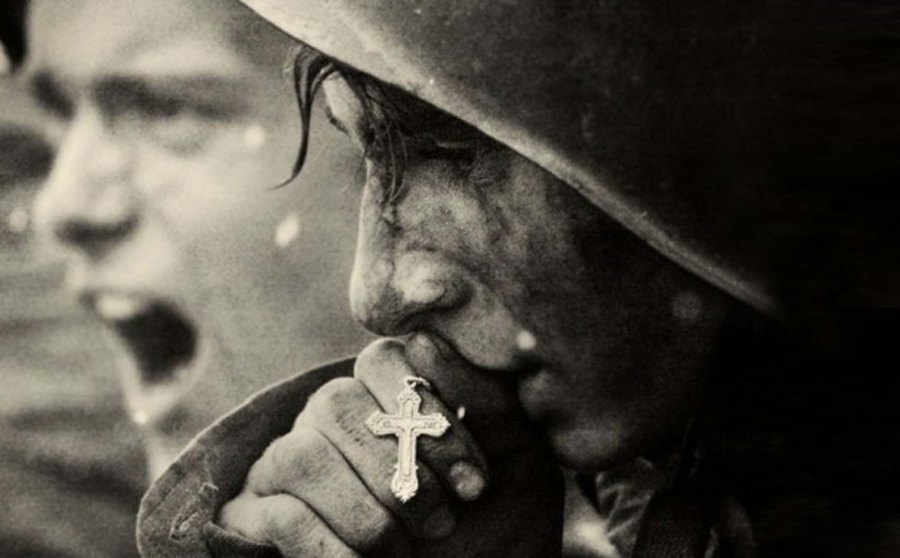
Yet, our life as a preacher is a lot better and safer than my brothers and sisters in other places. Our Dominican sisters of St. Catharine of Siena in Iraq chose to stay despite the ongoing war and turmoil that hit the country, and serve the refugees without any discrimination. In 2003, when US-led coalition invaded Iraq, they kept running the hospital in Baghdad amidst heavy fighting and looting in the capital. In 2014, when IS took the city of Mosul, the sisters were walking together with the refugees, and at forefront in helping and managing several refuge centers. For some others to preach Christ means violence and death. Last May, Fr. Miguel Angel Machorro was in critical condition after he was stabbed in the neck just right after saying the mass in Mexico City’s Cathedral. Fr. Teresito Suganob who was working among the Muslims in Marawi City, Philippines, was abducted when the group of extremists occupied the city. Nobody knows yet what happened to him.
What makes them preach the Gospel despite constant dangers to their lives? I believe that it is because they love the Lord dearly. This love, as Roman poet Virgil wrote, conquers all. Their love drives out the fear of death, empowers them in trials, and encourages them in face of frustrations and failures. In the words of St. Paul, “What will separate us from the love of Christ? Will anguish, or distress, or persecution, or famine, or nakedness, or peril, or the sword… No, in all these things we conquer overwhelmingly through him who loved us (Rom 8:35-37).” True preaching, then is fuelled by true love of God and not seeking after our own glory. Without this love, we will back out when our preaching seems to fail, or we will feel proud when our ministry meets success. Do we have this love for Jesus? Are our preaching motivated by this love? Are we allowed to be overwhelmed by God’s love for us?
Br. Valentinus Bayuhadi Ruseno, OP

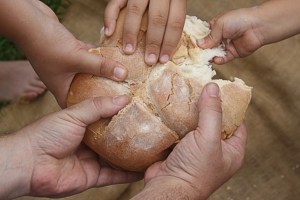 Eating is essential to our life. Nobody would deny that eating is a matter of life and death, but there is always significant different between a beggar sitting by the gate of St. Domingo church and most of us who can enjoy a full meal three times a day. The beggar will ask himself, “How can I eat today?” While, we will inquire ourselves, “Where am I going to eat today? Is the ambience of the restaurant welcoming? Is the food as tasty as Filipino delicacy? Is the food safe from any cancer-causing substance?” For some, eating is about survival, but for some other, this phenomenon has evolved into something mechanically sophisticated. The society provides us with almost unlimited options of what we are going to eat, and seemingly we are masters of these foods as we possess the authority to choose what we like and shun what we don’t. But, we actually are slowly turning to be slaves of our appetite as we shift our focus not on the essential but on the trivial, like how we satisfy our fickle cravings.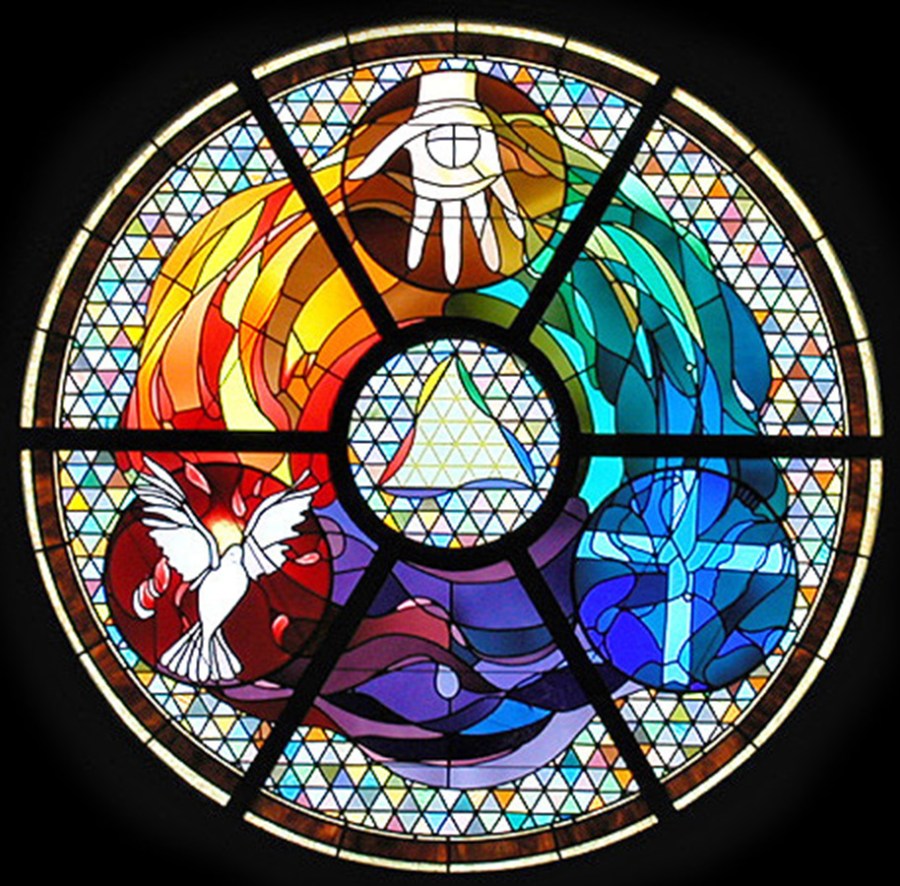
 Today, we are celebrating the Mystery of the Most Holy Trinity. This Mystery is rightly called the mystery of all the mysteries because the Holy Trinity is at the core of our Christian faith. Yet, the fundamental truth we believe is not only extremely difficult to understand, but in fact, it goes beyond our natural reasoning. How is it possible that we believe in three distinct Divine Persons, the Father, the Son and the Holy Spirit, and yet they remain One God? Many great minds have tried to explain, but at the face of such immense truth, the best explanations would seem like a drop of water in the infinite ocean. Yet, we believe it precisely because the mystery is not coming from the human mind, but is revealed to us by God Himself.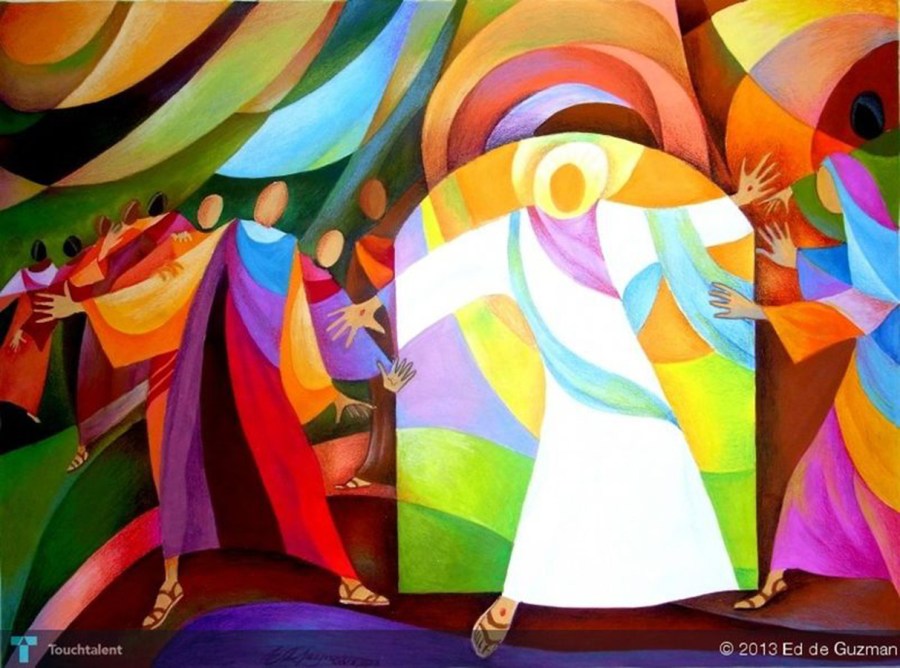
 Pentecost is the commemoration of the descent of the Holy Spirit upon the first disciples in the upper room. The usual images we have in our mind are usually dramatic and vivid. The disciples gathered in the upper room, suddenly the strong wind filled the room, followed by the appearance of the tongues of fire. Inspired by the Holy Spirit, the disciples began to speak various languages, and proclaimed the Gospel. This depiction of Pentecost comes from the Acts of Apostles (our first reading today). The same Acts tells us that Pentecost took place 50 days after Easter Sunday (Pentecost itself simply means ‘50’ in Greek).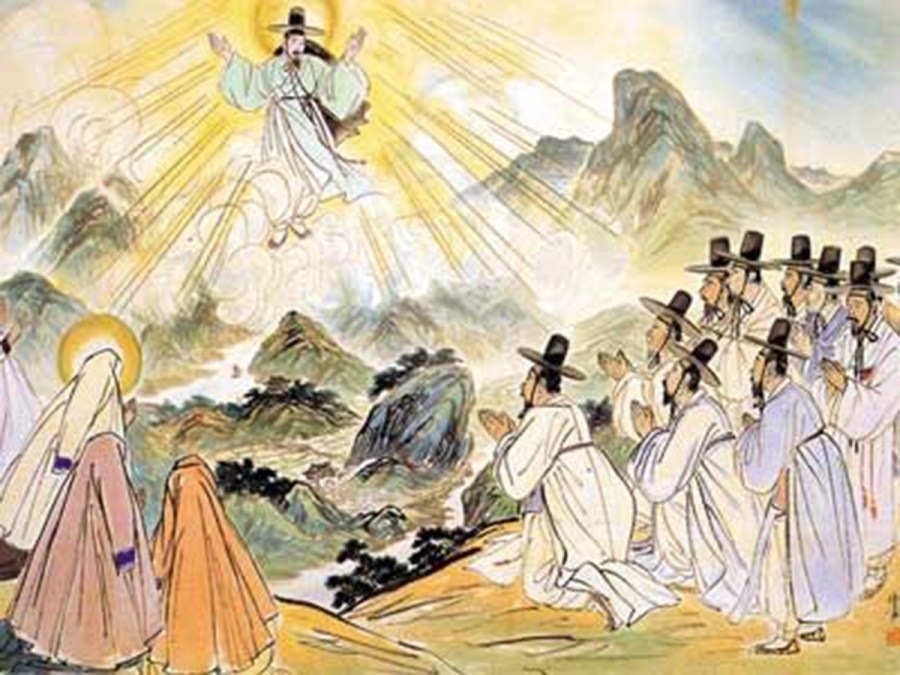


 Have you seen a spirit? When the word ‘spirit’ is mentioned, what image does appear in your mind? Perhaps, scary ghosts from some urban legends or Hollywood horror movies. The word ‘spirit’ conjures terrifying and often creepy images because it is related with the dead, the afterlife, and unexplained paranormal phenomenon. The Church herself warrants the existence of evil spirit or the demons, as the Church fights them through the ministry of exorcism.
 Jesus was about to leave His disciples and go back to His Father. The disciples were confused and failed to understand. Some were afraid of losing their Messiah. Some were puzzled by the actions of Jesus. Yet, despite this confusion and fear, Jesus reminded them not be troubled and to have faith in God and in Him.
 Jesus is not the gatekeeper, but Jesus is the gate Himself. A gate or a door gives a passage or access to a sheepfold, a house, a building or a room. It both separates and connects the insiders and the outsiders. In fact, the gate is as essential as the house itself. What is the building without a door or an entry point? It is either a construction error or it is not a sheepfold or a house at all. The gate is not only an accessory to the house, but it also defines the house itself. Is it an accessible house, locked house or not a house at all?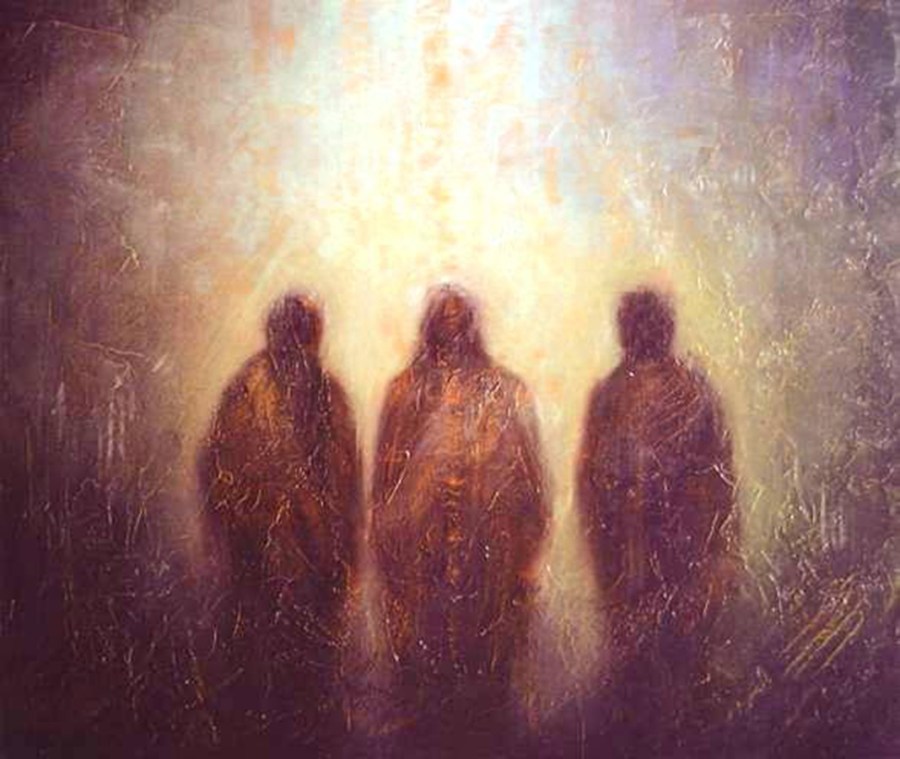
 Luke wonderfully narrated the Journey to Emmaus in such a way that it became a catechetical instruction on the Eucharist. The two disciples were actually running away from Jerusalem. After the death of their master, the situation turned to be dangerous for their lives. They were afraid of the Jewish authorities and their hope and dream of having a Messiah were shattered. Better for them to go away and return to their former lives. Yet, Jesus surprisingly came, healed their wounds, and reappointed them as His apostles. However, let us see some details of today’s Gospel and how this narrative speaks of the Eucharist.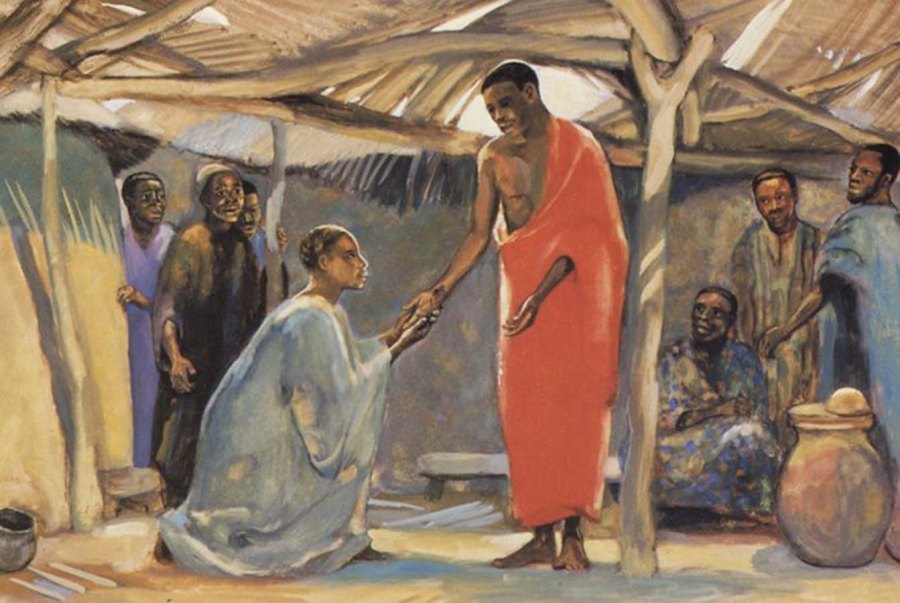
 Thomas was looking for a proof that Jesus truly rose from the dead. Not only seeing Him in person, he required another sign: touching the crucifixion marks that Jesus bore. He was one of the Twelve, the inner cycle of Jesus’ disciples, and being one, he had the privilege to walk with Jesus, dine with Him, and witness His mighty deeds. At a first glance, he would easily recognize Jesus, his Master, but still, he demanded the marks of the nails. Why did Thomas insist on searching the wounds?
 In Medio Ecclesiae