

30th Sunday in the Ordinary Time. October 23, 2016 [Luke 18:9-14]
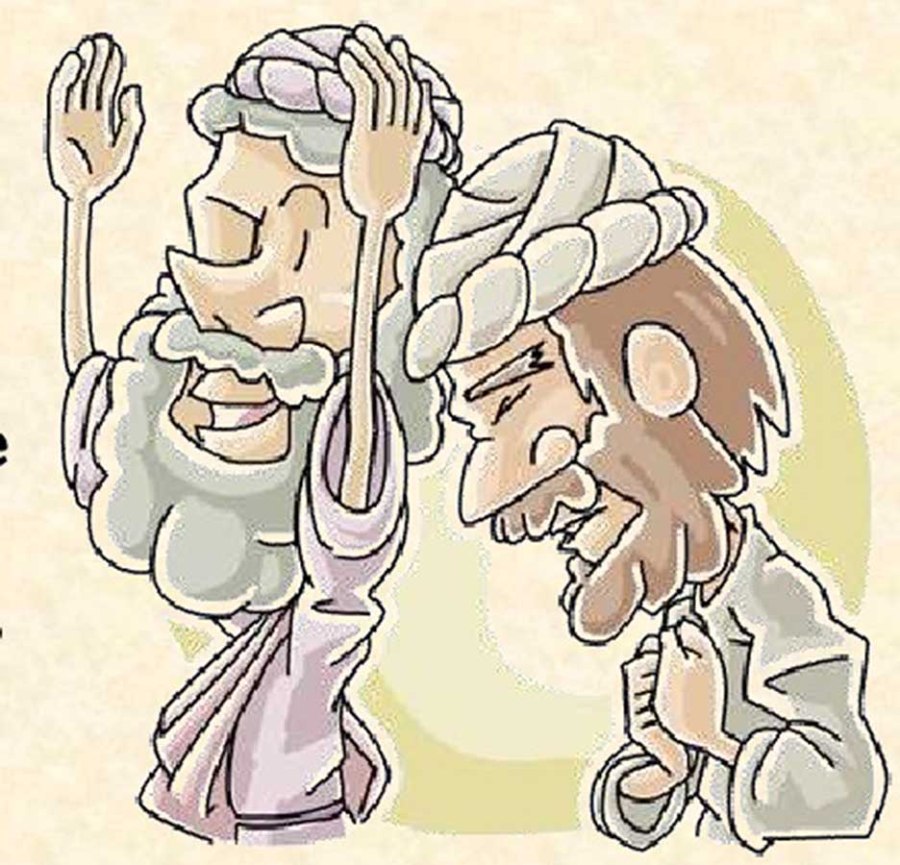
The Pharisee took up his position and spoke this prayer to himself, ‘O God, I thank you…” (Luk 18:11)
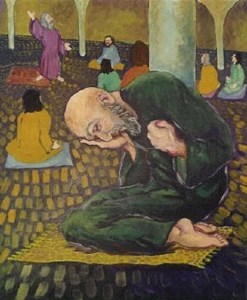 Last Sunday, Jesus reminded us to pray without getting weary. But, in today’s Gospel, Jesus tells us that there is something more than perseverance in prayer. It has something to do with the way we pray. Not only quantity of prayer, but also the quality of prayer. Yet, how do we know that we have a quality prayer?
Once I stumbled upon a Facebook post, and it said, “Pray not because you need something, but because you got a lot to thank God for.” True enough, everything I have is God’s gift. I am nothing without Him, and it is fitting to thank Him. In fact, the highest form of worship in the Church is the Eucharist. The word Eucharist simply means thanksgiving. I liked the post right away. However, when I read the parable in today’s Gospel, I realized that even the Pharisee did a thanksgiving prayer. In fact, in original Greek, when the Pharisee thanked God, he used the word ‘eucharisto’, the root word of the Eucharist. On the other hand, the tax collector was justified because he was asking mercy and forgiveness. Does it mean prayer of supplication and begging for mercy is better and more effective than the prayer of thanksgiving and other kinds of prayer?
Yet, if we read closely, there are some interesting details in the Parable. The first is that the Pharisee expressed his self-righteousness, paraded his good works, and felt better from the rest of humanity, especially the tax collector. Meanwhile the tax collector did nothing but humble himself, acknowledging that he was a sinner and in need of God’s mercy. Thus, prayer needs a right disposition. Humility is the foundation of prayer. Indeed, repentant David himself said, “My sacrifice, God, is a broken spirit; God, do not spurn a broken, humbled heart. (Psa 51:17)”
The second detail that we often miss is that the Pharisee was actually praying to himself, not to God (see closely verse 11). True that he mentioned God, but he was talking to himself. He offered prayer to himself not to God. If then prayer is our communication with God, the Pharisee nullified the very meaning of prayer. Perhaps, by mentioning God, he wanted God to be his audience and to listen to the litany of his successes, not really to build a relationship. Certainly, it felt good and edifying, but this was not prayer. What the Pharisee did was not a prayer at all, but a self-praise and self-service.
We may hear the Holy Eucharist every day, recite the Liturgy of the Hours faithfully, and pray the rosary. We may also join the Charismatic prayer meetings or the praise and worship. We may also attend the Latin Traditional Mass, or just simply spend silent prayer or meditation. Yet, from the parable, we may ask ourselves, whether our prayers are a true prayer? Do we pray because we feel great about it? Do we pray because we are proud of our achievements? Do we pray because we are more pious than others? Does our pray make us closer to God or just to ourselves? Is humility the foundation of our prayer? Our prayer should be a quantity and quality prayer. We pray with perseverance and proper disposition. But more than these, our prayer should be a true prayer.
Br. Valentinus Bayuhadi Ruseno, OP

 Getting tired and bored is unwanted yet unavoidable part of our lives. After doing things for a certain period of time, we get exhausted. Even if we are doing something we love, we are also bound to feel weary. Indeed, a man marries the woman he loves, but after sometime, encountering disappointments and problems, he begins to think whether he made the right decision. A woman loves dearly her teenage girl, but after sometime, her girl gets involved in substance abuse and runs away with his friends. She spends all her money and energy to win her daughter back yet to no avail, and she simply gets tired. As a religious brother, I love my vocation, but after years of waking up early, attending Mass and prayers, and plunging myself in rigorous study, I get bored.
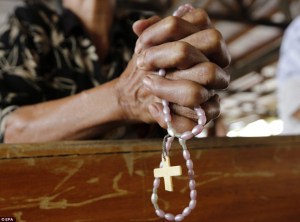 October is the month of the rosary. Allow me to reflect on this ancient yet ever new form of prayer. Why October? It all started when Pope Pius V, a Dominican, dedicated October 7 as the feast of Mary Our Lady of the Rosary after the battle of Lepanto. In this naval battle of October 7, 1571, the smaller Christian army fought the much larger and powerful Ottoman Turks’ forces that planned to invade Europe at the Gulf of Lepanto in Greece. While the battle was being waged, the Holy Pontiff and all Christians prayed the rosary asking the intercession of Our Lady. After hours of confrontation, the enemy’s fleet was roundly defeated.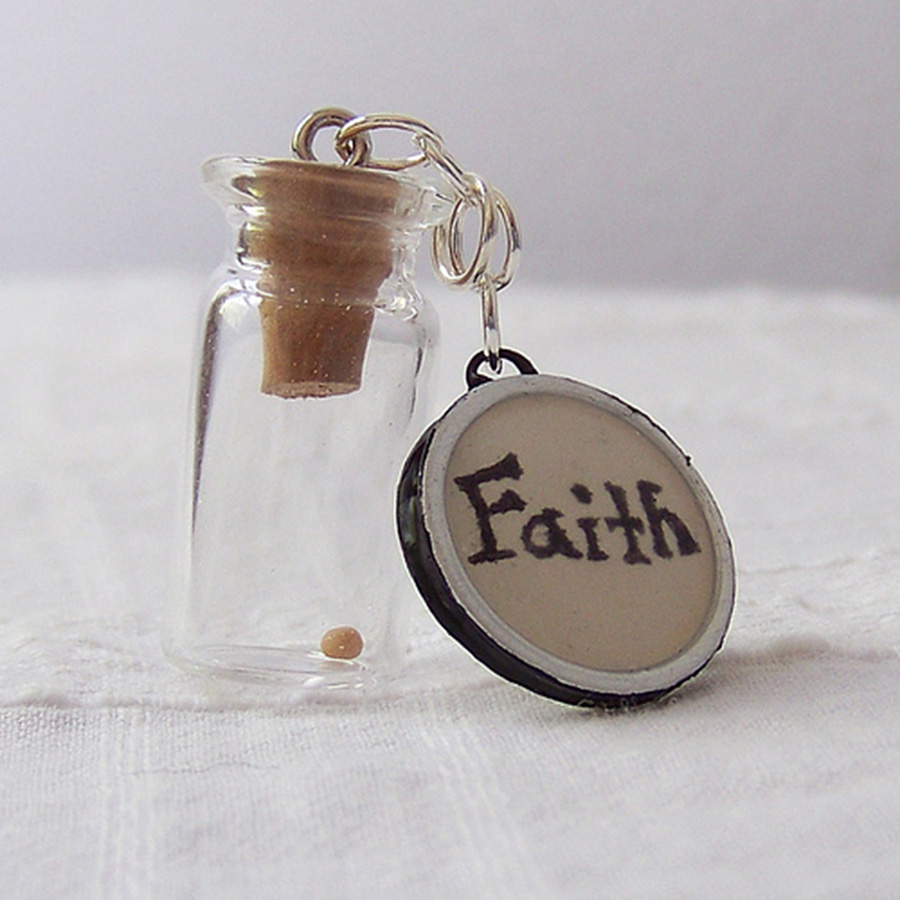
 Reading through today’s Gospel, it seems to have faith is to perform some sort of magical power. If I have faith, I can create rice field on the seabed. If I have faith, I can made a Lamborghini car out of pile of garbage. If I have faith, I can transform my voice like Ed Sheeran. But, faith is not like that. It is not a magical show to entertain us. It is neither an instant answer to our wishes. Yet, it remains true that even the smallest of faith can make the difference.
 When Abraham said to the tormented rich man, “My child, you have received what was good during your life,” does it mean I will be thrown to the netherworld as well? I admit I have received so many good things in my life. I enjoy three good meals a day. I am studying in one of the best schools in the country. I do not have to worry about the security and future of my life. Many of us are enjoying the good things in this world, and we may ask ourselves, “are we going to have the same fate with this rich man in the parable?”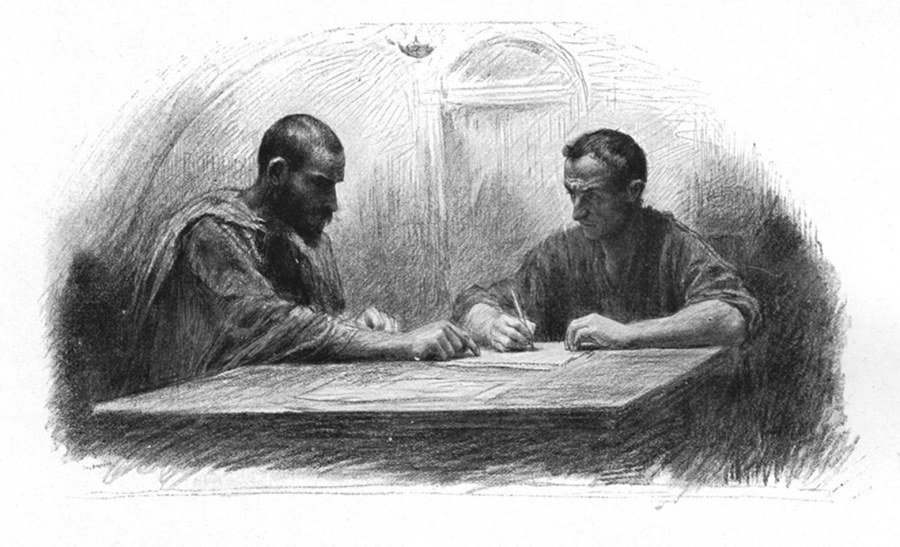
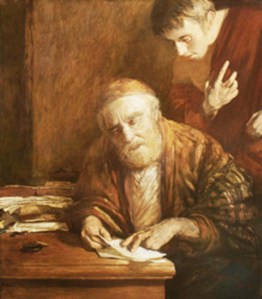 We were created in the image of God. Thus, our true happiness is only in God. As St. Augustine would say, “You have created us for Yourself, O God, and our hearts are restless until they rest in You.” St. Teresa of the Avilla would echo the same truth when she simply said, “God alone suffices.” But, we were also born into the real human body within a complex and concrete world. As we journey toward God, we cannot totally separate our soul from the various mundane concerns. Even the monks and nuns living in monasteries will still work hard to fulfill their daily and basic needs.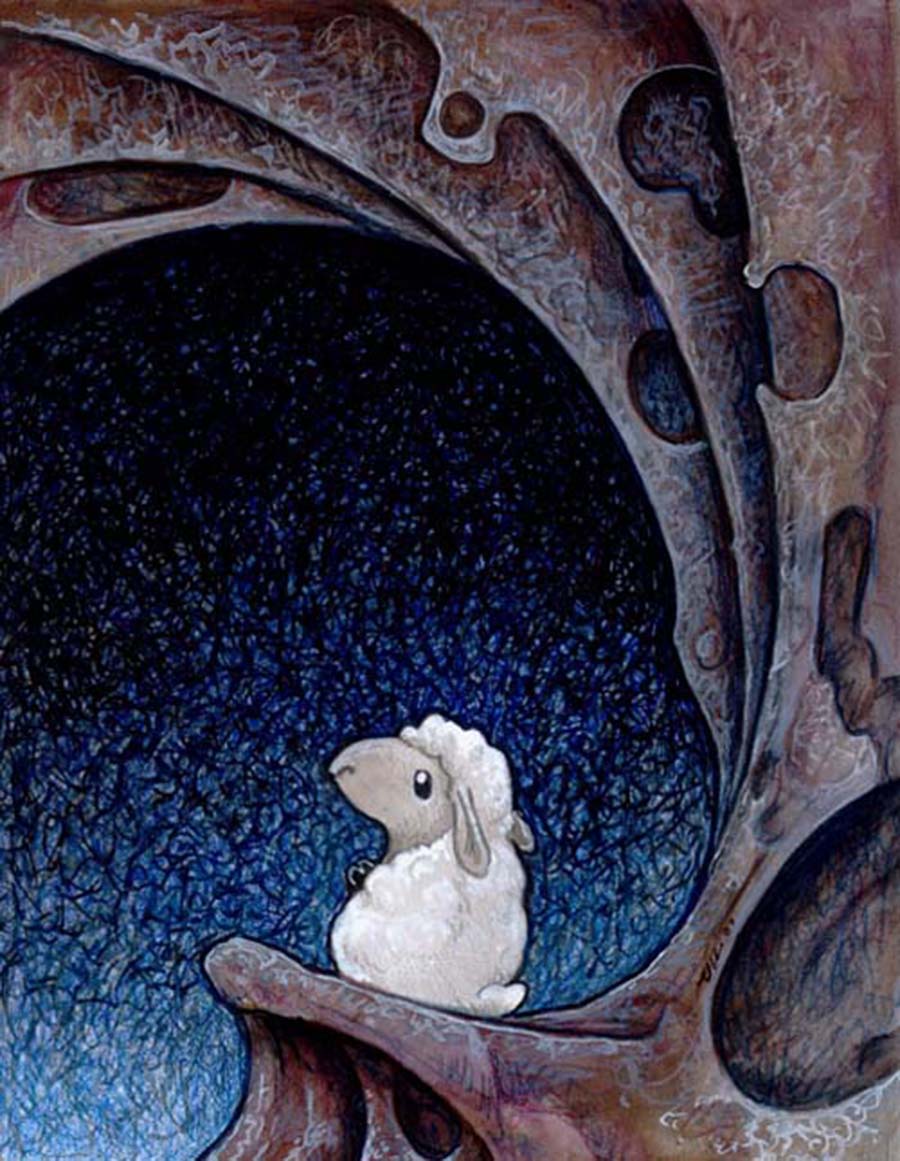
 The parable of the lost sheep subtly speaks of who we are fundamentally to Jesus. We are all His sheep and He is our shepherd. Whether we faithfully remain inside the sheepfold or go astray, we are still His sheep.
 Being a disciple is an essential character of Jesus’ followers. In our time, a disciple may mean a student of particular teachers or schools. Like Br. Bayu is a student of the University of Santo Tomas, Manila. In ancient time, especially in Eastern and Jewish tradition, being a disciple has a different understanding. A disciple would not only accept his master’s teachings, but literally follow his Master wherever he would go and stay. Disciples would not only learn on various insight, but also witness and imitate how their master lived his life. They shared their master’s meal, and they were part of their teachers’ joy and sadness. Thus, being a disciple is not only about an intellectual education, but also a holistic formation. It is fundamentally sharing the very life of the master himself.
 In the time of Jesus, Jews had their own special way of dining. Instead of sitting or standing the Jews would recline on a low table where food and wine are served. Reclining was the sign of free man in Greco-Roman culture. The slaves stood and served the guests. Aside reclining posture, their place in the dining table indicated their importance to the host. The closer they were to the host, the more significant they were to the host. Thus, persons sitting beside the host were expected to be the most important guests.
 Salvation is both a gift and a choice. It is free yet it is never cheap. It is a gift because it is freely given by God and no one earns it. Yet, it is a choice because we make all the efforts to receive it and make it ours. Through His death and resurrection, Jesus has made available the grace of salvation for everyone. But, we need to participate in His work of salvation by living out the gift of faith in our daily lives.
 In Medio Ecclesiae