Surpassing the Pharisees

6th Sunday in Ordinary Time. February 12, 2017 [Matthew 5:20-37]

 “I tell you, unless your righteousness surpasses that of the scribes and Pharisees, you will not enter into the kingdom of heaven. (Mat 5:20)”

phariseeThe word ‘Pharisee’ has a rather negative connotation for us. In the Gospels, they are the bad guys. They often argued with Jesus and Jesus challenged their way of life. Even some planned to get rid of Jesus (see Mat 12:14). In our time, the term ‘Pharisaic’ simply means hypocrite.

However, if we look from another angle, the Pharisees are not that ugly. In the time of Jesus, they had important roles to play. They, in fact, revolutionized the Jewish society itself. What did they do? They brought the Law, various rituals and devotional practices from the Temple of Jerusalem to the Jewish communities and families in Israel. Many Pharisees took care of the local synagogues and made sure that the people would observe properly the Law and its traditions, like the Sabbath and rituals of cleansing. Unlike the priests who served in the Temple, the Pharisees were lay people who loved the Law in their ordinariness of life. Thus, when the Temple was destroyed by the Roman army in 70 AD, the priestly clan also disappeared, but the Jewish cultural fabrics and religion continued to live because of the Pharisees, the lay people.

Jesus criticized them not because they were following the Law and traditions, but because of their ‘interpretations’ of the Law. Doubtless, the Pharisees loved the Law of Moses dearly, but they fell into fundamentalism. They absolutized the letters of the Law and the traditions, and trivialized what or who is actually at the service of the Law: God and fellow human beings. To become a fundamentalist means we opt to follow the dead letters of the Law of the Bible, which is easier, rather than to dialogue with the Person behind it and persons in front of it.

Without realizing it, many of us are acting like the Pharisees. Like them, we love God, His Law, and His Church, but sometimes, we are too busy with the trivial things. I am sad when some people are arguing on how to receive the Holy Eucharist, kneeling, standing, by hands or directly to the mouth. Some accuse Charismatic mass as heretical. Others label the Latin Mass as ultra-conservative. I am also saddened with a young Catholic apologist who is zealously debating on the Internet, yet does not lift a finger to help his sick mother. Yes, Sacred Scripture and the Liturgy is an essential part of our faith as the exercise of the priestly office of Jesus Christ and means of salvation, but if we are disintegrated because of details of the rituals, we miss the point.

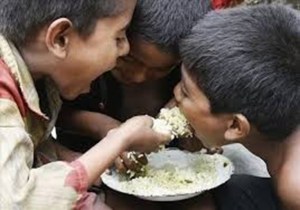
We forget to transform our love for God and His Church into love for others. St. Dominic sold his expensive books made of animal skins so he could feed the poor, and argued, “Would you have me study from these dead skins when the living skins are dying of hunger?” Who among us are involved in feeding the poor around us? Who among us are doing something meaningful to the victims of injustice in the society? Who among us have the patience towards our ‘difficult’ brothers and sisters in the family or community? Remember that we are called to surpass the righteousness of the Pharisees.

Br. Valentinus Bayuhadi Ruseno, OP


Why Salt?

5th Sunday in Ordinary Time. February 5, 2017 [Matthew 5:13-16]

“You are the salt of the earth… (Mat 5:13)”

Picture 006
Picture 006

 Jesus says that we are the salt of the earth. We note that He does not say we are ‘like’ the salt of the earth. In literature, we learn that the former is called a metaphor and the latter is a simile. The two sentences look similar, but actually, the difference is significant. Take note of the difference: I am Bayu and I am like Bayu.  The two illustrate that the usage of ‘like’ makes things different considerably. One gives us an essential connection, while the other points only to an accidental relationship.

Jesus sees that being the salt of the earth is not merely accessory, but essential and defining to the identity and mission of His disciples.  Like I cannot be Bayu in the morning and be John in the evening, so we cannot be salt on weekdays and be sugar in weekends. We are salt every second of our lives. This is what we call a vocation. Being salt is our vocation.

Ordinarily, salt is for seasoning. We hate it if the food is too salty, but we hate more if the food is tasteless. Once at our Lenten observance in my minor seminary, we ate salt-less food, and the taste was truly awful. Yet, since we were hungry, we still consumed the food. That was the moment I appreciated the importance of salt. Being salt, we are to make the difference in the world with our good deeds, yet not ‘too salty’ that we simply draw the attentions to ourselves. Again, we do good all the time, not only when others are looking at us, not only when we feel good and motivated, not only when we expect a reward.  A good mother will not do good to her children only Monday to Friday. Nor a good father will only raise his potentially successful children and abandon the rest.

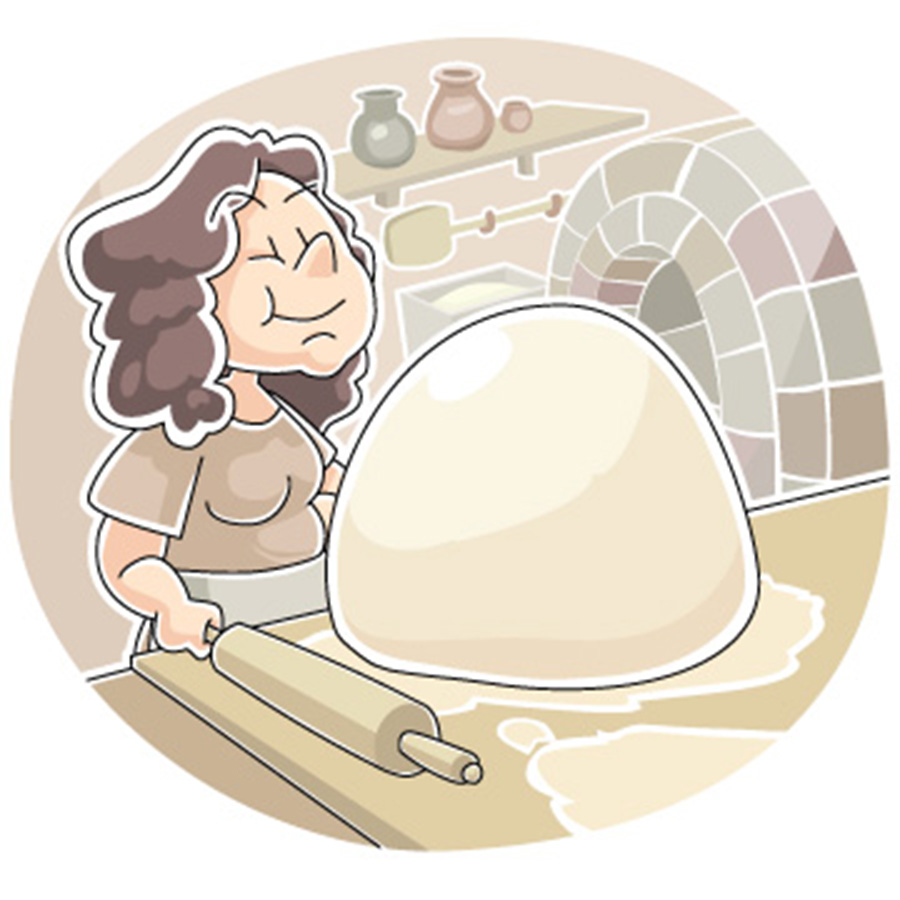
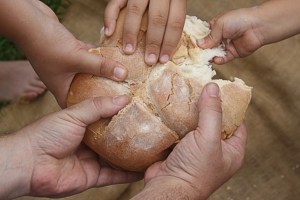
However, we may ask a deeper question: why does it have to be salt? We are well aware that aside for spicing up, salt has practically no nutritional values. Even some scientists link excess salt to health problems like high blood pressure. Why not something more substantial like rice, pasta, or noodles? The answer may be simple: it is not our vocation to become the true source of sustenance and nourishment. It belongs to Jesus. That is in the Gospel of John, Jesus called Himself as the Bread of Life (Jn 6:35). In the Philippines, we have this popular bread called ‘pandesal’ (literally means bread of salt). It is a small bread made of flour, yeast, egg, sugar and salt, a bit sweet rather than salty. The amount of salt is insignificant, and yet it enhances the taste of the bread, makes it pleasurable to our senses. Yet again, salt is not the real thing, but the bread.

As salt, it is not us who give the fullness of life, but our vocation is to bring Jesus to others so that they may have the life. Our goodness, our achievement, our ministries are not to draw praise to ourselves, but through our good deeds others may feel God even more. That is who we are: Salt.

Br. Valentinus Bayuhadi Ruseno, OP

Disciples not Crowds

Fourth Sunday in the Ordinary Time. January 29, 2017 [Mat 5:1-12]

“When Jesus saw the crowds, he went up the mountain; and after he sat down, his disciples came to him (Mat 5:1).”

sermon-on-the-mountMatthew chapters 5 to 7 are well known as the Jesus’ sermons in the Mount. The section contains classic teachings and parables of Jesus like Beatitudes, the love for one’s enemy and the golden rule. Before Jesus began his sermon, He was sitting down. This gesture actually symbolizes the teaching authority of Jesus. On the Mount, Jesus was the teacher, and as a good teacher, He would expect people to listen attentively to His words. Thus, before Jesus commenced His sermon, He went up to the Mount to separate Himself from the crowd. Jesus knew that being part of the crowd was practically effortless and usually motivated selfishly: to be cured, to be fed and to be entertained. It could turn out to be very superficial, as a mass of people is drawn to one charismatic and powerful leader like Jesus, yet the moment its need is served or its leader is no longer satisfactory, it would be naturally disbanded.

The Sermon on the Mount was intended not for the crowd, but for a small group of people who would sit around Jesus and listen to Him carefully. These were the disciples.  Indeed, the teacher-disciples relationship is one of the most fundamental for us Christians. If we seek Jesus merely to be emotionally satisfied and economically profitable, we are just part of the crowd. And this is not our vocation. Jesus calls us into a more rooted and mature relationship with Him. He wants us to be His disciples, to listen to His teachings and follow Him.

However, to become a disciple in our time is seriously challenging. We are now part of the digital generation. We are people who hold latest iPhone or Android on our hands, access internet 24/7 and are exposed to countless TV channels. We move from one TV program to another, jump from one web to another, use one app to another, go from one entertainment to another. As a consequence, the span of attention of many people especially the young people is sharply declining. I am teaching Theology and Scriptures to young people, and I have to be always engaging and using various methods and multimedia. The moment these young ones lose their interest, they will not listen and immediately be busy with something else. Thus, no wonder that people cannot stand the boring and tedious homilies. Some choose another mass with a better preacher, some opt to look for another parish, others decide to attend worship service in other churches, and the rest find it altogether meaningless going to the mass.

Certainly, it is a challenge for preachers like myself to improve our preaching, to be more engaging and sensitive to the needs of the contemporary listeners. Yet, it is also true that we, the disciples of Christ, are invited to regain that humility and listening ears. Jesus and His Church are not a global amusement park. We come to Jesus not as crowd looking for instant happiness. Otherwise, we treat Jesus as a mere drug, and we are a kind of religious drug-addict! We pray that we continue to listen to Him even in times that we do not feel it as fun. We pray that we go beyond the crowd mentality and become Jesus’ true disciples.

Br. Valentinus Bayuhadi RUseno, OP

Capernaum

Third Sunday in Ordinary Time. January 22, 2017 [Matthew 4:12-23]

“He left Nazareth and went to live in Capernaum by the sea, in the region of Zebulun and Naphtali (Mat 4:13)”

journeyJesus began His public ministry by moving to another town in Galilee. From his hometown Nazareth to a bigger and more dense Capernaum. It was an ancient urbanization! Nazareth was small and scarcely populated, while Capernaum was one of the fishing centers in the Sea of Galilee. It was where people came, gathered, and interacted with each other. Had Jesus commenced His mission in Nazareth, probably, it would have taken more time to grow. Capernaum gave critical advantages for Jesus. It was easier to gather people, preach and attract followers. As a port city, it eased up Jesus mobility to other places in Galilee. And, Capernaum provided Jesus with shelter and other resources for His preaching. The reason for migrating was practical and yet decisive.

When St. Dominic started his Order, one of the first things he did was to send his small and fragile group of friars to big university cities like Paris and Bologna. His move was criticized as careless and dangerous. It could have swept away the infant community of Dominic. But, He insisted. “Stored seeds rot!” Dominic was actually able to think like Jesus. In bigger cities, it was much manageable not only to study, but also to preach and invite generous souls to be part of the community. Thus, Dominic made a clear instruction as he sent his brothers: “to study, preach and build community.

Our time is characterized with mega migration. Countless people move from town to another, from one country to another, and from one continent to another with ease and speed. And like Jesus, we migrate for practical cause as well as survival. We go places because of our works, our family, or our dreams. My life as a seminarian and a Dominican is also marked with constant movement. As early as fourteen years old, I left my hometown Bandung to enter the seminary in Magelang. Then, from Indonesia to Manila in the Philippines.

Going back to today’s Gospel, St. Matthew does not only see Jesus’ migration as practical solutions to His ministry, but as fulfillment of God’s promise: “the people who sits in darkness have seen a great light.” As Jesus travelled from one place to another, He brought light to others that they may see God whose Kingdom has come. Jesus immediately preached the Good News and called Andrew, Peter, James and John to His disciples. Jesus accommodated the practical and temporal things in His disposal for His mission. And He was faithful to this to the end. He used the cross, the practical means of torture and humiliation as means of presenting God’s love and salvation.

The same mission is given to us. As we move from one place to another, we bring also the light of Christ with us. Like newly-wed persons, we are called to enlighten our new families. As workers, we are to denounce what is evil in our new workplaces. As people who live on this earth, we shall take care of the creations in every land we step.   


Br. Valentinus Bayuhadi Ruseno, OP


The Little Lambs of God

Second Sunday in Ordinary Time. January 15, 2017 [John 1:29-34]

“Behold, the Lamb of God, who takes away the sin of the world (Jn 1:29).”

the-lamb-of-god

John the Baptist calls Jesus the Lamb of God who takes away the sin of the world. This very phrase eventually became part of the Eucharist and we faithfully recite or sing ‘the Lamb of God’ just before we receive holy communion. But, what does it mean? Why does it have to be a lamb? Not an orangutan, a giraffe or a komodo dragon? Why an animal, not a plant, a fruit or a mobile phone? To make it more intelligible, we have to go back to the Jewish ritual meal of Passover.

The first Passover meal took place before the Hebrews escaped their slavery in Egypt. Every family has to slaughter an unblemished lamb, put its blood on the doorpost and lintel, and roast the lamb before the entire family consumes it. The story goes that the angel of God came to take every firstborn of the Egyptians, but, he passes over the houses of the Hebrew families because of this blood of the Lamb (see Exo 12). This historic event then was institutionalized and became an annual celebration for the Jewish people, even up this day.

Now, John the Baptist announced a new revelation: Jesus is the Lamb, not only any ceremonial lamb, but of God. This Lamb of God has much superior mission than the first Passover lambs: to take away the sin of the world. This lamb would be sacrificed on the cross and His blood will be poured for our salvation. Like the lamb of Passover which is consumed by the Jews, so the Lamb of God would be partaken by the Christians in the Eucharist. Thus, it is proper for us to remember Jesus as the Lamb of God right before we take the Body of Christ in the Mass.

However, it is true as well that for many of us, a lamb has not much meaning. How many among us have a first-hand experience with this four-legged animal? I myself have no immediately encounter with this mammal, except when I eat it at a restaurant! Yet, we know what it means to sacrifice for the persons we love. A wife faithfully taking care of his aging and sickly husband. Parents giving all their effort, time and money so their children may get the best education and life. A woman abandoning her promising career, entering religious life and serving the poor and homeless. Sacrifice entails pain, it gives away the best of us, our time, life and future, and yet, all sacrifice might not be fully appreciated. But, we continue to sacrifice because we know that is for the best of our loved ones. If we are empowered to give ourselves as a sacrifice, we have become the little lambs of God. We sacrifice ourselves because Jesus has sacrificed Himself for us and made our own sacrifices meaningful and fruitful.

Every time, we participate in the Eucharist, we remember someone has loved us so much and sacrificed Himself for us, and we still receive the fruits up to this day. Now, we are also called to be the little lambs of God for others.

 Br. Valentinus Bayuhadi Ruseno, OP

The Star

The Epiphany of the Lord. January 8, 2017 [Matthew 2:1-12]

 “We saw his star at its rising and have come to do him homage (Mat 2:2).”

three-kings-epiphany

Today we are celebrating the Epiphany of the Lord. The word Epiphany comes from the Greek word ‘epiphananie’, meaning ‘appearance’.  Therefore, today is also known as the feast of the manifestation of the Lord. This celebration is considered to be one of the oldest and most important because the Baby God invited not only the Jews but also the Gentiles, represented by the Magi, to visit and finally worship Him. In His earliest appearance, Jesus brought light to all the nations.

One little question may linger: why did the Magi from the East follow the star? Their journey was based on an ancient belief that the birth of a great king was signified by the appearance of a new star in the sky. Yet, we are never sure what ‘star’ the Magi actually saw. Was it a comet, a supernova, an unusual constellation, a planet, or a supernatural light? One thing we are sure of, this star possessed the greatest importance, that Gaspar, Balthazar, and Melchior abandoned the comfort of their homeland, traveled thousand miles westward and faced all the dangers and uncertainties.

 Now if we look at the night sky, we may observe hundreds and hundreds of stars. Then, we may ask what makes this star of Jesus different from the rest of the lights? These Magi were expert in astronomy or studies of celestial bodies, and they were able to distinguish the star as the one that would bring them to the newborn King. This star does not simply shine just like the rest, but it also illuminates and guides. Like the seasoned fishermen, before the discovery of GPS, they would depend their lives on the light of the stars, and among billion stars on the clear sky, they recognize that only a few truly point them the true directions.

We are all called to be a star. But the temptation is that we simply shine and attract others to ourselves. We fail to recognize that the light that God has given us is to illuminate and guide others to Jesus. When St. Thomas Aquinas was asked what makes his Order more prominent than other congregations, he answered that just like it is better to illuminate than to shine, so it is better to share one’s fruits of contemplate than just merely to contemplate. Of course, the Benedictines will disagree! One of the major features in the image of St. Dominic is the star at his forehead. Certainly, this is a symbol of guidance and direction for anyone who seeks God. No wonder if St. Dominic is less famous than other Dominican saints like St. Thomas Aquinas, St. Catherine of Siena or St. Martin de Porres, it is because until the end of his life, like a guiding star, his life always pointed to God.

To have the light is not enough. We may become stars that merely shine brightly. We turn to be a campus star, company star, parish star or even star preacher. Certainly, to receive a lot of attention from many people gives pleasure and sense of fulfillment, but that is not the true purpose of our light. Epiphany is the appearance of the Lord, but who among us have tried to cover Him with our dazzling lights? How many people have we led to Jesus? Yet, it is not too late. Epiphany is a time for us to realign with the real objective of our light: not to merely shine, but to illuminate.

 Br. Valentinus Bayuhadi Ruseno, OP

Christmas: Not Caesar, but Jesus

Christmas Eve. December 24, 2016. Luke 2:1-14

“She gave birth to her firstborn son. She wrapped him in swaddling clothes and laid him in a manger, because there was no room for them in the inn. (Luk 2:7)”

christmas-1The story of Nativity of Jesus Christ began with a great person in ancient time. He was Caesar Augustus. He was considered to be one of the greatest Roman Emperors because during his reign, he was able to establish peace and prosperity within his territory. The people adored him and worshiped him as the Savior and the Son of God. He was the hero of the ancient world, but fortunately, he was not the hero of Christmas.

From the great Roman world, we are brought to the small village Bethlehem. Here in this almost insignificant place, we meet the simple and poor couple from another small town, Nazareth in Galilee. They are Joseph, the righteous carpenter, and his expecting young wife, Mary. But, there is no room in the inn, perhaps because the inn is full of people, or because people do not want to receive the poor couple who might not be able to pay the rent. Consequently, Mary has to give birth at the place of animals and simply places her firstborn baby on the manger. This is the story of a lowly couple at the most wretched place on earth. Yet, this is actually our story of real Christmas.

Our salvation is not found in the strongest fortified palace, neither on riches nor prosperity. Our happiness lies in the most unlikely place: at the poor manger in the smallest town of Bethlehem. Our salvation comes not from the greatest emperor with his achievements and honor, but from a meek and defenseless baby. And this is the Good News of the first Christmas.

It is a good news for us because we can be truly happy even without all the new clothes, new gadgets, and all gifts coming from the Malls or shopping centers. It is a good news for us because we can be hopeful even if we are still struggling with so many problems in life, financial difficulties, health issues, relationship meltdowns, and more. God chooses to be born into the families torn by separations. Jesus is born inside war-torn places like in Aleppo in Syria and Mosul in Iraq. Christ is born in poor shanties, amidst the people who never taste an even decent Christmas Eve’s meal.

When Fr. Timothy Radcliffe, OP, former Master of the Order of Preachers, once visited the Dominican sisters in northern Rwanda. It was just after the civil war, generally between the Hutus and Tutsis. The place was frightening and anytime armed groups might ambush them. The sisters’ convent was also marked with bullets holes, sign of battle and skirmish. Inside the convent were the sisters, both the Hutus and Tutsis, and many have lost their family members during the war. Fr. Timothy was there on Christmas Eve, and despite the pain and fear, the entire community decided to celebrate the Eucharist and the birth of Christ together.  In tears yet in joy, the baby was born among them and baby Jesus becomes the sign of hope for a better future.

Christmas shakes our belief in many Caesar we hold dearly, Caesar of wealth, Caesar of power, Caesar of fame. In Christmas, we are reminded that God became man and embraced all our limitations, our sorrow, and pains, and points to a future hope for all of us.

Br. Valentinus Bayuhadi Ruseno, OP

What Jesus Learned from Joseph?

4th Sunday of Advent. December 18, 2016. Matthew 1:18-24

“Joseph her husband, since he was a righteous man, yet unwilling to expose her to shame, decided to divorce her quietly. (Mat 1:19)”

 jesus-n-joseph-2If there is one important person in the life of Jesus, but gets very little attention, this person is no other than Joseph, Jesus’ foster father. He was absent in the Gospel of Mark. In John, he was mentioned only by name. In Luke, his presence was felt, but he was overshadowed by Mary and her unique mission. Only in Matthew, Joseph had a more active role in the beginning of Jesus’ life. Yet, again, he remained a voiceless character, and simply disappeared as Jesus began his mission. Still, Joseph had significantly influenced the life of Jesus.

One of the recognizable influences was that Jesus inherited the profession of Joseph. His father was a carpenter, then Jesus was also called as the carpenter (see Mark 6:3). However, the influence of Joseph is not limited in terms of profession. There was something more. In today’s Gospel, Joseph was called as the ‘righteous man’. In Jewish society, the title ‘righteous man’ means a respectable man who faithfully follows the Law of God or Torah. He was not only well educated in the Law, but Joseph also cherished the Law dearly. Now, if we put ourselves in the shoes of Joseph when he received the news of Mary’s pregnancy, what was probably Joseph’s feeling? As an ordinary man, he must be deeply hurt, felt betrayed, by his soon-to-be wife. As a respectable person in town, he had to endure shame.

As a person who was well versed in the Law, he knew Mary had committed adultery and this sin deserved death (see Lev 20:10). Consumed by his pain and anger, Joseph could have made a public accusation and thrown the first stone on Mary. He had all the right to stone Mary and satisfy his vengeance. But, Joseph chose a different path. Instead using the Law for retaliation, Joseph decided to use the Law to save the life of Mary, and consequently, the life of Jesus. His decision is even more significant because he opted to save Mary even before the Angel Gabriel appeared to him and explained the cause of pregnancy. Despite pain of betrayal and shame, he chose to apply the Law in merciful and loving manner. And this was what Joseph taught Jesus to do.

Jesus argued a lot with the Pharisees and the Scribes on the interpretation of the Law, and for Jesus, mercy and love need to take primacy over vengeance and hatred. Thus, Jesus healed people on Sabbath (see Mat 12:10), allowed His hungry disciples to pick the grain during Sabbath (see Mat 12:1) and spared the life of woman caught in adultery (see John 8:1-11). Finally, Jesus declared that the most important Law of all is the Law of love. Now, we can trace the hands of Joseph and his merciful way in dealing with the Law.

As we prepare ourselves for Christmas, it is good to reflect on Joseph and learn from him. Do we use and create laws and regulations in our society to simply to punish and even kill people, or to heal them? When we are wronged, what is our first reaction? Seeking vengeance or working for reconciliation? What is our understanding of justice? Retaliation or restoration of goodness? We pray that St. Joseph will lead us into just society based on mercy and love.

Br. Valentinus Bayuhadi Ruseno, OP

John and Our Longing for Truth

 Second Sunday of Advent. December 4, 2016. Matthew 3:1-12

In those days John the Baptist appeared, preaching in the desert of Judea and saying, ‘Repent, for the kingdom of heaven is at hand!”

john-the-baptist-2Why did many people come to John the Baptist and listen to him? I believe that the Jewish people hungered for the truth. It might be an inconvenient and hurtful truth, but they longed to hear it.   They were tired of listening to their leaders, like the Pharisees and the Sadducees, who were not honest but were living in hypocrisy. They were exhausted by numerous religious obligations but did not find any inspiration and a good example from their leaders. John came and preached to them the truth with simplicity and integrity, and the Israelites knew that they had to hear him.

Despite the various advancements in our lives, our society is experiencing also the same hunger for truth. We spend years in schools and we learn a different kind of knowledge and various skills needed to survive the demands of our society, but we fail to discover the truth in our midst. After the presidential election in the US, many experts lamented how social media, especially the internet, has opened the floodgate of lies, hoaxes, and fake, perverted news. In Indonesia, especially Jakarta, the situation is not much different. The election of Jakarta’s governor as well as the case of a Basuki Tjahaja Purnama, an out-going governor involved in blasphemy row, have thrown the nation into deeper fragmentations. In the Philippines, various issues from the war on drug that kills thousands, to former president Ferdinand Marcos’ burial, have divided the nation. Various groups have disseminated myriads of news and reports to support their cause and destroy other opposing groups. People have become more and more confused and distracted, not knowing what the truth is.

In this chaos of overloaded information, Hossein Derakhshan, a researcher from MIT, has predicted that our society will become deeply fragmented, driven by emotions, and radicalized by a lack of contact and challenge from the outside. In short, we will make our decisions based on feelings instead of truth. This will create even more confusion despite instant pleasures here and there. All these will lead eventually to despair and profound unhappiness. Yet, deep inside we long for the truth because we are created for truth and have an innate capacity to seek for the truth.

In the midst of this deluge of information, we are called to be John the Baptist, the preacher of truth. Yet, before we proclaim the truth and go against the tide of news, we have to be rooted in prayer and study. John was spending his time in the desert, and in this deserted place, he could train his mind and heart to discern the truth. Some days ago, I delivered a talk on the death penalty in the Bible. Some fundamentalist Bible interpreters can easily lift some verses and justify the capital punishment. This is an easy and instant answer, but it is simplistic. I need to spend hours in research and study just to understand the truth that in the Scriptures, God does not wish the death of sinners in the first place.

Advent becomes a proper time for us to follow the footsteps of St. John the Baptist. We are called to train ourselves to listen to the truth, and preach it with confidence.

Br. Valentinus Bayuhadi Ruseno, OP

Advent: Season of Finding God

First Sunday of Advent. November 27, 2016. Matthew 24:37-44

“So too, you also must be prepared, for at an hour you do not expect, the Son of Man will come (Mat 24:44).”

advent-deeperWe are entering the Season of Advent. This season marks the beginning of the new Church’s liturgical year as well as of the four Sundays preparation for Christmas. Advent is from the Latin word ‘Adventus’ meaning ‘arrival’, and thus, this season prepares us for the coming of Christ.

Our faith speaks of two Advents of Jesus. Historically, Jesus’ first coming was in the little town Bethlehem more than two millennia ago, as a little baby, meek and gentle. We fondly call this day as the first Christmas. Theologians  name this sacred moment in history as the Incarnation. This means the Second Person of the Trinity became flesh and dwelt among us (see John 1:14). on the other hand the Second Coming calls our attention to His final coming as the King and Judge of the living and dead. This Second Coming is integral to our belief system as it was explicitly written in both Apostles’ and Nicea-Constantinople’ Creeds.

In the first coming, nobody expected the Messiah would be born in an extremely simple condition and from the poor family of Joseph and Mary. In time of Jesus, Jews naturally expected a Messiah coming from the royal, influential and well-off families. Though we all believe in the Second Coming, nobody knows also when exactly it will knock on our door. There were a lot of self-proclaimed prophets announcing the end of the world, but none were proven true. As the first coming caught the Jews unprepared, so too the second coming will bring great surprise to all of us.

Thus, to avoid the false expectations as well as complacency, the Church invites us to celebrate the season of Advent. This season trains us to expect His Coming and to expect rightly. But, how does the Season of Advent really make us truly prepare? The answer lies on a third coming. St. Bernard of Clairvaux reminded us that there is also the third coming of Christ. This is taking place between the first and the second Advent of Jesus. Jesus is present in our daily lives and knocks in our hearts. If we possess the virtue to discover God in our daily lives, we will not be caught unguarded with His Final Coming.

The Season of Advent reminds us that the presence of God is actually real and manifold. We need to exert effort to open our eyes and heart. Firstly, His presence is the sacraments, especially in the Eucharist. Every time we partake of the Eucharist, we receive the Real Body of Christ in the form of the sacred host. Secondly, His presence is also manifested in the Sacred Scriptures as the Word of God. Saint Augustine reminds us not only to read and study the Bible but also pray with it, as he writes, “When you read the Bible, God speaks to you; when you pray, you speak to God.” Thirdly, we are also trained to seek His invisible presence around us. On the door of his room, our formator in the seminary placed a large inscription. It writes, “Train your mind to see the good in everything.” Yes, we cannot see God directly, but we can always unearth His good works around us. He is present when we choose to forgive rather than take revenge. He is just around when suddenly our children give us much-needed warm hugs. He is not far when a little-impoverished boy decides to share his small piece of bread for his sickly mother.

Be prepared and find God in your midst!