
Orang Tua Ideal Yesus 

Pesta Yesus Dipersembahkan di Bait Allah

2 Februari 2020

Lukas 2: 22-40
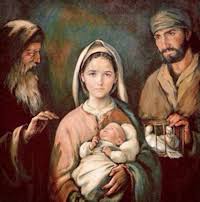
presentation 1Jika kita diberi kesempatan untuk memilih orang tua kita sendiri, orang tua ideal seperti apa yang akan menjadi pilihan kita? Mungkin, beberapa akan lebih suka orang tua miliarder, supaya hidup terjamin, mendapatkan Pendidikan terbaik, dan masa depan cerah. Mungkin sebagian dari kita ingin menjadi anak-anak raja. Jadi, memiliki darah ningrat, dan orang-orang memanggil kita sebagai pangeran, puteri atau bangsawan. Mungkin kita ingin dilahirkan dari megabintang Korea, karena kita ingin menjadi yang tercantik atau paling tampan.

Namun, jika kita mengajukan pertanyaan yang sama kepada Tuhan, apa yang akan menjadi pilihan-Nya? Pilihannya jelas, Yusuf dan Maria. Tapi kenapa? Yusuf dan Maria tidak kaya, dan bahkan miskin. Mereka hanya mampu membeli burung merpati, persembahan orang miskin. Memang, Yusuf adalah keturunan raja Daud, tetapi dalam kenyataannya, ia adalah seorang tukang kayu sederhana dari desa yang tidak dikenal, Nazareth. Saya tetap percaya bahwa Yusuf itu tampan dan Maria cantik! Dari sini, kita dapat menyimpulkan bahwa kekayaan, ketenaran, dan kecantikan fisik sebagai kriteria Allah bagi orang tua-Nya. Jadi, apa?

Jika kita melihat lebih dekat Injil hari ini dan beberapa ayat lainnya, kita dapat menemukan karakter terbaik dari Yusuf dan Maria sebagai pasangan dan orang tua adalah cinta dan iman mereka kepada Tuhan. Maria dan Yusuf mengetahui dengan baik Hukum Allah dan mereka dengan setia mematuhi Hukum-Nya.

Pesta hari ini secara tradisional disebut sebagai Yesus dipersembahkan di Bait Allah [Presentation]. Yesus dipersembahkan kepada Allah di Bait Suci. Mengapa Yusuf dan Maria mempersembahkan Yesus di Bait Suci? Karena mereka sadar akan Hukum Taurat bahwa setiap anak sulung akan dikuduskan bagi Tuhan karena mereka adalah milik Tuhan [lihat Kel 13: 2]. Hari ini juga disebut pesta Pemurnian Maria [Purification of Mary]. Dia dimurnikan bukan karena dia berdosa, tetapi karena menurut Hukum Musa, setiap wanita yang melahirkan akan menjadi “tidak bersih” secara ritual atau tidak layak untuk penyembahan, dan dia harus menjalani 40 hari periode pemurnian, dan pada hari ke-40, dia mempersembahkan korban kepada imam [Im 12: 1-8].

Yesus tidak peduli dengan kondisi ekonomi, status sosial, atau penampilan fisik orang tua-Nya. Yesus mencari apakah orang tua-Nya benar-benar mencintai Allah, apakah orang tua-Nya tahu dan mematuhi hukum Allah, dan apakah orang tua-Nya memiliki iman kepada Allah. Mengapa karakteristik ini penting bagi orang tua Yesus? Karena Yesus memahami warisan terbaik yang dapat diberikan orang tua kepada anak-anak mereka adalah iman, karena uang hanya dapat memberi Anda keamanan dalam kehidupan ini, tetapi iman akan membawa kita ke surga.

Tugas utama orang tua bukan hanya menyediakan makanan, tempat tinggal, dan pakaian, tidak hanya mengirim anak-anak mereka ke sekolah, dan tidak hanya membawa mereka ke dokter ketika mereka sakit, tetapi terutama berjalan bersama mereka ke surga. Seperti Maria dan Yusuf mempersembahkan Yesus kepada Allah, maka kita juga mempersembahkan anak-anak kita kepada Allah.

Valentinus Bayuhadi Ruseno, OP
Kingdom of God

Third Sunday of Ordinary Time [A]

January 26, 2020

Matthew 4:12-17

giving lettersAfter the arrest of John the Baptist, Jesus begins His public ministry. Jesus left Nazareth, His hometown, and moved to a more crowded and bigger town, Capernaum. Crudely speaking, Jesus did urbanization. This strategic move of Jesus was to support His mission. With a dense population and with better access to neighboring towns, Jesus could minister to more people in a more efficient way.

However, Jesus’ movement from Nazareth to Capernaum is not just about practicality and preaching strategy. Jesus was fulfilling the prophecy of Isaiah. “Land of Zebulun and land of Naphtali…the people who sit in darkness have seen a great light…” For many of us, Zebulun and Naphtali do not make any sense, and we tend to skip these verses. Yet, for the first-century Jews, this prophecy is a game-changer because God will gather the lost twelve tribes of Israel, and re-establish the Kingdom of Israel.

Let us go back to the Old Testament a little bit. In 2 Samuel 7, God promised that the throne of David will last forever, however after the reign of Salomon, David’s son, the kingdom of David was divided into two. After some hundred years, these two kingdoms, one by one, were destroyed by the enemies, and the twelve tribes were scattered among the Gentiles. Among the tribes of Israel, only Judah, and Benjamin were able to return to the land of Israel, while the rest, including Zebulun and Naftali, were lost. Jewish people in the time of Jesus knew well that one of the missions of the expected Messiah is to restore the Kingdom and to gather the lost tribes of Judah.

Jesus, the Messiah, came indeed to fulfill this expectation, and no wonder if the first thing He did was to preach that the Kingdom of God is at hand. It is called the Kingdom of God because it is the Kingdom promised by God, built by God, and governed by God. It is the restored kingdom of David, and much bigger than the first David’s kingdom.

However, there is a fundamental difference between David’s kingdom and Jesus’. David’s kingdom was established to fight Israel’s enemies. His kingdom was filled with nobilities, generals, and armies. It was characterized by political rivalry, a struggle for power, and treachery. Finally, it is no different from other kingdoms in the world. All is about “game of thrones”. And like other earthly kingdoms, the kingdom of David was bound to crush as well.

The Kingdom of God basically goes in the opposite direction. It is the Kingdom built upon faith in God, service, and love for others, even to the point of sacrifice. When we were baptized, we become the members of this Kingdom, and in fact, we are transformed into the children of God, calling Him as our Father. However, despite being heirs to the Kingdom, we are not princes, lords or generals. We are servants and lovers. The higher our positions in the Kingdom, the more love and service we shall render. That is why the priests do not have wives, because they are busy serving the people! No wonder St. John of the Cross would say, “in the twilight of life, God will not judge us on our earthly possessions and human success, but rather on how much we have loved.”

Valentinus Bayuhadi Ruseno

Kerajaan Allah

Minggu Ketiga pada Masa Biasa [A]

26 Januari 2020

Matius 4: 12-17

giving waterSetelah penangkapan Yohanes Pembaptis, Yesus memulai pelayanan publik-Nya. Yesus meninggalkan Nazaret, kampung halamannya, dan pindah ke kota yang lebih ramai dan lebih besar, Kapernaum. Sebenarnya, Yesus melakukan urbanisasi. Langkah strategis Yesus ini tentu saja untuk mendukung misi-Nya. Dengan populasi yang padat dan dengan akses yang lebih baik ke kota-kota lain, Yesus dapat melayani lebih banyak orang dengan cara yang lebih efisien.
Namun, pergerakan Yesus dari Nazareth ke Kapernaum bukan hanya tentang strategi marketing. Yesus menggenapi nubuat Yesaya. “Tanah Zebulon dan negeri Naphtali … orang-orang yang duduk dalam kegelapan telah melihat cahaya yang besar …” Banyak dari kita tidak tahu apa itu Zebulon dan Naphtali, dan kita cenderung melewati ayat-ayat ini. Namun, untuk orang Yahudi abad pertama, nubuat ini sangat penting karena Allah akan mengumpulkan dua belas suku Israel yang hilang, dan membangun kembali Kerajaan Israel.

Mari kita lihat kembali ke Perjanjian Lama. Dalam 2 Samuel 7, Tuhan berjanji bahwa takhta Daud akan bertahan selamanya, namun setelah masa pemerintahan Salomon, putra Daud, kerajaan Daud terjadi perang saudara dan terpecah menjadi dua. Setelah beberapa ratus tahun, kedua kerajaan ini, satu per satu, dihancurkan oleh musuh. Kedua belas suku Israel itu tersebar di antara bangsa-bangsa lain. Di antara suku-suku Israel, hanya Yehuda dan Benyamin yang dapat kembali ke tanah Israel, sementara sisanya hilang. Orang-orang Yahudi pada zaman Yesus tahu betul bahwa salah satu misi Mesias yang dinantikan adalah memulihkan Kerajaan dan mengumpulkan suku-suku Yehuda yang hilang.

Yesus, sang Mesias, memang datang untuk memenuhi harapan ini, dan tidak heran jika hal pertama yang Dia lakukan adalah memberitakan bahwa Kerajaan Allah sudah dekat. Kerajaan ini disebut sebagai Kerajaan Allah karena Kerajaan ini dijanjikan oleh Allah, dibangun oleh Allah, dan diperintah oleh Allah. Ini adalah kerajaan Daud yang dipulihkan, dan jauh lebih besar dari kerajaan Daud yang pertama.

Namun, ada perbedaan mendasar antara kerajaan Daud dan Yesus. Kerajaan Daud didirikan untuk memerangi musuh-musuh Israel. Kerajaannya dipenuhi bangsawan, jenderal, dan tentara. Kerajaan yang diwarnai oleh persaingan politik, perebutan kekuasaan, dan pengkhianatan. Akhirnya, tidak ada bedanya dengan kerajaan lain di dunia. Sama seperti serial TV “Game of Thrones”. Dan seperti kerajaan duniawi lainnya, kerajaan Daud pasti akan hancur juga.

Kerajaan Allah pada dasarnya pergi ke arah yang berlawanan. Itu adalah Kerajaan yang dibangun di atas iman kepada Allah, pelayanan dan kasih bagi orang lain, bahkan sampai pada titik pengorbanan. Ketika kita dibaptiskan, kita menjadi anggota Kerajaan ini, dan pada kenyataannya, kita diubah menjadi anak-anak Allah, memanggil Dia sebagai Bapa kita. Namun, meskipun pewaris Kerajaan, kita bukan pangeran, raja atau jenderal. Kita adalah pelayan bagi sesama. Semakin tinggi posisi kita di Kerajaan, semakin banyak kasih dan pelayanan yang akan kita berikan. Itulah sebabnya para romo tidak memiliki istri, karena mereka sibuk melayani orang-orang! Tidak heran St. Yohanes dari Salib akan berkata, “di masa senja kehidupan, Tuhan tidak akan menghakimi kita atas dasar harta duniawi dan keberhasilan manusia, tetapi lebih pada seberapa besar kita telah mengasihi.”

Valentinus Bayuhadi Ruseno

Ignoring Jesus

Second Sunday of the Ordinary Time [A]

January 19, 2020

John 1:29-34

reading the bibleWe begin the ordinary time of the liturgical year. In the Church, we have three cycles of the liturgical year: A, B, and C. every year, we have a different set of readings. In year A, the Gospel readings are mainly from the Gospel of Matthew, meanwhile, year B is from Mark and year C is from Luke. The Gospel of John does not have its separate year, but the readings from John are scattered through the years, especially in the Easter season.

The first reading is usually taken from the Old Testament and it is thematically related to the Gospel. While the second reading is coming from the letters of the apostles like St. Peter, St. John and the letter to the Hebrews, yet the majority of the second reading comes from letters of St. Paul. The second readings have their own sequence and it is not necessarily thematically related to the Gospel. The reason behind why we have this kind of liturgical setting is that to help us, the regular mass-goers, to read the Scriptures together with the Church. If we are faithfully attending the mass every Sunday, or even every day, and attentive to the readings, we will have a good grasp of the Scriptures and especially the life and works of Jesus.

However, not all the Scriptures are there in the Mass. If we go every day to participate in the Eucharist for three years, we only listen to around 30 percent of the Bible. We still have 70 percent to complete the Bible! Thus, it is highly recommended that we take the initiative to read the Bible on our own. Three to four chapters a day, and hopefully, within a year, we are able to read the entire Bible cover to cover.

I guess one of the “great sickness” of Catholics nowadays is the ignorance of the Scriptures. When I ask some Catholics whether they have the Bible, they unanimously answer that they have a Bible, and in fact, they have a collection of Bible coming from different countries. However, when I inquire whether they read the Bible regularly, only a few would confidently reply that they do.

The task of reading the Bible is getting difficult in our time because young generations or the millennials and generation Z, despite their high education, prefer to playing electronic gadgets rather than to read books, and printed materials become an obsolete. Yes, it is easy now to install a Bible on our cellphone but to spend time to read it is another thing. With so many other competing applications in our handheld device, reading the Word of God is easily relegated to the sideline.

St. Jerome reminds us that ignorance of Scriptures is ignorance of Christ. Indeed, it is too easy to say “I love Jesus”, but in reality, we are ignoring Him because we never read or attentively listen to the Scriptures. St. Paul in the beginning of his letter to the Corinthians reminds us that we are called to saints or holy. And holiness for Paul is nothing but living in Christ, but how we can live in Christ, if we do not know Christ, worse ignore him? Reading a Bible on a daily basis can become a simple yet concrete act of loving Jesus, and in fact, the way to holiness as we become more and more like Christ.

Valentinus Bayuhadi Ruseno, OP

Mengabaikan Yesus

Minggu Kedua dari Masa Biasa [A]

19 Januari 2020

Yohanes 1: 29-34

joseph marie lagrangeKita memulai masa biasa pada tahun liturgi ini. Di Gereja Katolik, kita memiliki tiga siklus tahun liturgi: A, B, dan C. Di setiap tahun, kita memiliki serangkaian bacaan yang berbeda. Pada tahun A, bacaan Injil terutama dari Injil Matius, sementara tahun B dari Markus dan tahun C dari Lukas. Injil Yohanes tidak memiliki tahun yang khusus, tetapi bacaan dari Yohanes tersebar di sepanjang tahun, terutama di masa Paskah.
Bacaan pertama biasanya diambil dari Perjanjian Lama dan secara tematis terkait dengan bacaan Injil. Sementara bacaan kedua berasal dari surat-surat para rasul seperti St. Petrus, St. Yohanes dan surat kepada orang-orang Ibrani, namun mayoritas bacaan kedua berasal dari surat-surat St. Paul. Bacaan kedua memiliki urutannya sendiri dan tidak harus secara tematis terkait dengan Injil. Alasan di balik mengapa kita memiliki pengaturan liturgi semacam ini adalah untuk membantu kita untuk membaca Kitab Suci bersama dengan Gereja. Jika kita dengan setia menghadiri misa setiap hari Minggu, atau bahkan setiap hari, dan memperhatikan bacaan, kita akan memiliki pemahaman umum yang baik tentang Kitab Suci dan khususnya kehidupan dan karya Yesus.

Namun, tidak semua Alkitab ada dalam tahun liturgi ini. Jika kita pergi setiap hari untuk berpartisipasi dalam Ekaristi selama tiga tahun, kita hanya mendengarkan sekitar 30 persen dari Alkitab. Kita masih memiliki 70 persen untuk menyelesaikan Alkitab! Karena itu, sangat disarankan agar kita mengambil inisiatif untuk membaca Alkitab sendiri. Tiga hingga empat bab sehari, dan semoga, dalam waktu satu tahun, kita dapat membaca seluruh Alkitab.

Salah satu “penyakit berat” yang menjakiti umat Katolik dewasa ini adalah ketidaktahuan akan Kitab Suci. Ketika saya bertanya kepada beberapa orang Katolik apakah mereka memiliki Alkitab, mereka dengan mantab menjawab bahwa mereka memiliki Alkitab, dan pada kenyataannya, mereka memiliki lebih dari satu Alkitab di rumah. Namun, ketika saya menanyakan apakah mereka membaca Alkitab secara teratur, hanya sedikit yang akan menjawab dengan yakin.

Tugas membaca Alkitab semakin sulit di zaman kita karena generasi muda atau genarasi milenial dan generasi Z, meskipun berpendidikan tinggi, lebih suka bermain gadget elektronik daripada membaca buku. Ya, sekarang mudah untuk menginstal Alkitab di ponsel kita, tetapi meluangkan waktu untuk membacanya adalah hal lain. Dengan begitu banyak aplikasi lain yang bersaing dalam perangkat genggam kita, membaca Firman Tuhan dengan mudah dikesampingkan, dan bahkan kadang-kadang kita lupa ada Kitab Suci di HP kita.

St. Heronimus mengingatkan kita bahwa mengabaikan Kitab Suci adalah sama saja dengan mengabaikan Kristus. Memang, sangat mudah untuk mengatakan “Aku cinta Yesus”, tetapi dalam kenyataannya, kita mengabaikan Dia karena kita tidak pernah membaca atau mendengarkan dengan penuh perhatian Kitab Suci. Santo Paulus di awal surat pertamanya kepada jemaat Korintus mengingatkan kita bahwa kita dipanggil untuk orang-orang kudus. Dan kekudusan bagi Paulus tidak lain adalah hidup di dalam Kristus, tetapi bagaimana kita dapat hidup di dalam Kristus, jika kita tidak mengenal Kristus, lebih buruk mengabaikannya? Membaca Alkitab setiap hari dapat menjadi tindakan sederhana namun konkret untuk mengasihi Yesus, dan pada kenyataannya, jalan menuju kekudusan saat kita menjadi semakin mirip Kristus.

Valentinus Bayuhadi Ruseno, OP

Why Jesus Has to be Baptized

Baptism of The Lord [A] – January 12, 2020 – Mat 3:13-17

baptism of the lord 2One question that always baffles attentive readers of the Scriptures is that why should Jesus be baptized by John the Baptist? John himself proclaimed that his baptism is a sign of repentance. Those who are baptized by John must first acknowledge their sinfulness and unworthiness, and baptism of water becomes the visible token of turning away from sins and promise of a new and better life. Yet, we all know that Jesus is sinless [Heb 4:15; 1 Pet 2:22]. Does it mean Jesus is sinful? Is John the Baptist greater than Jesus?
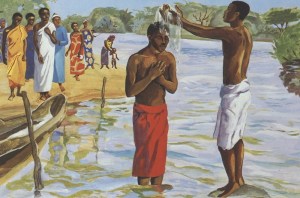
The Gospel of Matthew has pointed out clearly that John the Baptist is not worthy to baptize Jesus and he is in need of Jesus’ baptism. It is Jesus Himself who insists to be baptized by John. Why? Jesus told John, “to fulfill all righteousness.” These words of Jesus certainly difficult to understand, and many theologians have come up with different interpretations to understand better Jesus’ actions and words in this baptism.

 St. Augustine of Hippo, one of the greatest Fathers of the Church, told us in his sermon, “The Savior willed to be baptized not that He might Himself be cleansed, but to cleanse the water for us.” St. Augustine pointed to us that Jesus entering the water as to prepare the sacrament of baptism, and so everyone who is baptized in the name of Trinity will receive the grace of forgiveness and new life. Meanwhile Catechism of the Catholic Church notes that Jesus’ submission to John’s baptism is an act of self-emptying [CCC 1224].

However, Pope Emeritus Benedict XVI has exposed some interesting in his book, Jesus of Nazareth, that Jesus applied the word “baptism” also to His Passion, Death, and Resurrection [see Mrk 10:38; Luk 12:50]. From here, we discover that Jesus’ insistence to be baptized by John because Jesus’ baptism turns to be a symbolic act of His Cross. As Jesus needs to be baptized, so He shall pass through suffering and death as to reach resurrection and bring salvation for all. From the moment of the baptism in the Jordan, Jesus has set His foot to Calvary.

In the Scriptures, righteousness is being faithful to the Convent, and God as the most righteous fulfills His covenant by saving His people (Deut 32:4; Is 5:16; 42:6). Now, Jesus fulfills that same “righteousness” with a perfect and definitive way by His Cross and Resurrection.

So, what all these biblical and theological stuff are for us?  As we know deeper the meaning of the Baptism of the Lord, we shall also follow the footsteps of Jesus. If baptism means His way of the Cross, then all of us who have been baptized, whether as infants or adults, shall share in Jesus’ cross. We are lucky that we are living comfortably as Christians, but more many, to be Christians means discriminations, persecution, and even death. It may be shocking, but Christians remain the most persecuted people on the earth. For us who are more fortunate, we can manifest our baptism with living authentically as disciples of Christ: to be honest despite the possibility of losing earthly gains, to be loving despite many sufferings, and to be honest despite living without fame.

Valentinus Bayuhadi Ruseno, OP

Mengapa Yesus Harus Dibaptis

Pembaptisan Tuhan [A] – 12 Januari 2020 – Mat 3: 13-17

baptism of the lordSatu pertanyaan yang selalu membingungkan para pembaca Kitab Suci adalah mengapa Yesus harus dibaptiskan oleh Yohanes Pembaptis? Yohanes sendiri menyatakan bahwa baptisannya adalah tanda pertobatan. Mereka yang dibaptiskan oleh Yohanes harus terlebih dahulu mengakui keberdosaan dan ketidaklayakan mereka, dan baptisan air menjadi tanda nyata berpaling dari dosa dan memulai kehidupan yang baru dan lebih baik. Namun, kita semua tahu bahwa Yesus tidak berdosa [lih. Ibr 4:15; 1 Pet 2:22]. Apakah ini berarti Yesus berdosa? Apakah Yohanes Pembaptis lebih besar dari Yesus?
Injil Matius telah menunjukkan dengan jelas bahwa Yohanes Pembaptis tidak layak untuk membaptiskan Yesus dan ialah membutuhkan baptisan Yesus. Namun, Yesus sendiri yang bersikeras untuk dibaptiskan oleh Yohanes. Mengapa? Yesus memberi tahu Yohanes, “untuk menggenapi semua kebenaran.” Kata-kata Yesus ini tentu sulit untuk dipahami, dan banyak teolog muncul dengan tafsiran yang berbeda untuk memahami tindakan dan kata-kata Yesus dalam baptisan ini.

 St Agustinus dari Hippo, salah seorang Bapa Gereja terbesar, mengatakan kepada kita dalam khotbahnya, “Juruselamat ingin dibaptis bukan agar Dia sendiri dapat dibersihkan, tetapi untuk menyucikan air bagi kita.” Santo Agustinus menunjuk kepada kita bahwa Yesus memasuki air untuk mempersiapkan sakramen baptis sehingga setiap orang yang dibaptis dalam nama Tritunggal akan menerima rahmat pengampunan dan kehidupan baru. Sementara itu Katekismus Gereja Katolik mencatat bahwa penyerahan Yesus kepada baptisan Yohanes adalah tindakan pengosongan diri [CCC 1224].

Namun, Paus Emeritus Benediktus XVI telah mengungkap beberapa yang menarik dalam bukunya, Jesus of Nazareth, bahwa Yesus menerapkan kata “baptisan” juga untuk Sengsara, Kematian, dan Kebangkitan-Nya [lihat Mrk 10:38; Luk 12:50]. Dari sini, kita menemukan bahwa keinginan Yesus untuk dibaptiskan oleh Yohanes karena pembaptisan Yesus menjadi tindakan simbolis dari Salib-Nya. Sebagaimana Yesus perlu dibaptis, maka Ia perlu melalui penderitaan dan kematian untuk mencapai kebangkitan dan membawa keselamatan bagi semua. Dari saat pembaptisan di sungai Yordan, Yesus telah menginjakkan kaki menuju Kalvari.

Jadi, apa arti semua diskusi alkitabiah dan teologis bagi kita? Semakin dalam kita mengerti arti Pembaptisan Tuhan, kita juga akan semakin dalam mengerti arti pembaptisan kita juga. Jika baptisan berarti jalan Salib-Nya, maka kita semua yang telah dibaptis, baik saat bayi atau dewasa, akan ambil bagian dalam salib Yesus. Kita beruntung bahwa kita hidup dengan nyaman sebagai umat Kristiani, tetapi bagi banyak orang, menjadi umat Kristiani berarti mengalami diskriminasi, penganiayaan, dan bahkan kematian. Ini mungkin mengejutkan, tetapi umat Kristiani tetap menjadi orang yang paling teraniaya di dunia. Bagi kita yang lebih beruntung, kita dapat memanifestasikan baptisan kita dengan hidup secara otentik sebagai murid Kristus: menjadi jujur ​​meskipun ada kemungkinan kehilangan keuntungan duniawi, untuk terus mengasihi di tengah banyak penderitaan, dan untuk menjadi rendah hati ​​meskipun hidup tanpa ketenaran.

Valentinus Bayuhadi Ruseno, OP

Jesus the King

Solemnity of Christ the King – November 24, 2019 – Luke 23:35-43

crossOften we take for granted the name Jesus Christ, without realizing the meaning behind it. The word “Christ” is neither part of the personal name of Jesus nor the family name of Jesus. Jesus earns the name Christ not because of His foster father, Joseph, otherwise, we also call him Joseph Christ and his wife, Mary Christ.
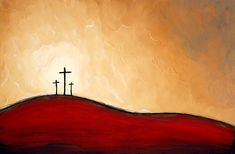
Christ is coming from the Greek word “Christos” meaning “the anointed one”. In Hebrew, the title is even more pronounced, “the Messiah”. For us, the title does not ring us a bell, but for the Jewish people living in the time of Jesus, the Messiah is the fulfillment of God’s promise. In the Old Testament, the title Messiah was given to one of the greatest figures in Israel, King David. He was the Christ because he was anointed by Prophet Samuel, and he was personally chosen by God Himself to rule Israel. During his reign, the kingdom of Israel reached the pick of glory.

Unfortunately, after David’s death, the kingdom was declining and eventually destroyed. In the time of Jesus, almost one millennium after David, Palestine was under the Roman Empire, and lives were awful. No wonder, people were expecting the coming of the Messiah, the new king, that would restore the glory of Israel.

We believe that Jesus is Christ, meaning we believe that Jesus is the expected a king that will fulfill God’s promise. Yet, in today’s Gospel, we discover that Jesus was crucified. He had no army, except disbanded and coward disciples. He had not a palace except a small and poor house in Nazareth. He was insulted, spat upon, and tortured. He bore the greatest human humiliation. Even the criminal who was punished together with Him, mocked Jesus as a good-for-nothing king.

If we focus only on this cross and humiliation, we shall fail to see Jesus as king. For Jesus, being a king is not about gold, guns, and glory. It is neither about force nor control. Jesus is not a war-freak Messiah. So, what does it mean to be a King for Jesus?

 When one of the repented criminals asked Jesus to remember him when Jesus comes into His Kingdom, Jesus said that he would be in Paradise. The word Paradise is a Greek word for “garden”, it originally refers to the garden of Eden. That is what Jesus does as a king: He brings men and women who acknowledge Him as a king to Paradise. And no other kings in the world possess such power to bring us to paradise.

If then we confess that Jesus is the Christ, and now we understand that Jesus is our King, do we honor Him as our King? If Jesus is our King, do we allow Jesus to control us or we control Jesus? If Jesus is our leader, do we align our lives and priorities to His missions, or Jesus has to follow us? When our King summons us for a mission, do we gladly embrace it, or we rather choose our own plans and design?

Valentinus Bayuhadi Ruseno, OP

Yesus sang Raja

Hari Raya Kristus Raja [C] – 24 November 2019 – Lukas 23: 35-43

crossesSeringkali kita menerima begitu saja nama Yesus Kristus, tanpa menyadari makna mendalam di baliknya. Kata “Kristus” bukan bagian dari nama pribadi Yesus atau nama keluarga Yesus. Yesus mendapat nama Kristus bukan karena ayah angkatnya, Yusuf, tetapi senyatanya “Kristus” adalah sebuah gelar yang sangat penting bagi umat Yahudi dan Kristiani pada abad pertama masehi.
Kristus datang dari kata Yunani “Christos” yang berarti “yang diurapi”. Dalam bahasa Ibrani, kata yang digunakan adalah “Mesias”. Bagi kita yang hidup dua ribu tahun setelah Yesus, gelar ini tidak begitu berarti, tetapi bagi orang-orang Yahudi yang hidup di zaman Yesus, Mesias atau Kristus adalah penggenapan dari janji Allah. Dalam Perjanjian Lama, gelar Mesias diberikan kepada salah satu tokoh terbesar di Israel, Raja Daud. Dia adalah Kristus karena dia diurapi oleh Nabi Samuel, dan dia secara pribadi dipilih oleh Allah sendiri untuk memerintah Israel. Selama masa pemerintahannya, Kerajaan Israel mencapai puncak kejayaannya.

Sayangnya, setelah kematian David, kerajaannya terus menurun, dan akhirnya dihancurkan. Pada masa Yesus, hampir satu milenium setelah David, Palestina berada di bawah penjajahan Kekaisaran Romawi, dan kehidupan menjadi sangat buruk. Tidak heran, hampir semua orang Israel mengharapkan kedatangan Mesias, raja baru, yang akan mengembalikan kejayaan Israel.

Kita percaya bahwa Yesus adalah Kristus, artinya kita percaya bahwa Yesus adalah Raja yang telah memenuhi janji Allah. Namun, dalam Injil hari ini, kita menemukan bahwa Yesus disalibkan. Sebagai raja, Dia tidak memiliki pasukan, kecuali para lelaki yang bernyali kecil yang mengaku sebagai murid-murid-Nya. Sebagai raja, Dia tidak memiliki istana kecuali gubuk kecil dan miskin di Nazareth. Dia dihina, diludahi, dan disiksa. Dia menanggung penghinaan manusia terbesar. Bahkan penjahat yang dihukum bersama-sama dengan Dia, mengejek Yesus sebagai raja yang tidak berguna.

Jika kita hanya berfokus pada salib dan penghinaan ini, kita akan gagal melihat Yesus sebagai raja. Bagi Yesus, menjadi raja bukanlah tentang mengumpulkan kekayaan, memiliki senjata paling canggih, dan ketenaran. Ini bukan tentang kemampuan menguasai atau kontrol. Yesus bukanlah Mesias yang hobinya berperang. Jadi, apa artinya menjadi Raja bagi Yesus?

 Ketika salah satu penjahat yang bertobat meminta Yesus untuk mengingatnya ketika Yesus kembali ke Kerajaan-Nya, Yesus berkata bahwa hari itu juga, ia akan berada di Firdaus. Kata Firdaus sebenarnya berasal kata Yunani “paradesos” yang berarti “taman.” Sejatinya, taman ini merujuk pada taman Eden di Kitab Kejadian. Itulah yang dilakukan Yesus sebagai raja: Dia membawa semua orang yang mengakui Dia sebagai raja ke Firdaus. Dan tidak ada raja lain di dunia yang memiliki kekuatan seperti itu untuk membawa kita ke Firdaus.

Jika kemudian kita mengakui bahwa Yesus adalah Kristus, dan sekarang kita mengerti bahwa Yesus adalah Raja kita, apakah kita menghormati Dia sebagai Raja kita? Jika Yesus adalah Raja kita, apakah kita mengizinkan Yesus mengendalikan hidup kita atau malah kita yang mengendalikan Yesus? Jika Yesus adalah pemimpin kita, apakah kita menyelaraskan hidup dan prioritas kita dengan misi-Nya, atau Yesus harus mengikuti kita? Ketika Raja kita memanggil kita untuk sebuah misi, apakah kita dengan senang hati menerimanya, atau kita lebih suka memilih rencana dan desain kita sendiri?

Valentinus Bayuhadi Ruseno, OP

God’s House

33rd Sunday in Ordinary Time – November 17, 2019 – Luke 21:5-9

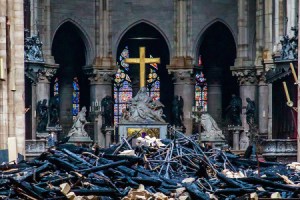
Cathedral of Notre-Dame of Paris fire aftermath, France - 16 Apr 2019During the reign of Herod the Great, the Temple of Jerusalem was refurbished, adorned by gold and other precious metals, and expanded, and thus making it the crown jewel of the Jewish nation. However, the Temple was not merely a magnificent building, but primarily the center of Jewish religious worship and religion. Every morning and evening, sacrifices were offered, and every year, Jewish men from all over the world made their pilgrimage, and paid their homage the Lord God. It was the place where God chose to stay, the place where the Israelites meet their God, and the house of God.

Looking at the majestic view of the Temple and its religious significance, many would believe that the Temple would last forever because God Himself would defend His house. Yet, Jesus prophesied against the sentiment of the Israelites and told His disciples that this beautiful Temple would be destroyed. Surely, Jesus’ words offended the religious sensitivity of His time and one of the accusations against Him was precisely because Jesus spoke against the Temple, against God Himself. Yet, 40 years later, in 70 AD, the Romans under General Titus, burned the Temple and razed the city to the ground.

Jesus’ prophesy opens us to the profound truth that even God allows His house on earth to be destroyed. Hagia Sophia in Constantinople (now Istanbul) was the grandest church in the 4th and 5th centuries and considered to be an architectural and engineering marvel. Yet, when Constantinople fell to the Turks, the church stopped functioning as a Christian worship place. In our time, the Cathedral of Notre Dame was an iconic Gothic building at the heart of Paris. Yet, on April 15, 2019, the fire destroyed many parts of this holy building. Just this month, some churches in Chile became the target of violent demonstrators. They forcefully entered the churches, took out the pews and other religious images, and burnt them outside the churches, not to mention, the desecration of the tabernacles. The houses of God have been the object of vandalism, violent anger, and untold destruction, and God allows those to take place in our midst. But why? Is God weak enough to stop these from happening? Does God not care? Has God forsaken us?

The Churches as the house of God symbolize the inner sanctuary of our faith. An attack on the Church means an attack on our cherished faith. If God allows His house to be humiliated, so God also allows our faith to be challenged, shocked, and shaken. God allows trials to batter our lives, doubts to question our faith, and darkness to envelop our vision. But why?

When the fire that burned the Church of Notre Dame was extinguished, many things have been lost, but at the center of the Church, one image survived the blazing fire: the huge cross stood still. God allows His houses destroyed, and our faith was shaken to show us what truly matters in life and our journey of faith. It is God and God alone. It is not so much the monuments we build for Him nor the works and mission for Him, even our talents, charism and fruits of prayers. These are surely important, but these easily vanish. Only one remains God alone. God allows us to be shaken so we may find Him again, surprisingly more alive and ever closer.

Valentinus Bayuhadi Ruseno, OP