Minggu ke-29 di Masa Biasa
18 Oktober 2020
Matius 22: 15-21
 Untuk memahami Injil hari ini, kita perlu melakukan perjalanan waktu ke zaman Tuhan Yesus. Orang-orang Yahudi pada abad pertama Masehi Palestina bukanlah orang-orang merdeka, dan mereka tunduk pada kekaisaran Romawi. Sebagai penduduk jajahan, mereka diharuskan membayar pajak yang cukup berat. Uang ini pada akhirnya akan digunakan untuk membayar tentara yang menjaga “keamanan” di Palestina. Tak ayal, membayar pajak adalah salah satu hal yang paling dibenci dan menimbulkan gejolak. “Mengapa saya harus membayar untuk penindasan saya sendiri?”
Masalah pembayaran pajak bahkan lebih sensitif karena koin yang digunakan untuk transaksi memiliki gambar atau citra Kaisar. Tidak hanya berukir wajah Caesar, di sekitar gambar, ada tulisan, “Tiberivs Caesar Divi Avgvsti Filivs Avgvstvs (Kaisar Augustus Tiberius, putra Augustus yang ilahi).” Koin itu menjadi semacam hujatan kepada orang-orang Yahudi yang mengakui bahwa tidak ada tuhan, selain Tuhan Allah.
Dengan latar belakang ini, orang Farisi berencana untuk menjebak Yesus dengan pertanyaan yang sangat dilematis: “haruskah kita membayar pajak kepada Kaisar?” Jika Yesus mengangguk, Dia akan dianggap sebagai pengkhianat bagi banyak nasionalis Yahudi dan penyembah berhala bagi orang Israel yang saleh. Tetapi, jika Yesus menggelengkan kepala, Dia akan segera dicap sebagai pemberontak dan menghadapi murka orang Romawi. Namun, tidak pernah bijaksana untuk menguji Yesus, karena itu tidak akan pernah berhasil. Sekali lagi, Yesus tidak hanya lolos dari dilema dengan bijaksana tetapi juga memberikan pelajaran yang mendalam bagi semua orang.
Dia mengambil koin Romawi dan menunjukkan bahwa koin itu memiliki citra Kaisar. Kemudian, Dia berkata, “berikan kepada Kaisar apa yang menjadi milik Kaisar …” Dasar kepemilikan adalah kehadiran “citra.” Koin itu milik Kaisar karena memiliki citra Kaisar. Jadi, membayar pajak sejatinya bentuk pengembalian koin yang sejak awal adalah milik Kaisar dan Kekaisaran Romawi. Namun, Yesus tidak berhenti sampai di situ. Dia juga mengajarkan, “berikan kepada Tuhan apa yang menjadi milik Tuhan.” Dan apakah yang menjadi milik Tuhan? Jawabannya adalah hal-hal yang memiliki citra Tuhan. Kembali ke Kejadian 1:26, kita menemukan bahwa kita diciptakan menurut citra Allah, dan oleh karena itu, Yesus ingin menunjukan bahwa kita adalah milik Allah.
Di sini, Yesus tidak hanya menghindari serangan orang Farisi, tetapi mengajarkan kebenaran mendasar tentang siapa kita dan ke mana kita akan pergi. Kita diciptakan menurut citra Tuhan, bukan citra HP, bukan uang, bukan juga piala. Meskipun mereka mungkin menawarkan kesenangan instan, hal-hal ini tidak bisa memberi kita kebahagiaan sejati. Hanya Tuhan yang benar-benar dapat memenuhi kerinduan kita yang terdalam. Meskipun hal-hal ini secara alami baik dan dapat bermanfaat, mereka hannyalah sarana untuk mencapai tujuan sejati kita, Tuhan sendiri. Kita mungkin sibuk mengejar kekayaan, popularitas atau pengaruh, tetapi apa gunanya kita kehilangan Tuhan?
St Ignatius dari Loyola dalam Latihan Rohaninya mengingatkan kita bahwa, “Manusia diciptakan untuk memuji, menghormati, dan melayani Tuhan, dan dengan cara-cara inilah manusia menyelamatkan jiwanya. Hal-hal lain di muka bumi diciptakan bagi manusia untuk membantunya dalam mencapai tujuan penciptaannya… Oleh karena itu, kita harus membuat diri kita sendiri tak terikat terhadap semua ciptaan… Satu keinginan dan pilihan kita haruslah jatuh pada hal-hal yang lebih kondusif untuk mencapai tujuan penciptaan kita.”
Valentinus Bayuhadi Ruseno, OP
 To understand the parable, we need to see the surprising elements that Jesus offers. Firstly, this is no ordinary wedding, but the royal wedding of the king’s son. Surely, people in the royal list are honored and privileged guests, but they refuse to come, decline the invitation twice and even mistreat the king’s servants. What they do are unthinkable! They fail to see how precious the invitation and rather choose their own trivial business. They are like throwing insult to the king who has honored them. No wonder, the king punishes them.
 Untuk memahami perumpamaan yang kita dengar Minggu ini, kita perlu melihat elemen-elemen yang mengejutkan. Pertama, perjamuan ini bukalah perjamuan pernikahan biasa, tapi pernikahan putra raja. Tentunya, orang-orang dalam daftar undangan adalah tamu terhormat dan istimewa, tetapi mereka menolak untuk datang sampai dua kali dan bahkan menganiaya para utusan raja. Apa yang mereka lakukan tidak terpikirkan! Mereka gagal untuk melihat betapa berharganya undangan tersebut dan malah memilih urusan-urusan sepele mereka sendiri. Mereka sama saja melontarkan hinaan kepada raja yang telah menghormati mereka. Tak heran, raja menghukum mereka.
 The vineyard owner in today’s parable is extraordinary. He knows that the tenants are greedy and corrupt, and if I had been the owner, I would have expelled the tenants right away. Yet, this owner is doing the opposite. He keeps sending His envoys and pleading with them, to the point of giving his own son, the true heir. This vineyard owner must be crazy! Yet, that is how much merciful, and patient God is. However, that is not the end of the story. The thing is if we keep abusing God’s mercy, His justice will eventually prevail.
 Pemilik kebun anggur dalam perumpamaan hari ini luar biasa tak terduga. Dia tahu bahwa para penyewa adalah serakah dan korup, dan jika saya menjadi dia, saya akan segera mengusir para penyewa itu. Namun, pemilik ini melakukan yang sebaliknya. Dia terus mengirim utusannya dan sampai memberikan putranya sendiri, pewaris sejati. Pemilik kebun anggur ini pasti sudah gila! Dan, itulah citra Tuhan kita yang sangat penuh belas kasih dan sabar. Namun, itu bukanlah akhir dari cerita. Perumpamaan ditutup dengan sebuah penghakiman: jika kita terus menyalahgunakan belas kasihan Tuhan, keadilan-Nya pada akhirnya akan meraja.
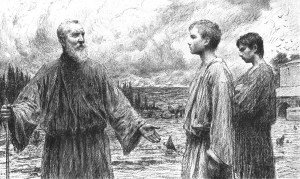 Untuk memahami perumpamaan tentang dua anak laki-laki pemilik kebun anggur ini, kita perlu membaca seluruh Matius pasal 21. Yesus baru saja memasuki kota Yerusalem dan disambut oleh orang-orang dengan teriakan “Hosana” dan ranting palem. Kemudian, Dia pergi ke area Bait Allah untuk menyucikannya dari malpraktek yang terjadi. Jadi, para penatua dan imam kepala, yang bertanggung jawab atas Bait Allah, mempertanyakan Yesus, “siapa kamu? Dengan wewenang apa Anda bertindak demikian? ”
 Reading the entire Matthew chapter 21, we will get the sense of the parable of the two sons of the vineyard owner. Jesus just entered the city of Jerusalem and was welcomed by the people with a shout of “Hosanna” and palm branches. Then, he proceeded to the Temple area to cleanse it from the malpractices plaguing the holy ground. Thus, the elders and chief priests, the one who was in charge of the Temple, questioned Jesus, “who are you? By what authority do you act and teach?”