

7th Sunday of Easter
May 24, 2020
John 17:1-11a
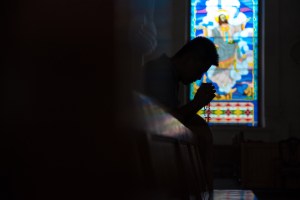 We are aware that prayer is a fundamental part of Jesus’ life. He prays on a regular basis, and especially when He is preparing to embrace decisive events, like Baptism on the Jordan [Luke 3:21], the election of the twelve apostles [Luke 6:12], transfiguration [Luke 9:28], and the Passion [Matt 26:36–44]. However, we seldom hear what Jesus says in His prayers. In the Synoptic Gospels [Matthew, Mark, and Luke], we are fortunate enough to hear Jesus’ compact and emotional prayer in the Garden of Gethsemane before He enters into His Passion. However, John the evangelist makes sure that we are going to discover what Jesus prays, and it is substantially longer than we ever heard before.
John devotes the entire chapter of His Gospel for this prayer [John 17:1-26]. As expected, He prays to the Father with extraordinary affection and confidence. Yet, what makes it noteworthy is that Jesus does not say only about Himself and His mission, but also prays for His disciples. Jesus is acting as the priest who is interceding on behalf of His disciples. That is why we call this section the high priest’s prayer of Jesus Christ.
From Jesus’ prayer, we unearth some powerful lessons:
Firstly, if prayer is essential in the life of Jesus, it is because Jesus understands that prayer is His line of communication to the Father. Jesus knows well that communication is the key to every flourishing relationship. Perhaps, we fail to see this truth, and that is why we feel prayer is burdensome. We are not eager to attend the mass because we simply understand it as an obligation. We relegate personal prayer to the sideline as we make other things as our priority. Sadly, we immediately blame God if our plans do not work according to our whim, or we even threaten God to grant our wishes. Thus, changing perspective about prayer is crucial and even life-transforming.
Secondly, if prayer is communication, then it should always be a dialogue. Often when we start growing in prayer, we think that we need to always say something to the Lord. I remember one seminarian asked me, “Father, what else should I say if I am running out of words in my prayers?” I told him, “Perhaps, it is time to listen to God.” The next expected question is, “How do I listen to God?” Surely there is no one-size-fits-all answer to this, but I like what St. Jerome says, “You pray: You speak to the bridegroom. You read [scriptures]: He speaks to you.” Yet, we need to remember that dialogue of words is not the end of the communication. The end is the unity of the persons in dialogue. Jesus says, “I am in my Father, and you are in me, and I am in you [John 14:20].”
Lastly, our prayer involves the third person. This is the direct consequence of Jesus’ priestly prayer. Prayer is a dialogue, but just like other dialogue, it may speak about other persons. This is when we pray to God for others. Because Jesus leaves us an example in His priestly prayer, it is all the more imperative for us to care for others through prayers. In time we cannot reach other people who need our help; prayers remain the best way to love them. Indeed the saints in heaven continue to care for us despite not able to physically appear to us through their prayers.
Prayer unites us with God in love and prayer also unites us with people we love in God.
Valentinus Bayuhadi Ruseno, OP
 We have closed our churches for public service for weeks. We shifted to livestreaming masses, and we are learning to adjust and to give priority to our health and life, we realize our hearts remain troubled. We long to see Jesus in the Most Blessed Sacrament, we desire to receive Him in the Eucharist, we want to serve Him in the churches, and we miss the sacrament of confession. We are unsure when it is going to end and be back to normal.
 We relate to Jesus in many ways. Some consider Him as a teacher, some call Him as a friend, and some others would simply acclaim Him as Lord and Savior. However, little known to us that the Gospel introduces Him as the bridegroom.
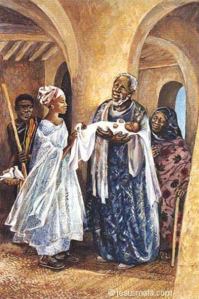 If we are given a chance to choose our parents, what kind of parents will be our choice? Perhaps, some will prefer billionaire parents so that we can sing like Bruno Mars, “I wanna be a billionaire… Buy all of the things I never had… I wanna be on the cover of Forbes magazine, and Smiling next to Oprah and the Queen.” Perhaps some of us want to become the children of a king. So, royal blood is flowing through our vein, and people call us as a prince, princess, or royal highness. Perhaps, we want to be born from Korean megastars, because we want to become the prettiest or the most handsome.
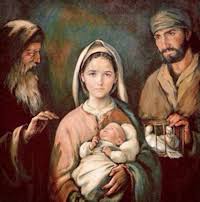 Jika kita diberi kesempatan untuk memilih orang tua kita sendiri, orang tua ideal seperti apa yang akan menjadi pilihan kita? Mungkin, beberapa akan lebih suka orang tua miliarder, supaya hidup terjamin, mendapatkan Pendidikan terbaik, dan masa depan cerah. Mungkin sebagian dari kita ingin menjadi anak-anak raja. Jadi, memiliki darah ningrat, dan orang-orang memanggil kita sebagai pangeran, puteri atau bangsawan. Mungkin kita ingin dilahirkan dari megabintang Korea, karena kita ingin menjadi yang tercantik atau paling tampan.
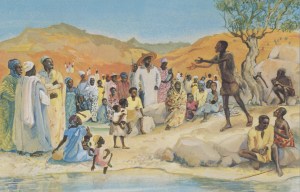 John the Baptist is a prominent figure in four Gospels, and he powerfully appears before Jesus begins His public ministry. But, who is this John the Baptist? His name is simply John, and the Church calls him the Baptist to distinguish him from other John in the Bible like John the son of Zebedee, one of Jesus’ disciples. John the Baptist is the miracle son of Zacharia and Elizabeth in their old days. And since Elizabeth and Mary, the mother of Jesus, are relatives, John and Jesus are closely related to each other.
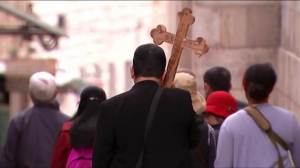 Hari ini kita mendengarkan salah satu ajaran Yesus yang paling sulit dimengerti dan diikuti. Bagi mereka yang ingin mengikuti Yesus, Dia menuntut kesetiaan total, dan menjadi prioritas utama mereka dalam hidup. Baik dalam tradisi Yahudi maupun Kristiani, untuk menghormati orang tua kita adalah salah satu perintah tertinggi dalam Sepuluh Perintah Allah. Tetapi, ketika seseorang meminta Yesus untuk menguburkan ayahnya, Yesus mengatakan kepadanya, “Biarkan orang mati menguburkan orang mati.” Kepada orang yang meminta untuk mengucapkan selamat tinggal kepada keluarganya, Yesus berkata, “Setiap orang yang siap untuk membajak tetapi menoleh ke belakang, tidak layak untuk Kerajaan Allah.” Tidak terbayangkan! Apakah ini benar-benar Yesus yang hatinya tergerak oleh belas kasihan kepada orang-orang miskin? Apakah Yesus tidak lagi memperhatikan Sepuluh Perintah? Bagaimana kita bisa mengerti kata-kata Yesus yang keras ini?
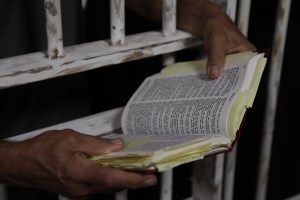 Tiga hari Minggu terakhir ini, kita telah mendengarkan serangkaian ajaran Yesus yang diberikan di Dataran [Luk 6]. Dua Minggu yang lalu, kita membaca tentang Sabda Bahagia. Ini adalah serangkaian kondisi yang menuntun kita menuju kebahagiaan dan berkat sejati. Minggu lalu kita mendapatkan beberapa langkah praktis untuk mencapai Sabda Bahagia ini. Dan hari Minggu ini, kita menemukan inti dari ajaran Yesus: ini adalah pembentukan hati manusia.
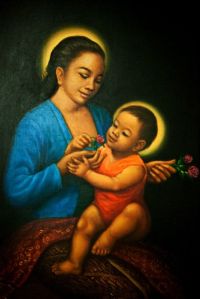 Some of us may wonder why the Church places the celebration of the solemnity of Mary, the Mother of God on January 1, or on the New Year. One may guess that the Church wants us to attend mass on the first day of the year, so as to start the year right. For those who wish to have a long holiday, it might be pretty a killjoy, but for some of us who wish to be blessed for the entire year, it is a nice thought. Yet, surely there is something deeper than that.
 In Medio Ecclesiae