Seeing the Empty Tomb

Easter Sunday. March 27, 2016 [John 20:1-9]

 “Then the other disciple, whom Jesus loved, also went in, the one who had arrived at the tomb first, and he saw and believed (John 20:8).”
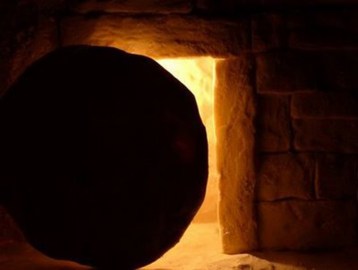
empty-tombWhat do you see inside the empty tomb? Seeing the empty tomb, Mary Magdalene was at lost, terrified and confused. Where is Jesus? Is He moved to the other tomb? Is someone stealing His Body? Peter, the leader of the apostles, did not understand the empty tomb and went home puzzled. All things were so depressing. Jesus was betrayed, denied, tortured, crucified and now he is missing!

Once he was a charismatic preacher, but then, he was dead. Once he was an inspirational leader, but then he was buried. Once he was welcome as a king and Messiah, then He was crucified by the people who welcome Him. Even the tomb where his body rested, was not spared from this cruelty. All expectations were shattered, all dreams were put off, and it was just empty and dark, just like the empty tomb.

When everything seems so absurd and hopeless, one disciple did not give up. He was the disciple who loved Jesus and whom Jesus loved. Indeed, love turns to be the game changer. Only the eyes of love can pierce through the darkest empty tomb and see a deepest meaning of it. In love, Jesus was not lost, and not even dead. He is fully alive, present and vibrant. Easter is our celebration of faith that drives away meaninglessness, hope that prevails over despair. And all of this, only possible when there is love that conquers all. As St. Paul would say, “So faith, hope, love remain, these three; but the greatest of these is love (1 Cor 13:13).”

Easter is the time for us to learn to see what the beloved sees, to see through the eyes of love. As the beloved sees the risen Lord at the empty tomb, we shall see the resurrected Christ as well in this emptiness of life. With the eyes of love, a mother will not see a baby in her womb just as an intruder or burden, but life that holds bright future. With the eyes of love, a wife will not see her aging and sickly husband as mistake, but a living brave soul who dedicated his life for her, despite so many imperfections.

In 2006, after Zimbabwe president, Robert Mugabe, won the election, he decreed operation Murambatsvina, “the cleaning out of the rubbish”. He ordered the demolition of the houses of those people who refused to vote for him during the election. More than 700,000 people watched their home bulldozed. They became refugees in their homeland and begun their life again out of the rubbles of their home. At the heart of this place of refuge, was a small plastic tent, called ‘the young Generation pre-school’. This was a home of a young woman called Evelyn, and she used it as a school in the day. There were around a dozen of her students under the age of eight, nearly all HIV-positive and with TB. Sometimes there was food to eat, but usually, there was none. Yet, Evelyn never gave up taking care of the children and even the children sang welcome songs happily every time guests would visit them. Fr. Timothy Radcliffe, OP once visited her and seeing her condition, he asked her why she did that. She just had one simple reason that she loved the children so much and indeed found meaning and joy in what she was doing.

Easter is the time when Jesus resurrects, defeats death, renews our broken humanity and disfigured world. And all begins at the empty tomb. The question now is: What do you see in the empty tomb?

 Happy Easter!

 Br. Valentinus Bayuhadi Ruseno, OP

Melihat Makam yang Kosong

Minggu Paskah. 27 Maret 2016 [Yohanes 20:1-9]

Maka masuklah juga murid yang dikasihi Yesus, yang lebih dahulu sampai di kubur itu dan ia melihatnya dan percaya (Yoh 20:8).

 Apa yang Kamu lihat dalam kubur yang kosong? Melihat kubur yang kosong, Maria Magdalena  ketakutan, sedih dan bingung. Dimana Yesus? Apakah Dia dipindah ke makam lainnya? Apakah seseorang mencuri tubuh-Nya? Petrus, pemimpin para rasul, tidak mengerti kenapa kubur menjadi kosong dan pulang kebingungan. Semua hal-hal yang terjadi di sekitar mereka sungguh sangat menyedihkan. Yesus dikhianati, ditolak, disiksa, disalib dan sekarang dia hilang!

Dulu Ia adalah seorang pengkhotbah karismatik, tapi kemudian, Ia mati. Dulu Ia adalah seorang pemimpin inspirasional, tapi kemudian Ia dikubur. Dulu Dia disambut sebagai raja dan Mesias, namun kemudian Dia disalibkan oleh orang-orang yang menyambut Dia. Bahkan makam di mana tubuhnya terbaring, tidak luput dari kekejaman ini. Semua harapan hancur, semua mimpi pudar, dan semuanya hanya kekosongan dan kegelapan, seperti kubur yang kosong.

Ketika semuanya tampak begitu tidak masuk akal dan putus asa, satu satu murid tidak menyerah. Ia adalah murid yang mengasihi Yesus dan dikasihi Yesus. Sungguh, kasih menjadi titik nadir perubahan. Hanya mata kasih yang dapat menembus kubur yang kosong dan paling gelap dan melihat makna di dalamnya. Bagi mereka yang mengasihi, Yesus tidak hilang, dan bahkan tidak mati. Ia hidup, hadir dan penuh bersemangat. Paskah adalah sebuah perayaan akan iman kita yang mengusir kehampaan makna, akan harapan yang menang atas keputusasaan. Dan semua ini, hanya mungkin bila ada kasih yang mengalahkan segalanya. Seperti St. Paulus yang berkata, “Demikianlah tinggal ketiga hal ini, yaitu iman, pengharapan dan kasih, dan yang paling besar di antaranya ialah kasih. (1 Kor 13:13). “

Paskah adalah waktu bagi kita untuk belajar untuk melihat dengan mata sang rasul yang mengasihi Yesus, untuk melihat melalui mata kasih. Sebagai sang rasul melihat Tuhan yang bangkit di kubur yang kosong, kita akan melihat Kristus yang bangkit di dalam kekosongan hidup ini. Dengan mata kasih, seorang ibu tidak akan melihat bayi di dalam rahimnya hanya sebagai penyusup atau beban berat, tapi sebuah hidup yang memegang masa depan yang cerah. Dengan mata kasih, seorang istri tidak akan melihat suaminya yang tua, sakit-sakitan dan penuh dengan ketidaksempurnaan sebagai sebuah kesalahan, tapi sebuah jiwa pemberani yang telah mendedikasikan hidupnya bagi dia.

Pada tahun 2006, setelah presiden Zimbabwe, Robert Mugabe, memenangkan pemilu, dia mengadakan operasi Murambatsvina, ‘pembersihan sampah.’ Ia memerintahkan pembongkaran rumah-rumah mereka yang menolak untuk memilih dia selama pemilu. Lebih dari 700.000 orang menyaksikan rumah mereka dibuldoser. Mereka menjadi pengungsi di tanah air mereka sendiri dan harus memulai hidup mereka lagi dari puing-puing reruntuhan. Di tengah-tengah kehancuran ini, ada sebuah tenda plastik kecil, bernama ‘the Young Generation Pre-School.’ Ini adalah rumah bagi seorang wanita muda bernama Evelyn, dan dia menggunakan tenda ini sebagai sekolah. Ada sekitar belasan murid-muridnya di bawah usia delapan tahun, hampir semua mengidap HIV-positif dan TB. Kadang-kadang ada makanan untuk makan, tetapi biasanya, tidak ada. Namun, Evelyn tidak pernah menyerah mengurus anak-anak ini dan bahkan anak-anak menyanyikan lagu-lagu menyambut gembira setiap kali ada tamu yang mengunjungi mereka. Romo Timothy Radcliffe, OP pernah mengunjungi dan melihat kondisinya, ia bertanya mengapa dia melakukan itu. Dia hanya punya satu alasan sederhana bahwa dia menkasihi anak-anak begitu banyak dan memang menemukan makna dan sukacita dalam apa yang dia lakukan.

Paskah adalah waktu ketika Yesus bangkit, mengalahkan kematian, memperbaharui kemanusiaan kita rusak dan dunia yang remuk. Dan semua ini berawal di kubur yang kosong. Sekarang pertanyaan adalah: Apa yang Kamu lihat di kubur yang kosong?

 Selamat Hari Paskah!

 Frater Valentinus Bayuhadi Ruseno,OP

Christian Life, Authentic Life?

Palm Sunday of the Lord’s Passion. March 20, 2016 [Luke 19:28-40/Luke 23:1-49]

 “Blessed is the king who comes in the name of the Lord (Luk 19:38).”

palm sundayPalm Sunday or Jesus’ entrance to Jerusalem marks the beginning of the most important drama of the Gospel, the drama of the Holy Week. The memory was so significant to the early Christians that the episode was recorded in all four Gospels (Mat 21:1-11, Mark 11:1-11, and John 12:12-19), though with some different emphases. Why was Jesus’ entrance to the ancient city Jerusalem so significant?
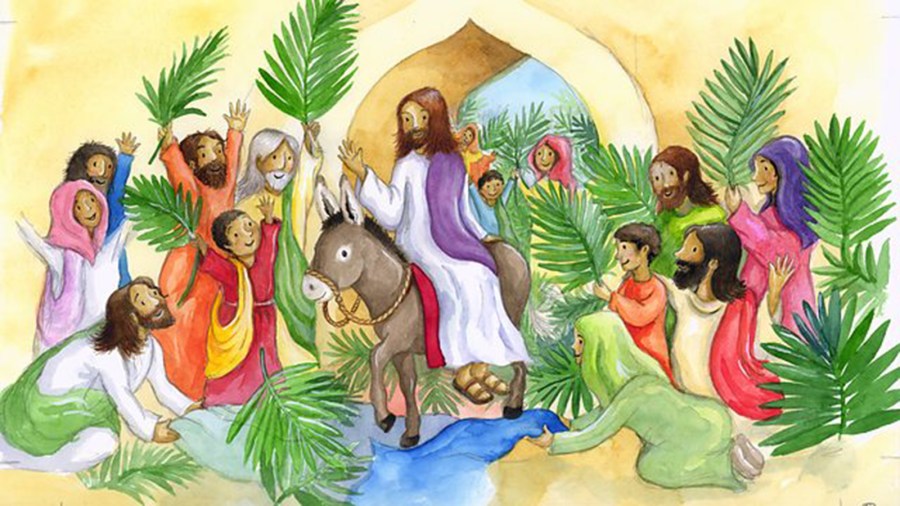
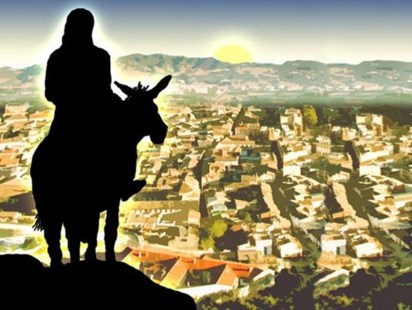
His entrance was unusual and less triumphant because he preferred to ride a meek donkey rather than a combat-ready horse. Yet, his unique entrance was not unexpected by the Jewish people looking forward for the Messiah. By riding on the donkey, he was fulfilling the prophecy of Zechariah, “Rejoice heartily, O daughter Zion, shout for joy, O daughter Jerusalem! See, your king shall come to you; a just savior is he, Meek, and riding on an ass, on a colt, the foal of an ass.” (Zec 9:9). The people who gathered in Jerusalem for annual Jewish festival, could not hide their excitement to this Jesus who had been rumored as the expected Christ. Indeed, the people welcome Him as a king as they shouted, “Blessed is the King who comes in the name of the Lord! (Luk 19:38)” Through his action, Jesus no longer hid His true identity, but revealed publicly that He is the Messiah.

Unfortunately, the moment Jesus revealed who He was, both the Jewish authority and the Roman rulers were ready to pin him down. They did not care whether Jesus came as the peaceful and humble leader or war-freak king. Jesus was the potential troublemaker and the sooner they get rid of him, the better. True enough, lest than a week, Jesus was betrayed, deserted by his followers and condemned to death. The people who acclaimed Him king, now cried to the top of their voice, “Crucify him!” The entrance to Jerusalem is significant because Jesus made a firm decision to live and die to the fullest. Jesus knew this horrifying possibility would take place, but He did not run and look for safety. He freely embraced his identity and mission, and because of this, his death was not in vain. He has made a difference that mattered most.

We are called Christian because we indeed the follower of Jesus Christ, but our name is worthless if we fail to follow Him up to Jerusalem. For some of us, being Christian or Catholic is just a matter of social convenience or family tradition. Our family, our society is Christian then we should be Christians. Often we just remember that we are Christians during special events in our life. In the Philippines, there are KBL Catholics, those who attend the Mass only for ‘Kasal’ or marriage, ‘Biyag’ or baptism and ‘Libing’ or funeral mass. In Indonesia, we are familiar with ‘Na-Pas’ (literally means ‘breath’) Christians, those who only go to the Church during ‘Natal’ or Christmas and ‘Paskah’ or Easter.

But, we must not forget that for some being Christians means hardship, sufferings and death. Christians in war-zones like Syria and Iraq, or when the Christians were minority, live in constant danger and discriminations are so real. Just few weeks ago, four sisters of Missionaries of Charity were brutally executed by the terrorists in Yemen. While they were fully aware of the extent of the danger, they refused to live behind the people they served, the elderly and the disabled. They are the disciples of Christ who lived their authentic Christianity to the end. Both in death and life, their faith has made the world a better.

Philosopher Abraham Kaplan noted that if Socrates said ‘unexamined life is not worth living’, so ‘the unlived life is worth examining. As we are entering the most solemn week in our liturgy, we ask ourselves: have we live our lives to the fullest? Is our Christian faith making any difference? Are we willing to make the change that matters most in our lives?

Br. Valentinus Bayuhadi Ruseno, OP

Menuju Hidup yang Otentik

Minggu Palma. 20 Maret 2016 [Lukas 19:28-40/Lukas 23:1-49]

 “Diberkatilah Dia yang datang sebagai Raja dalam nama Tuhan (Luk 19:38).”

palm sunday 2Minggu Palma atau disaat Yesus memasuki kota Yerusalem menandai awal dari drama yang paling penting di Kitab Suci. Ini adalah drama Pekan Suci. Memori ini begitu signifikan bagi Gereja Perdana, sampai-sampai episode ini tercatat di keempat Injil (Matius 21:1-11, Markus 11:1-11, dan Yohanes 12:12-19). Pertanyaannya adalah: Mengapa Minggu Palma begitu penting bagi kita?
Yesus memasuki kota tua Yerusalem dengan cara yang tidak biasa dan tidak begitu meyakinkan karena ia lebih memilih menaiki keledai yang lembut daripada kuda kuat yang siap tempur. Namun, cara yang unik ini sebenarnya tidak dianggap aneh oleh orang-orang Yahudi yang menantikan Mesias. Dengan mengendarai keledai, Yesus memenuhi nubuat nabi Zakharia, Hai penduduk Sion, bergembiralah! Hai penduduk Yerusalem, bersoraklah! Lihatlah! Rajamu datang dengan kemenangan! Ia raja adil yang membawa keselamatan. Tetapi penuh kerendahan hati ia tiba mengendarai keledai, seekor keledai muda (Zak 9:9). Orang-orang yang berkumpul di Yerusalem untuk festival Yahudi tahunan, tidak bisa menyembunyikan kegembiraan mereka kepada Yesus yang telah dikabarkan sebagai Mesias yang diharapkan. Memang, orang-orang menyambut Dia sebagai raja dan merekapun berseru, Diberkatilah Dia yang datang sebagai Raja dalam nama Tuhan, damai sejahtera di sorga dan kemuliaan di tempat yang mahatinggi! (Luk 19:38)Melalui peristiwa ini, Yesus tidak lagi menyembunyikan identitas-Nya, tetapi mengungkapkannya secara terbuka bahwa Dia adalah Mesias bagi bangsa Israel.

Sayangnya, saat Yesus mengungkapkan identitasnya, baik otoritas Yahudi dan penguasa Romawi siap untuk menjatuhkan-Nya. Mereka tidak peduli apakah Yesus datang sebagai pemimpin damai dan rendah hati atau raja yang siap berperang. Yesus adalah sebuah potensi keonaran dan semakin cepat mereka menyingkirkan dia, semakin baik. Benar saja, kurang dari seminggu, Yesus dikhianati, ditinggalkan oleh para pengikutnya dan dihukum mati. Orang-orang yang menyambut-Nya sebagai raja, sekarang berteriak, “Salibkan Dia!” Minggu Palma adalah peristiwa penting karena Yesus membuat keputusan tegas untuk hidup dan mati secara total. Yesus sadar akan kemungkinan mengerikan ini, tetapi Dia tidak lari dan mencari keselamatan pribadi. Dia dengan bebas memeluk identitas dan misi-Nya, dan karena ini, kematian-Nya tidak sia-sia. Pilihan-Nya telah membuat perbedaan yang paling penting di dalam sejarah umat manusia.

Kita dipanggil sebagai Kristiani karena kita memang pengikut Yesus Kristus, tetapi nama kita tidak ada gunanya jika kita gagal untuk mengikuti-Nya ke Yerusalem. Bagi sebagian dari kita, menjadi Kristen atau Katolik hanyalah masalah kenyamanan sosial atau tradisi keluarga. Keluarga kita dan masyarakat kita adalah Kristiani maka kita harus menjadi Kristiani. Seringkali kita hanya ingat bahwa kita adalah Kristen atau Katolik saat acara penting dalam hidup kita. Di Filipina, ada namanya Katolik KBL, orang-orang yang hanya menghadiri Misa ketika ‘Kasal’ atau pernikahan, ‘Biyag’ atau baptisan dan ‘Libing’ atau misa arwah. Di Indonesia, kita mengeenal dengan Katolik ‘Na-Pas’, orang-orang yang hanya pergi ke Gereja saat ‘Natal’ dan ‘Paskah’.

Tapi, kita tidak boleh lupa bahwa untuk sebagian orang, menjadi Kristaini berarti kesulitan, penderitaan dan bahkan kematian. Umat Kristiani di dalam zona perang seperti Suriah dan Irak, atau ketika orang-orang Kristiani adalah minoritas, akan terus hidup dalam bahaya dan diskriminasi yang begitu nyata. Hanya beberapa minggu yang lalu, empat suster dari Missionaries of Charity secara brutal dieksekusi oleh teroris di Yemen. Sementara mereka sepenuhnya menyadari situasi yang membahayakan di Yemen, mereka menolak untuk meninggalkan orang-orang yang mereka layani, para lansia dan kaum difabel. Mereka adalah murid-murid Kristus yang meghidupi panggilan mereka secara otentik sampai akhir. Baik dalam kematian dan kehidupan, iman mereka telah membuat dunia menjadi lebih baik.

Filsuf Abraham Kaplan berpendapat, “Jika Socrates berkata unexamined life is not worth living maka the unlived life is worth examining.” Saat kita memasuki minggu paling kudus dalam liturgi Gereja, kita diajak berefleksi dan menjawab pertanyaan penting bagi hidup kita: Apakah kita telah menjalani hidup secara penuh? Apakah hidup kita sebagai orang Apakah kita bersedia untuk membuat perbedaan yang paling penting dalam hidup kita?

Frater Valentinus Bayuhadi Ruseno, OP

Jesus and the Woman

Fifth Sunday of Lent. March 13, 2016 [John 8:1-11]

 “The woman replied, ‘No one, sir.’”

jesus and woman caught in adultery 3In time of Jesus, women were not standing at the same level with men. Crudely speaking, women were considered to be the property of men. Except for several outstanding female figures in the Bible like Deborah, the judge, and Judith, the warrior, the ancient Jewish women had to live under the patriarchal domination. The Bible is not loud at the stories of abused and battered women, but we can safely assume that the exploitations took place here and there.
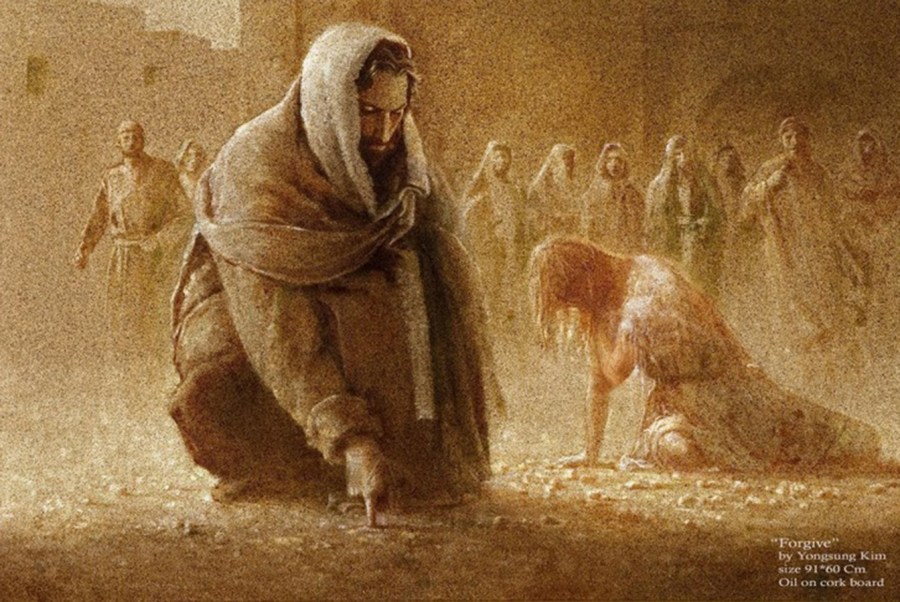
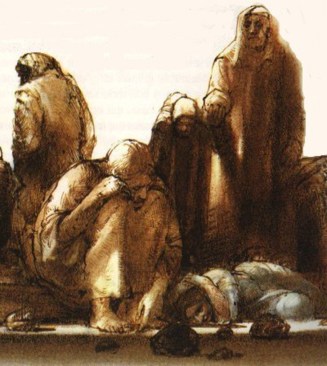
Our today’s Gospel is rarely seen as the story of woman being exploited by the some group of Jewish and religious male, but this was what really happening. The Book of Leviticus has regulated that both the male and female adulterers shall be put to death (Lev 20:10), but the Pharisees only forcefully brought the woman. Their goal was crystal-clear: to trap Jesus, and the rest were means to it, including if they had to use and stone the woman. Here lies the fundamental reason why women always turn to be victims of abuses and violence: the objectification and depersonalization of women. The adulterous woman lost her personhood and became a tool of the Pharisees in achieving their objective. I guess the same underlying motive influence men of different generations. Heartless men change women into their sex objects, cheap labors, or step stone to success.

Jesus got to stop this. Not only He need to save the woman victim, but he had to challenge the corrupt mentality of male abusive domination. He then wrote on the ground. Now, this has been subject of debate and discussion for centuries, and nobody really knew what Jesus wrote. My wild imagination would tell me that he wrote, “Guys, where is the adulterous man?” Jesus read their evil intention not only to Him about to the lady. They were planning for the death for both Jesus and the woman, and the Law says that the murderers and those who pre-meditated on murder shall be put to the death (Lev 21:14). Surely, killing is graver evil than adultery. When Jesus said, Let the one among you who is without sin be the first to throw a stone at her,” Jesus exposed their malicious motivation to kill Him and the woman. The scribes and the Pharisees also deserved death and they should throw the stone to themselves. Losing the battle, they left Jesus and the woman.

Yet, the story does not end there. Jesus had one more mission. After being objectified and depersonalized by her sin and the violent men, Jesus restored her dignity by giving back her voice. Jesus did not unveil her name, but Jesus allowed her to speak for her own. She answered Jesus, “No one, sir.” Indeed, no men shall make her a mere object and no one shall degrade her anymore. She is the beautiful daughter of God and she will remain to be so.

We are living two millennia after Jesus, yet a lot of women still fall victim to this objectification and depersonalization effort of the Evil one. As Jesus fought for the woman, we shall to fight for the women around us. If Jesus was able to expose the subtle form of woman’s exploitation, we shall too expose the various forms of abuses around us. If Jesus restored the dignity of the woman, we shall too respect the dignity of woman around us.

Br. Valentinus Bayuhadi Ruseno, OP

Yesus dan Sang Perempuan

Minggu Prapaskah Kelima. 13 Maret 2016 [Yohanes 8: 1-11]

Jawab sang perempuan, ‘Tidak ada, Tuhan.’”

jesus and woman caught in adultery 5Dalam masa Yesus, perempuan tidak memiliki posisi yang sama dengan lelaki. Mereka bahkan dianggap sebagai barang kepemilikan kaum adam. Kecuali beberapa tokoh perempuan dalam Alkitab seperti Deborah dan Judith, perempuan Yahudi masa lalu harus hidup di bawah dominasi patriarki. Alkitab juga tidak banyak menjabarkan kisah perempuan korban kekerasan dan pelecehan, tapi kita bisa berasumsi bahwa dengan mentalitas patriarki ini, kekerasan dan eksploitasi berlangsung di berbagai tempat.
Injil kita hari ini jarang dilihat sebagai kisah seorang perempuan yang dieksploitasi oleh beberapa kelompok laki-laki Yahudi yang adalah pemuka agama, tapi hal ini benar-benar terjadi. Kitab Imamat telah mengatur bahwa baik laki-laki dan perempuan yang berzinah harus dihukum mati (Im 20:10), tetapi orang-orang Farisi hanya membawa paksa sang perempuan. Tujuan mereka sangat jelas: untuk menjebak Yesus, dan selebihnya adalah sarana untuk mencapai tujuan ini, termasuk jika mereka harus menggunakan dan merajam sang perempuan. Di sinilah terletak alasan mendasar mengapa banyak perempuan selalu menjadi korban pelanggaran dan kekerasan: objektifikasi dan depersonalisasi perempuan. Perempuan yang berzina ini telah kehilangan kepribadian dan menjadi sekedar alat bagi orang-orang Farisi dalam mencapai tujuan mereka. Saya percaya motif ini jugalah yang memgaruhi kaum lelaki dari berbagai generasi. Para laki-laki yang tak berhati menjadikan perempuan sebagai objek kepuasan seksual, tenaga kerja yang murah, atau sebuah langkah menuju kesuksesan.

Yesus harus menghentikan hal ini. Tidak hanya Dia menyelamatkan sang perempuan yang adalah korban, tapi ia harus menantang mentalitas korup dan dominasi kasar kaum adam ini. Dia kemudian menulis di tanah. Apa yang Ia tulis telah menjadi subyek perdebatan dan diskusi selama berabad-abad, dan tak seorang pun benar-benar tahu apa yang Yesus tulis. Namun, dugaan saya adalah Yesus menulis, Di mana lelaki yang berzinah? Kok hanya sang perempuan? Yesus membaca niat jahat para Farisi yang tidak hanya ditujukan kepada-Nya tetapi juga kepada sang perempuan. Mereka merencanakan kematian bagi Yesus dan sang perempuan, dan Hukum Yahudi mengatakan bahwa pembunuh dan mereka yang merencanakan pembunuhan harus dihukum mati (Im 21:14). Tentunya, pembunuhan adalah perbuatan yang jauh lebih jahat dari perzinahan. Ketika Yesus berkata,Barangsiapa di antara kamu tidak berdosa, hendaklah ia yang pertama melemparkan batu kepada perempuan itu,” Yesus paham benar motivasi jahat mereka untuk membunuh-Nya dan sang perempuan. Ahli-ahli Taurat dan orang-orang Farisi juga patut dihukum mati dan mereka harusnya melempar batu kepada diri mereka sendiri. Kalah dalam pertempuran, mereka pun meninggalkan Yesus dan sang perempuan.

Namun, cerita tidak berakhir di sana. Yesus memiliki satu misi lagi. Setelah dijadikan sekedar objek dan kehilangan harga dirinya oleh dosa dan para lelaki kejam itu, Yesus memulihkan martabatnya dengan memberikan suara kembali kepadanya. Yesus tidak mengungkap nama sang perempuan, tapi Yesus memungkinkan dia untuk berbicara bagi dirinya sendiri. Dia menjawab Yesus, “Tidak ada, Tuhan.” Sungguh, tidak ada lagi laki-laki yang akan membuatnya sebagai obyek belaka dan tidak ada lagi yang akan menurunkan derajatnya. Dia adalah putri perempuan dari Allah dan dia akan tetap sebagai demikian.

Kita hidup dua ribu tahun setelah Yesus, namun banyak perempuan masih menjadi korban objektifikasi dan depersonalisasi. Seperti Yesus berjuang untuk sang perempuan, kita akan juga berjuang bagi para perempuan di sekitar kita. Jika Yesus mampu mengekspos eksploitasi perempuan pada zaman-Nya, kita akan juga mengekspos berbagai bentuk pelanggaran di sekitar kita. Jika Yesus memulihkan martabat sang perempuan, kita juga akan menghormati martabat para perempuan di sekitar kita.

Frater Valentinus Bayuhadi Ruseno, OP

Mercy of the Father

Fourth Sunday of Lent. March 6, 2016 [Luke 15:1-3, 11-32]

“His father caught sight of him, and was filled with compassion (Luk 15:20).”


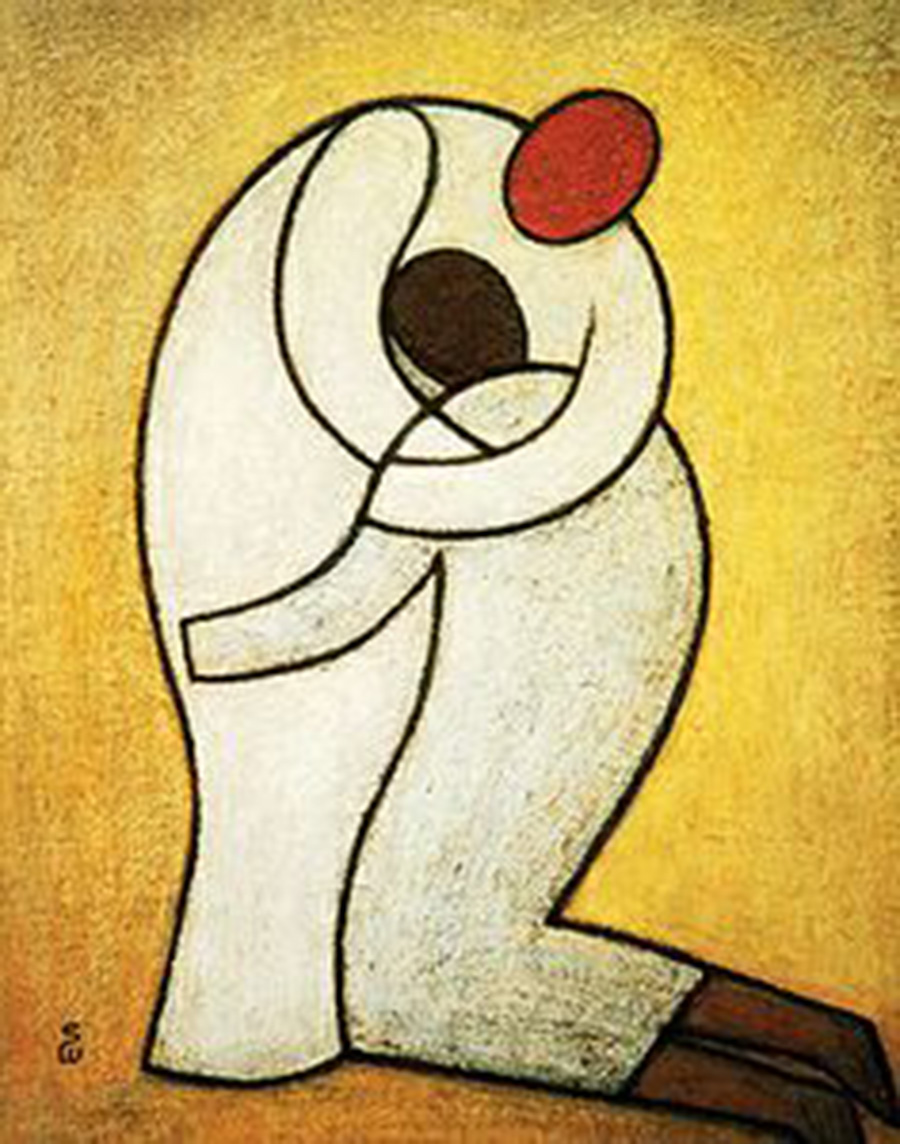
prodigal son 2The Parable of the Prodigal Son is one of the most moving stories of Jesus and has been regarded as the all-time favorite. The parable is so beautiful that it moved one of the earliest heretics, Marcion of Sinope, to single out the Gospel of Luke as the only valid Gospel. Why does the parable gain such honor among Jesus’ parables? I guess one of the reasons is the unexpected twist of event appears in the parable. Like when we watch movies in the cinema, flat and predicted plot of movies will cause boredom, but movies with sudden and unforeseen twists often create breath-taking excitement. The twist of the parable is that the Mercy of God that goes beyond any human expectation and limitations.
The lost son would simply expect that he would be treated as one of his father’s servants after sinning so greatly. The elder son, meanwhile, expected the same thing would happen to the bad boy. But, the father did not subscribe to their human expectation. He did sudden yet amazing turn: he accepted both as who they really are, his sons. God’s mercy surpasses all our human limitations and logic, because we are all his children.

The story of Rudolf Höss may illustrate how unimaginable God’s Mercy is. Rudolf Höss was a commandant of the Auschwitz concentration camp and he was practically responsible for the extermination of 2.5 million prisoners, mostly Jews, but also Christians like St. Maximillian Kolbe, and Edith Stain. At the end of the war, he was arrested, tried and received capital punishment for his crime against humanity. He was then imprisoned in Wadowice (the birthplace of St. John Paul II) and he would be executed at the very place he used to rule, Auschwitz. Höss was in great fear not only because of his imminent death penalty but also of cruel torture from prison guards. To his surprise, he was treated mercifully by the guards, notwithstanding the fact that their wives and children were also victims of Nazi’s cruelty. Their mercy moved him to tears and conversion. Höss was a baptized Catholic, but left his faith in his adulthood. He eventually asked for a priest for confession. It was truly difficult to find one, until they discovered Fr. Wladyslaw Lohn, a Jesuit who was the chaplain of the sisters of Our Lady of Mercy at the Shrine of Divine Mercy, Krakaw. Höss made his confession and received the underserved forgiveness. A day before he died, he was able to receive the Holy Communion, kneeling and in tears.

Sometimes, we are like the lost son that we have turned away from God and our lives have been so messed up, that we are losing hope of God’s mercy. Sometimes, we become the elder son who has lived a righteous and good life, but we forget how it is to be merciful to others. Thus, this is not coincidence that Pope Francis chose Luke 6:36 as the motto of the Jubilee of Mercy: ‘Merciful like the Father’. The jubilee of Mercy is both time for us to ask mercy as well as to give mercy. The lost son is in need of mercy and the elder son needs to be merciful. Are we humble enough to ask mercy and forgiveness from God and others? Are we ready to be merciful like the Father?

Br. Valentinus Bayuhadi Ruseno, OP

Mercy: Our Second Chance

Third Sunday of Lent. Luke 13:1-9 [February 28, 2016]

“It may bear fruit in the future (Luk 13:9)”

jesus n fig treeThe heart of the parable of the Good Gardener is God’s Mercy. Not only He is merciful, but He is the Mercy itself. Pope Francis fittingly wrote that the name of God is Mercy. God cannot but be merciful. We are like the tree that was fruitless and useless, but God gave us a second chance. Jesus, our Holy Gardener, even exerts His utmost effort to take care of us, making sure that grace of God in constantly pour upon us.

In my readings on Mercy, I stumbled upon this little story of a young French soldier who deserted the armies of Napoleon but was soon caught. He was court-martialed and condemned to death. His mother pleaded with Napoleon to spare her son’s life. Napoleon said that the crime was dreadful; justice demanded his life. The mother sobbed and begged for mercy. Napoleon replied that the young man did not deserve mercy. And the mother said, “I know that he does not deserve mercy. It would not be mercy if he deserved it.”

God’s mercy flows from His overflowing love. However, because God so loves us, He also allows us grow in freedom. God gave us a second chance, but it is up us to grab it or blow it up. Just like St. Augustine once said, “God created us without us, but He did not save us without us.” Thus, the greatest enemy of mercy is hopelessness. We assume that we no longer are no longer able to change. We refuse God’s second change because we see it as completely useless. Indeed, to cash despair is the chief work of the devil. Author, lawyer, economist, and actor Ben Stein says, “The human spirit is never finished when it is defeated. It is finished when it surrenders.” Our failures, weaknesses condition us to believe that we are worthless, and the moment we doubt the mercy of God, the devil is victorious.

England could have been lost to Germany in World War II, had not been for Winston Churchill. He was the prime minister of England during some of the darkest hours of World War II. He was once asked by a reporter what his country’s greatest weapon had been against Hitler’s Nazi regime that bombarded England day and night. Without pausing for a moment he said, “It was what England’s greatest weapon has always been hope.”

Pope Francis, through his own initiative declared this year as the Jubilee Year of Mercy, and He opens up the gates of mercy all over the world so that everyone may feel God’s love and compassion. Yet again, we never receive that grace, unless we pass through the threshold of that gates. We need to believe that His Mercy conquers all our limitations, and His Love covers multitude of sins. When Pope Francis visited the US in September 2015, he made a point to meet the prisoners and he said to them, “Let us look to Jesus, who washes our feet. He is ‘the way, and the truth, and the life’. He comes to save us from the lie that says no one can change. He helps us to journey along the paths of life and fulfillment. May the power of his love and his resurrection always be a path leading you to new life.”

Br. Valentinus Bayuhadi Ruseno, OP

Belas Kasih: Sebuah Kesempatan Kedua

Minggu Pra-Paskah ketiga. Lukas 13:1-9 [28 Februari 2016]

“Mungkin tahun depan ia berbuah (Luk 13:9)”

jesus n fig tree 2Inti dari perumpamaan tentang Pengurus kebun yang baik adalah kerahiman Allah. Tidak hanya Allah penuh dengan belas kasih, tetapi Dia adalah belas kasih itu sendiri. Paus Fransiskus dengan tepat menulis bahwa Nama Allah adalah Belas Kasih. Karena Ia adalah Sang Belas Kasih, tindakan pertama-Nya terhadap kita manusia adalah berbelas kasih. Walaupun kita seperti pohon ara yang tak membuahkan hasil dan tidak berguna, tetapi Allah memberi kita kesempatan kedua. Dan tidak hanya kesempatan baru, Yesus, sang pengurus kebun kita yang suci, bahkan memberikan upaya maksimal-Nya untuk merawat kita, memastikan bahwa anugerah Allah terus-menerus tercurahkan kepada kita.

Dalam pembelajaran saya tentang belas kasih, saya menemukan sebuah cerita tentang seorang prajurit Perancis muda yang melarikan diri dari tugasnya sebagai pasukan Napoleon, tapi ia segera tertangkap. Dia diadili di mahkamah militer, dinyatakan bersalah dan dijatuhi hukuman mati. Mendengar hal ini, sang ibu memohon Napoleon untuk menyelamatkan nyawa anaknya. Napoleon mengatakan bahwa kejahatan yang dilakukan sang anak sungguh melampaui batas; keadilan menuntut hidupnya. Sang ibu menangis dan memohon belas kasihan. Napoleon menjawab bahwa anaknya tidak pantas mendapat belas kasihan. Dan sang ibu pun berkata, “Aku tahu bahwa ia tidak layak mendapat belas kasihan, tetapi jika ia layak mendapatkannya, ini bukanlah belas kasihan.”

Kerahiman Allah mengalir dari kasih-Nya. Namun, karena Allah begitu mengasihi kita, Dia juga memungkinkan kita tumbuh dalam kebebasan. Tuhan memberi kita kesempatan kedua, tapi terserah kita untuk meraih kesempatan ini atau menyia-nyiakannya. St. Agustinus pun pernah berkata, “Allah menciptakan kita tanpa kita, tetapi Dia tidak menyelamatkan kita tanpa kita.” Dengan demikian, musuh terbesar dari belas kasihan adalah hilangnya harapan akan belas kasih Allah. Kita berasumsi bahwa kita tidak lagi tidak lagi mampu berubah. Kita menolak kesempatan kedua dari Allah karena kita melihatnya sebagai sama sekali tidak berguna. Sungguh, untuk menabur benih keputusasaan adalah pekerjaan sang Jahat. Penulis, pengacara, ekonom, dan aktor Ben Stein mengatakan, Jiwa manusia tidak pernah selesai ketika dikalahkan. Ia selesai ketika menyerah. Kegagalan dan kelemahan kita mengkondisikan kita untuk percaya bahwa kita tidak berharga, dan saat kita meragukan belas kasihan Allah, sang jahat telah menang atas kita.

Inggris bisa saja kalah dari Jerman dalam Perang Dunia II, jika bukan karena Winston Churchill. Dia adalah perdana menteri Inggris selama masa tergelap Perang Dunia II. Dia pernah ditanya oleh seorang wartawan tentang senjata terbesar negaranya melawan rezim Nazi Hitler yang membombardir Inggris siang dan malam. Dengan lugas, ia berkata, Senjata terbesar Inggris adalah selalu harapan.” Sungguh harapan adalah senjata terbesar kita melawan sang jahat.

Paus Fransiskus, melalui inisiatifnya menyatakan tahun ini sebagai Tahun Yubileum Kerahiman Ilahi, dan beliau membuka pintu-pintu kerahiman di berbagai penjuru dunia sehingga setiap orang dapat merasakan kasih dan kemurahan hati Allah. Namun, kita tidak akan pernah menerima anugerah ini, kecuali kita memutuskan melewati ambang pintu ini. Kita perlu percaya bahwa rahmat-Nya mengalahkan segalanya keterbatasan kita, dan Kasih-Nya menghapus banyak dosa. Ketika Paus Fransiskus mengunjungi AS pada bulan September 2015, ia bertemu dengan para tahanan di sana dan ia mengingatkan mereka untuk tidak kehilangan harapan akan belas kasih Allah, “Marilah kita melihat ke Yesus, yang mencuci kaki kita. Dia adalah ‘jalan, dan kebenaran, dan hidup. Dia datang untuk menyelamatkan kita dari kebohongan yang mengatakan bahwa kita tidak bisa beruhah. Dia membantu kita di dalam perjalanan sepanjang jalan kehidupan dan kepenuhan. Semoga kekuatan kasih dan kebangkitan-Nya selalu menjadi jalan yang kamu mencapai kehidupan baru.


Frater Valentinus Bayuhadi Ruseno, OP

Go Down from the Mount!

Second Sunday of Lent. February 21, 2016 [Luke 9:28-36]

“He took Peter, John, and James and went up the mountain to pray (Luk 9:28).”

transfiguration 2 For St. Luke, Jesus is a man of prayer. Luke fondly wrote in his Gospel that Jesus would pray before the decisive events in His life and mission. Jesus prayed the whole night before he chose His disciples (Luk 6:12). One of the reasons why Jesus cleansed the Temple of Jerusalem was that He was well aware of the main function of the holy Temple: House of Prayer (Luk 19:46). He reminded his disciples to pray especially in facing trials and tribulations (Luk 21:36). Before He was embracing His passion and death, He prayed at the garden (Luk 22:44). Finally, enduring a brutal torture, He saved His last breath even to pray for those who have crucified Him (Luk 23:34).

Another important event wherein Jesus spent time in prayer was the Transfiguration. Two evangelists, Matthew and Luke, placed the story of Transfiguration into their gospels, but only Luke who told the purpose of why Jesus and His three disciples went up to the Mount. It was to pray. For Luke, the Transfiguration is a prayer event. Indeed, reflecting today’s Gospel in the context of prayer will bring us a deeper understanding on our relationship with God.

Firstly, Jesus invited the disciples to climb the Mount and pray. Our desire to meet Him and to pray is actually God’s initiative. If we are able to pray, it is because God calls us and enables us to communicate with Him. Our Liturgy of the Hour prayer begins with a verse ‘O God, come to my assistance (Ps 51:15).’ It is a humble acceptance that without His grace and aid, we are not able to pray. We, Catholics, open our prayer with the sign of the cross and mentioning, “In the name of the Father, the Son and the Holy Spirit (Mat 28:19).” This was born out of conviction that apart from the Holy Trinity, our human words will be futile. St. Paul said it best when he wrote to the Romans, “the Spirit too comes to the aid of our weakness; for we do not know how to pray as we ought, but the Spirit itself intercedes with inexpressible groanings (Rom 8:26).”

Secondly, the Transfiguration teaches us that sometimes, our prayers give sense of delight and contentment, but this is not the most important. We are like the three disciples who were filled with awe in the presence of transfigured Jesus. It is the moment when we feel peace before the Blessed Sacrament. We are enjoying the recitation of the Holy Rosary. We are inspired by a good homily and feel nourished by the Holy Communion in the Eucharist. Sometimes, I attended Worship Service loaded with upbeat songs and electrifying preaching. Truly, the feeling was ecstatic and liberating, especially for persons with messed up lives.

Surely, like the disciples, we want to enjoy the delight for eternity. Yet, our good Lord did not want us to be rooted there. He asked the disciples to go down and face the world. If we rather stay and refuse to go down, then our prayers are no longer genuine and sincere. They become an addiction that helps us escape from the realities. If this happens, Karl Marx’ adage, ‘Religion is the opium to the society’ turns to be a reality.

St. Pope John Paul II reminded us that the Transfiguration would lead eventually Jesus and his disciples to that passion in Jerusalem. Prayer should then empower us to face life with courage and humility, and not to give us a venue to run away from life. The Eucharist, as the summit of all Christian worship, does not end by saying ‘Stay and enjoy some more!’ The last phrase in the Mass is always missionary in spirit, like ‘Go and preach the Gospel’. We are to share the fruits of prayers to others. If we truly find Christ in our prayer, then together with Christ, we shall go down from the Mount and bravely walk to our Jerusalem.

 Br. Valentinus Bayuhadi Ruseno, OP