

27th Sunday in Ordinary Time [C] – October 6, 2019 – Luke 17:5-10
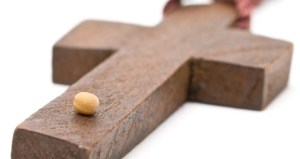 If there is one most powerful force in the universe, it will be faith. Jesus teaches us that even faith as small as a mustard seed can do the impossible. Jesus preaches that with this little faith, we can command a sycamore tree be uprooted and be planted in the sea. One of the smallest things on earth can move the most significant reality in the world. The sycamore tree has both deep, strong and widespread roots. It is just impossible to uproot it when it has grown mature. Yet, Jesus surprises further even by saying that we can replant this on the bed of the ocean. That makes it doubly impossible. Jesus is pushing his teaching on faith beyond natural human reasoning!
The question is whether Jesus is merely exaggerating the power of faith, or He is unveiling the deepest of truth of faith. To answer this question, we need to know first what is faith? Surely there are several definitions of faith. In the broadest sense, it is a belief in the divine, something that is much more powerful than us, something beyond us. In many religious traditions, this transcendence is a person that is called God. This faith makes us different those who claim themselves as atheists. In narrower sense, it refers to a belief in a particular set of teachings about the divine. In this sense, the Catholic faith is different from the Protestant Lutheran faith.
St. Thomas Aquinas reminds us that faith is basically an ascent of the intellect. This is precisely what faith is mighty. It does not rely on earthly possession, nor our biological nature, nor our emotions. If we base our faith on moods, every time, we feel unhappy or depressed, and we may lose our faith. Mother Teresa of Calcutta once wrote in her diary that she did not feel the presence of God in her life for almost ten years. If she had depended on her emotion, she would have lost her faith. If we place our faith in our bodily wellbeing, the moment we get sick, or our body weakens, we may lose faith. Padre Pio of Pietrelcina received the gift of stigmata and had to endure the excruciating pain of the crucifixion for more than 50 years. Had he relied on his body, he would have lost his faith long time ago.
It is the ascent of the intellect that makes faith unbelievably powerful. When I was ordained to both to the diaconate and to the priesthood, especially during the most essential part of the ceremony, the laying of bishop’s hands on my head, I confess that I did not feel anything but a little pressure on my head. Does it mean my ordination invalid? Fortunately, the validity of my ordination is not based on my feelings! It is the faith, my faith, my bishop’s faith, the faith of the people, the faith of the Church. It is the faith that allows the unseen, unfelt grace of God to transform my soul into a soul of Jesus, the priest.
Our Catholic faith is indeed the mustard seed that moves a mountain. It is the faith that make our ears to hear the Word of God in the ordinary pages of the Scriptures. It is the faith that opens our minds to see the Body of Christ in a small tiny bread. It is the faith that encourages us to be humble before God and confess our sins before a priest. It is the faith that empowers many Christians to persevere in persecutions and to readily give their blood for Jesus. It is the faith that enables us to sacrifice our lives for others and to love the end.
Valentinus Bayuhadi Ruseno, OP
 Jika ada satu kekuatan paling dahsyat di alam semesta, ini adalah iman. Yesus mengajarkan kepada kita bahwa iman sekecil biji sesawi dapat melakukan hal yang mustahil. Yesus menyatakan bahwa dengan iman yang kecil ini, kita dapat memerintahkan pohon ara dicabut dan ditanam di laut. Salah satu hal terkecil di bumi dapat menggerakkan realitas paling besar di dunia. Pohon ara memiliki akar yang dalam, kuat dan menyebar. Tidak mungkin mencabutnya ketika sudah dewasa. Namun, Yesus bahkan mengatakan bahwa kita tidak hanya mampu mencabutnya tetapi juga menanam kembali ini di dasar samudera. Itu membuatnya mustahilnya doble! Inilah hebatnya iman yang kita miliki.
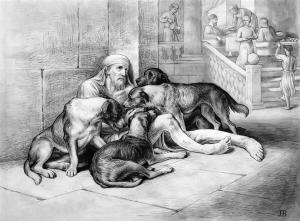 Once again, we listen to one of Jesus’s most remarkable stories. There is a rich man, and this guy is insanely wealthy. He is described as someone clothed with purple and fine linen. In ancient time, fine purple linen is an utmost luxury, and usually only nobilities could afford to buy this kind of cloth. Before the coming of synthetic coloring, purple dye is coming from snails of Mediterranean Sea, and it takes thousands of snails just to dye one ordinary garment. This rich guy is also throwing party every night. At the time of Jesus, where majority must toil to earn a little and to have something to eat, to enjoy feast every night is madly extravagant. At that time, fork, knife, and napkins were not common; thus, people are eating with their hands. In very wealthy houses, they will cleanse their hands by wiping them on hunks of bread that will be thrown away. These are pieces of bread Lazarus longs to receive.
 There is something strange in our Gospel today. Jesus is praising the cunning steward. Why does Jesus commend his shrewd action? To understand Jesus’ words, we need to comprehend first what really takes place with this servant and his master.
 Ada sesuatu yang aneh dalam Injil kita hari ini. Yesus memuji pelayan yang curang itu. Mengapa Yesus memuji tindakan cerdiknya? Untuk memahami kata-kata Yesus, kita perlu memahami terlebih dahulu apa yang sebenarnya terjadi dengan hamba ini dan tuannya.
 Chapter 15 of the Gospel of Luke contains three of the most heartwarming as well as powerful parables in the entire Bible. These three parables are known as the parable of the lost sheep, the parable of the lost coin, and the parable of the prodigal son. If we look closer into these three parables, what is so stunning and astonishing is how Jesus bends, twists and stretches human logic and natural tendency to nail His point.
 Bab 15 dari Injil Lukas berisi tiga perumpamaan yang paling mengharukan dan indah di seluruh Alkitab. Tiga perumpamaan ini dikenal sebagai perumpamaan tentang domba yang hilang, perumpamaan tentang koin yang hilang, dan juga perumpamaan tentang anak yang hilang. Jika kita melihat lebih dekat ke dalam ketiga perumpamaan ini, apa yang begitu menakjubkan dan mencengangkan adalah bagaimana Yesus membengkokkan, memutar dan merentangkan logika manusia dan budaya Israel untuk menyampaikan poin terdalam-Nya.
 Humility is actually being simple and doing simple, yet it is so simple that many of us find it difficult to be and do. It seems paradoxical but it is the reality that we experience in our day to day life. It is because we are living in the world that is so proud with itself and it continuously influences us to become proud as well. We can practically be proud of anything. We can be proud of our personality, family and clan, personal achievements, successful careers and status in life. We can be proud of the good things we have done or even the bad things we have committed. Eventually, the awful irony in our life is when we are even proud of our humility.
 Kerendahan hati sebenarnya adalah melakukan hal yang sederhana dan menjadi orang yang sederhana, tetapi karena hal ini sangat sederhana, banyak dari kita merasa sulit untuk melakukannya. Inilah adalah paradoks yang kita alami dalam kehidupan kita sehari-hari. Hal ini dikarenakan kita hidup di dunia yang begitu sombong dengan dirinya sendiri, dengan segala kemajuan, kejayaan, kekayaan, dan dunia ini terus memengaruhi kita untuk menjadi angkuh. Kita bisa jadi sombong karena banyak hal. Kita bisa sombong karena kepribadian, keluarga dan klan kita, prestasi pribadi, karier dan status yang sukses dalam hidup. Kita bisa menyombongkan hal-hal baik yang telah kita lakukan atau bahkan hal-hal buruk yang telah kita lakukan. Akhirnya, ironi mengerikan dalam hidup kita adalah ketika kita bahkan menyombongkan kerendahan hati kita.
 In Medio Ecclesiae