

Third Sunday of Easter [May 5, 2019] John 21:1-19
 If we observe the Gospel readings of the past days and Sundays, we will notice that most of them are speaking about the risen Christ’s appearances to His disciples. One unnoticeable yet interesting feature in these stories is that of the presence of food.
The two disciples who walk to Emmaus, invite Jesus to have a dinner. Jesus takes the bread, says the blessing, breaks it, and gives it, and He disappears. The two disciples come to their senses, and realize He is Jesus [Luk 24:30]. When Jesus appears to the Eleven and other disciples, they are terrified. To dispel their doubt on His resurrection, Jesus presents His body and eats the fish given to Him [Luk 24:42]. And in today’s Gospel, Jesus invites His seven disciples to a breakfast at the shore of the Lake of Tiberias. After another miraculous catch, Jesus prepares bread and fish for the disciples who are no longer baffled by the appearance of their Master [John 21:13].
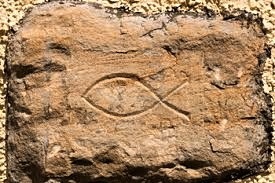
We may ask, “Why bread and fish?” These are simple food that are often available at Jewish household. Yet, looking deeper, bread and fish possess a profound meaning. Bread and fish are earliest symbol of Christ and Christians. Bread, especially the breaking of the bread, is the technical biblical name for the Eucharist. In the Acts of Apostles, the first Christians gather around the apostles for the teaching and breaking of the bread [Acts 2:42]. On a Sunday, Paul leads the community of Troas in worship as he preaches and breaks bread [Acts 20:7]. Fish, in Greek, is “Ichthus” and it stands for “Iesous Christos Theos Hyios Soter”, meaning Jesus Christ God Son [and] Savior. The symbol of fish was scattered inside catacombs of Rome as a sign of Christian gathering in time of persecution.
The question lingers: why does the risen Lord ask for food and invites the disciples to eat? Firstly, eating food is one of the most basic activities of human being. It points to our biological functions that sustains our bodily life and growth. The spiritless body neither consumes food, nor the bodiless spirit enjoys meals. Jesus shows His disciples that his resurrection is not a matter of spiritual enlightenment, but truly a bodily reality. His disciples neither see a spirit floating in the air, nor simply believe that their Teacher is alive in their hearts. The tomb is empty because Jesus, including His body, has risen.
Secondly, eating together does not only satisfy our tummy, but it also brings people closer together. While we are enjoying food, we cannot but share our thoughts and hearts to each other. Eating together builds not only the body, but also the dialogue and community. One of my favorite activities in the convent is the meal time, not because I am fond of eating, but we share a lot of stories and opinions. We practically speak about anything under the sun, from the latest movie, Avenger Endgame, the current political issues, to theological discussion on St. Thomas Aquinas. We also tell our joys, concerns and worries in our ministry and our future as a community. Simple food, yet great bonding.
Upon the simple reality of eating together, Jesus builds His community. In a shared meal, He retells His stories of painful passion and shameful death, and unearths its profound meanings especially as the fulfillment of the Scriptures. The events of his death used to be absurdity and loss of hope, but in the dining table, the risen Lord restores the faith, hope and love that go dim.
Jesus leaves us the Eucharist, the breaking of the bread, the sacred meal. Like the first disciples, it is here that we discover the risen Lord who shares His body as a spiritual food, and His Word as the meaning of our life. In the Eucharist, we are assured that the worst of this world does not have the last say, and the battle against absurdity has already been won.
Deacon Valentinus Bayuhadi Ruseno, OP

 Today is the Divine Mercy Sunday. From the Gospel, Jesus institutes the sacrament of reconciliation as He bestows His Holy Spirit upon the Disciples. He grants them the divine authority to forgive (and not to forgive) sins and charges them to be the agents of Mercy. While it is true that only priests can minister the sacrament of confession, every disciple of Christ is called to be an agent of Mercy and forgiveness. Yet, how we are going to be the bearers of Mercy and Forgiveness? I think we need to understand first the dynamic of fear and peace.
 Hari ini adalah Hari Minggu Kerahiman Ilahi. Dari Injil, Yesus membentuk sakramen rekonsiliasi saat Ia menganugerahkan Roh Kudus-Nya kepada para Murid. Dia memberi mereka otoritas ilahi untuk mengampuni (dan tidak mengampuni) dosa dan mengutus mereka sebagai pekerja Kerahiman. Meskipun benar bahwa hanya imam yang dapat melayani sakramen pengakuan dosa, setiap murid Kristus dipanggil untuk menjadi pekerja Kerahiman dan pengampunan. Namun, bagaimana kita akan menjadi pembawa Kerahiman dan Pengampunan? Kita perlu memahami dulu dinamika antara rasa takut dan kedamaian.
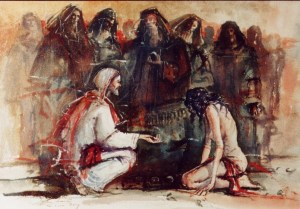 Adultery is a serious sin according to the Law of Moses. It is a violence against the Basic Law, the Ten Commandments. It is in fact, one of the few crimes that are punishable by death [Lev 20:10]. Why so cruel? It is a grave sin because adultery profanes the holiness of marriage and the gift of sexuality. In the Book of Genesis, God has willed that man and woman through marriage and their sexuality participate in God’s work of creation and caring of creation. Since marriage is a sacred calling, violation to this holy mission is an utmost insult to God who calls man and woman into marriage.
 Perzinahan adalah dosa serius menurut Hukum Musa. Ini adalah pelanggaran terhadap Sepuluh Perintah Allah. Pezinahan adalah satu dari sedikit dosa yang bisa dihukum mati [Im 20:10]. Kenapa begitu kejam? Ini adalah dosa besar karena perzinahan mencemarkan kekudusan pernikahan dan karunia seksualitas. Dalam Kitab Kejadian, Tuhan menghendaki pria dan wanita melalui pernikahan dan seksualitas mereka berpartisipasi dalam karya penciptaan. Karena pernikahan adalah panggilan suci, pelanggaran terhadap misi suci ini adalah salah satu penghinaan terbesar bagi Allah yang memanggil pria dan wanita ke dalam pernikahan.
 The Parable of the Prodigal Son is one of the most moving stories of Jesus and has been regarded as the all-time favorite. Why? I guess one of the reasons is the story of the Prodigal Son is also our story.
 Perumpamaan tentang Anak yang Hilang adalah salah satu kisah Yesus yang paling mengharukan dan telah dianggap sebagai yang paling disukai. Mengapa? Saya kira salah satu alasannya adalah kisah Anak yang Hilang adalah kisah hidup kita juga.
 One time, during a Bible class I facilitated, one of the participants asked me, “how was Peter able to recognize that it was Moses who stood beside Jesus during the Transfiguration?” It was a valid question, and yet I personally never thought of it. I thought of with several possible answers. Perhaps, Moses appeared bringing two stone tables of the Law. Perhaps, as Jesus was conversing with Moses and Elijah, Peter was able to pick up the names. Perhaps, the divine inspiration enlightened Peter’s mind on the identity of Moses. Eventually, I have to answer, “When you go to heaven, don’t forget to ask both Peter and Moses.”
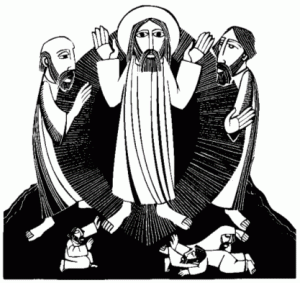 Suatu kali, saat saya mengajar kelas Alkitab, salah satu peserta bertanya kepada saya, “bagaimana Petrus dapat mengenali Musa adalah yang berdiri di samping Yesus saat Transfigurasi?” Itu adalah pertanyaan yang valid, namun saya pribadi tidak pernah memikirkan. Saya datang dengan beberapa kemungkinan jawaban. Mungkin, Musa muncul membawa dua loh batu Taurat. Mungkin, ketika Yesus berbicara dengan Musa dan Elia, Petrus dapat mengambil nama-nama itu. Mungkin, ilham ilahi menerangi pikiran Petrus tentang identitas Musa. Akhirnya, saya harus menjawab, “Ketika Anda pergi ke surga, jangan lupa untuk bertanya kepada Petrus dan Musa!”
 In Medio Ecclesiae