

32nd Sunday in Ordinary Time – November 10, 2019 – Luke 20:27-38
In today’s Gospel, the Sadducees attempt to test Jesus. Sadducees are a religious faction in first-century Judaism, but unlike the popular Pharisees, they only hold Torah as the only valid source of Jewish religious teachings and practices, and refuse the writings of the prophets, the wisdom books, and later traditions. One of their main doctrines is that they do not believe in the resurrection of the body. Jesus and the Pharisees though always in debate, share in a common fundamental belief in the bodily resurrection. Thus, to ridicule this kind of belief, the Sadducees are using the practice of the levirate marriage. In the Law of Moses, there is a practice to secure the bloodline and inheritance of a man who does not have any offspring. As a solution, the brothers or relatives of the deceased man will marry the widow and produce offspring on his behalf. Then, the Sadducees move to checkmate position. “In the resurrection, whose husband, this woman be?”
However, the Sadducees forget that nobody could win against Jesus in a debate. Jesus thoroughly destroys their plot by revealing what will happen in heaven: we will be like the angels. Who are these angels? Angel or “angelos” in Greek means the messenger. This points to their function, but their true nature is spirit. As a spirit, they have no physical body, and because of this, they are no longer bonded into the limitations of the body. They have no sexual desire or any desire, and therefore, they are not multiplying like humans. What attracts spirit is only a spiritual thing, and since God is the most perfect spirit [John 4:24], only God can give them perfection.
To be like angels in heaven is our destiny. One day, Mother Angelica, the founder of EWTN, talked with two men who had many titles behind their names, and they are proud of those achievements. Yet, during the conversation, they were amazed by Mother Angelica’s wisdom and serenity. She reminded them that the most important title is not what placed behind their names, but one put before their names, and this only has two letters: St. or Saint.
Our journey in this earth only makes sense if we are marching toward a destination beyond this world, and Jesus has pointed out to us that this goal is something spiritual, life like angels. Thus, it is important for us to examine our lives whether we are preparing ourselves every day to life like angels, or we keep ourselves busy with this earthly life. How we are going to prepare ourselves? We give more time to the spiritual things as well as spiritual aspects of our lives. Do we pray enough? Do we worship God often? Do we consult the Holy Spirit in our decision in our lives? Do we read Bible regularly? Do we spend quality time with Jesus? Do we help and love others sincerely?
It is important to remember that our God is the God of the living, thus our lives continue even beyond death. Thus, the kind of life we live here on earth will simply continue to the next life. If we live like an angel in heaven even now in earth, we will not have problem to adjust in the next life. Heaven starts here and now.
Valentinus Bayuhadi Ruseno, OP
 Dalam Injil hari ini, orang-orang Saduki berusaha untuk menguji Yesus. Saduki adalah faksi religius dalam agama Yahudi pada zaman Yesus, tetapi tidak seperti orang-orang Farisi yang populer, kaum Saduki hanya memegang Taurat sebagai satu-satunya sumber yang sah dari ajaran dan praktik keagamaan Yahudi, dan menolak tulisan para nabi, dan tradisi selanjutnya. Salah satu doktrin utama mereka adalah bahwa mereka tidak percaya pada kebangkitan badan. Meskipun, Yesus dan orang-orang Farisi selalu berdebat, Yesus dan orang Farisi berbagi kepercayaan dasar yang sama tentang kebangkitan tubuh. Dengan demikian, untuk menyangkal kepercayaan ini, orang Saduki menggunakan Hukum Taurat untuk membuat malu Yesus. Dalam Hukum Taurat, ada praktik untuk mengamankan garis keturunan dan warisan seorang pria yang tidak memiliki keturunan. Sebagai solusi, saudara-saudara lelaki yang meninggal akan menikahi jandanya dan diharapkan memperoleh keturunan bagi sang saudara yang telah meninggal. Kemudian, para Saduki mengajukan kesimpulan seolah-olah kebangkitan badan tidak masuk akal. “Dalam hari kebangkitan, siapakah yang menjadi suami istri ini?”
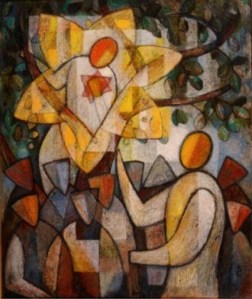 In the time of Jesus, there are at least two kinds of taxes. The first tax goes to the Temple of Jerusalem. This is a “sacred tax”. Those who collect them are performing a sacred duty, and those who pay are fulfilling their due to God. Yet, the second tax is exacted by the Roman government. In order to effectively get the taxes, the Romans employs the local collaborators. The Jews are heavily burdened by this tax because they are unjustly hefty, and often collected by coercion. The Jews understandably loathe those Jewish tax collectors who willingly betray their own people and are involved in greedy malpractices. These are the worst sinners, unclean, corrupt and traitors.
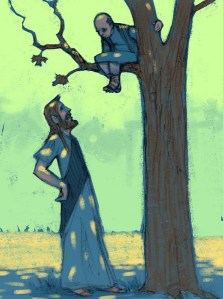 Pada zaman Yesus, setidaknya ada dua jenis pajak atau cukai. Pajak pertama adalah untuk Bait Allah di Yerusalem. Ini adalah “pajak suci”. Mereka yang memungutnya melakukan tugas mulia, dan mereka yang membayar memenuhi kewajibannya kepada Allah. Namun, pajak kedua dibebankan oleh pemerintah Romawi. Untuk mendapatkan pajak secara efektif, orang-orang Romawi mempekerjakan kolaborator lokal. Orang-orang Yahudi sangat terbebani oleh pajak ini karena sangat berat, tidak adil, dan dengan paksaan. Orang-orang Yahudi pada umumnya tentu saja membenci para pemungut pajak Yahudi yang dengan sukarela mengkhianati rakyatnya sendiri dan terlibat dalam praktik korupsi yang tamak. Ini adalah pendosa terburuk, karena najis, korup dan pengkhianat.
 In Jesus’ time, they were several Jewish religious groups and one of them is the Pharisees. These are the people who love the Lord and devoutly observe the Law of Moses and the traditions of the elders even in their daily lives. Thus, Jewish people regard them as righteous because they are faithful to the Law, and pious because they pray often. Many Pharisees turn to be the caretakers of the local synagogues and zealously teach the Law during Sabbath days. No wonders, the Jewish people offer the Pharisees the best places in the worship places and the parties. The leaders are called the Rabbis or teachers.
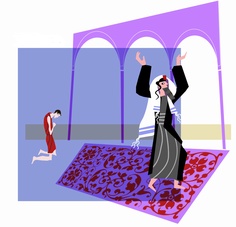 Pada zaman Yesus, ada beberapa kelompok di dalam agama Yahudi dan salah satunya adalah orang-orang Farisi. Inilah orang-orang yang mencintai Tuhan dan dengan taat mematuhi Hukum Musa dan tradisi para penatua bahkan dalam kehidupan sehari-hari mereka. Jadi, orang Yahudi menganggap mereka sebagai orang benar karena mereka setia kepada Hukum, dan saleh karena mereka sering berdoa. Banyak orang Farisi menjadi pengurus sinagoga dan dengan tekun mengajarkan Hukum saat hari-hari Sabat. Tidak heran, orang-orang Yahudi memberikan kepada orang-orang Farisi tempat-tempat terbaik di tempat-tempat ibadah dan pesta-pesta, dan memanggil beberapa dari mereka sebagai Rabi atau guru.
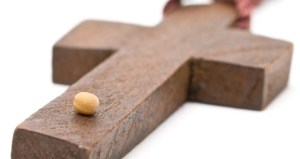 If there is one most powerful force in the universe, it will be faith. Jesus teaches us that even faith as small as a mustard seed can do the impossible. Jesus preaches that with this little faith, we can command a sycamore tree be uprooted and be planted in the sea. One of the smallest things on earth can move the most significant reality in the world. The sycamore tree has both deep, strong and widespread roots. It is just impossible to uproot it when it has grown mature. Yet, Jesus surprises further even by saying that we can replant this on the bed of the ocean. That makes it doubly impossible. Jesus is pushing his teaching on faith beyond natural human reasoning!
 Jika ada satu kekuatan paling dahsyat di alam semesta, ini adalah iman. Yesus mengajarkan kepada kita bahwa iman sekecil biji sesawi dapat melakukan hal yang mustahil. Yesus menyatakan bahwa dengan iman yang kecil ini, kita dapat memerintahkan pohon ara dicabut dan ditanam di laut. Salah satu hal terkecil di bumi dapat menggerakkan realitas paling besar di dunia. Pohon ara memiliki akar yang dalam, kuat dan menyebar. Tidak mungkin mencabutnya ketika sudah dewasa. Namun, Yesus bahkan mengatakan bahwa kita tidak hanya mampu mencabutnya tetapi juga menanam kembali ini di dasar samudera. Itu membuatnya mustahilnya doble! Inilah hebatnya iman yang kita miliki.
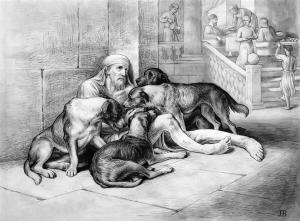 Once again, we listen to one of Jesus’s most remarkable stories. There is a rich man, and this guy is insanely wealthy. He is described as someone clothed with purple and fine linen. In ancient time, fine purple linen is an utmost luxury, and usually only nobilities could afford to buy this kind of cloth. Before the coming of synthetic coloring, purple dye is coming from snails of Mediterranean Sea, and it takes thousands of snails just to dye one ordinary garment. This rich guy is also throwing party every night. At the time of Jesus, where majority must toil to earn a little and to have something to eat, to enjoy feast every night is madly extravagant. At that time, fork, knife, and napkins were not common; thus, people are eating with their hands. In very wealthy houses, they will cleanse their hands by wiping them on hunks of bread that will be thrown away. These are pieces of bread Lazarus longs to receive.

