

26th Sunday in Ordinary Time [A]
September 27, 2026
Philippians 2:1-11
Philippians 2:5–11 is one of the most beautiful and profound passages in Scripture. Many scholars and theologians have recognized it as an ancient Hymn of Christ, either composed by St. Paul himself or inherited from the earliest Christian communities. What can we learn from this profound hymn?
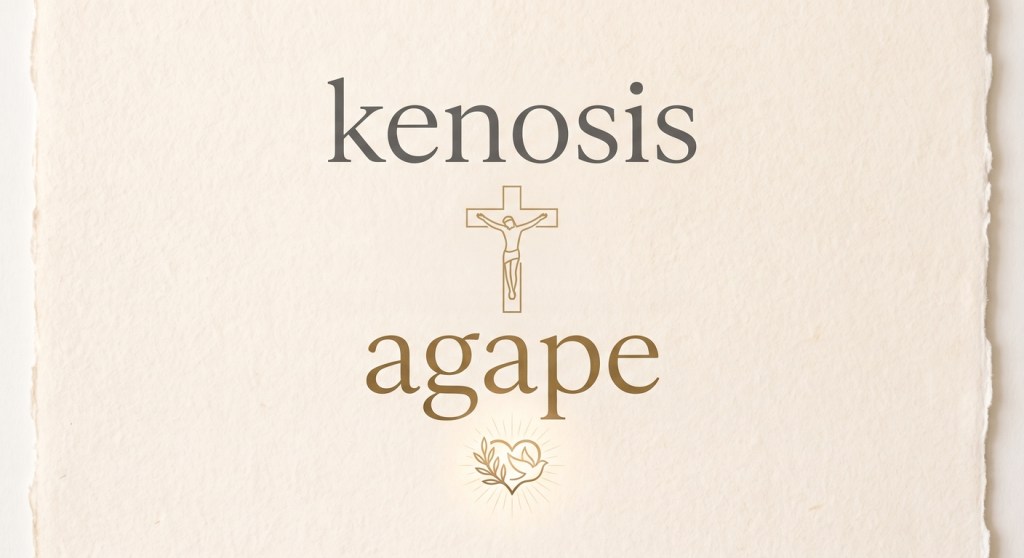
The first lesson lies in the act of self-emptying, known in Greek as kenosis (v. 7). This act of self-emptying was possible precisely because Jesus possesses the full nature of God. As God, He had every right and power to remain in heavenly glory with the Father and the Holy Spirit. From heaven, Jesus could have dealt with sinful humanity in any way He pleased, whether by punishing us severely or eradicating us completely. Even if He had wished to pardon us, He could have done so simply by speaking a single word of forgiveness from the comfort of His heavenly throne. Instead, He chose something far beyond human imagination: He descended from heaven and became man. This decision was driven by His radical humility. Jesus was not obsessed with holding onto His divine glory, majesty, and splendor, nor was He hungry for worship or adoration. Instead, He loved us so immensely that He chose to become like us in our human weakness.
Furthermore, His act of self-emptying did not end with the Incarnation; it went even deeper to embrace the lowest state of human suffering: death as a crucified man. In the time of Jesus, crucifixion was a penalty so brutal that it was reserved only for the worst criminals, such as murderers and rebels. Jesus did not merely set aside His divine majesty; He was willing to be counted among the most degraded of human beings. Jesus walked this path to demonstrate one ultimate truth: He loves us to the very end. His unimaginable self-emptying, motivated by radical humility, reveals the depth of God’s infinite love.
St. Paul further amplifies this truth by linking Christ’s self-emptying to its spiritual effect when he writes, “For you know the grace of our Lord Jesus Christ, that though he was rich, yet for your sake he became poor, so that you by his poverty might become rich” (2 Cor 8:9). Through this hymn, St. Paul teaches us the precious lesson that true love is realized through humility and self-emptying. It is through this very self-emptying that love transforms and enriches the ones we love.
St. Paul recognized Christ’s self-emptying and strove to follow in the footsteps of his divine Master. He left everything behind to proclaim Jesus Christ and establish churches in many lands. Living a very simple life, he worked by day as a tentmaker to support himself and his mission, while spending his nights teaching the Gospel to the faith communities. Though he surrendered everything for Christ, the early Christians gained Christ and an abundance of spiritual gifts. Paul gained nothing in the eyes of the world except hardship and trials, yet he rejoiced in his sufferings because he was able to participate in the afflictions and self-emptying of Christ (Col 1:24).
Ultimately, we love truly when we are willing to empty ourselves so that those we love may be made rich.
Manila
Valentinus Bayuhadi Ruseno, OP
Guide Questions:
In what areas of my life am I holding on to my rights, status, or desire for recognition, and how can I practice radical humility like Christ in those situations? Am I willing to lower myself or set aside my own comfort so that the people I love can be built up, enriched, and supported? When I face hardships, trials, or sacrifices for the sake of others, do I see them as empty burdens, or can I embrace them as a way to participate in Christ’s self-emptying love?

