
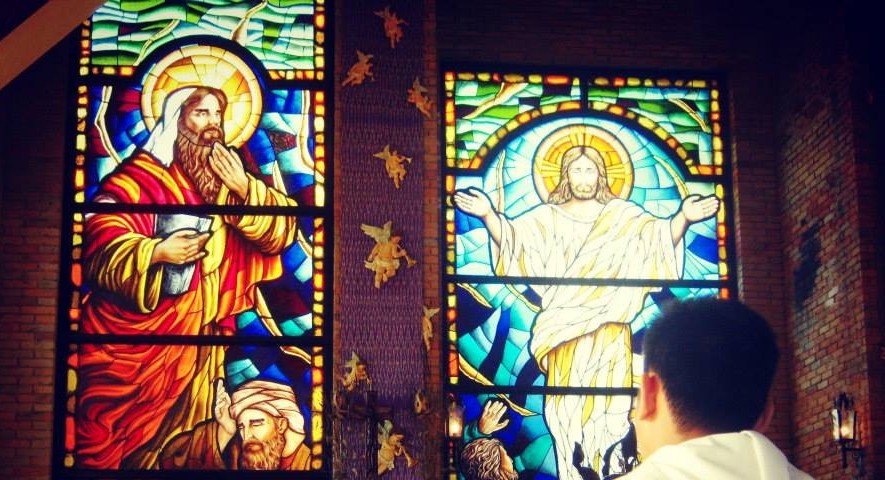
Reflection on 24th Sunday in Ordinary Time [September 16, 2018] Mark 8:27-35
“Jesus asked them, ‘But who do you say that I am?’ (Mk. 8:29)”
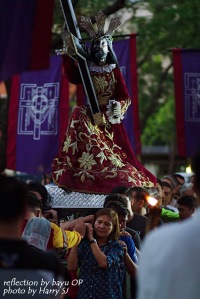 Several years ago, I gave a talk on the introduction to Christology to a group of young Filipino professionals who wished to deepen their spirituality. The first question I asked them as we commenced the short course was, “Who do you say that Jesus is?” The answers were varied. Some gave a dogmatic formula like Jesus is God, one quoted the Bible saying Jesus is the Word made flesh, one expressed boldly that Jesus is Savior and Lord, and the rest shared personal convictions like Jesus is their closest friend, or Jesus is their Shepherd. All these answers were right, but nobody claimed that Jesus is the Christ. Considering that our subject was Christology, we missed the basic Jesus’ title, in Greek, “Christos,” in Hebrew, “Messiah,” and translated into English, the Anointed One. Fortunately, around two thousand years ago, Simon Peter was able to spell the title when Jesus Himself asked the question.
Going deeper into our Gospel today, we are at chapter 8 of the Gospel of Mark. Since Mark has 16 chapters, we are literally in the middle of this second canonical Gospel. Yet, today’s reading does only happen to be in the middle of the Gospel, but it turns out to be the turning point of the Gospel. In the first eight chapters, Mark narrates Jesus’ ministry in Galilee and some other Gentile regions in the north of Israel. Jesus is doing wonders and teaching with authority. He can draw a lot of people, and some of them will be close followers called His disciples. Meanwhile, the last eight chapters, Jesus begins to journey down south and reaches His destination in Jerusalem. There, He will face his tormentors, and He will meet His passion, death and resurrection.
Peter gets the bulls-eye answer. After all, Peter’s profession is what Mark intends to convey to his readers, “The beginning of the gospel of Jesus Christ (Mk. 1:1).” Unfortunately, when Jesus reveals His suffering and death, it does not sit well with Peter’s idea of the Messiah. Perhaps Peter gets stuck with the concept of a powerful and conquering Christ that will lead Israel into victory. Jesus has been preaching about the coming of the Kingdom, teaching unforgettable lessons, and performing unmatched miracles. Surely, nothing, not even the great Roman empire could beat this Messiah. However, Peter just desires the first half of the Gospel, and cannot be at peace with the other half of the Gospel. If Peter and other disciples want to accept Jesus fully, then they need to embrace the other half of the Gospel of Jesus Christ as well. Following Jesus does not stop in Galilee where things are just awesome, but it has to go down to Jerusalem, where the persecution and death lurk. Thus, Jesus declares, “Whoever wishes to come after me must deny himself, take up his cross, and follow me. (Mk. 8:34).”
Often we are like Peter. We call ourselves Jesus’ disciples and accept the Gospel of Jesus Christ, but in reality, we just want half of Jesus or parts of the Gospel. We go to the Church and worship God, but we do not want to soil our hands in helping our brothers and sisters in need. Married couples enjoy the benefits of marriage, yet refuse to see children as a gift of God. Religious men and women vow to serve the Lord and His Church, but often, we serve our own interests and desires. No wonder G. K. Chesterton once wrote, “The Christian ideal has not been tried and found wanting. It has been found difficult; and left untried.” As we try to answer Jesus’ question, “Who do you think that I am?”, we are invited to reflect and to accept Jesus and His Gospel, not half, but the whole of Him.
Br. Valentinus Bayuhadi Ruseno, OP
 Beberapa tahun yang lalu, saya memberikan ceramah pengantar Kristologi bagi sekelompok profesional muda Filipina yang ingin memperdalam spiritualitas mereka. Pertanyaan pertama yang saya tanyakan kepada mereka adalah, “Menurut kamu, siapakah Yesus itu?” Jawabannya beragam. Beberapa memberikan formula dogmatis seperti Yesus adalah Allah, ada yang mengutip Alkitab dan mengatakan Yesus adalah Firman yang menjadi daging, seseorang menyatakan dengan berani bahwa Yesus adalah Juruselamat dan Tuhan, dan sisanya berbagi keyakinan pribadi seperti Yesus adalah sahabat terdekat mereka, atau Yesus adalah Gembala mereka. Semua jawaban ini benar, tetapi tidak ada yang mengklaim bahwa Yesus adalah Kristus. Mempertimbangkan bahwa ceramah kami adalah Kristologi, kami sepertinya lupa akan identitas dasar Yesus, dalam bahasa Yunani, “Christos,” dalam bahasa Ibrani, “Mesias,” yang berarti “Yang Diurapi”. Untungnya, sekitar dua ribu tahun yang lalu, Simon Petrus mampu mengucapkan identitas dasar ini ketika Yesus Sendiri menanyakan pertanyaan ini.
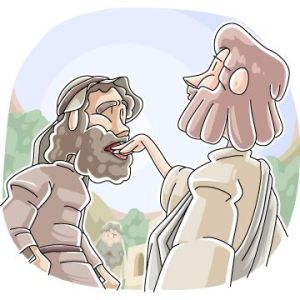 The deaf man whom Jesus heals is so blessed. He is able to see Jesus, and He finds healing. Inspired by this miracle, we wish that we will also meet Jesus and He will heal our sickness and solve our problems. Thus, we come to various places where we believe Jesus will heal us. We visit pilgrimage sites, we attend prayer and worship meetings, we recite various novenas, and we become actively involved in the Church’s organizations. We believe that our faith in Jesus will save us. However, what if our prayers are not granted? What if our problems are not solved but rather grow in number? What if our sickness is not healed, but gets worse? What if we do not feel that we are saved? One time, I visited Flora [not her real name], a colon-cancer patient, and she asked me, “Brother, I have faith in God, and I faithfully serve the Church, but why am I suffering from this terrible sickness?” Surely, it was a tough question.
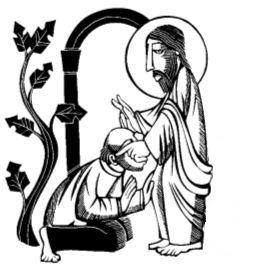 Minggu ini kita mendengar tentang Yesus yang menyembuhkan seorang tuli dan bisu. Terinspirasi oleh mukjizat ini, kita berharap bahwa Yesus akan menyembuhkan penyakit kita dan memecahkan segala masalah kita. Jadi, kita pergi ke berbagai tempat ataupun kegiatan di mana kita percaya Yesus akan menyembuhkan kita. Kita pergi ke situs ziarah, kita menghadiri pertemuan doa, dan kita menjadi aktif terlibat di Gereja. Kita percaya bahwa iman kita kepada Yesus akan menyelamatkan kita. Namun, bagaimana jika doa kita tidak dikabulkan? Bagaimana jika masalah kita tidak selesai tetapi bertambah jumlahnya? Bagaimana jika penyakit kita tidak sembuh, tetapi semakin parah? Suatu kali, saya mengunjungi Flora [bukan nama sebenarnya], pasien kanker usus besar, dan dia bertanya kepada saya, “Frater, saya memiliki iman kepada Tuhan Yesus, dan saya dengan setia melayani di Gereja, tetapi mengapa saya menderita penyakit yang mengerikan ini? “Tentunya, ini pertanyaan yang sulit dijawab.
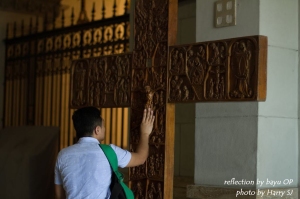
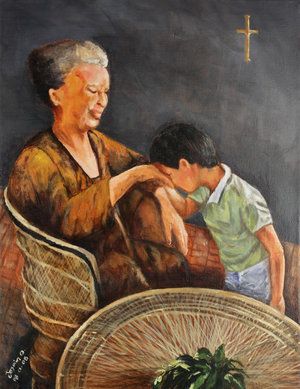 In today’s Gospel, Jesus seems to denounce all traditions. However, this position is rather simplistic and unattainable. The reason is that human beings are the creatures of traditions. Tradition comes from Latin word, “tradere”, meaning “to hand down”. Thus, crudely put, tradition is anything that has been handed down from our predecessors. Traditions range from something tangible like technologies and fashions, to something intangible like values, languages, sciences and many more. I remember how my mother taught me basic Christian prayers, like Our Father, Hail Mary, and the Rosary, and how my father would regularly bring us to the Church every Sunday. This is my family’s religious traditions. As an Indonesian living in the Philippines, I appreciate the “Mano Po” tradition among the Filipinos. This is a simple gesture of respect and blessing. The younger Filipinos are to hold a hand of older Filipino, and place it on their forehead.
 Dalam Injil hari ini, Yesus tampaknya menolak semua tradisi. Namun, pernyataan ini terlalu disederhanakan. Alasannya adalah bahwa manusia adalah makhluk tradisi. Tradisi berasal dari kata Latin, “tradere”, yang berarti “menurunkan”. Jadi, secara sederhana, tradisi adalah segala sesuatu yang telah diturunkan atau diwariskan dari para pendahulu kita. Tradisi berkisar dari sesuatu yang berwujud seperti teknologi, hingga sesuatu yang tidak berwujud seperti bahasa, ilmu pengetahuan, dan banyak lagi. Saya ingat bagaimana ibu saya mengajarkan saya doa-doa dasar, seperti Bapa Kami, Salam Maria, dan Rosario, dan bagaimana ayah saya secara teratur membawa kami ke Gereja setiap Minggu. Ini adalah tradisi agama keluarga saya. Sebagai orang Indonesia yang tinggal di Filipina, saya mengapresiasi tradisi “Pano Po” di antara orang Filipina. Ini adalah sikap menghormati orang yang lebih tua dan juga memberi berkat kepada yang lebih muda. Orang Filipina yang lebih muda akan memegang tangan mereka yang lebih tua, dan meletakkannya di dahi mereka.
 To say “Amen” is something usually we do in prayer. Commonly it is used to end a prayer. Our biblical prayers like Our Father and Hail Mary are usually concluded by amen. In several occasions, amen is mentioned more often. One of my duties as a hospital chaplain is to lead a prayer of healing for the sick. I always ask the family and friends who accompany the patients to pray together. Sometimes, they will say amen at the end of the prayer. However, some others will utter several amens within the prayer, and in fact, some people will say more amens than my prayer! In several occasions, amen is utilized outside the context of prayer. Preachers with a charismatic gift will invite their listeners to say amen. Surely, it is a good technique to keep the listeners awake!
 Mengatakan “Amin” adalah sesuatu yang biasanya kita lakukan dalam doa. Kata ini biasanya digunakan untuk mengakhiri doa. Doa alkitabiah seperti Bapa Kami dan Salam Maria biasanya disimpulkan oleh kata amin. Namun, dalam beberapa kesempatan, amin disebut lebih sering. Salah satu tugas pastoral saya di rumah sakit adalah memimpin doa penyembuhan bagi yang sakit. Saya selalu meminta keluarga dan mereka yang menemani pasien untuk berdoa bersama. Biasanya, mereka akan mengatakan amin di akhir doa. Namun, ada juga beberapa orang akan mengucapkan beberapa amin dalam doa, dan bahkan, ada beberapa orang mengucapkan lebih banyak amin dari pada doa yang saya ucapkan! Dalam beberapa kesempatan, amin digunakan di luar konteks doa. Pengkhotbah karismatik akan mengajak pendengar mereka untuk mengatakan amin sebagai bentuk penegasan. Tentunya, ini adalah juga teknik yang bagus untuk membuat pendengar tidak tertidur!
 When Jesus teaches in the synagogue in Nazareth, the listeners are amazed by his wisdom. Jesus speaks like a mighty prophet. However, the people soon make a background check on Jesus, and they realize Jesus’ identity and his family background. Nazareth is a small rural town in Galilee, and everyone knows everyone in this kind of setting. The people of Nazareth know Jesus as a son of a carpenter, and himself a carpenter. They are familiar also with Jesus’ family and relatives.
 Ketika Yesus mengajar di sinagoga di Nazaret, para pendengar kagum dengan kebijaksanaan-Nya. Yesus berbicara seperti seorang nabi yang perkasa. Namun, orang-orang segera melakukan pemeriksaan latar belakang pada Yesus, dan mereka menyadari identitas Yesus dan latar belakang keluarganya. Nazaret adalah desa kecil di Galilea, dan semua penduduk saling mengenal satu sama lain di lingkungan seperti ini. Orang-orang Nazaret mengenal Yesus sebagai putra seorang tukang kayu, dan dirinya sendiri adalah tukang kayu. Mereka juga akrab dengan keluarga dan kerabat Yesus.
 In Medio Ecclesiae