

19th Sunday in Ordinary Time [C] – August 11, 2019 – Luke 12:32-48
 In ancient Israel, the masters of the house were often leaving their homes for business trips or attending social gatherings like weddings. They would entrust their houses and their possessions to chief servants. And this was the world without a cellular phone, internet, and GPS. Thus, the servants have no idea of the ETA (estimated time of arrival) of their masters. It could be 8 PM, midnight or even early in the morning. The best attitude of a servant in this scenario is to be always vigilant and prepared for the arrival of his master.
However, being prepared is not understood as being idle or passivity, like someone who does nothing but waits near the door, and opens the door when the master knocks. Jesus says, “Gird your loins and light your lamps… (Lk. 12:35)” In ancient Israel, people were wearing robe or tunic. It is a long dress that covers the entire body, from the neck down to the leg. When people are working, they gird their loins with a robe or belt, to make sure that their tunic will not get in the way. In short, the servants are doing their jobs, making sure that the house is in order, and ready to receive any order just in case their masters arrive. This is a kind of readiness and preparedness that Jesus asks of His disciples.
This kind of preparedness naturally comes the humble recognition of who we are. If the servant accepts that he is a servant and aware that the house belongs to his master, he will not act as if he is the owner of the house and neglect his jobs, but perform his tasks well despite the absence of his master. So, we need also to recognize who we are and do the works that follow from our identity well. If our pride gets in the way, and we fail to understand who we are. We start playing God, and we begin doing whatever we please, even to confidently predict the end of the world.
Based on the Scriptures, the Church always believes that Jesus will come for the second time in glory and bring the final judgment to the world. We do not know when Jesus will come as the King and those who prophesy that they understand when, turn to be a dangerous hoax. In 1997, Marshall Applewhite predicted that the earth would be destroyed by the alien spaceships, and the only way to survive was to “transfer” their souls to another planet by committing suicide. Marshall and 36 followers killed themselves, yet the earth’s destruction never happened. Marshall was playing God, and he brought calamity to himself and his followers.
Be ready for the coming of Jesus means that we realize who we are before God. If we are God’s children, we love and obey our Father, and care for the other creations because God cares for them as well. If we are God’s disciples, we faithfully follow Him and continuously learn from Him. If we are fathers, we love, protect, and provide for their family. If we are mothers, we love, care, and educate our children. And when the Lord truly comes, we may be one of those “Blessed servants who are faithful and prudent [see Lk. 12:42]”
Valentinus Bayuhadi Ruseno, OP
 Di Israel kuno, tuan rumah sering meninggalkan rumah mereka untuk perjalanan bisnis atau menghadiri pertemuan sosial seperti pernikahan. Mereka akan mempercayakan rumah dan harta benda mereka kepada seorang hamba yang adalah hamba utama. Dan kita perlu ingat bahwa ini adalah dunia tanpa telepon seluler, internet dan GPS. Dengan demikian, para pelayan tidak tahu dengan pasti waktu kedatangan dari tuan mereka. Bisa jadi jam 8 malam, tengah malam atau bahkan dini hari. Sikap terbaik seorang pelayan dalam skenario ini adalah untuk selalu waspada dan siap menghadapi kedatangan tuannya.
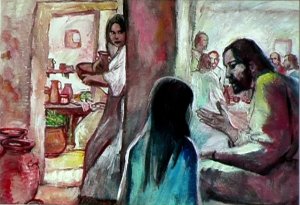 Melakukan sesuatu untuk melayani Tuhan tentu baik dan terpuji. Dan karya-karya ini sangat banyak dan beragam. Tindakan-tindakan ini dapat secara langsung melayani Dia di Gereja, terutama dalam liturgi. Kita dapat berpartisipasi dalam ibadat sebagai anggota paduan suara, lektor, putra altar, asisten imam, atau bahkan sebagai imam yang mempersembahkan Ekaristi itu sendiri. Namun, kita juga dapat melayani Dia melalui sesama ketika kita terlibat dalam inisiatif amal untuk membantu orang miskin, untuk memperjuangkan keadilan dan perdamaian dan integritas ciptaan. Kita memiliki banyak cara, tetapi tujuannya adalah satu dan itu adalah untuk memuliakan Dia.
 The journey from Jericho to Jerusalem was notoriously dangerous. The path was narrow, steep, filled by sudden turnings. The road became the favorite spot for the robbers to ambush any unguarded traveler. Some criminals were often violent, not only they took everything from the victims, but they would beat them mercilessly. Up to early twentieth century, some tourists and pilgrims were caught off guard when they passed this path, as their cars were ambushed and robbed. The brigands would swiftly escape before the police came.
 Perjalanan dari Yerikho ke Yerusalem terkenal berbahaya. Jalan itu sempit, terjal, dipenuhi belokan mendadak sehingga jalan itu menjadi tempat favorit para perampok untuk menyergap setiap pejalan yang tidak siap. Beberapa penjahat sering melakukan kekerasan, bahwa mereka tidak hanya mengambil semua barang dari para korban, tetapi mereka juga akan memukuli mereka tanpa ampun. Hingga awal abad kedua puluh, beberapa turis dan peziarah menjadi korban ketika mereka melewati jalan ini. Setelah mobil para turis dirampok, para perampok akan dengan cepat melarikan diri sebelum polisi datang.
 In today’s Gospel, Jesus is sending His seventy disciples for a mission. Yes, we are reading it correctly; it is not just twelve disciples, but seventy. While we are used to the celebrated mission of the Twelve, Luke informs us about the less famous mission of the seventy. We are not sure who are these people, but for sure, these are people who have the same commitment, dedication, and passion like the big names like Peter, John, Andrew, and Matthew. They follow Jesus, leave everything and are willing to be dispatched into a difficult mission to preach the Kingdom, to heal the sick, and to drive out the demons. The story of the seventy disciples gives us a hint about those dedicated and more numerous disciples of Jesus and yet somehow forgotten. While the Twelve represents the well-known figures of the Church like the pope and the bishops, the seventy bring to mind the nameless yet countless priests, religious men and women, and laity who are tirelessly building up the Body of Christs.
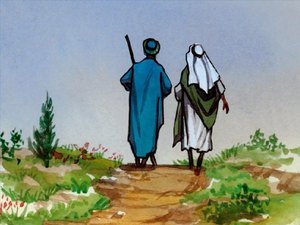 Dalam Injil hari ini, Yesus mengirim tujuh puluh murid-Nya untuk bermisi. Bukan hanya dua belas murid, tetapi tujuh puluh. Sementara kita terbiasa dengan misi Dua Belas Rasul yang lebih terkenal, Lukas memberi tahu kita tentang misi tujuh puluh murid yang kurang terkenal. Kita tidak yakin siapa orang-orang ini, tetapi yang pasti, mereka adalah orang-orang yang memiliki komitmen, dedikasi, dan semangat yang sama seperti Petrus, Yohanes, Andreas dan Matius. Mereka mengikuti Yesus, meninggalkan segalanya dan bersedia dikirim ke misi yang sulit untuk memberitakan Kerajaan Allah, menyembuhkan orang sakit, dan mengusir setan. Kisah tujuh puluh murid memberi kita petunjuk tentang murid Yesus yang berdedikasi dan lebih banyak secara jumlah, namun terlupakan. Sementara Dua Belas Rasul mewakili tokoh-tokoh terkenal dari Gereja seperti paus dan para uskup, tujuh puluh murid mengingatkan kita akan para imam, biarawan-biarawati, kaum awam yang tak terkenal namun tak terhitung jumlahnya, dan yang tanpa lelah membangun Tubuh Kristus.
 Today we listen to one of the most demanding and perhaps harsh teachings of Jesus. For those who follow Him, He demands total allegiance, and He shall become no less than their top priority in life. In both Jewish and Christian tradition, to honor our parents is one of the highest commandments. In fact, it is not a mere honoring, but it is to glorify [Hebrew word used is “kabad”] our parents. But, when a man asks Jesus to bury his father, Jesus tells him, “Let the dead bury the dead.” To one who requests to say goodbye to his family, Jesus says, “No one who sets a hand to the plow and looks to what was left behind is fit for the kingdom of God.” Very harsh. Is this truly Jesus whose heart is moved with pity towards the poor people? Is Jesus no longer observing the Ten Commandments?
 Hari ini kita mendengarkan salah satu ajaran Yesus yang paling sulit dimengerti dan diikuti. Bagi mereka yang ingin mengikuti Yesus, Dia menuntut kesetiaan total, dan menjadi prioritas utama mereka dalam hidup. Baik dalam tradisi Yahudi maupun Kristiani, untuk menghormati orang tua kita adalah salah satu perintah tertinggi dalam Sepuluh Perintah Allah. Tetapi, ketika seseorang meminta Yesus untuk menguburkan ayahnya, Yesus mengatakan kepadanya, “Biarkan orang mati menguburkan orang mati.” Kepada orang yang meminta untuk mengucapkan selamat tinggal kepada keluarganya, Yesus berkata, “Setiap orang yang siap untuk membajak tetapi menoleh ke belakang, tidak layak untuk Kerajaan Allah.” Tidak terbayangkan! Apakah ini benar-benar Yesus yang hatinya tergerak oleh belas kasihan kepada orang-orang miskin? Apakah Yesus tidak lagi memperhatikan Sepuluh Perintah? Bagaimana kita bisa mengerti kata-kata Yesus yang keras ini?
