
Eating God

The Solemnity of the Body and Blood of Christ [June 23, 2019] Luke 9:11-17

benedict n first communicantToday the Church is celebrating the solemnity of the Body and Blood of Jesus Christ. In many countries like Indonesia, today is the best time for the children who are already prepared to receive their first Holy Communion. I still recall the day I partook of the sacred host and the holy wine. Many of us were around 10 years old, old enough to recognize the presence of Christ in the Eucharist and we were dressed in white. I was wearing long-sleeved white shirt with a tie and black pants. When the priest dipped the white bread into the chalice of wine and said, “the body and blood of Christ”, I said “Amen.” It was my first time to savor the sweetness of wine, and of course, alcoholic beverage!

At that moment, I just knew the reception of sacred host is necessary to complete the Eucharist, and I was aware I was receiving a blessing, but I never truly comprehend the profound meaning of the great mystery. For me, it was just enough that I attend the mass and consume the consecrated host. It has become a routine and tradition, from Sunday to Sunday, to from month to month, from year to year. Till we become parents and we also bring our children for their first communion. And when somebody asks us, “why do you bring your children to the first communion?”, our answer may be like, “Well, we want our kids to be like us. It is just a family tradition.” The answer is simple, but too simple that it draws more questions: why bread and wine? Why Body and Blood of Jesus? Why does it have to be eaten?

We often forget to realize that this sacred host and wine are the entire Jesus Christ Himself, with all humanity and divinity. Thus, God offers Himself to be eaten. Why eating God? The answers lie on the pages of our Old Testament. Firstly, we recall that our first parents fell because of the act of eating. Now, in the Eucharist, God uses the same act of eating to restore men and women into grace. Secondly, in the middle of the garden of Eden, there were two trees, the forbidden tree, the tree of the knowledge of good and evil, and the tree of life [Gen 2:9]. Unfortunately, our first parents chose to eat the fruits from the forbidden tree. Thus, to restore humanity to grace, now God offers us the fruits from the tree of life, the tree of the cross of Christ. Thirdly, we remember the first Passover was about the story of how God liberated Hebrew people from the slavery of Egypt. The Passover began with the slaughter of the lamb, and its blood was sprinkled on the doors of the Israelite house so that their firstborns would be saved from death. Yet, the slaughter and the sprinkling of blood were not the summit of Passover. The Hebrew people had to consume the lamb as to complete their first Passover [Exo 12:8]. Now, Jesus the Lamb of God, has been sacrificed on the cross, yet it is not the end. Like the Hebrew Passover, we need to consume the Lamb of God to complete our New Passover, the Eucharist.

There are so much themes and aspects we may ponder on the Eucharist, and particularly today, the Church reminds us that the Eucharist, especially the reception of the Holy Communion is not just our Sunday routine, a family tradition. It is of the essential plan of God for our salvation, so that we may have heaven, our Communion with God, the Holy Trinity.

Deacon Valentinus Bayuhadi Ruseno, OP

Memakan Tuhan

Hari Raya Tubuh dan Darah Kristus [23 Juni 2019] Lukas 9: 11-17

VATICAN-POPE-MEMORIALHari ini Gereja merayakan Hari Raya Tubuh dan Darah Yesus Kristus. Di banyak negara seperti Indonesia, hari ini adalah waktu terbaik bagi anak-anak yang sudah siap untuk menerima Komuni Suci pertama mereka. Saya masih ingat hari saya menerima hosti dan anggur suci. Banyak dari kami berusia sekitar 10 tahun, cukup dewasa untuk mengenali kehadiran Kristus dalam Ekaristi. Saya ingat bahwa saya mengenakan kemeja putih lengan panjang dengan dasi kecil dan celana hitam. Ketika pastor mencelupkan hosti putih ke dalam piala anggur, dan berkata “tubuh dan darah Kristus”, saya berkata “Amin.” Ini adalah pertama kalinya saya menikmati manisnya anggur, dan tentu saja, minuman beralkohol!

Pada saat itu, saya hanya tahu bahwa penerimaan hosti yang kudus diperlukan untuk melengkapi perayaan Ekaristi, dan juga menerima berkat, tetapi saya tidak pernah benar-benar memahami makna mendalam dari misteri agung ini. Bagi saya, cukuplah bahwa saya menghadiri misa dan mengonsumsi hosti yang dikuduskan. Hal ini telah menjadi rutinitas dan tradisi, dari Minggu ke Minggu, dari bulan ke bulan, dari tahun ke tahun. Mungkin banyak dari kita berpikiran yang sama dengan saya bahwa  ini hanyalah sekedar tradisi yang dihidupi sebagai seorang Katolik. Sampai saat kita menjadi orang tua dan kita juga membawa anak-anak kita untuk komuni pertama mereka. Dan ketika seseorang bertanya kepada kita, “mengapa Anda membawa anak-anak Anda ke komuni pertama?” Jawaban kita mungkin seperti, “Ya, kami ingin anak-anak kami seperti kami. Ini adalah tradisi keluarga. ”Jawabannya sederhana, tetapi terlalu sederhana sehingga memunculkan lebih banyak pertanyaan, seperti: Mengapa Tubuh dan Darah Yesus? Kenapa harus Tuhan harus dimakan?

Kita sering lupa untuk menyadari bahwa roti dan anggur yang kudus ini telah menjadi adalah Yesus Kristus yang seutuhnya, dengan segala kemanusian dan keilahian-Nya. Jadi, Tuhan sungguh menawarkan diri-Nya untuk dimakan. Kenapa harus memakan Tuhan? Jawabannya ada di Perjanjian Lama kita. Pertama, kita ingat bahwa orang tua pertama kita jatuh karena sebuah tindakan yakni makan. Sekarang, dalam Ekaristi, Tuhan menggunakan tindakan makan yang sama untuk memulihkan putra-putri dari Adam dan Hawa dalam rahmat. Kedua, di tengah taman Eden, ada dua pohon, yakni pohon pengetahuan tentang yang baik dan yang jahat yang adalah pohon terlarang, dan pohon kehidupan [Kej 2:9]. Sayangnya, orang tua pertama kami memilih untuk memakan buah dari pohon terlarang. Dengan demikian, untuk mengembalikan manusia kepada rahmat, sekarang Allah memberikan kepada kita buah-buah dari pohon kehidupan, dari pohon salib Kristus. Ketiga, kita ingat Paskah pertama adalah tentang kisah bagaimana Allah membebaskan orang-orang Ibrani dari perbudakan di Mesir. Paskah dimulai dengan penyembelihan anak domba, dan darahnya dipercikkan di pintu rumah orang Israel sehingga anak sulung mereka akan diselamatkan dari kematian. Namun, penyembelihan dan percikan darah bukanlah puncak dari Paskah Yahudi. Orang-orang Ibrani harus memakan domba untuk menuntaskan Paskah pertama mereka [Kel 12:8]. Sekarang, Yesus, Anak Domba Allah, telah dikorbankan di atas kayu salib, namun itu bukanlah puncaknya. Seperti Paskah Ibrani, kita perlu mengonsumsi Anak Domba Allah untuk menuntaskah Paskah Baru kita, yakni Ekaristi.

Ada begitu banyak tema dan aspek yang dapat kita renungkan tentang Ekaristi, dan khususnya hari ini, Gereja mengingatkan kita bahwa Ekaristi, khususnya penerimaan Komuni Kudus bukan hanya rutinitas hari Minggu kita, sebuah tradisi keluarga. Itu adalah rencana esensial Allah untuk keselamatan kita, agar kita bisa menerima kepenuhan hidup, bersekutu dengan Allah, Tritunggal Maha kudus.

Diakon Valentinus Bayuhadi Ruseno, OP

The Pentecost and The New Law

Pentecost Sunday [June 9, 2019] John 20:19-23

pray overToday we are celebrating the great feast of Pentecost, where the Holy Spirit, the third divine person of the Holy Spirit, comes in the form of a tongue of fire and fills the hearts of the disciples. Why do we call this day as Pentecost? Why does the Holy Spirit just come 50 days after Jesus rose from the dead?

The simplistic answer will be: “It is the Holy Spirit’s business. It is up to Him!” Yet, our faith is not merely blind and stupid obedience, but a faith that seeks understanding. Our quest for an answer brings us back to the Old Testament. In the Jewish tradition and history, the feast of Pentecost or also known as the feast of Weeks is the day that they remember and celebrate the giving of the Law in Sinai. Fifty days after the Sabbath day of Passover, the Jewish people come together and celebrate another festival, the feast of the harvest. The big day is also called the feast of the Weeks because the Israelites wait for seven weeks. If seven is the number of covenants in the Bible, then seven weeks represents seven days times seven days, the fullness of covenant. In the Book of Exodus, we are going to discover that the day after seven weeks from the exodus from Egypt, God appeared in Mount Sinai, strike a covenant with Israel and gave them the Law to govern His people. If the Passover commemorates their liberation, the feast of the Weeks points to the day God gave His Law to Moses and Israel at Sinai. Then, if fifty days after the exodus from Egypt, the Israelites received the Mosaic Law, the disciples of Jesus, fifty days from the day of resurrection welcome the Holy Spirit, the new Law of Christ written in our hearts and souls.

To grasp the Pentecost, we need to comprehend the formative aspect of the Law. When God offered a covenant with Israelites, He expected them to behave like His people and not following the examples of other neighboring nations. To facilitate this, God gave Israel a set of Law to obey. The Law is to form Israelites as the people of God. With this in mind, we can now see the fundamental importance of the Pentecost for Jesus’ disciples. The Holy Spirit descends upon and dwells in the disciples as the New Law, and as the Old Law is to shape the old Israelites, so the New Law is to build the New Israel, the Church. That is why Pentecost is also considered the day that the Church was born, the birthday of the Church.

To receive the Holy Spirit in our hearts is an immense privilege, yet we are also to live in the Spirit. If ancient Israel calls themselves as the people of God because they obey the Law, so we may recognize ourselves the People of God when we follow the Spirit.  However, living in the Spirit is not about speaking in tongue or to join Charismatic groups. St. Paul clearly states to live in the Spirit is opposed to the urging of the flesh. When we detach ourselves from the works of the flesh like immorality, impurity, idolatry, hatred, division, wrath and jealousy [Gal 5:19], we already walk in the Spirit, and this is even harder than to speak in tongue. The Holy Spirit has given us His seven gifts, but do we strive to be wise, understanding, pious, persevering, knowledgeable in faith, fearful to offend the Lord [see Isa 11:1]? It would be the massive loss if we are celebrating the Pentecost, and yet we live as if we never receive the Holy Spirit.

Deacon Valentinus Bayuhadi Ruseno, OP

Pentakosta dan Hukum Baru

Minggu Pentakosta [9 Juni 2019] Yohanes 20: 19-23

pentecost mafaHari ini kita merayakan hari raya Pentakosta, hari raya Roh Kudus yang datang dalam bentuk lidah api dan memenuhi hati para murid. Pertanyaannya yang bisa kita angkat adalah: Mengapa kita menyebut hari ini sebagai Pentakosta? Mengapa Roh Kudus datang hanya 50 hari setelah Yesus bangkit dari kematian?

Iman kita bukan hanya ketaatan yang buta dan bodoh, tetapi iman yang mencari pengertian. Pencarian kita akan jawaban membawa kita kembali ke Perjanjian Lama. Dalam tradisi dan sejarah Yahudi, hari raya Pentakosta atau juga dikenal sebagai hari Tujuh Minggu adalah hari di mana mereka merayakan pemberian Hukum Taurat di Sinai. Lima puluh hari setelah hari Sabat Paskah Yahudi, orang-orang Israel berkumpul dan merayakan hari raya Pentakosta. Dalam Kitab Keluaran, kita akan menemukan bahwa sehari setelah tujuh minggu dari eksodus dari Mesir, Tuhan Allah menampakkan diri di Gunung Sinai, membuat perjanjian dengan Israel dan memberi mereka Hukum Taurat untuk mengatur umat-Nya. Jika Paskah Yahudi memperingati pembebasan mereka, hari raya Tujuh Minggu menunjuk pada hari Tuhan memberikan Hukum-Nya kepada Musa dan Israel di Sinai. Jadi, jika lima puluh hari setelah eksodus dari Mesir, orang Israel menerima Hukum Musa, para murid Yesus, lima puluh hari sejak hari kebangkitan menerima Roh Kudus, Hukum Kristus yang baru, yang tertulis dalam hati dan jiwa kita.

Untuk memahami Pentakosta, kita perlu memahami aspek formatif Hukum. Ketika Tuhan memberikan perjanjian dengan bangsa Israel, Dia menuntut mereka berperilaku seperti umat-Nya dan tidak mengikuti contoh bangsa-bangsa sekitar mereka. Untuk memfasilitasi ini, Allah memberi Israel seperangkat Hukum untuk dipatuhi. Sejatinya, Hukum Taurat adalah untuk membentuk bangsa Israel sebagai umat Allah. Dengan mengingat hal ini, kita sekarang dapat melihat pentingnya Pentakosta bagi para murid Yesus. Roh Kudus turun ke atas dan berdiam di dalam para murid sebagai Hukum Baru, dan sebagaimana Hukum Lama membentuk bangsa Israel yang lama, Hukum Baru adalah untuk membangun Israel Baru, yakni Gereja. Itulah sebabnya Pentakosta juga sebagai hari Gereja terbentuk atau hari lahir Gereja.

Menerima Roh Kudus di dalam hati kita adalah hak istimewa yang sangat besar, namun ini juga berarti kita juga harus hidup dalam Roh. Jika Israel kuno menyebut diri mereka sebagai umat Allah karena mereka mematuhi Hukum, maka kita dapat mengenali diri kita sendiri sebagai Umat Allah ketika kita mengikuti Roh. Namun, hidup dalam Roh bukanlah sekedar tentang bahasa roh atau bergabung dengan kelompok-kelompok Karismatik. St. Paulus dengan jelas menyatakan untuk hidup dalam Roh berlawanan dengan desakan kedagingan kita. Ketika kita melepaskan diri dari perbuatan kedagingan seperti amoralitas, penyembahan berhala, kebencian, perpecahan, kemarahan dan kecemburuan [Gal 5:19], kita sudah berjalan dalam Roh, dan ini bahkan lebih sulit daripada berbicara dalam bahasa roh. Roh Kudus telah memberikan kepada kita tujuh karunia-Nya, tetapi apakah kita berusaha untuk menjadi bijaksana, pengertian, saleh, tekun, berpengetahuan dalam iman, takut untuk menyinggung Tuhan [lihat Yesaya 11: 1]? Ini akan menjadi kehilangan terbesar kita jika kita merayakan Pentakosta, namun kita hidup seolah-olah kita tidak pernah menerima Roh Kudus.

Diakon Valentinus Bayuhadi Ruseno, OP

New Commandment: Agape

5th Sunday of Easter [May 19, 2019] John 13:31-33a, 34-35

childrenAt the Last Supper, after Jesus washed the feet of the disciples, He gives them a new commandment: “love one another as I have loved you”. If there is one single, most beautiful line in the Gospel of John or even in the entire Bible, this would be one of the strongest candidates. However, why does Jesus give us a new commandment?

To understand what Jesus does in the Last Supper, we need to go back to the Old Testament, particularly when the Lord God gave His commandments. After the Lord God delivered Israel from the slavery of Egypt, He made a covenant with them through the mediation of Moses. They shall be God’s people and the Lord shall be their God. This was the fundamental step in the life of Israel because God formed them as the People of God. This was an unprecedented privilege and grace, but with great privilege comes the great responsibility. God wanted them to live as the People of God and not as the other nations that surrounded them. Thus, the Lord gave them the Law that would separate them from other peoples who worshiped false gods, and the most fundamental among these laws are the Ten Commandments. If they stubbornly failed to observe the Law and lived as if like the Gentiles, they would be cut off from the People of God.

At the Last Supper, Jesus does the same as His Father in the desert. He forms His disciples, His family, His Church by giving them a New Law, the Law of Love. Only when the disciples keep the New Law, they will be different from the rest of nations, and they may call themselves as the followers of Jesus. At first, we may perceive that Jesus’ new law is easier done than the Ten Commandment. Yet, when we go deeper to the meaning of love understood by Jesus, it is actually the opposite. Jesus’ Law is much more difficult and tougher to do. Why?

In Greek of the New Testament, there are several words for love. “Eros” is the love between husband and wife. “Philia” is love among friends. None of these two Jesus used to describe His love. It is “agape”. While eros and philia are love based on emotion, agape is love rooted in free will. It is the love of action. That is why Jesus is able to teach us to love our enemies. Jesus does not say we should like our enemies because it is naturally impossible, but we can still do good to our enemies despite the hatred and anger.

But, this agape is not just any agape, it is agape of Jesus. For Him, there is no greater love than one who lays down his life for his friends. Agape of Jesus is sacrificial. It is Jesus’ cross as well as His glory. Only when we love to the point of sacrifice, we may say that we have kept Jesus’ commandment.

Muelmar “Toto” Magallanes was a young Filipino who worked as a construction worker. In 2009, monstrous tropical storm Ondoy battered Metro Manila and caused an instant flood in many areas. When his area was flooded, Toto first brought to safety his family. Yet, he did not stop there. He decided to rescue others who were still trapped by the mighty water. Braving the strong current, he saved more than 30 people. He was already exhausted when he realized a mother and her baby were still in danger. He made his last rescue attempt and brought the mother and her baby to the higher ground. Yet, losing his strength, he was swept by the current. He was lifeless the following day. “He gave his life for my baby,” Menchie Penalosa, the child’s mother, told Agence France-Presse. “I will never forget his sacrifice.”

This is the new commandment of Jesus and only by keeping His Commandment, we can become His authentic disciples.

Deacon Valentinus Bayuhadi Ruseno, OP

Perintah Baru: Agape

Minggu Paskah ke-5 [19 Mei 2019] Yohanes 13: 31-33a, 34-35

love new commandmentPada Perjamuan Terakhir, setelah Yesus membasuh kaki para murid, Dia memberi mereka perintah baru: “Kasihanilah satu sama lain seperti Aku telah mengasihi kamu”. Namun, mengapa Yesus perlu memberi kita perintah baru?
Untuk memahami apa yang Yesus lakukan dalam Perjamuan Terakhir, kita perlu kembali ke Perjanjian Lama, khususnya ketika Tuhan Allah memberikan Hukum-Nya. Setelah Tuhan Allah membebaskan Israel dari perbudakan Mesir, Dia membuat perjanjian dengan mereka melalui perantaraan Musa. Mereka akan menjadi umat Tuhan dan Tuhan Allah akan menjadi Tuhan mereka. Ini adalah langkah mendasar dalam kehidupan Israel karena Allah membentuk mereka sebagai Umat-Nya. Ini adalah hak istimewa dan rahmat yang belum pernah terjadi sebelumnya, tetapi dengan hak istimewa yang besar ini diikuti oleh tanggung jawab besar. Tuhan ingin mereka hidup sebagai Umat Allah dan bukan sebagai bangsa lain yang mengelilingi mereka. Jadi, Tuhan memberi mereka Hukum yang akan memisahkan mereka dari orang-orang lain yang menyembah dewa-dewa palsu, dan yang paling mendasar di antara hukum-hukum ini adalah Sepuluh Perintah Allah. Jika mereka dengan keras kepala gagal mematuhi Hukum Allah dan hidup seolah-olah seperti bangsa-bangsa lain, mereka akan disingkirkan dari Umat Allah.

Pada Perjamuan Terakhir, Yesus melakukan hal yang sama seperti Bapa-Nya di padang gurun. Dia membentuk murid-murid-Nya, keluarga-Nya, Gereja-Nya dengan memberi mereka Hukum Baru, Hukum Kasih. Hanya ketika para murid mematuhi Hukum Baru, mereka akan berbeda dari bangsa-bangsa lain, dan mereka dapat menyebut diri mereka sebagai pengikut Yesus. Pada awalnya, kita dapat merasakan bahwa hukum baru Yesus lebih mudah dilakukan daripada Sepuluh Perintah Allah. Namun, ketika kita masuk lebih dalam ke makna kasih yang dipahami oleh Yesus, kita mulai menyadari bahwa Hukum Yesus jauh lebih sulit untuk dilakukan. Mengapa?

Dalam bahasa Yunani Perjanjian Baru, ada beberapa kata untuk kasih. “Eros” adalah kasih antara suami dan istri. “Philia” adalah kasih di antara teman-teman. Tidak satu pun dari kedua kata ini yang digunakan untuk menggambarkan kasih-Nya. Itu adalah “agape”. Sementara eros dan philia adalah cinta berdasarkan perasaan, agape adalah cinta yang berakar pada kehendak bebas. Itu adalah kasih tindakan. Itulah sebabnya Yesus dapat mengajar kita untuk mengasihi musuh kita. Yesus tidak mengatakan kita harus menyukai musuh kita karena itu secara alami tidak mungkin, tetapi kita masih bisa berbuat baik kepada musuh kita meskipun ada kebencian dan kemarahan.

Tetapi agape ini bukan sembarang agape. Bagi-Nya, tidak ada kasih/agape yang lebih besar daripada seseorang yang memberikan nyawanya untuk sahabat-sahabatnya. Agape Yesus adalah pengorbanan. Itu adalah salib Yesus dan juga kemuliaan-Nya. Hanya ketika kita mengasihi sampai pada titik pengorbanan, kita dapat mengatakan bahwa kita telah mematuhi perintah Yesus.

Muelmar “Toto” Magallanes adalah seorang pemuda Filipina yang bekerja sebagai pekerja konstruksi. Pada 2009, badai tropis Ondoy yang dahsyat menghantam Metro Manila dan menyebabkan banjir di banyak daerah. Ketika daerahnya dilanda banjir, Toto pertama-tama membawa keluarganya ke tempat aman. Namun, dia tidak berhenti di situ. Dia memutuskan untuk menyelamatkan orang lain yang masih terjebak. Menantang arus kuat, dia menyelamatkan lebih dari 30 orang. Dia sudah kelelahan ketika menyadari seorang ibu dan bayinya masih dalam bahaya. Dia melakukan upaya penyelamatan terakhirnya dan membawa ibu dan bayinya ke tempat yang lebih tinggi. Namun, kehilangan kekuatannya, ia tersapu oleh arus. Dia ditemukan tak bernyawa pada hari berikutnya. “Dia memberikan hidupnya untuk bayiku,” Menchie Penalosa, ibu yang bayinya diselamatkan, mengatakan kepada Agence France-Presse. “Aku tidak akan pernah melupakan pengorbanannya.”

Ini adalah perintah baru Yesus dan hanya dengan mematuhi Perintah-Nya, kita dapat menjadi murid-murid-Nya yang otentik.

Diakon Valentinus Bayuhadi Ruseno, OP

Fish and Bread

Third Sunday of Easter [May 5, 2019] John 21:1-19

ichthus 2If we observe the Gospel readings of the past days and Sundays, we will notice that most of them are speaking about the risen Christ’s appearances to His disciples. One unnoticeable yet interesting feature in these stories is that of the presence of food.

The two disciples who walk to Emmaus, invite Jesus to have a dinner. Jesus takes the bread, says the blessing, breaks it, and gives it, and He disappears. The two disciples come to their senses, and realize He is Jesus [Luk 24:30]. When Jesus appears to the Eleven and other disciples, they are terrified. To dispel their doubt on His resurrection, Jesus presents His body and eats the fish given to Him [Luk 24:42]. And in today’s Gospel, Jesus invites His seven disciples to a breakfast at the shore of the Lake of Tiberias. After another miraculous catch, Jesus prepares bread and fish for the disciples who are no longer baffled by the appearance of their Master [John 21:13].

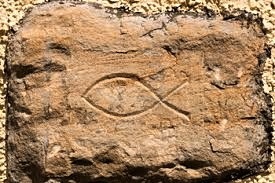
We may ask, “Why bread and fish?” These are simple food that are often available at Jewish household. Yet, looking deeper, bread and fish possess a profound meaning. Bread and fish are earliest symbol of Christ and Christians. Bread, especially the breaking of the bread, is the technical biblical name for the Eucharist. In the Acts of Apostles, the first Christians gather around the apostles for the teaching and breaking of the bread [Acts 2:42]. On a Sunday, Paul leads the community of Troas in worship as he preaches and breaks bread [Acts 20:7]. Fish, in Greek, is “Ichthus” and it stands for “Iesous Christos Theos Hyios Soter”, meaning Jesus Christ God Son [and] Savior. The symbol of fish was scattered inside catacombs of Rome as a sign of Christian gathering in time of persecution.

The question lingers: why does the risen Lord ask for food and invites the disciples to eat? Firstly, eating food is one of the most basic activities of human being. It points to our biological functions that sustains our bodily life and growth. The spiritless body neither consumes food, nor the bodiless spirit enjoys meals. Jesus shows His disciples that his resurrection is not a matter of spiritual enlightenment, but truly a bodily reality. His disciples neither see a spirit floating in the air, nor simply believe that their Teacher is alive in their hearts. The tomb is empty because Jesus, including His body, has risen.

Secondly, eating together does not only satisfy our tummy, but it also brings people closer together. While we are enjoying food, we cannot but share our thoughts and hearts to each other. Eating together builds not only the body, but also the dialogue and community. One of my favorite activities in the convent is the meal time, not because I am fond of eating, but we share a lot of stories and opinions. We practically speak about anything under the sun, from the latest movie, Avenger Endgame, the current political issues, to theological discussion on St. Thomas Aquinas. We also tell our joys, concerns and worries in our ministry and our future as a community. Simple food, yet great bonding.

Upon the simple reality of eating together, Jesus builds His community. In a shared meal, He retells His stories of painful passion and shameful death, and unearths its profound meanings especially as the fulfillment of the Scriptures. The events of his death used to be absurdity and loss of hope, but in the dining table, the risen Lord restores the faith, hope and love that go dim.

Jesus leaves us the Eucharist, the breaking of the bread, the sacred meal. Like the first disciples, it is here that we discover the risen Lord who shares His body as a spiritual food, and His Word as the meaning of our life. In the Eucharist, we are assured that the worst of this world does not have the last say, and the battle against absurdity has already been won.

Deacon Valentinus Bayuhadi Ruseno, OP

Ikan dan Roti

Minggu Paskah ketiga [5 Mei 2019] Yohanes 21: 1-19

ichthus

Jika kita mengamati bacaan-bacaan Injil pada hari-hari terakhir, kita perhatikan bahwa kebanyakan dari mereka berbicara tentang penampakan Kristus yang bangkit kepada murid-murid-Nya. Salah satu fitur yang sederhana namun menarik dalam cerita-cerita ini adalah adanya makanan.

Kepada dua murid yang berjalan ke Emaus, Yesus diundang untuk makan malam. Bagi mereka, Yesus mengambil roti, mengucapkan berkat, memecahnya, dan memberikannya, dan Dia menghilang. Kedua murid itu segera menyadari bahwa Dia adalah Yesus [Luk 24:30]. Ketika Yesus menampakkan diri kepada sebelas rasul dan murid-murid lainnya, mereka ketakutan. Untuk menghilangkan keraguan mereka tentang kebangkitan-Nya, Yesus menunjukkan tubuh-Nya dan memakan ikan yang diberikan kepada-Nya [Luk 24:42]. Dan dalam Injil hari ini, Yesus mengundang ketujuh murid-Nya untuk sarapan di tepi Danau Tiberias. Setelah mujizat penangkapan ikan, Yesus menyiapkan roti dan ikan untuk para murid yang tidak lagi bingung dengan penampakan Guru mereka [Yoh 21:13].

Kita mungkin bertanya, “Mengapa roti dan ikan?” Ini adalah makanan sederhana yang sering tersedia di rumah tangga Yahudi. Namun, melihat lebih dalam, roti dan ikan memiliki makna yang dalam. Roti dan ikan adalah simbol awal Kristus dan Gereja. Roti, khususnya pemecahan roti, adalah nama teknis Alkitabiah untuk Ekaristi. Dalam Kisah Para Rasul, jemaat pertama berkumpul di sekitar para rasul untuk pengajaran dan pemecahan roti [Kis 2:42]. Pada hari Minggu, Paulus memimpin komunitas di Troas dalam ibadat, dan ia berkhotbah dan memecahkan roti [Kis 20:7]. Ikan, dalam bahasa Yunani, adalah “Ichthus” dan itu singkatan dari “Iesous Christos Theos Hyios Soter”, yang berarti Yesus Kristus, Allah Putra [dan] Juruselamat. Simbol ikan tersebar di katakombe Roma sebagai tanda pertemuan jemaat pada masa penganiayaan.

Pertanyaannya: mengapa Tuhan yang bangkit meminta makanan dan mengundang para murid untuk makan? Pertama, makan makanan adalah salah satu kegiatan paling dasar manusia. Itu menunjuk pada fungsi biologis kita yang menopang kehidupan dan pertumbuhan tubuh kita. Tubuh tanpa roh maupun roh tanpa tubuh tidak mengkonsumsi makanan. Yesus menunjukkan kepada para murid-Nya bahwa kebangkitan-Nya bukanlah masalah pencerahan spiritual, tetapi benar-benar suatu realitas jasmani. Murid-muridnya tidak melihat roh mengambang di udara, juga tidak hanya percaya bahwa Guru mereka hidup di dalam hati mereka. Makam itu kosong karena Yesus, termasuk tubuh-Nya, telah bangkit.

Kedua, makan bersama tidak hanya memuaskan perut kita, tetapi juga membuat kita lebih dekat dengan satu sama lain. Sementara kita menikmati makanan, kita juga berbagi pikiran dan hati kita. Makan bersama membangun tidak hanya tubuh, tetapi juga dialog dan komunitas. Salah satu kegiatan favorit saya di biara adalah waktu makan, bukan karena saya senang makan, tetapi kami bisa berbagi banyak cerita dan pendapat. Kami berbicara tentang apa pun, dari film terbaru, Avenger Endgame, masalah politik saat ini, hingga diskusi teologis tentang St Thomas Aquinas. Kami juga menceritakan kegembiraan, keprihatinan, dan kekhawatiran kami dalam pelayanan dan masa depan kami sebagai sebuah komunitas. Makanan sederhana menjadi ikatan persaudaraan.

Dengan realitas sederhana yakni makan bersama, Yesus membangun komunitas-Nya. Dalam perjamuan bersama, Dia menceritakan kembali kisah-kisah-Nya tentang penderitaan yang menyakitkan dan kematian yang memalukan, dan menggali maknanya yang mendalam terutama sebagai penggenapan dari Kitab Suci. Peristiwa kematiannya dulunya adalah sebuah absurditas dan kehilangan harapan, tetapi di meja makan, Tuhan yang bangkit memulihkan iman, harapan dan cinta yang menjadi redup.

Yesus memberikan kita Ekaristi, memecahkan roti, perjamuan kudus. Seperti para murid pertama, di sinilah kita menemukan Tuhan yang bangkit yang membagikan tubuh-Nya sebagai makanan rohani, dan Firman-Nya sebagai makna hidup kita. Dalam Ekaristi, kita diyakinkan bahwa yang terburuk di dunia ini tidak memiliki suara terakhir, dan makna dan pengertian mengalahkan kegelapan dan keputusasaan.

Diakon Valentinus Bayuhadi Ruseno, OP

Fear and Forgiveness

Second Sunday of Easter/ Divine Mercy Sunday [April 28, 2019] John 20:19-31

risen christ 2Today is the Divine Mercy Sunday. From the Gospel, Jesus institutes the sacrament of reconciliation as He bestows His Holy Spirit upon the Disciples. He grants them the divine authority to forgive (and not to forgive) sins and charges them to be the agents of Mercy. While it is true that only priests can minister the sacrament of confession, every disciple of Christ is called to be an agent of Mercy and forgiveness. Yet, how we are going to be the bearers of Mercy and Forgiveness? I think we need to understand first the dynamic of fear and peace.

Fear is one of the human most basic emotions. It makes us flee from impending danger and normally, it is good and necessary for our survival. Yet, what is unique with us humans is that the object of fear is not only physical real danger like an earthquake, fire, or venomous animals, but it extends to moral judgment. When we commit a mistake, we are afraid of the judgment as well as the consequences. Quite often too, fearful of the judgment and condemnation, we are run away and hide. In fact, the story of fear is a primordial story. We recall our first parents, Adam and Eve. After they violated the Law of God, they realized that they have terribly sinned against the Lord, and afraid of God’s judgment, they hid.

After the passion and death of Jesus we find out that Jesus’ disciples themselves are afraid and hiding. The disciples lock themselves inside the room because they are afraid. However, the real fear is not from the Jewish authority or the Roman troops, but from Jesus’ judgment. We remember that Judas handed over Jesus to the Jewish authority, Peter, the leader, denied Jesus three times, and most of the disciples were running away. Even before the crucial moments of Jesus, they have deserted their Master and Messiah. In a court martial, a soldier who deserts his army, especially during the pick of the battle, is considered a traitor not only to the army, but to the entire nation, and he deserves no less than capital punishment. The disciples are hiding because of fear that Jesus will bring His severe judgment, and get back on them. The disciples are afraid that Jesus may come anytime, condemn them, and throw a fireball on them.

Indeed, Jesus comes to them, but he brings not condemnation but the gift of peace, “Shalom”. This peace only ensues from forgiveness. This peace, however, is not the absence of judgment, but rather it presupposes one. Unless the disciples recognize and own up their terrible mistakes, they will not appreciate Jesus’ forgiveness and mercy. The peace will be just a mirage, and fear still reigns.

To become an agent of Mercy, we first dare to pronounce judgment. If we pretend that the sin never happens, and keep telling ourselves that everything is just fine, we deceive ourselves and never become sincerely peaceful. Indeed, it is difficult, but as we cannot heal unless there is prognosis, we cannot truly forgive unless there is judgment.

Just last week, several suicide bombers blew themselves up at several churches in Sri Lanka and killed hundreds of Christians. A religious sister, who lost several of her community members in the explosion, wrote an open letter to the perpetrators. She judged that what they did was an act of terrorism, pure evil. Yet, she reminds them that Christians will not be cowed and afraid because we know how to forgive. She said that the Catholic Church remains an open-door Church because she is not afraid to welcome everyone including those who tried to destroy her.

There is no peace without forgiveness, and there is no forgiveness and mercy without true judgment.

Deacon Valentinus Bayuhadi Ruseno, OP

Ketakutan dan Pengampunan

Minggu Paskah Kedua [28 April 2019] Yohanes 20: 19-31

risen christ n thomasHari ini adalah Hari Minggu Kerahiman Ilahi. Dari Injil, Yesus membentuk sakramen rekonsiliasi saat Ia menganugerahkan Roh Kudus-Nya kepada para Murid. Dia memberi mereka otoritas ilahi untuk mengampuni (dan tidak mengampuni) dosa dan mengutus mereka sebagai pekerja Kerahiman. Meskipun benar bahwa hanya imam yang dapat melayani sakramen pengakuan dosa, setiap murid Kristus dipanggil untuk menjadi pekerja Kerahiman dan pengampunan. Namun, bagaimana kita akan menjadi pembawa Kerahiman dan Pengampunan? Kita perlu memahami dulu dinamika antara rasa takut dan kedamaian.

Rasa takut adalah salah satu emosi paling mendasar manusia. Itu membuat kita lari dari bahaya yang akan datang dan biasanya, hal ini baik dan perlu untuk kelangsungan hidup kita. Namun, yang unik dengan kita manusia adalah bahwa objek rasa takut bukan hanya bahaya benda nyata secara fisik seperti gempa bumi, api, atau binatang berbisa, tetapi meluas ke penilaian moral. Ketika kita melakukan kesalahan, kita takut akan penghakiman serta konsekuensinya. Dan seringkali terlalu takut pada penghakiman dan hukuman, kita melarikan diri dan bersembunyi. Sejatinya, kisah ketakutan adalah kisah primordial kita. Kita mengingat orang tua pertama kita, Adam dan Hawa. Setelah mereka melanggar Hukum Allah, mereka menyadari bahwa mereka telah sangat berdosa terhadap Tuhan, dan takut akan hukuman Tuhan, mereka bersembunyi. Kita menjumpai juga bahwa murid-murid Yesus sendiri takut dan bersembunyi seperti halnya Adam dan Hawa.

Para murid mengunci diri di dalam ruangan karena mereka takut. Namun, ketakutan yang sebenarnya bukan dari otoritas Yahudi atau pasukan Romawi, tetapi dari penghakiman Yesus. Kita ingat bahwa Yudas menyerahkan Yesus kepada otoritas Yahudi, Petrus, sang pemimpin, menyangkal Yesus tiga kali, dan sebagian besar murid melarikan diri. Bahkan sebelum saat-saat genting Yesus, mereka telah meninggalkan Sang Guru dan Mesias mereka. Di pengadilan militer, seorang prajurit yang meninggalkan tentaranya, terutama saat pertempuran, dianggap sebagai pengkhianat tidak hanya bagi tentara, tetapi juga bagi seluruh bangsa, dan ia layak menerima hukuman mati. Para murid bersembunyi karena takut bahwa Yesus akan membawa hukuman berat-Nya, dan membalas mereka. Para murid takut bahwa Yesus akan datang kapan saja, mengutuk mereka, dan melemparkan bola api ke atas mereka.

Sungguh, Yesus datang kepada mereka, tetapi ia tidak membawa penghukuman tetapi karunia damai, “Shalom”. Kedamaian ini hanya terjadi karena pengampunan. Namun, kedamaian ini tidak terlahir dari absennya penghakiman, tetapi justru dari penghakiman yang diambil Yesus. Hanya saat para murid mengenali dan mengakui kesalahan mereka yang mengerikan, mereka akan menghargai pengampunan dan kerahiman Yesus. Tanpa penghakiman, kedamaian hanya akan menjadi fatamorgana, dan ketakutan masih berkuasa.

Untuk menjadi pekerja Kerahiman, pertama-tama kita berani mengucapkan penghakiman. Jika kita berpura-pura dosa tidak pernah terjadi, dan terus mengatakan pada diri kita sendiri bahwa semuanya baik-baik saja, kita menipu diri kita sendiri dan tidak pernah menerima rasa damai yang sesungguhnya. Seperti halnya dokter yang tidak dapat menyembuhkan pasien kecuali ada diagnosis yang benar, kita tidak dapat benar-benar memaafkan kecuali ada penghakiman yang benar.

Baru minggu lalu, beberapa pelaku bom bunuh diri meledakkan diri di beberapa gereja di Sri Lanka dan membunuh ratusan jemaat. Seorang suster, yang kehilangan beberapa anggota komunitasnya dalam ledakan itu, menulis surat terbuka kepada para pelaku. Dengan berani dia menyatakan bahwa apa yang mereka lakukan adalah tindakan terorisme, kejahatan yang tak berprikemanusiaan. Namun, dia mengingatkan mereka bahwa umat Katolik tidak akan takut karena kita tahu bagaimana cara mengampuni. Dia mengatakan bahwa Gereja Katolik tetap menjadi Gereja dengan pintu terbuka karena kita tidak takut untuk menyambut semua orang termasuk mereka yang mencoba menghancurkan Gereja.

Tidak ada kedamaian tanpa pengampunan, dan tidak ada pengampunan dan belas kasihan tanpa yang benar.

 Diakon Valentinus Bayuhadi Ruseno, OP