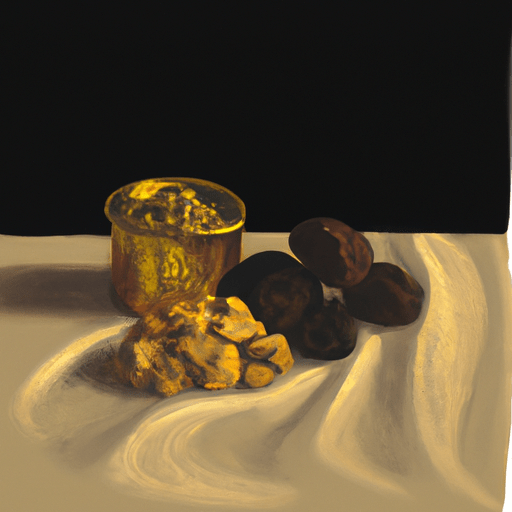
The Magi and the Truth

The Epiphany of the Lord
January 7, 2024
Matthew 2:1-12 [B]

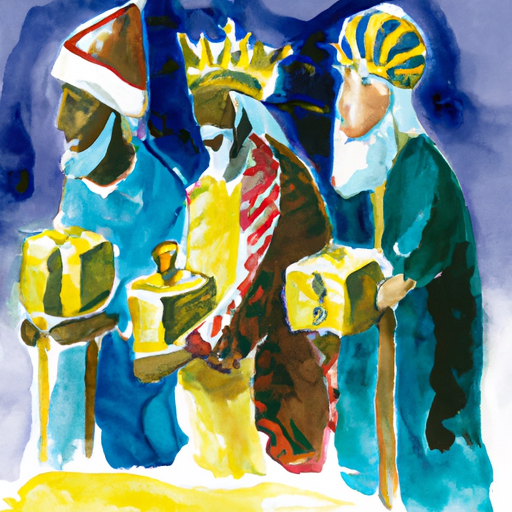
The Christmas season ends with the feast of Epiphany. This ancient feast is associated with the story of the Magi from the East who visited the child Jesus in Bethlehem. The story is a fitting conclusion to the Christmas season since the Magi represented the nations of the world who came and worshiped the newborn king. Jesus was born not only to be the Messiah of the Jews but also the Savior of the nations.
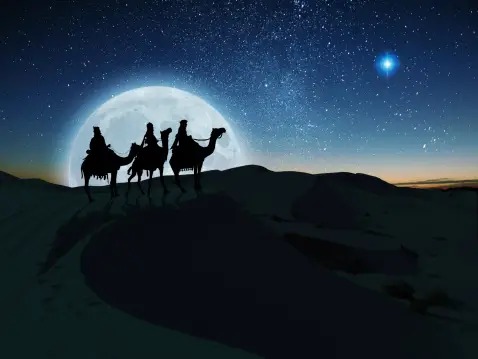
The identity of the Magi remains largely a mystery. The earliest depiction in the Basilica of the Nativity in Bethlehem presented them dressed in Persian clothes (presently Iran). But, some fathers of the Church believed that they were Chaldeans (now Iraq). Others still argued that they were coming from northern Syria because they were thought to be the descendants of Baalam (see Num 22). Finally, we are not really sure. The Bible describes them as ‘Magos’; in the Bible itself, ‘Magos’ has ambiguous meanings. The word Magos can be negatively associated with a sorcerer, one who practiced magic and even to earn money and fame (see Acts 13:6). Yet, the term can also be translated as a sage or wise man, one who dedicated himself in search of Truth.

The Church’s traditions tend to see the Magi as the wise men from the East. These were people who offered their lives in search of the Truth. Yet, living two millennia before us, they did not enjoy the fruits of scientific revolutions and methods. They had to rely on limited resources and information, often mixed with myths and superstitions. They did not have chemistry yet, but rather alchemy (protoscience that aims to transform one material into something else like gold or medicine). They did not yet understand astronomy principles but contended with astrology (a pseudo-science that reads the celestial bodies and how they relate to human fates). The majority of their literature probably dealt with magic rather than true science.

However, despite their limitations, God recognized their sincere effort and thus led them to the Truth himself through the star. After all, God placed in their hearts the profound thirst for Truth. They proved their commitment as they left their palaces’ comfort and embarked on a long, dangerous journey. We are also not sure what Baltazar, Melchior, and Gaspar (as the tradition calls them) truly experienced when they discovered Jesus, the Truth. We are confident that the Magi are the symbols of humanity in search of Truth for God Himself.

Like the Magi, God also created us as beings that possess a fundamental hunger for Truth. Unfortunately, this hunger for Truth does not find its fulfillment because of sins. The sin of laziness poisons our desire for Truth and chains us in our comfort zones. The sin of lust turns our desire for Truth into carnal desire. The sin of pride makes us believe that we already possess the Truth and we do not need God’s grace. Learning from the Magi, we recognize that sciences are also parts of God’s providence to lead us into ultimate Truth to Himself.

Rome
Valentinus Bayuhadi Ruseno, OP

Orang Majus dan Kebenaran

Hari Raya Penampakan Tuhan – Epifani [B]
7 Januari 2024
Matius 2:1-12

Masa Natal berakhir dengan perayaan Epifani. Perayaan kuno ini erat hubungannya dengan kisah orang Majus dari Timur yang mengunjungi bayi Yesus di Bethlehem. Kisah ini merupakan penutup yang tepat untuk masa Natal karena orang Majus mewakili bangsa-bangsa di dunia yang datang dan menyembah raja yang baru lahir. Yesus lahir bukan hanya sebagai Mesias bagi orang Yahudi, tetapi juga Juruselamat bagi semua bangsa.

Identitas orang Majus masih menjadi misteri besar. Lukisan paling awal di Basilika Kelahiran Yesus di Bethlehem menampilkan mereka mengenakan pakaian Persia (sekarang Iran). Namun, beberapa bapa Gereja percaya bahwa mereka adalah orang Kasdim (sekarang Irak). Yang lain berpendapat bahwa mereka berasal dari Suriah utara karena mereka dianggap sebagai keturunan Baalam (lihat Bil. 22). Alkitab menggunakan kata ‘Magos’, dan di dalam Alkitab sendiri, kata ‘Magos’ memiliki arti yang ambigu. Kata Magos dapat diasosiasikan secara negatif dengan tukang sihir, untuk mendapatkan uang dan ketenaran (lihat Kisah13:6). Namun, istilah ini juga dapat diterjemahkan sebagai orang bijak, mereka yang mendedikasikan dirinya untuk mencari Kebenaran.

Tradisi Gereja cenderung melihat orang Majus sebagai orang bijak dari Timur. Mereka adalah orang-orang yang memberikan hidup mereka untuk mencari Kebenaran. Namun, hidup dua milenium sebelum kita, mereka tidak menikmati metode ilmiah dan ilmu pengetahuan modern. Mereka harus mengandalkan sumber daya dan informasi yang terbatas, yang sering kali bercampur dengan mitos dan takhayul. Mereka belum mengenal ilmu kimia, melainkan alkimia (proto-sains yang bertujuan untuk mengubah suatu bahan menjadi bahan lain seperti emas atau obat-obatan). Mereka belum memahami prinsip-prinsip astronomi, namun mereka lebih banyak berkutat pada astrologi (ilmu semu yang membaca benda-benda langit dan bagaimana hubungannya dengan nasib manusia). Mayoritas literatur mereka mungkin lebih banyak membahas tentang ilmu gaib daripada ilmu pengetahuan yang benar.

Namun, terlepas dari keterbatasan mereka, Tuhan melihat upaya tulus mereka, dan dengan demikian menuntun mereka kepada Kebenaran sejati melalui bintang-Nya. Bagaimanapun juga, Tuhan jugalah menempatkan kehausan yang mendalam akan Kebenaran di dalam hati mereka. Mereka membuktikan komitmen mereka ketika mereka meninggalkan kenyamanan istana mereka dan memulai perjalanan yang panjang dan berbahaya. Kita juga tidak yakin apa yang sebenarnya dialami oleh Baltazar, Melkior, dan Gaspar (sebagaimana tradisi menyebutnya) ketika mereka menemukan Yesus, Sang Kebenaran. Namun, kita yakin bahwa orang Majus adalah simbol dari umat manusia yang sedang mencari Kebenaran untuk Tuhan sendiri.

Seperti orang Majus, Tuhan juga menciptakan kita sebagai makhluk yang memiliki rasa lapar yang mendalam akan Kebenaran. Sayangnya, rasa lapar akan Kebenaran ini sering kali tidak terpenuhi karena dosa. Dosa kemalasan meracuni hasrat kita akan Kebenaran dan membelenggu kita dalam zona nyaman. Dosa hawa nafsu mengubah keinginan kita akan Kebenaran menjadi keinginan daging. Dosa kesombongan membuat kita percaya bahwa kita telah memiliki kebenaran dan kita tidak membutuhkan rahmat Allah. Belajar dari orang Majus, kita menyadari bahwa ilmu pengetahuan juga merupakan bagian dari penyelenggaraan Allah untuk menuntun kita ke dalam Kebenaran yang hakiki.

Roma
Valentinus Bayuhadi Ruseno, OP

Wives, Husband and Family in God’s Plan

Feast of the Holy Family of Jesus, Mary and Joseph

December 31, 2023

Luke 2:22-40

“Wives, be subordinate to your husbands, as is fitting in the Lord [Col 1:18].” To us, modern readers, the words of St. Paul raise our eyebrows. How come St. Paul instructed women to be subjected and even slaves to men? Were not men and women created equal in dignity? Is St. Paul anti-women or even a misogynist?

To answer these objections, we must understand the historical context of St. Paul and the Church in Colossae. In the Greco-Roman society of the first century AD, women were basically the household property of men. They were primarily responsible for producing legitimate heirs to their husbands and were expected to care for the house. They were to obey their husbands in all respects. Indeed, there were strong and dominant women, but these were exceptions. Even for the women of nobility, though they enjoyed rare lives of luxury, they also turned out to be political tools. They were offered as brides to secure political alliances and the families’ economic security.

Reading St. Paul in this context, his letter is, in fact, revolutionary. In the section of the instructions to the Christian families (see Col 3:18-21), St. Paul did not write, “Husbands, tell your wives that they need to be your subjects!” Instead, he addressed his female readers directly and made his instructions clear to them. This writing style unearthed Paul’s fundamental understanding of the relationship between men and women: wives stand on equal ground with their husbands. What is even more remarkable is that St. Paul mentioned the women first and the men second. This was unheard of! St. Paul transgressed the cultural limitations to preach, “For as many of you as were baptized into Christ have put on Christ. There is neither Jew nor Greek, there is neither slave nor free, there is neither male nor female; for you are all one in Christ Jesus [Gal 3:27-28].”

Now, how do we understand Paul’s word, ‘be subordinate’? St. Paul used the original Greek word ‘ὑποτάσσω’ (read: hupotasso). It literally means ‘to be assigned under.’ So, the wives are assigned under the husbands. Yet, it does not mean that women are lower in human dignity and status in the family. St. Paul understood that the human family is also a form of human community, and any human community need ‘order’ to flourish. A leader is a responsible person who ensures that the order works properly and, thus, generates the greatest good for everyone in the community. In a family context, St. Paul recognized the husband is the leader of an order called family.

St. Paul further clarified this ‘subordination’ by his instruction to the husbands, “Husbands, love your wives, and avoid any bitterness toward them.” For Paul, family is an order of love. Yes, the men are the heads of families, but they are not tyrants but the leaders of love. Men who are naturally stronger physically are expected to protect and provide for the family. Paul expected husbands to give up their lives for their families, as Christ gave His life for the Church (see Eph 5:25). Thus, ‘ὑποτάσσω’ means that wives are under the radical love of husbands.

We recognize that Paul’s ideal is not always happening. Because of our weakness and the devil’s attack, we fall into sin, and we fail to become a good husband or wife. Yet, we must not lose hope because this is God’s plan for us, and we continue to strive in holiness through God’s grace.

Rome

Valentinus Bayuhadi Ruseno, OP

The Joy of Christmas

The Nativity of our Lord (Christmas)

December 25, 2023

Luke 2:1-14

Merry Christmas!

The Lord is born, and there is a great joy in heaven and earth. However, what is the reason behind this joy of Christmas? There is joy not because we can gather with our family and relatives and have a good Christmas party. The joy is not because we have gifts and bonuses, nor because we travel and have our vacations. So, what is behind this joy?

Christmas is the day that our Savior is born. This birth is not just a natural biological process involving a man and a woman. This birth is a supernatural event that takes its root from God’s love for us, pitiful sinners. God had countless options to redeem us, yet He chose the most intimate way. God the Father sent His Son, and the Son took His second nature, that is, human nature in the Virgin Mary. In this way, God becomes intimately close to us, thus, His title, Immanuel, God-with-us. He is with us not only in spiritual or mystical manners but in the most humanly possible. He is a baby Mary could feed, Joseph could embrace, and shepherds could see.

However, Christmas is the cause of rejoicing not only in a theological sense but also because it is a strong reminder for all of us. We are living in a changing culture and mindset. Many couples no longer want to have children. Indeed, there are some valid reasons, such as economic hardship that makes it impossible to raise children or certain medical conditions that can be dangerous for the mothers. Yet, many also consider having children a burden, and thus, want only to have the fun things in marriage but get away with the difficult parts, including raising children.

However, Christmas reminds us that while it is true that having children carries its own hardship, it also brings joy. It is true that after receiving Jesus, Mary and Joseph did not get a better life; in fact, they had to endure more suffering. Yet, Mary and Joseph celebrated the birth of the Son of God. We must not forget that the countless angelic community sang glory to the Lord in heaven, and on earth, the shepherds rushed to joyfully greet Mary and Joseph [see Luk 2].

Getting pregnant is indeed a painful and laborious process, and educating our children can often be economically and emotionally challenging. Yet, God also provides abundant joy for parents. There is immense and indescribable joy when the mother sees her newborn baby for the first time. When the parents lovingly interact with their babies, the bodies intensely produce ‘positive’ hormones like oxytocin and dopamine. A friend who recently had a baby recounted her joy every time she noticed simple yet significant growth in her baby. There is joy when the baby begins to pronounce words clearly. There is joy when the baby starts recognising and distinguishing her parents’ faces from others.

Christmas teaches us that there is great joy in heaven when a baby is conceived and born because this baby is a potential citizen of heaven. Now, it is our joy to bring our children entrusted to us to God and share the fullness of life with Him.

Rome

Valentinus Bayuhadi Ruseno, OP

Sukacita Natal

Hari Raya Kelahiran Tuhan Yesus (Natal)
25 Desember 2023
Lukas 2:1-14

Selamat Natal!
Tuhan telah lahir, dan ada sukacita besar di surga dan di bumi. Namun, apa alasan di balik sukacita Natal ini? Sukacita ini ada bukan karena kita bisa berkumpul dengan keluarga dan kerabat dan mengadakan pesta Natal yang meriah. Sukacita ini ada bukan karena kita mendapatkan hadiah dan bonus, juga bukan karena kita berlibur dan healing. Jadi, apa sebenarnya di balik sukacita ini?

Natal adalah hari kelahiran Juruselamat kita. Kelahiran ini bukan hanya sebuah proses biologis alamiah yang melibatkan seorang pria dan wanita. Kelahiran ini adalah sebuah peristiwa adikodrati yang berakar dari kasih Allah kepada kita, para pendosa. Allah memiliki banyak sekali pilihan untuk menebus kita, namun Dia memilih cara yang paling intim. Allah Bapa mengutus Putra-Nya, dan Sang Putra mengambil kodrat-Nya yang kedua, yaitu kodrat manusia dalam diri Perawan Maria. Dengan cara ini, Allah menjadi sangat dekat dengan kita, sehingga gelar-Nya, Imanuel, Allah yang bersama kita, menjadi sebuah kenyataan. Dia bersama kita tidak hanya dalam cara-cara rohani atau mistik, tetapi dalam cara yang paling manusiawi. Dia adalah bayi yang Maria susui, Yusuf peluk, dan para gembala kunjungi. Dia adalah yang wafat disalib dan bangkit pada hari ketiga. Dia adalah yang naik ke surga, dan yang hadir di setiap Ekaristi. Dia, sang Immanuel, Allah yang bersama kita sampai akhir zaman.

Namun, Natal juga memberikan kita alasan lain untuk bersukacita. Kita hidup dalam budaya dan pola pikir yang telah berubah. Banyak pasangan yang tidak lagi ingin memiliki anak. Memang, ada beberapa alasan yang sah, seperti kesulitan ekonomi yang tidak memungkinkan untuk membesarkan anak atau kondisi medis tertentu yang dapat membahayakan ibu. Namun, banyak juga yang menganggap memiliki anak hanya sebagai beban, dan dengan demikian, hanya ingin menikmati hal-hal yang menyenangkan dalam pernikahan tetapi tidak ingin terlibat dalam hal-hal yang sulit, termasuk membesarkan anak.

Namun, Natal mengingatkan kita bahwa meskipun benar bahwa memiliki anak membawa kesusahan tersendiri, namun juga membawa sukacita. Memang benar bahwa setelah menerima Yesus, Maria dan Yusuf tidak mendapatkan kehidupan yang lebih baik; bahkan mereka harus menanggung lebih banyak penderitaan. Namun, Maria dan Yusuf tetap merayakan kelahiran Anak Allah. Kita tidak boleh lupa bahwa bala malaikat yang tak terhitung jumlahnya penuh suka cita dan bernyanyi kemuliaan bagi Allah di surga, dan di bumi, para gembala bergegas menyambut Maria dan Yusuf dengan penuh sukacita [lihat Lukas 2].

Kehamilan memang merupakan proses yang menyakitkan dan melelahkan, dan mendidik anak-anak sering kali dapat menjadi tantangan secara ekonomi dan emosional. Namun, Tuhan juga menyediakan sukacita yang berlimpah bagi para orang tua. Ketika orang tua berinteraksi dengan penuh kasih dengan bayi mereka, tubuh akan memproduksi hormon ‘positif’ seperti oksitosin dan dopamin. Seorang teman yang baru saja memiliki bayi menceritakan kegembiraannya setiap kali ia melihat pertumbuhan yang sederhana namun signifikan pada bayinya. Ada kegembiraan ketika bayi mulai mengucapkan kata-kata dengan jelas. Ada sukacita ketika bayi mulai mengenali dan membedakan wajah orang tuanya dengan orang lain. Seorang teman lain juga bercerita bagaimana ada sukacita yang tak terlukiskan saat melihat wajah sang bayi yang terlahir sehat, setelah mengalami beberapa kali keguguran.

Natal mengajarkan kepada kita bahwa ada sukacita yang besar di surga ketika seorang bayi dikandung dan dilahirkan karena bayi ini adalah calon warga surga. Sekarang, adalah sukacita kita untuk membawa anak-anak yang dipercayakan kepada kita kepada Tuhan dan berbagi kepenuhan hidup dengan-Nya.

Roma
Valentinus Bayuhadi Ruseno, OP

Full of Grace

4th Sunday of Advent [B]

December 24, 2023

Luke 1:26-38

‘Full of Grace’ is the most iconic title of the Blessed Virgin Mary. Every time we recite ‘Hail Mary,’ we immediately recognize that the first title after the name of Mary is full of grace. Not only is it her most recognized title, but it is also the most ancient. Even it goes back to the Bible, the first chapter of Luke’s Gospel. The angel Gabriel appeared and greeted Mary, ‘Hail, full of grace!’ (Luk 1:28). However, if we carefully read this passage, the title ‘Full of Grace’ is not there. What did the angel say to Mary? Why do we have ‘Full of Grace’ in the first place?

The title ‘Full of Grace’ appears in the Vulgate version of the Bible. Vulgate is the Latin Bible translation done by St. Jerome in the early fifth century. In Latin, it is ‘gracia plena’. Since Latin is the official language of the Roman Catholic Church, ‘gracia plena’ became the standard title of Blessed Virgin Mary and got translated into different languages. When ‘Hail Mary’ and the holy rosary became the most popular devotion in the Catholic world, the title ‘full of grace’ could no longer be separated from Mary, the mother of Jesus. But what is written in the Bible?

What St. Luke wrote in Greek is ‘κεχαριτωμένη’ (read: kecharitomene), and it literally means ‘one who has been graced’ or ‘one who has received grace.’ So, is St. Jerome mistaken? Not really. St. Jerome decided not to make a literal translation but rather a more poetic one, and by this choice, St. Jerome wanted to draw our attention to the total and continuous presence of grace in the life of Mary. Yet, why is the title ‘κεχαριτωμένη’ extremely important for Mary and us?

Firstly, we need to understand the meaning of the word ‘grace .’In Greek, it is ‘χάρις’ (read: Charis), and its most fundamental meaning is ‘gift’ or ‘favor .’Yet, in the New Testament, the word grace does not simply mean any gift, like birthday or graduation gifts, but it is the ultimate and the most important gift. Grace refers to God’s gift of salvation. The salvation is not only from sins and death but also for God. When we are saved, not only are our sins forgiven, but we are also enabled to share the divine life of the Holy Trinity. Grace is the gift of salvation, the gift of holiness, and the gift of heaven. (for a fuller discussion, see CCC 1996-2007)

Mary is wholly unique because she is the first person who has received grace even before our Lord was crucified and resurrected, and in fact, before He was born. The reality of grace perfectly manifested in her. It is not that Mary was worthy but that she was chosen. She did not earn it, but grace was given freely. It is not because of Mary’s plan but God’s providence. Yet, the moment of Annunciation also shows us that grace is free but never cheap. Though grace has filled her since the beginning, Mary still has to make the free choice to accept the grace and make it fruitful in her life. Thus, she said, “May it be done to me according to your word!” Mary’s yes to God’s grace is not only a one-time action but a lifetime commitment, even in the face of the cross.

Our Savior has died, risen for us, and poured out His grace for our redemption. Yet, like Mary, we must choose freely to accept the grace in our lives; through it, we flourish in God’s friendship. This is why we avoid sins, go to the mass regularly and devoutly, or do works of mercy. Not because we want to earn salvation, but to grow in God’s grace and express our thanks for the grace freely given.

Rome

Valentinus Bayuhadi Ruseno, OP
The Third Coming

First Sunday of Advent [B]

December 3, 2023

Mark 13:33-37

We are entering the Advent season, and the new liturgical year of the Church has begun. Advent itself is from the Latin word ‘Adventus,’ and it literally means ‘the coming.’ In light of the Scriptures and Tradition, the Church teaches two arrivals of Christ. His first coming was in Bethlehem around two millennia ago, and the second coming of Jesus will be at the final judgment as the king of kings and the judge of all. This liturgical season reminds and prepares us for both comings of Jesus. However, there is another coming of Christ, also called the third coming of Christ. What does it mean? And, how does the third coming of Christ connect the other two comings?

Before we answer this question, we shall reflect more deeply on the relationship between the first and second coming of Christ because how Jesus came for the first time should give us precious lessons in preparing ourselves for His second coming. How did Jesus come for the first time? He was born of Mary, a humble virgin married to Joseph, a poor carpenter, and neither to the powerful family of Herod nor to the ruling dynasty of Caesar. He was born in the most unworthy place, a dirty cave in Bethlehem, and not in a royal palace or a first-class hospital. He was born as the weakest human being, a baby, and not coming down from the skies like a superhero. The first coming teaches us a precious lesson that Jesus is present in the humblest places, among the simple people, and at the most unexpected moments. As Jesus arrived in Bethlehem most unexpectedly, so also, He will come for the final moment in His second coming.

As many people failed to recognize the first arrival of the Messiah, we might also fail to be ready for this last judgment. Then, how shall we do to anticipate His coming down from the heavens? This truth leads us to “the third coming of Christ.” What is it? The third coming refers to Jesus’ coming and presence among us in our daily lives, albeit in the most unexpected ways. In the Advent season, we prepare ourselves for the second coming of Christ by reflecting on His first coming and, thus, recognizing and welcoming ‘His third coming’ in our lives. The more we can discover Christ in His third coming, the more we are prepared for His final appearance.

Then, what are the manifestations of the third coming of Christ? The first and foremost is the holy Eucharist. Here, Jesus is truly and really present, yet we need great faith to perceive Him, who appears in the forms of bread and wine. He is also present in the words of the Holy Scriptures. The Church firmly believes that the Bible is the Word of God in the written form. By reading and meditating, we encounter Jesus, who speaks to us. St. Paul also teaches us that the Church is the body of Christ. Thus, encountering Christ cannot be done without encountering His body, the Church. However, it is also true that often, it is the most difficult to see Christ in the Church because some members of the Church are far from Christ-like. Yet, this has become an excellent opportunity to perform acts of charity and be Christ-like. Lastly, we encounter Christ in our unfortunate brothers and sisters, as Jesus said, “Amen, I say to you, whatever you did for one of these least brothers of mine, you did for me (Mat 25:40).”

Rome

Valentinus Bayuhadi Ruseno, OP

Emas, Mur dan Kemenyan

Epifani [A]
8 Januari 2023
Matius 2:1-12

Kisah orang Majus memiliki apa yang diperlukan untuk menjadi kisah petualangan yang luar biasa. Kisah ini dimulai dengan perjalanan panjang dan penuh tantangan orang-orang Majus dari timur yang mencari harta karun yang besar, yaitu Raja yang baru lahir. Ada juga bintang misterius yang membimbing mereka. Kemudian, tokoh antagonis, dalam diri Herodes, muncul. Dia tampaknya seorang pria yang suka menolong dan tulus, tetapi diam-diam menyembunyikan niat jahatnya dan berencana untuk menghancurkan Raja sejati. Kemudian kejutan! Para Majus menemukan sang Raja mereka pada kondisi yang paling tak terduga: bukan di istana, tapi di rumah sederhana, bukan dalam kekayaan, tetapi dari keluar sederhana, bukan raja biasa, tapi Sang Imanuel, Allah-bersama-kita. Kemudian, sebagai penutup, orang-orang Majus berhasil lolos dari raja gila karena mereka diperingatkan dalam mimpi dan kembali ke negara mereka sendiri melalui jalan yang berbeda dan lebih aman.

Matius adalah seorang narator yang jenius, dan mengizinkan kita, para pembacanya, untuk menjadi bagian dari cerita ini. Sebagian besar dari kita bisa dengan mudah mengidentifikasi diri kita dengan orang-orang Majus. Ia juga membiarkan beberapa elemen ceritanya ‘tidak lengkap’ sehingga kita bisa mengisinya dengan interpretasi dan imajinasi kita. Salah satunya adalah tiga persembahan orang Majus. Lalu, mengapa mereka mempersembahkan emas, kemenyan, dan mur?

Salah satu jawaban paling awal berasal dari St. Irenaeus (sekitar 200 M). Dia mengatakan bahwa tiga persembahan itu mewakili identitas dan misi Kristus. Emas adalah salah satu logam yang paling berharga, dan ini menjadi simbol dari Kristus Sang Raja. Kemenyan berkualitas tinggi juga merupakan sesuatu yang berharga digunakan untuk ritual keagamaan, dan ini menjadi simbol keilahian dan imamat Kristus. Sementara itu, mur adalah rempah-rempah berharga yang digunakan dalam penguburan (lihat Yoh 19:39), dan ini merujuk pada kematian dan kodrat manusia Yesus. St. Thomas Aquinas dari abad ke-13, dalam tafsirannya tentang Injil Matius, menjelaskan bahwa pemberian-pemberian ini memiliki tujuan yang lebih praktis. Emas adalah untuk membantu Keluarga Kudus yang berkekurangan secara finansial. Mur mungkin digunakan untuk menghangatkan tubuh bayi, dan kemenyan untuk menghilangkan bau tidak enak.

Penafsiran lain yang menarik adalah bahwa emas, mur, dan kemenyan adalah bahan yang digunakan dalam alkimia dan sihir kuno. Orang Majus (dari kata ‘magos’ dan akar kata ‘magic’) diyakini terlibat dalam kegiatan sihir, tetapi ketika mereka menemukan Yesus, mereka memutuskan untuk meninggalkan hal-hal ini dan menemukan cara baru dalam hidup mereka. Dengan demikian, karunia-karunia ini melambangkan pertobatan orang Majus kepada iman yang sejati.

Namun, secara pribadi saya cenderung ke arah penafsiran yang paling sederhana. Orang Majus mempersembahkan benda-benda ini karena hal-hal ini adalah benda-benda yang paling berharga yang mereka miliki saat itu. Mereka mempersembahkan yang terbaik yang mereka miliki kepada Raja sejati. Ini adalah sikap yang tepat untuk menghormati sang raja dan juga menyembah Tuhan. Di dalam Alkitab, tindakan penyembahan melibatkan persembahan yang terbaik yang kita miliki kepada Tuhan. Orang Majus menemukan Allah yang benar dan menyembah-Nya. Hal ini mengubah hidup mereka dan membawa sukacita dan keselamatan bagi mereka.

Kisah Epifani menyadarkan kita bahwa umat manusia memiliki tujuan, yaitu untuk menemukan Tuhannya. Kita sangat diberkati karena kita telah menemukan Allah kita. Namun, pertanyaannya adalah: apakah kita ingin menyembah Dia? Apa yang akan kita persembahkan kepada-Nya? Apakah kita bersedia memberikan hal-hal yang paling berharga dalam hidup kita? Apakah kita ingin hidup kita diubahkan? Sampai kita mempersembahkan emas, mur, dan kemenyan kita, itu belum mencapai akhir yang bahagia dan mulia.

Roma
Valentinus Bayuhadi Ruseno, OP

Gold, Myrrh and Frankincense

The Epiphany [A]
January 8, 2023
Matthew 2:1-12

The story has what it takes to be magical. It begins with a long and adventurous journey of people searching for a great treasure, the new-born King. There is also a mysterious star that guides them. Then, the antagonist, in the person of Herod, appears. He seems to be a helpful and sincere guy, but secretly hides his evil intention and plot to destroy the true King. Here comes the twist. The main characters discover their King in the most unexpected way: a little child in a humble house with His poor family, yet He is also Emmanuel, God-with-us. Then, for the finale, the Magi barely escape the mad king as they are warned in a dream and return to their own countries through a different and safer way.

Matthew is a genius storyteller, and allows us, his readers, to be part of the story. Most of us can easily identify ourselves with the Magi. He also leaves some elements ‘incomplete’ so that we may fill them in with our interpretation and imagination. One of those is the Magi’s gifts. Why do they offer gold, frankincense, and myrrh?

One of the earliest answers comes from St. Irenaeus (ca. 200 AD). He said that the gifts represent the identity and mission of Christ. Gold is one of the most precious and expensive metals, and this is for His kingship. Frankincense is a resin from a particular plant and is commonly used for religious ritual, and this is the symbol of His divinity and priesthood. Meanwhile, myrrh is a spice used in burial (see John 19:39), and this points to His death and human nature. St. Thomas Aquinas in his commentary on Matthew explained that these gifts served practical purposes. Gold is to support the Holy Family, who was poor. Myrrh may be used to warm the baby’s body, and frankincense to remove the stench.

Another interesting interpretation is that gold, myrrh, and frankincense are materials used in ancient alchemy and sorcery. Magi (from ‘magos’ and the root word of ‘magic’) were believed to be involved in magical activities, but when they discover Jesus, they decide to give up these things and find a new way in their lives. Thus, these gifts represent the conversion of the Magi to true faith.

However, I am personally inclined towards the simplest interpretation. The Magi offered these items because these gifts were the most precious things in their possessions. They offered the best they had to the true King. This is a fitting gesture of honoring a king as well as worshiping God. In the Bible, acts of worship involve offering the best we have to God. The Magi discovered the true God and worshipped Him. This transformed their lives and brought them joy and salvation.

The story of Epiphany tells us that the human race has a purpose, that is to find its God. We are extremely blessed because we have discovered our God. Yet, the question is: do we wish to worship Him? What will we offer to Him? Are we willing to give the most precious things in our lives? Do we desire our lives to be transformed? Until we offer our gold, myrrh, and frankincense, it is not yet a glorious ending.

Rome
Valentinus Bayuhadi Ruseno, OP
Mary and her Motherhood

Solemnity of Mary, the Mother of God [A]
January 1, 2023
Luke 2:16-21

After eight days (octave) we ponder the mystery of our Savior’s birth, we turn our eyes to the woman who gave birth to the Savior. Therefore, exactly on January 1, we celebrate the solemnity of Mary, the Mother of God. It is once again an opportunity to clarify some misconceptions about this important dogma, as well as to deepen our understanding on her motherhood.

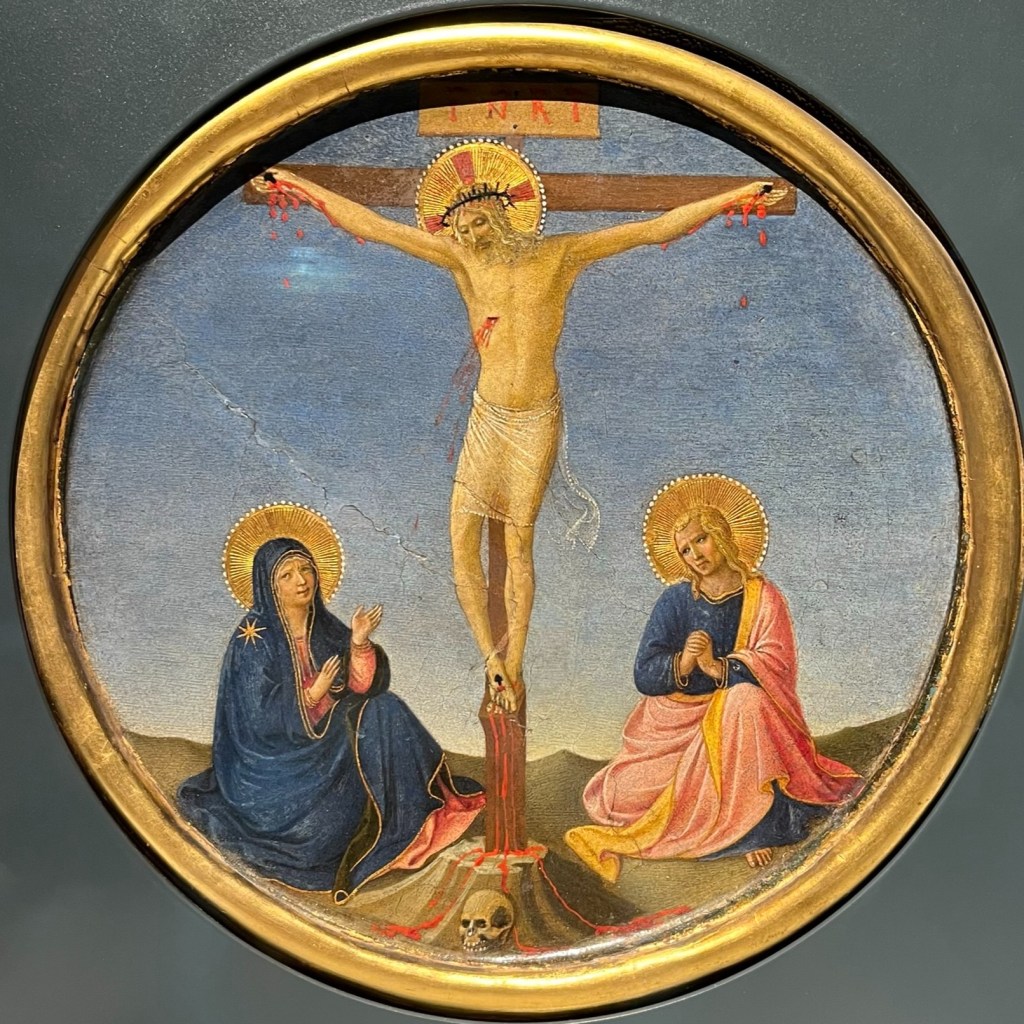
photocredit: Fra Angelicum

The title mother of God for Mary does not mean that she is a god-mother who created other deities. Neither she is a goddess-wife of God the Father. The Church always teaches that Mary is not a god, but a human being. To understand better, we look closely the word ‘mother’. A mother is someone who has a person in her womb and eventually give birth to that person. Mary had the second person of the Trinity in her womb, and in due course, gave birth to Him. Thus, as simple logical conclusion, Mary is the mother of Jesus, the Second Person of the Trinity. In short, Mary is the Mother of God.

However, being a mother is not only about getting pregnant and giving birth. A true mother is a woman who also raises, nourishes and educates her children. Mary did not stop when she gave birth to Jesus in Bethlehem. She did not leave Jesus on the manger and went away. She did not abandon baby Jesus to the Magi or to Herod’s army. With Joseph, Mary protected, nurtured and ‘made big’ Jesus. In fact, Mary was faithful to follow Jesus to His cross and tomb.

How did Mary perceive her identity as a mother? We recognize that when Mary received Jesus in her womb, she was entering extremely perilous situations. She could lose her life because people may stone her, or Herod’s soldiers may arrest and kill her. She endured the life of exile in Egypt, and had to contain with life of poverty. But, did she regret her decision?

The answer we can get from Mary’s song, ‘Magnificat’. “My soul magnifies the Lord, and my spirit rejoices in God my Savior… (Luk 1:46–47)” In Hebrew language, the term ‘my soul’ or ‘my spirit’ is another way to say ‘I’. Thus, Mary said, “I magnifies the Lord, and I rejoices in God my Savior.” Interesting to note is the word ‘magnify’ or literally ‘make big’. What does it mean ‘Mary makes big the Lord’? The Greek word is ‘μεγαλύνω (- megaluno)’ and it is related to Hebrew word ‘גָּדַל’ (- gadal) which means to become physically mature. Therefore, what Mary said is that she physically nourishes the Lord in her womb as well as to make sure the Lord grow into maturity. And in her role as a mother of the Lord, she rejoiced exceedingly.

Mary becomes an antithesis to modern toxic maternity. In our time, many separate sexualities with pro-creation, and even consider fertility as disease. Many see being a mother and having a child are unnecessary burden that must be avoided and disposed. Mary saw things the opposite way. Despite life-threatening situations, Mary accepted her motherhood as integral part of her identity as woman. She saw Jesus in her womb as great blessing, and her participation in God’s will. She knew well only when she fulfilled God’s plan, she found her true joy.

Happy Mothers’ Day!
And
Happy New Year!

Rome
Valentinus Bayuhadi Ruseno, OP