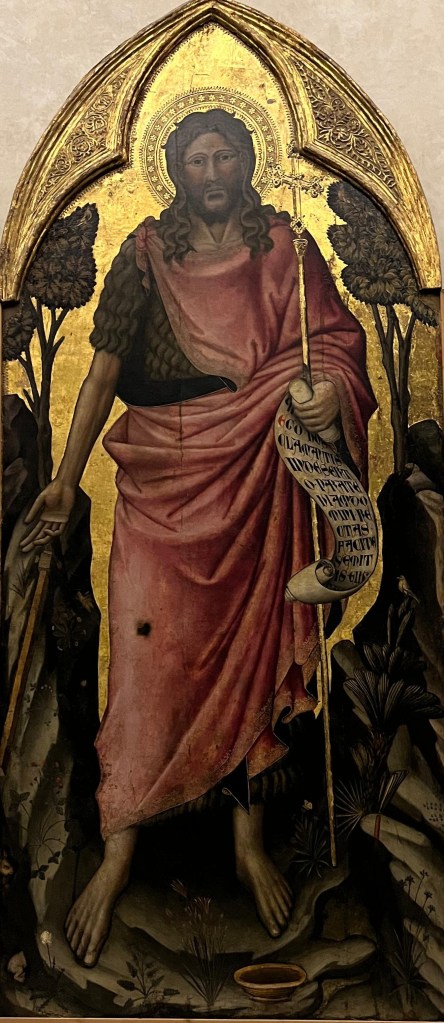
Joseph the Just Man

4th Sunday of Advent [C]

December 21, 2025

Matthew 1:18-24

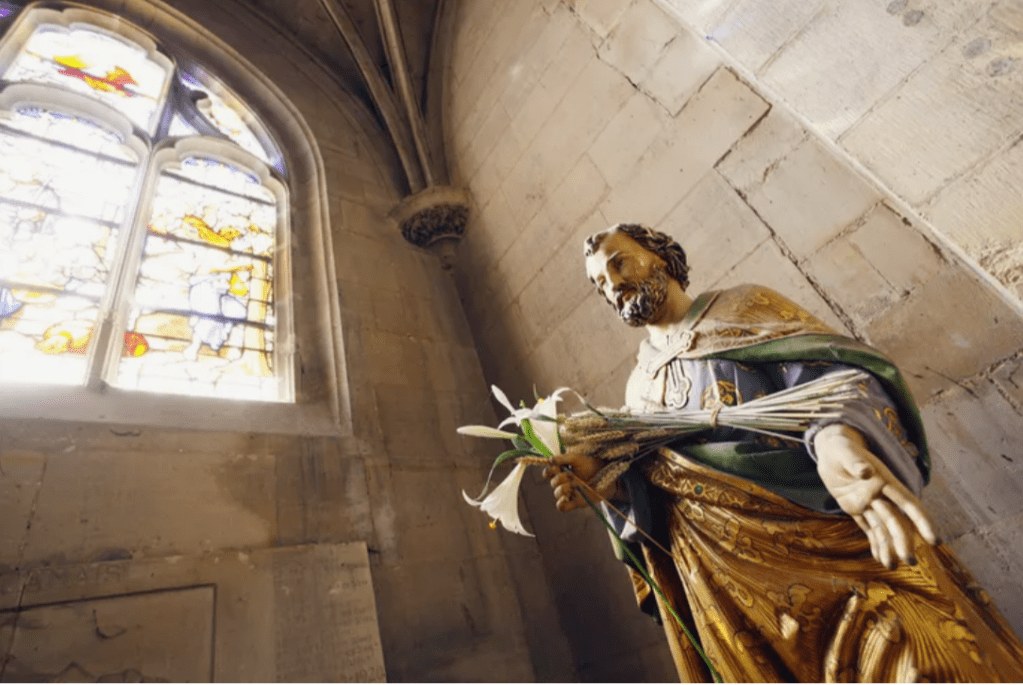
As we approach Christmas, the Gospel introduces us to the key figures surrounding the Messiah’s birth. Among them is Joseph, the foster father of Jesus. Matthew the Evangelist gives him a profound title: a “just man.” What does it mean to be like Joseph? What does it mean to be just?

Matthew uses the Greek word “δίκαιος” (dikaios), typically translated as “just” or “righteous.” In the Biblical context, being just means living in faithful obedience to God’s Law, particularly the Torah given through Moses at Sinai. This adjective is highly significant for an Israelite. Scripture consistently links the “just” person—one who lives by God’s Law—with true happiness and blessing. Psalm 1 declares, “Happy are those who… delight in the law of the Lord, and meditate on his law day and night.” Proverbs similarly praise, “The memory of the just is blessed” (10:7). Why is this life of justice so praiseworthy and fulfilling?

The answer lies in how the Israelites understood God’s Law. They did not view it primarily as a restriction on freedom, but as a gift of love and identity. God gave the Law at Sinai after choosing Israel as His holy nation. Therefore, living the Law was not merely an obligation; it was a sign of their covenant fidelity and their very identity as God’s people. Fundamentally, they saw the Law as God’s gracious guidance—the pathway to avoid the pitfalls of misery and to draw closer to Him, the source of all blessing.

Consequently, Joseph is called “just” because he is the true Israelite who meditates on, loves, and lives by God’s Law. During His formative years, Jesus would have received from Joseph not only a knowledge of the Law’s letters but also Joseph’s own love for God and His commandments. In Joseph, Jesus and Mary saw a happy and righteous man.

From St. Joseph, we learn to love God through faithful obedience. However, we must also avoid the trap of rigidity and legalism, which absolutizes the letter of the law over its spirit. Had Joseph chosen a rigid legalism, he might have applied the strictest penalty to Mary upon discovering her pregnancy, that is stoning. Yet, his justice was perfected by mercy. He recognized that the Law’s ultimate purpose is to love God and neighbor, leading him to protect Mary’s life. Joseph was a happy man because, through the Law, he loved God profoundly.

Finally, Jesus Himself holds the “just” in high esteem. He teaches, “Blessed are those who hunger and thirst for righteousness” (Matthew 5:6), and promises, “Then the just will shine like the sun in the kingdom of their Father” (13:43). While Joseph is not named explicitly in these verses, it is fitting to see in these verses a reflection of his own virtue—virtue that shaped the Holy Family.

Rome

Valentinus Bayuhadi Ruseno, OP

Questions for Meditation:

Do I strive to know God’s Law as revealed in Scripture and taught by the Church?

Do I meditate on God’s commandments, seeking the wisest way to live them out in love for God and my neighbor?

Do I follow rules blindly, or do I seek to understand the spirit and purpose behind them? How do I treat those who struggle to live by them?

Our Expectations

Third Sunday of Advent [A]

December 14, 2025

Matthew 11:2-11

John the Baptist sends his disciples to ask Jesus a pivotal question: “Are you the one who is to come, or should we look for another?” This moment reveals a profound uncertainty in John—a man who had dedicated his life to preparing the way for the Messiah. Why, then, does he doubt?

For Christians today, Jesus’ identity is clear. Yet what is evident to us was not always obvious to others, even to someone as faithful as John. A fundamental reason many struggles to recognize Jesus as the One is that He often does not meet human expectations.

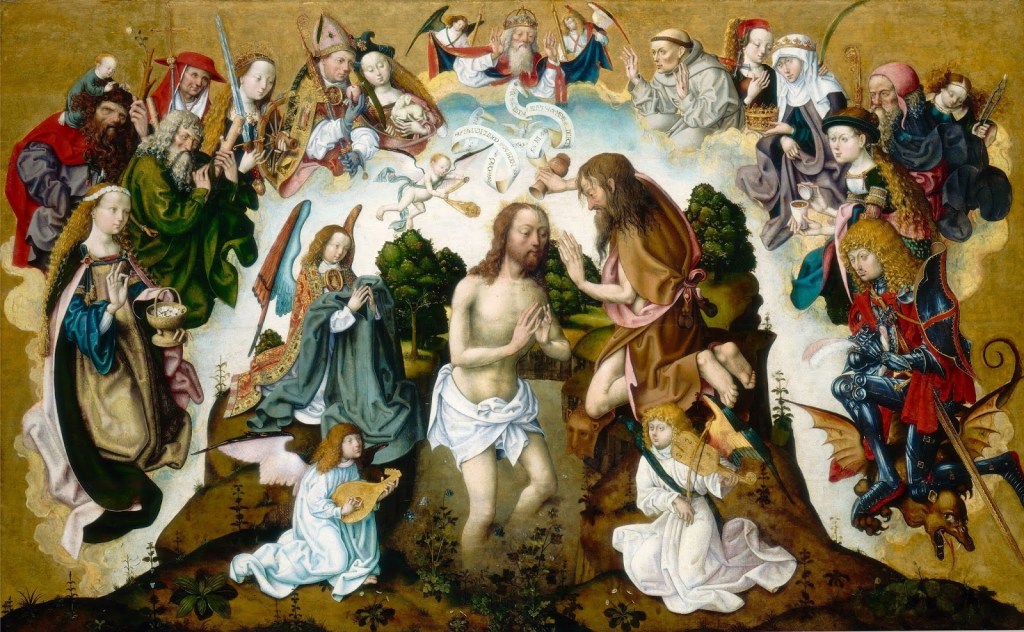
John’s situation illustrates this. He had devoted himself entirely to God’s mission—to herald the coming of the Messiah. But after challenging Herod to repent, he finds himself imprisoned and in mortal danger. In that dark hour, he wonders: Had he fulfilled God’s will, or had he labored in vain? God had already revealed Jesus’ identity to John at the Jordan (Mk 1:9; Mt 3:13–17; Lk 3:21–22; Jn 1:29–34) yet doubt lingered. Jesus did not fully align with John’s expectations.

What were those expectations? Like many Israelites, John may have awaited a Davidic Messiah—a political liberator who would unite Israel, overthrow Roman rule, and restore national glory. Or perhaps John expected someone who mirrored his own ascetic lifestyle: a figure of severe simplicity, fasting, and prophetic austerity. Yet Jesus did not come as a nationalist rebel, nor did He live like John. Instead, He pointed to the works He performed: “The blind regain their sight, the lame walk, lepers are cleansed, the deaf hear, the dead are raised…” (Lk 7:22). These were divine acts, signs that authenticated His mission, even if He did not fit human preconceptions.

From John’s story, we learn a powerful lesson: God remains God, whether He meets our expectations or not. Indeed, God often does not conform to our limited images of Him. This invites us to continually examine our own expectations and adjust them in light of His revelation. It is humbling to realize that even John the Baptist—the greatest of prophets—experienced uncertainty and held expectations that needed refining.

As we grow spiritually, we are called to seek God more than we seek our own desires. This requires honest reflection: What are our expectations of God? Are they drawing us closer to Him or pushing us away? We believe God is good, but how do we expect that goodness to manifest? Does it mean we always get what we want? That our prayers are answered exactly as we wish? That we will be spared from suffering? And when God does not meet our expectations, how do we respond? If we become unhappy, frustrated, angry, or even embittered, the problem may lie not with God, but with our expectations. This season of Advent invites us once again to purify our expectations and allow God to be our God.

Rome

Valentinus Bayuhadi Ruseno, OP

Questions for reflection:

What expectations do I hold about God? How do I envision God working in my life? How do I respond when God does not meet my expectations? Are my expectations drawing me nearer to God, or are they creating distance?

Yohanes Pembaptis dan Integritas

Minggu Kedua Advent [A]

7 Desember 2025

Matius 3:1-12

Teguran Yohanes Pembaptis terhadap orang-orang Farisi dan Saduki sebagai “keturunan ular beludak” merupakan salah satu momen paling mengejutkan dalam Injil. Bagi telinga kita, hal itu terdengar seperti hinaan yang sangat keras. Mengapa Yohanes menggunakan bahasa yang begitu keras?

Untuk memahami kata-katanya, kita harus terlebih dahulu melihat siapa Yohanes itu. Dia diakui secara luas sebagai nabi Allah, seorang pria dengan integritas yang tak tergoyahkan, hidupnya mencerminkan pesan yang dia sampaikan. Memanggil orang untuk bertobat dan kembali kepada Allah, dia sendiri hidup dalam kesederhanaan yang ekstrem—berpakaian bulu unta, makan belalang dan madu liar—mencerminkan penyesalan yang dia ajarkan. Konsistensi antara kata dan perbuatan ini membangun kredibilitasnya, menarik banyak orang ke Sungai Yordan untuk dibaptis sebagai tanda pertobatan mereka.

Di antara mereka yang datang ada orang-orang Farisi dan Saduki. Meskipun kedua kelompok ini memiliki perbedaan teologis yang signifikan—seperti keyakinan orang Farisi tentang kebangkitan badan dan kanon Kitab Suci yang lebih luas, berbeda dengan orang Saduki—mereka memiliki sikap yang sama: keduanya mengklaim kesalehan yang superior dari orang-orang Israel yang lain berdasarkan pengetahuan mereka tentang Hukum Musa. Pengetahuan ini menjadi landasan untuk mendapatkan keistimewaan, menempatkan mereka dalam posisi kehormatan dan otoritas (lihat Lukas 14:7-11).

Namun, permasalahan mendasar dari orang-orang Farisi dan Saduki adalah kemunafikan. Banyak di antara mereka mencari kehormatan tanpa mempraktikkan integritas yang menghasilkan penghormatan sejati. Mereka berdoa, berpuasa, dan memberi sedekah secara mencolok, melakukan tindakan-tindakan keagamaan sebagai pertunjukan publik dan bukan sebagai transformasi batin. Iman tanpa integritas, pada dasarnya, adalah kemunafikan.

Yohanes menyebut mereka sebagai “keturunan ular beludak” karena, seperti ular di Kitab Kejadian yang menipu Hawa, tipu daya mereka juga menjauhkan orang dari Allah. Mereka datang ke Sungai Yordan bukan dengan penyesalan yang tulus, melainkan untuk memanfaatkan popularitas Yohanes dan mempertahankan citra kesalehan mereka. Bukan pertobatan tetapi pencitraan. Melihat niat mereka, Yohanes menegur mereka dengan tajam: “Berilah buah yang sesuai dengan penyesalan” (Matius 3:8).

Bahaya kemunafikan tidak berakhir dengan para pemimpin agama pada abad pertama. Hal ini tetap menjadi godaan bagi siapa pun yang secara mendalam terlibat dalam kehidupan agama—termasuk kita semua. Menghadiri Misa, berpartisipasi dalam pelayanan, dan melakukan tindakan devosi, tanpa integritas dan pertobatan, dapat menjadi rutinitas yang menipu dan merusak. Kemunafikan tidak hanya merugikan si munafik, tetapi juga komunitasnya. Hal ini dapat melemahkan orang-orang yang beriman, melukai mereka yang tulus, dan memberikan amunisi bagi mereka membenci iman untuk mengejek kita. Tidak jarang karena sudah muak dengan kemunafikan, beberapa orang meninggalkan Gereja sama sekali.

Advent berfungsi sebagai panggilan bangun yang profetik, menggema seruan Yohanes Pembaptis melintasi abad-abad. Praktik-praktik keagamaan kita—baik Ekaristi, pengakuan dosa, devosi, atau pelayanan—harus erat terhubung dengan tobat yang autentik dan pertumbuhan kekudusan yang tulus.

Roma

Valentinus Bayuhadi Ruseno, OP

Pertanyaan untuk Refleksi:

• Apa yang memotivasi aktivitas keagamaan saya—keinginan untuk dilihat dan dipuji, atau cinta sejati kepada Allah?

• Apakah pilihan harian saya mencerminkan iman yang saya nyatakan? Apakah saya tetap dalam kebiasaan yang bertentangan dengan Injil sambil mempertahankan pengamalan eksternal?

• Apakah saya menghakimi orang lain sementara gagal memenuhi standar yang saya tuntut dari diri sendiri?

Integrity

Second Sunday of Advent [A]

December 7, 2025

Matthew 3:1-12

John the Baptist’s denunciation of the Pharisees and Sadducees as a “brood of vipers” stands as one of the most startling and confrontational moments in the Gospels. To modern ears, it sounds like a severe insult. Why would John use such harsh language?

To understand his words, we must first look at John himself. He was widely recognized as a prophet of God, a man of unwavering integrity whose life embodied his message. Calling for repentance and a return to God, he himself lived in radical austerity—clothed in camel’s hair, sustained by locusts and wild honey—embodying the penitence he preached. This consistency between word and deed established his credibility, drawing multitudes to the Jordan to be baptized as a sign of their repentance.

Among those who came were Pharisees and Sadducees. While these two groups held significant theological differences—such as the Pharisees’ belief in resurrection and a broader canon of Scripture, unlike the Sadducees—they shared a common belief: both claimed a superior piety based on their expert knowledge of the Law. This knowledge became a platform for privilege, placing them in positions of honor and authority (see Luke 14:7-11).

The core issue, however, was hypocrisy. Many among them sought honor without practicing the integrity that earns true respect. They prayed, fasted, and gave alms conspicuously, performing religiosity as a public spectacle rather than an inward transformation. A faith devoid of integrity is, in essence, hypocrisy.

John identified them as a “brood of vipers” because, like the ancient serpent that deceived Eve, their deception led people away from God. They came to the Jordan not in genuine repentance, but to co-opt John’s popularity and perpetuate a façade of piety. Seeing through their intentions, John rebuked them sharply: “Bear fruit worthy of repentance” (Mat 3:8).

The danger of hypocrisy did not end with the religious leaders of the first century. It remains a temptation for anyone deeply invested in religious life—ourselves included. Attending church, participating in ministries, and performing devotional acts can, without integrity and repentance, become a deceptive routine. Hypocrisy harms not only the hypocrite but also the community. It can disillusion the faithful, wound the sincere, and provide those hostiles to faith with ammunition to ridicule believers. It is not rare that because of them, some people leave the Church all together.

Advent serves as a prophetic wake-up call, echoing John the Baptist’s cry across the centuries. Our religious practices—whether the Eucharist, confession, devotions, or service—must be intimately linked to authentic repentance and a sincere pursuit of holiness.

Rome

Valentinus Bayuhadi Ruseno, OP

Questions for Reflection:

  • What motivates my religious activities—a desire to be seen and praised, or a genuine love for God?
  • Do my daily choices reflect the faith I proclaim? Do I persist in habits contrary to the Gospel while maintaining external observance?
  • Do I judge others while failing to live up to the standards I demand of myself?

First and Second Advent

First Sunday of Advent [A]
November 30, 2025
Matthew 24:37-44

We begin the liturgical year by celebrating the First Sunday of Advent. The word “Advent” comes from the Latin “Adventus,” meaning “arrival.” In the Catholic context, Advent signifies the arrival of Jesus Christ. Our faith teaches that Jesus comes to the world in two ways. His first coming was in the flesh, when the Second Person of the Holy Trinity, the divine and uncreated Logos, became man and lived in first-century Palestine. His second coming will be at the end of time, when He will return as the Judge of the living and the dead.

This duality of Christ’s coming is reflected in the Sunday readings throughout Advent. The first and second Sundays focus primarily on the second coming of Jesus, while the third and fourth Sundays speak more of His first coming. This pattern is crucial because it teaches us that Advent—and, by extension, Christmas—is not only about the birth of a baby in Bethlehem but also about the return of Christ the King. The first arrival highlights Jesus’ tenderness and mercy, while the second reveals His divine justice.

Therefore, Advent invites us into two distinct modes of waiting: a joyful anticipation of the loving infant Jesus, and a sober awareness of the divine judgment of Christ the King. Maintaining this tension is challenging, as we often favor one aspect over the other. Some focus exclusively on the joy of the Nativity, forgetting the need to prepare for God’s judgment. Others live in constant fear of divine wrath, overlooking God’s profound love and mercy.

Though difficult, holding both truths in balance is essential for our salvation. Jesus Himself warns His disciples that in the days of Noah, people were absorbed in their daily lives when the flood suddenly came. Conversely, if we are trapped in fear and anxiety about hell, we cannot live the joyful life God intends. So, how do we maintain a healthy balance between these two kinds of waiting?

The answer lies in what we can call the “third” coming of Christ. If the first Advent is His incarnation and the second is His role as Judge, this third coming occurs between these two. It is Christ’s daily arrival in our lives through various means. Jesus promised to be with us until the end of time (Matthew 28:20). He comes to us in the Sacraments, especially the Eucharist, where He is fully present under the appearances of bread and wine. When we worship Him at Mass with reverence, we form our souls to properly welcome Him as the King of the Universe.

When we regularly read Scripture and live according to God’s word, we are conformed to the likeness of Christ. Then, when He comes as Judge, He will recognize us as His own. When we dedicate time to prayer, devotion, and adoration, we familiarize ourselves with the voice of our Shepherd. Thus, at His second coming, we will know exactly which voice to follow when the King calls our name.

Surabaya

Valentinus Bayuhadi Ruseno, OP

Questions for Reflection:

  • How do we prepare for Christmas? Is our preparation focused on external things like decorations, travel, and new clothes? Or do we prioritize spiritual preparation by striving to live more fully according to God’s will?
  • How do we prepare for Jesus’ second coming with joy rather than fear? Do we attend Mass out of obligation, habit, or a genuine desire to worship God?

The King on the Cross

The Solemnity of Our Lord Jesus Christ, King of the Universe
November 23, 2025
Luke 23:35-43

As the liturgical year draws to a close, the Church proclaims a startling truth: Jesus Christ is King of the Universe. But what can this mean?

Jesus’ life defies every worldly notion of kingship. He is not a king who commands powerful armies or controls vast resources. He possesses neither soldiers nor gold. In fact, He died the most humiliating death, nailed to a cross under the mocking accusation, “This is the King of the Jews.” Most of His disciples had fled, leaving only a few faithful women to witness His tragic end. So, we must ask: what kind of king is this?

The answer is revealed precisely at the cross. Here, in the midst of injustice and mockery, Jesus redefines kingship. Even the two criminals crucified beside Him initially joined in the taunts (Mk 15:32). But then, something extraordinary happens. One of them has a change of heart and turns to Jesus, saying, “Jesus, remember me when you come into your kingdom (Luk 23:42).” In this moment of utter despair, the “good thief” recognizes Jesus as a real king at His throne.

What caused this dramatic shift? The key lies in the thief’s own words to his companion: “Do you not fear God, since you are under the same sentence of condemnation? We have been condemned justly, for we are getting what we deserve for our deeds, but this man has done nothing wrong (23:40-41).” He knew Jesus was innocent.

Yet, more than just His innocence, the good thief saw something more. He witnessed a profound and unsettling grace. Amid the injustice, he heard no curse or bitter word from Jesus. Instead, he heard, “Father, forgive them; for they do not know what they are doing (23:34).” While the world hurled its anger, hatred, and violence at Him, Jesus did not amplify it with revenge. He embraced it, allowing it to stop with Him, and answered with a word of forgiveness.

The good thief realized that true power is not the ability to inflict suffering, to enrich oneself, to gain more power over oneself, but rather the strength to bear suffering and transform it into occasion of love. Jesus, stripped of all earthly power, wielded the greatest weapon of all: self-sacrificing love. He demonstrated that not even the cross could stop Him from loving—even loving those who sought His destruction.

And in that moment of recognition and humble request—“remember me”—the King exercises His true authority. Jesus doesn’t only promise a future reward; He proclaims a present reality: “Today you will be with me in Paradise.” Jesus, the King, transforms the darkest moment of a condemned criminal into the paradise.

This is the power of Christ our King. He invites us, like the good thief, to recognize His authority and embrace the law of love. When we do, He begins the same work of transformation in us, turning our own moments of pain, confusion, and sin into foretastes of His Kingdom.

Surabaya

Valentinus Bayuhadi Ruseno, OP

Questions for Reflection:

  • The citizens of God’s Kingdom are peacemakers who seek justice without vengeance. When others hurt us, what is our response? Do we avoid them, wish them harm, or seek to inflict the same pain? Or do we, like our King, pray for their conversion?
  • The citizens of the Kingdom are the pure in heart. What fills our inner world? Is it hatred, bitterness, and anger? Or is it forgiveness, compassion, and the things of God?

Work as Gift

33rd Sunday in Ordinary Time [C]

November 16, 2025

2 Thessalonians 3:7-12

Work is an essential part of being human. We can define it as an effortful activity aimed at accomplishing a task, whether that be gathering food, building a home, or caring for another person. Yet, work is not a uniquely human endeavor. In the animal kingdom, we see remarkable industry: worker bees build, clean and protect their hives, forage for nectar, and regulate the hive’s temperature, while beavers construct complex dams that provide safe shelter and store food during winter.

While we share this impulse for labor with the animal world, there is an essential difference. Most animals work by instinct to ensure their survival and the propagation of their species. Our purpose in work, however, transcends mere survival. We work not only to preserve our lives but to improve them and build a better world for ourselves and our children. This is possible because of the unique gift of intellect, which allows us to comprehend the mysteries of nature, build tools, and develop technologies to use nature for the common good.

This intellect is a fundamental gift from God, bestowed upon us as beings made in His image. Through it, we are empowered to participate in God’s own work of creation. In Genesis 1:28, God instructed our first parents to “subdue” the earth. This “subduing” is not a license for destruction but a call to stewardship. This is clarified in Genesis 2:15, where God placed Adam in the garden “to serve and to guard it.” It is the duty of men and women to use our God-given intellect to cultivate the world according to His will—for the benefit of all, including future generations, and as protection against human greed and exploitation.

When we work honestly and diligently, we truly become God’s co-workers in building a better world. By participating in His holy work, our own labor becomes a means of our sanctification. This is why St. Paul so sharply rebukes the Thessalonians who abandoned work and relied on others for their sustenance (2 Thes 3:10). Laziness has no place in God’s plan; in fact, it is counted among the seven deadly sins.

However, a misunderstanding of work’s purpose also poses a spiritual danger. When our work occupies the majority of our time and energy, we can begin to derive our entire identity from our profession. We risk believing that “we are what we do,” living in fear of losing our job, our competitive edge, or our ability to achieve and be successful. At times, we may even bury ourselves in work, hiding behind the title of a “successful professional” to escape other responsibilities or even to hide from our failures as a present spouse or a loving parent.

This is the profound wisdom of God’s rest on the seventh day (Gen 2:1-3). He did not rest because He was weary, but to model for us the freedom we must claim: we must not become slaves to our work. Our identity is far greater than our profession. While work gives our lives meaning, it is not our only meaning, and certainly not our ultimate one. On the day of rest, we are invited to lay aside our status, our achievements, and our successes, and to remember our primary identity as beloved sons and daughters of God.

Rome

Valentinus Bayuhadi Ruseno, OP

Questions for Reflection:

  • How do I view my work and profession? Is it a vocation, a mere job, or something else?
  • When I fear losing my job, what is the true source of that fear? Is it the loss of financial stability, or a deeper fear of losing my sense of purpose and identity?
  • Do I truly observe a day of rest, setting aside my work to recharge and reconnect with God and my loved ones, or do I allow work to encroach upon this sacred time?

Basilica St. John Lateran

Feast of the Dedication of the Lateran Basilica in Rome [C]

November 9, 2025

John 2:13-22

Today, the Church celebrates the Dedication of the Basilica of St. John Lateran in Rome. While many of us may be unfamiliar with this basilica, and others may wonder why its dedication is celebrated with such solemnity. To understand why, we must journey back to the earliest days of the Catholic Church.

The first Christian community in Rome was likely established around 33-34 AD. The Acts of the Apostles tells us that Jewish pilgrims from Rome were present at Pentecost, heard Peter’s preaching, were baptized, and carried the faith back to the imperial capital (Acts 2:1-42). This was the seed of the Church in Rome. When St. Peter himself arrived, he was recognized as the leader—the first Bishop of Rome.

For centuries, this fledgling Church endured severe persecution. The first state-sanctioned persecution began under Emperor Nero in 65 AD, who scapegoated Christians for a great fire in Rome. Nero’a persecution claimed the lives of the great Apostles Peter and Paul. The most systematic and brutal persecution, however, came later under Emperor Diocletian (303-311 AD), who ordered the destruction of scriptures, sacred places, and the execution of Christians across the empire.

This era of darkness gave way to light. After Diocletian, the empire fell into civil wars. Several generals, including Constatine, fought for the throne. On the eve of the decisive Battle of the Milvian Bridge, near Rome, in 312 AD, Constantine reportedly saw a vision of a cross in the sky with the words, “En Toutō Nika”—”In this sign, conquer.” Following a dream of Christ, he had his soldiers mark their shields with the Chi-Rho (☧). After his victory, Constantine not only ended the persecution of Christians but became a powerful patron of the Church.

In thanksgiving, he donated the former property of the Lateran family to the Church. On this land, he built a great basilica dedicated to Christ the Savior—the first public papal basilica (later, it would be dedicated also to St. John the Baptist and St. John the Evangelist). Pope St. Silvester accepted this gift and established it as his cathedral, the official seat of the Bishop of Rome. This was a monumental shift: the Church emerged from the hidden catacombs into the public square, a powerful sign of God’s providence and victory.

This is why the Basilica of St. John Lateran holds the title “Omnium Urbis et Orbis Ecclesiarum Mater et Caput”—”The Mother and Head of All Churches in the City and the World.” Though the popes moved their residence to the Vatican in the 14th century after a fire, the Lateran remains the Pope’s cathedral. Therefore, in celebrating its dedication, we celebrate the very foundation of the Church of Rome, the See of Peter, and the triumph of Christ’s Church over evil.

Rome

Valentinus Bayuhadi Ruseno, OP

Guide questions:

Are we truly aware of the rich and long history of our Church? Do we recognize that we belong to a greater, universal Catholic family spread across the world? How deeply do we live our faith each day? Have we ever experienced persecution, or are we blessed with the freedom to express our faith openly? What are we doing—personally and as a community—to help our Church grow in faith, love, and witness?

St. Joseph and the Happy Death

The Commemoration of All the Faithful Departed (All Souls)

November 2, 2025

John 6:37-40

St. Joseph, the foster father of Jesus, is celebrated as a holy model for husbands, fathers, and workers. Yet, he also holds a more poignant title: the patron saint of a happy death. But what does this mean? How can death, so often shrouded in fear and sorrow, ever be considered happy?

To understand this, we must first ask a more fundamental question: What constitutes a happy death? Does it mean being surrounded by family at a ripe old age, free from pain? Or a beautiful funeral in a well-kept cemetery? At first glance, happiness and death seem to be irreconcilable opposites. We are hardwired for life; we instinctively recoil from the suffering that reminds us of our mortality. So, how can we find happiness in the very event our entire being resists? To seek a happy death can feel like trying to capture the wind.

It is here that St. Joseph comes to our aid. His life provides the answer to this profound puzzle. Catholic tradition holds that at his dying moment, Joseph was not alone. He was cradled in the presence of Jesus and Mary. This sacred companionship at life’s end was simply the culmination of a life lived in constant communion with God. The key to a happy death is a life lived with God.

In the Catholic faith, death is the final and decisive act of life, eternally sealing our choice for or against God. St. Joseph embodies the ideal: on his deathbed, he turned to Jesus, his adopted son and the Lord of Mercy, and to Mary, his wife and the Mother of God. His was a happy death because the Jesus he embraced with his final breath was the same Jesus who welcomed him into the eternal joy of heaven.

Yet, St. Joseph’s lesson is not merely about how to die, but fundamentally, about how to live. The Gospel describes him as a “righteous man” (Matt 1:19). His entire life was a faithful “yes”—a dedication to God’s will, often at great personal cost. He faced uncertainty, exile, and hardship for the sake of his family. Because he spent his life seeking the Lord in every circumstance, it was the most natural thing in the world for him to seek Jesus at his final moment. His good death was the fruit of a faithful life.

As we pray for our dearly departed, St. Joseph offers us a profound hope. He reminds us that for those who live faithfully with Christ, death does not destroy life but perfects it. It is not an end, but a gateway to unquenchable joy. This is the happy death.

St. Joseph, patron saint of a happy death, pray for us!

Guide Questions for Reflection:

Are we cultivating a life with Christ that prepares us to face our death with peace? Do we see death as a terrifying end, or as a passage to eternal life? In our daily choices, are we building the habit of turning to Jesus, as Joseph did? Do we seek the intercession of St. Joseph, asking him to pray for a holy death for ourselves and for all those who need it most?

Time and Prayer

29th Sunday in Ordinary Time [C]

October 19, 2025

Luke 18:1-8

In the parable of the persistent widow and the unjust judge, Jesus gives us a clear command: “pray always without becoming weary.” He invites us to persevere, especially when God asks us to wait for an answer. But why does a loving Father, who knows our needs, allow this waiting?

This period of waiting is not a sign of God’s absence, but His profound love. Here are three reasons God may allow us to wait.

1. Time Heals and Purifies Our Prayers

Often, our initial prayers are born from intense emotion—grief, distress, or even anger. In our urgency, we can confuse our genuine needs with our selfish wants. We do not always know what is truly good for us.

God uses the gift of time to help us settle our hearts and purify our intentions. He reforms our prayers, transforming them from demands into dialogues, from pleas for personal gain into words of trusting surrender, from “Be it done according to my will.” to “Be it done to me according to Your will.”

2. Time Builds Essential Virtues

We live in a world of instant results, and we can carry this impatience into our relationship with God. When we don’t get what we want immediately, we can become restless and frustrated.

Waiting teaches us the true meaning of patience—which is not just the ability to wait, but the ability to keep a good attitude while waiting. As St. Francis de Sales reminds us, “Every one of us needs half an hour of prayer each day, except when we are busy… then we need an hour.” The more we patiently pray, the more recognize that many things are beyond our control. The more we patiently ask, the more we realize how powerless we are. Yet, though we are powerless, we are not helpless or hopeless since we are now relying ourselves on someone beyond us, God the creator of heavens and earth.

3. Time Deepens Our Intimacy with God

It is easy to treat God like a heavenly vending machine, focused solely on the gifts we seek. Waiting refocuses our attention from the gifts to the Giver.

The more time we spend in prayerful waiting, the more we seek to know God for who He is—not just as a wish-fulfiller, but as a loving Father. We begin to focus less on our list of needs and more on our relationship with Him. This is the heart of prayer, which St. Teresa of Ávila defined as “nothing else than being on terms of friendship with God.”

A Story of Purified Prayer:
A senior nun once shared how, as a young novice, she wanted to leave the convent to get a job and support her mother financially. Her prayers were consumed with this plan. Her spiritual director gently asked her: “Would leaving truly be the best help? Is God limited to only one way of providing?”

She began to change her prayers. She stopped telling God what to do and started entrusting her mother entirely to His care. In time, relatives and friends came forward to support her mother, and she found the peace to persevere in her vocation. This simple story shows how God uses time to purify our prayers and draw us closer to Himself.

Valentinus Bayuhadi Ruseno, OP

Guide Questions for Personal Reflection:

  • Do I pray? Is there a consistent, daily space for God in my life?
  • How do I pray? Is my prayer a list of requests, or is it a conversation that includes listening?
  • How long do I pray? Do I give up when an answer isn’t immediate?
  • What do I ask from God? Are my prayers focused on my will, or on seeking to understand His?
  • How do I react when I don’t get what I prayed for? Does it lead to doubt, or to a deeper trust in His wisdom?
  • Do I ask for grace? Do I pray not just for specific outcomes, but for the strength, peace, and trust to endure the wait?