Beyond Grateful

28th Sunday in Ordinary Time [C]

October 12, 2025

Luke 17:11-19

On the surface, the story of the ten lepers presents a clear contrast between gratitude and ingratitude. Ten lepers are healed, yet only one—a Samaritan, a traditional enemy of the Jews—returns to thank Jesus. The nine others, presumably Jews, appear simply ungrateful. But to leave the lesson there risks missing the profound, multi-layered drama unfolding within this encounter.

To truly understand the story, we must first grasp the gravity of the men’s condition. The Greek word “lépra” used in the Gospel translates the Hebrew “tzara’at.” This was not merely a medical ailment causing spreading sores and discoloured skin; it was a state of severe religious impurity and thus, the persons were barred to approach the sacred grounds (Lev 13-14). Due to its religious nature, a person with this condition was declared permanently unclean by a Levitical priest, not a doctor. Due to its contagious nature, they were forced to live in isolation, wear torn clothes, and call out “Unclean, unclean!” to warn anyone who approached. Therefore, “tzara’at” was one of the most dreaded fates for an Israelite, as it cut a person off from family, community, and, most importantly, from God.

With this context, Jesus’ instruction for the ten lepers to show themselves to the priests is deeply significant. They would have recognized this as the standard procedure for being officially declared clean and restored to society. We can assume the nine Jews set off for their Israelite priests, while the Samaritan headed for his own. The critical moment comes when the Samaritan, en route and still technically unclean, is so overwhelmed that he turns back. He falls at Jesus’ feet in a gesture that is more than emotional thanks; it is a profound act of faith that breaks ritual law, as an unclean person was not to approach a clean one.

This act reveals the story’s deeper meaning. The question is not merely whether the nine were ungrateful. Perhaps they were, forgetting their healer as soon as they were cleansed. Or perhaps they were simply obeying Jesus’ command to the letter, fully intending to return after their priest’s approval. The Samaritan, however, realizes something more profound. He understands that Jesus is not just a healer of disease, but the very source of purification itself. By returning to Jesus, he acknowledges that Christ has the authority to cleanse him not only of his physical ailment but of his grave impurity. In this moment, Jesus is revealed as the true divine High Priest.

The healing, therefore, was never just about restoring health. It was an invitation to be drawn back to God, to choose holiness, and to recognize the giver over the gift. The Samaritan received not just clean skin, but salvation. His gratitude was the sign of a faith that saw beyond his immediate need to the one who could fulfil his ultimate need for God.

Rome

Valentinus Bayuhadi Ruseno, OP

Guide Questions:

Do we approach God primarily with a list of our needs and necessities? When we feel God has answered our prayers, what is our reaction? How do we express our gratitude? Does it draw us closer to the Giver? Do the gifts we receive from God ultimately lead us back to Him, or do we become preoccupied with the gifts themselves?

True Faith

27th Sunday in Ordinary Time [C]

October 5, 2025

Luke 17:5-10

Faith is a powerful act. Our Lord teaches that with faith even as small as a mustard seed, we could command a mulberry tree to be uprooted and planted in the sea. Yet, He also reminds us that faith alone is not enough. It must be accompanied by another essential virtue. What is that?

In simple terms, faith is an act of trust in God and in His Son, Jesus Christ. Throughout history, believers have experienced its tremendous, miraculous power. Through faith in Jesus, many find healing—both physical and psychological—even from incurable diseases. Through faith, countless people have life-transforming experiences, discovering profound meaning and joy. Through faith, many receive spiritual gifts, including extraordinary ones like healing and prophecy.

Despite this earth-shaking power, our Lord reminds us that we are ultimately God’s “servants.” Faith does not make us masters; it opens our eyes to the truth of our identity. If we believe in an almighty Creator, then we are His creatures. An unbridgeable gap exists between us: God is everything, and we are nothing. And yet, He loves us so immensely that He gave His only Son to save us and bring us into communion with Himself. This realization, driven by faith, leads us directly to humility.

The word “humility” comes from the Latin humus, meaning “soil” or “ground.” It is the realization that we are nothing and undeserving—we are, in a sense, “dirt.” Yet, God loves us unconditionally. Humility places faith in its proper context, reminding us that even our faith is a gift from God.

In fact, faith without humility is dangerous. Satan and the evil spirits have a kind of “faith”—they know with certainty that God exists and that they owe their power to Him. But without humility, they refuse to obey and serve. Ultimately, they fall.

Without humility, we risk self-deception. We might think our “great faith” makes us superior to others. While the gifts of faith are real, they can trap us into pride. Without humility, we may also treat faith as a bargaining chip, believing that if we have enough, we can control God to get what we want.

With humility, however, faith truly saves. We receive baptism from the Church and this act of humility means recognizing salvation as a gratuitous, unmerited God’s gift. We receive Holy Communion from the priest’s hand, and this act of humility means acknowledging that we need God to feed our hungry, weak souls. We Confess to God’s representative, and this act of humility means accepting that however broken we are, God still loves us and wants to heal us. Humility allows our faith to move us to love God deeply, as we fully recognize the abundance of His love for us.

Rome
Valentinus Bayuhadi Ruseno, OP


Guide Questions

  1. How do we understand faith? Is it a belief in the truth about God? An emotional attachment? Or a commitment to live according to His will?
  2. How do we understand humility? Is it simply a lack of self-confidence? Or is it the profound realization of God’s immense love for us, even in our smallness?

The Nameless Rich Man

26th Sunday in Ordinary Time [C]

September 28, 2025

Luke 16:19-31

The story of Lazarus and the Rich man does not only have a lot of lessons we can learn and imitate, but it also reveals the truth about our salvation. What are those?

1. The Plot Twist

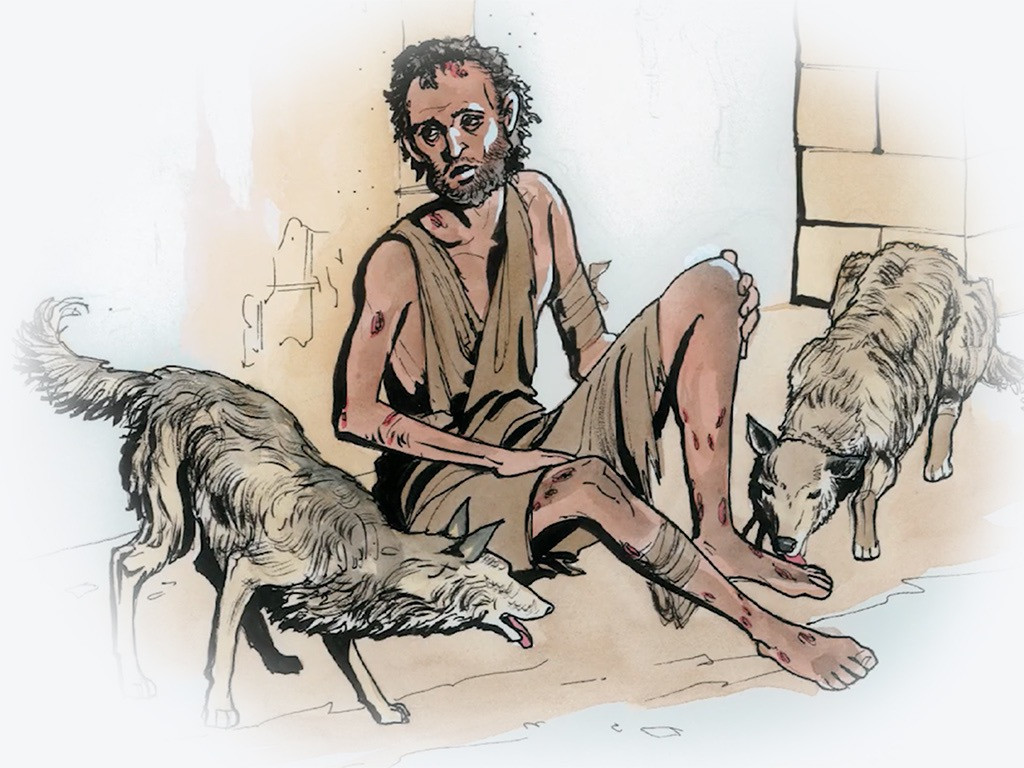
The story of Lazarus and the rich man demonstrate Jesus’ wisdom as both a storyteller and a teacher. Most would assume the rich man is the protagonist, as his material wealth was seen as a sign of God’s favour. Conversely, Lazarus, in his poverty and sickness, would be viewed as a loser, suffering from divine disfavour. Yet, Jesus delivers a shocking twist that challenged his original Jewish audience and continues to challenge us today. In the end, the rich man, despite his extreme wealth, cannot save himself, while Lazarus, the poor man, receives God’s mercy and rests in the bosom of Abraham.

2. Not Just About Wealth

However, a deeper look reveals that Jesus is not simply condemning the rich and glorifying the poor. The rich man loses his salvation not merely because of his wealth, which can be a blessing from God when used as a means to an end. The core of his failure is his selfishness. He is depicted wearing expensive purple garments and feasting sumptuously every night, yet he chooses to ignore the desperately poor man at his gate. Despite having more than enough capacity to help, he closes his eyes, focusing only on his own pleasure.

Similarly, poverty alone does not automatically grant Lazarus a place with Abraham. The poor are also susceptible to sin, such as stealing or manipulation. Yet, Lazarus is described as one who “gladly” received the scraps from the rich man’s table. He refused to use his poverty as an excuse for sin, instead choosing gratitude for the little he had.

3. The Nameless Rich Man

Among the story’s three major characters, only one is left nameless: the rich man. Abraham, whose name means “father of many nations,” receives Lazarus, whose name is a Latinized form of the Hebrew “Eliazer,” meaning “My God is my helper.” This small detail is significant, illustrating a profound truth: we become what we love.

The rich man loved his wealth so dearly that he lost his unique identity, becoming known simply by his material status. He defined himself by his luxurious garments and lavish lifestyle. In contrast, Lazarus and Abraham loved God. The more they loved Him, the more they reflected His image, allowing their authentic, God-given identities to shine. Lazarus lived as one dependent on God’s help, and Abraham as a father to many nations. The more we love earthly things, we are absorbed into them, and gradually losing ourselves, yet the more we love God, the more we become like God, and we become more authentic.

Lourdes, France

Valentinus Bayuhadi Ruseno, OP

Guide questions:

Do we love God more than anything? What are things that prevent us from loving God? What are God-given missions in this life? Do we care for our unfortunate brothers and sisters around us?

The True Crisis

25th Sunday in Ordinary Time [C]

September 21, 2025

Luke 16:1-13

Today, we encounter one of Jesus’ most challenging parables: the story of the dishonest manager. Its difficulty lies in a seeming contradiction. The manager is praised for actions he should not be doing. He abuses his authority and manipulates his master’s wealth for his own advantage. So how are we to understand this?

  1. He Was Praised for His Cleverness, Not His Morality
    First, it’s crucial to see that the servant is commended for his shrewdness, not his ethics. The Greek word used is φρονίμως (phronimos), meaning one who is prudent, wise, or clever in practical matters. Faced with a crisis, the manager made a sharp, calculated decision. Having been caught for his dishonesty and facing dismissal, he knew he lacked other skills to survive. Since he was being fired anyway, repenting his ways at that moment was pointless. Instead, he used the only skill he had, manipulative management, to create a safety net. By reducing debts, he made friends who would welcome him after his job was gone, thus saving himself from poverty and shame.
  • The Worldly Wisdom of “The Children of This Age”
    Second, this parable illustrates how “the children of this age” can be remarkably adept at using their resources to navigate a crisis and achieve a form of “salvation.” The manager’s love of money had blinded him, yet when true crisis struck, he recognized what was most important: his future earthly survival. He pragmatically turned ill-gotten wealth into relational capital to secure his earthly life.
  • A Challenge to “The Children of Light”
    Finally, and most importantly, the parable challenges “the children of light” to recognize the real crisis we face and to be just as wise in pursuing our true salvation. What is our crisis? Just as the master returned to judge his manager, our Master will return to judge us. Many of us live under the illusion that God’s judgment is remote, thinking we have unlimited time. But we do not know the hour when the Lord will come or when death will call us to account. The dishonest manager knew his worldly life was at stake and acted decisively to save it. How much more should we, who value eternal life, use our time, talents, and treasures to prepare for our Lord’s unexpected return?

An Example: St. Pier Giorgio Frassati

Pier Giorgio Frassati appeared to be a typical young man of his generation: he enjoyed sports like hiking and was an engaged student involved in the social and political issues of his time. He was also a devout Catholic who prayed the Rosary and attended Mass regularly. He died unexpectedly at just 24, having accomplished little in the eyes of the world. Yet, at his funeral, thousands of poor people arrived to mourn him. It was revealed that for years, he had secretly visited and helped the poor. In 1990, Pope John Paul II beatified him, naming him “the man of the Eight Beatitudes.” Pier Giorgio is a perfect example of a “child of light” who used his earthly resources wisely to prepare for his Lord’s coming.

Surabaya

Valentinus Bayuhadi Ruseno, OP

Guide Questions for Reflection:

Are we prepared for the coming of our Lord? In what state would He find us today? How do we prepare? What practical steps are we taking to invest in our eternal future? What earthly things are we attached to? Is it money, comfort, status, or pride? How can we be freed from these attachments? How can we redirect these resources to serve God and others, storing up “treasure in heaven”?

The Cross that Heals

Feast of the Exaltation of the Holy Cross

September 14, 2025

John 3:13-17

The cross is a universal symbol of Christianity. People wear it as jewelry, like necklaces, rings, and earrings, either as a sign of devotion or simply as fashion. Churches and other Christian buildings are often crowned with its shape. Yet, despite its familiarity, the profound history and meaning of the cross can often be overlooked.

Historically, the cross was not a sacred symbol but a tool of terror. Crucifixion was a Roman method of execution designed for criminals and rebels. The condemned person was stripped naked, nailed to a wooden beam, and left to die a slow, public death exposed to the elements and humiliation. It was the ultimate symbol of human cruelty. This is the torture Jesus endured.

Yet, Jesus did not escape His cross. He embraced it. Through His resurrection, He transformed the cross from an instrument of torture into an instrument of God’s mercy and healing. In the Gospel, Jesus Himself draws a typological connection between His cross and the bronze serpent raised by Moses. Just as those who looked at the bronze serpent were healed, all who look to Jesus’ cross with faith will be saved.

This leads to the essential question: how does the cross heal us?

First, it heals through love. When we look at the cross, we see the ultimate proof of God’s love: He sent His only Son to offer Himself as a sacrifice to reconcile us to Himself. As St. Paul writes, “But God proves his love for us in that while we still were sinners Christ died for us” (Rom 5:8). We receive this healing from sin primarily through Baptism and the Sacrament of Reconciliation. Every sin wounds our soul and separates us from God; the cross stands as a permanent call to repent and return to Him.

Second, it heals through God’s presence. The cross shows us that God is not a distant deity, remote from our pain. He chose to become one of us, to share in our human experience with all its suffering. On the cross, Jesus embraced the worst of human agony, demonstrating that when we unite our sufferings with His, our own crosses can be transformed. They can become a divine means of healing and grace.

When suffering hits us, it is easy to complain and despair. But the cross reminds us we are not alone. Just as Jesus used His suffering to become a blessing for the world, we too can offer our own pains to God and become a source of strength and compassion for others.

St. Francis of Assisi once sought glory as a knight. After being captured in battle and becoming seriously ill, he recovered physically but still felt a spiritual emptiness. Everything changed while he was praying in a broken-down chapel. He had a vision of Jesus on the cross, who said to him, “Francis, go and repair my house, which is falling into ruin.” This moment gave Francis the true healing he needed, helping him discover who he was and what he was meant to do, to be God’s instrument of peace and healings.

Valentinus Bayuhadi Ruseno, OP

Guide questions:

What are our crosses in our lives? How do Jesus’ cross heal us? How? Do we become the means of God’s healing for others also? How?

To Hate and To Love

23rd Sunday in Ordinary Time [C]

September 7, 2025

Luke 14:25-33

We now encounter one of Jesus’ most challenging statements: He demands that we “hate” our parents, siblings, and even our own children. How are we to understand this hard saying?

To find the answer, we must consider three key elements: Jesus’ full statement, the meaning of the word “hate,” and the broader context of Jesus’ life and mission.

  1. The Full Statement
    First, we need to read the entire sentence. Jesus said, “If anyone comes to me without hating his father and mother, wife and children, brothers and sisters, and even his own life, he cannot be my disciple.” This is not a general command for everyone, but a specific condition addressed to those who wish to become His true followers.
  • The Biblical Meaning of “Hate”
    The word “hate” here (from the Greek μισέω – miseo) does not imply a feeling of strong aversion or enmity. In the Bible, this word often carries a comparative meaning: “to love less” or “to disfavor” in order to show preferential treatment to something else (see Genesis 29:31, Deuteronomy 21:15-16, Luke 16:13). In this context, Jesus is demanding that His followers make Him their absolute top priority. He is not asking us to detest our families, but to love Him so much that all other loves—even for our own lives—seem like hatred by comparison. A simpler way to phrase it is: Unless we love Jesus more than everything and everyone else, we cannot be His disciples.
  • The Broader Context
    Finally, we must remember that Jesus was speaking as He walked toward Jerusalem, where He would face His Passion and death on the cross. To follow Him meant to share in His suffering. This is only possible if a disciple prioritizes Jesus above all else. We see this exemplified in figures like Mary, His mother, who refused to hide but stood firmly at the foot of the cross, sharing in His agony. Other disciples, like John and Mary Magdalene, also followed Him to the very end, demonstrating this ultimate priority.


This teaching remains true for us today. To follow Jesus to the end requires loving Him above all. While not everyone is called to physical martyrdom like St. Ignatius of Antioch who was fed to the lions or St. Francis de Capillas was tortured and killed when he preached Jesus in China, every disciple is called to make Jesus the central priority of their life.

This doesn’t mean we must pray every second of the day. Instead, it means making daily decisions that reflect our love for Jesus and our desire to please God. This can be as simple as: Choosing to avoid sin and vice; Refusing to be a stumbling block for others; Prioritizing Sunday Mass, even while on vacation; Gently inviting family members to know Jesus more.

Loving Jesus is a conscious, daily decision to choose what strengthens our holiness and deepens our relationship with Him.

Surabaya

Valentinus Bayuhadi Ruseno, OP

Reflection Questions:

How do I concretely show my love for Jesus in my daily routine? Do my actions and words encourage others to love Jesus? Could my behavior be making it difficult for someone else to approach Jesus?

Honor and Holiness

22nd Sunday in Ordinary Time [C]

August 31, 2025

Luke 14:1,7-14

Honor is a fundamental concept that defines our humanity. It guides our behaviors and conduct, and in extreme cases, can compel people to die or even kill others.

Defining “honor” is challenging because it is deeply embedded in both our individual and communal identities. It refers to the ideals that we as humans, holds dear, such as loyalty, bravery, honesty, hardworking and moral integrity. While these values may vary across cultures, some are universally acknowledged and admired. Honor is earned when others recognize our efforts to achieve these difficult ideals. For example, a student may be honored with a medal for their hard-earned academic achievements.

The pursuit of honor is, therefore, a pursuit of our highest ideals, a striving for greatness that makes us more fully human. Conversely, dishonor signifies a failure to uphold these values. We are dishonored when we betray someone, whom we pledge our loyalty or cowardly avoid difficulty. Some societies value honor so deeply that they see a dishonorable life, like one of dishonesty, unfaithfulness, and cowardice, as worse than an animal’s existence. During World War II, many Japanese soldiers and civilians chose suicide over the shame of capture or coming home in defeat.

As our Lord, Jesus understood that honor is fundamental to humanity. Yet, He also recognized how sin can corrupt and twist it. In the Gospel, Jesus criticized those who sought places of honor without striving for the ideals they represent. Jesus taught that the true value of a seat at the banquet is not its prominence, but the virtuous life of the person sitting in it. More importantly, He called us to pursue true ideals and reject corrupt values, introducing humility as a virtue that earns genuine honor.

Jesus’ criticism of the Pharisees is timeless and profoundly relevant today. In postmodern societies, we often replace “the seat of honor” with superficial markers like clothing, cars, and bank accounts. While possessions are not inherently bad, they become harmful when we treat them as our standard of honor, and in the process, we sacrifice true ideals like honesty and loyalty to gain them. Spousal fidelity was once highly honored, but now some cultures praise promiscuity. We once lauded hard work, but now often celebrate only results, even if achieved through deceit.  To follow Jesus is to continually examine our ideals. It means rejecting those that do not lead to human flourishing and embracing those that foster genuine growth. Jesus, our Lord, wants nothing but our holistic growth as humans that eventually brings us into the fullness of human life and holiness.


Guide Questions:

What ideals do we strive for? Are they conducive to our development as humans? Do we feel shame when we fail to achieve our ideals or when we sin? Do we teach our children what it means to have a true sense of honor?

The Discipline and Love of a Father

21st Sunday in Ordinary Time [C]

August 24, 2025

Hebrews 12:5-7, 11-13

In the Letter to the Hebrews, we are reminded that God relates to us as a good Father who disciplines His children. At first glance, this seems ordinary. Many parents, especially fathers, discipline their children through rules and consequences. However, when applied to our relationship with God, this concept reveals a profound truth about His will for our growth and salvation.

1. Foundation in Jesus’ Teaching

The author of Hebrews bases his teaching on Jesus’ own revelation. In the Old Testament, God is symbolically referred to as the “Father” of the nation of Israel (Ex 4:22; Deut 32:6; Isa 63:16; Jer 31:9). Like a good father, God provided goodness upon Israel and protected them from their enemies. However, Jesus revealed something entirely new: He consistently and uniquely referred to God as His own Father because He is the eternal only-begotten Son (John 3:16; 5:17; 10:30). More than that, Jesus wants us to participate in this Father-son relationship, and teaches us to call God “Our Father” (Matthew 6:9; Luke 11:2; John 20:17). St. Paul further explains that through baptism and the Holy Spirit, we are not only servants, but we are children of God through adoption (Rom 8:14-17).

2. Suffering Is Not Punishment

The Letter to the Hebrews makes an important distinction: the suffering and difficulties we face are not divine punishment. God allows trials because He knows that they will ultimately be beneficial to us. This theme appears in the Old Testament, where righteous people like Job struggled to understand the great suffering they experienced, even though they were not sinful (Job 5:17-18). The New Testament reveals a deeper reason: God is a loving Father who allows hardship so that His children can grow and develop in holiness.

3. Love and Discipline Are Not Opposites

The author continues, “For whom the Lord loves He disciplines, and He scourges every son whom He receives” (Hebrews 12:6). This challenges the modern distortion of love, which suggests that loving someone means giving them everything they want, regardless of whether those things are beneficial or harmful to them. True love is wise. A good father gives his children what they need for authentic growth, even if it brings hardship to the child. The all-wise Heavenly Father knows what is best for our eternal good, and He sometimes uses life’s trials to shape us for eternal life.

This understanding, that God’s discipline is an act of His love, has empowered many saints to endure trials with joy. St. Catherine of Siena, who endured physical, emotional, and spiritual suffering (including stigmata), taught that “Nothing great has ever been accomplished without much suffering.” Saint Thérèse of Lisieux lived out her “Little Way” by accepting daily discomforts and the painful struggle against tuberculosis without complaint. She surrendered everything with joy, saying, “Suffering endured with joy for others changes people more than sermons.” For her, her sickbed became a place of mission and love.

Valentinus Bayuhadi Ruseno, OP

Questions for Reflection:

What trials are we currently facing? How do we view this suffering: as punishment, or as part of God’s loving plan for our growth? What is our typical reaction to difficulties? Do we respond with complaints and anger, or with faith and gratitude? Can we learn to see the hand of the Heavenly Father’s love even in our suffering?

Jesus’ Fire

20th Sunday in Ordinary Time

August 17, 2025

Luke 12:49-53

When Jesus declares, “I have come to set the earth on fire, and how I wish it were already blazing!” (Luke 12:49), He evokes a powerful biblical symbol with profound spiritual significance. Yet, what does fire mean here?

Fire in Scripture is a multifaceted image, representing God’s presence, judgment, purification, and the transformative power of the Holy Spirit. By examining these dimensions, we can better grasp Christ’s mission and His urgent longing for the world’s renewal.

  1. Fire as God’s Manifest Presence
    Throughout the Old Testament, fire serves as a visible sign of God’s holiness and nearness. When Moses encountered the burning bush, the flames revealed God’s sacred presence without consuming the bush, marking the beginning of Israel’s deliverance (Exo 3:2–5). Later, as the Israelites journeyed through the wilderness, God guided them with a pillar of fire, a constant reminder of His protection and guidance (Exo 13:21–22). At Mount Sinai, His descent in fire underscored the awe-filled covenant God wished to forge with His people (Exo 19:18). These instances show that fire signifies God’s active involvement in human history. Jesus is the final and fullness of God’s active presence in the world.
  2. Fire as Divine Judgment
    Fire also embodies God’s justice against sin. The destruction of Sodom and Gomorrah by “brimstone and fire” (Gen 19:24) demonstrates His intolerance for wickedness. Similarly, Nadab and Abihu, the sons of Aaron, the high priest, was sudden consumed by holy fire (Lev 10:1–2) while they offered unlawful fire and incense, illustrating the seriousness of approaching God with irreverence. Jesus’ words in Luke 12 thus carry a warning: His coming will ignite a separation between those who embrace God’s righteousness and those who reject it  (12:51–53).
  3. Fire as Purification
    Yet fire is not only destructive; it refines. In the beginning of his ministry, Isaiah’s unclean lips were cleansed by a burning coal (Isa 6:6–7). Meanwhile, prophet Malachi prophesied that God would purify His people like a refiner’s fire (Mal 3:2–3). In the New Testament, Paul echoes this idea, describing how the “Day of the Lord” will test each person’s works with fire, burning away what is worthless while preserving what is eternal (1 Cor 3:12–15). Jesus’ fire, then, is a call to holiness and repentance. It aims to purge sin to prepare hearts for God’s Kingdom.
  4. Fire as the Holy Spirit’s Power
    Finally, fire represents the Holy Spirit’s active presence. At Pentecost, tongues of fire rested on the disciples, filling them with the Holy Spirit and empowering them to preach boldly (Acts 2:1–4). This fulfills John the Baptist’s prophecy that Jesus would baptize “with the Holy Spirit and fire” (Mat 3:11). When Jesus speaks of setting the earth ablaze, He anticipates this outpouring of the Holy Spirit, a spiritual fire that would ignite evangelization, transform lives, and spread the Gospel to all nations.

Conclusion: Jesus’ Burning Mission
Christ’s desire to “set the earth on fire” is a summation of His entire mission: to reveal God’s presence, confront sin with justice, purify believers, and send the Spirit to empower the Church. This fire is both a promise and a challenge, a call to let God’s love consume our complacency and set us ablaze with zeal for His Kingdom.

Reflection Questions:

How have we experienced God’s presence as a guiding or purifying “fire” in our life? Does the “fire of the Holy Spirit” move us to share Christ with others? If not, what holds us back? In what areas do we need Jesus to refine us, burning away sin and lighting up our faith?

What is Faith?

19th Sunday in Ordinary Time

August 10, 2025

Hebrew 11:1-2, 8-19

The author of the Letter to the Hebrews gives us a profound definition of faith: “Now faith is the foundation of things hoped for, the evidence of things not seen” (Hebrews 11:1-2). But what does this truly mean?

Faith as a Firm Foundation

The Greek word used for “foundation” is ὑπόστασις (hupostasis), which literally means “that which stands underneath.” This tells us that faith is not a fleeting emotion or a momentary burst of belief. It is not something can instantly be produced through loud music or strong screams. Instead, it is a steady, unshakable confidence in God’s promises. Faith anchors us, giving substance to what we hope for even when we cannot yet see it.

Faith as Convincing Evidence

The author also describes faith as ἔλεγχος (elengkos), a term often used in legal contexts to refer to irrefutable proof. In a courtroom, verified evidence determines guilt or innocence. Similarly, faith serves as undeniable confirmation of spiritual realities we cannot perceive with our physical senses, our eyes, our ears, and our mouth. Though unseen, these realities are just as real because faith testifies to their truth.

Where Does Such Faith Come From?

But how can faith be so strong? How can it serve as both foundation and evidence? The answer lies in its source: faith does not originate from within us but from God’s faithfulness. The promises we hope for are not human wishes but divine guarantees. Since God is trustworthy, our faith rests on His unchanging commitment to fulfil His promises

Then, how do we know God is truly faithful? History proves it. The Old Testament is filled with stories of God keeping His word, and Hebrews highlights Abraham as a key example. At seventy-five, Abraham obeyed God’s call to leave his comfortable homeland for an unknown future and uncharted land. Despite his old age and Sarah’s barrenness, he believed God’s promise of descendants as numerous as the stars. Even when tested with the unthinkable, sacrificing his son Isaac, Abraham trusted God’s faithfulness that everything would turn just right. He died without seeing the full fulfilment, yet God’s promises came to pass.

The Ultimate Fulfilment in Christ

Hebrews shows us that God’s faithfulness, demonstrated through generations, culminates in Jesus Christ. He is the final and fullest expression of God’s promises. He was born like us humans, suffered and died for us, and resurrected. Our faith, therefore, is not only built on emotions or human reasoning but on historical acts of God, proven in the lives of believers before us and sealed in Christ. Faith is more than simple belief. It is trust in the One who has never failed. And because God is faithful, we can stand firm, even when the path ahead is unseen.

Valentinus Bayuhadi Ruseno, OP

Reflection Questions

  • How do we understand faith? Is it merely an emotional feeling, a product of logic, or a personal encounter with God?
  • Have we faced moments of doubt or a crisis of faith? How did we overcome them?
  • How does recognizing God’s faithfulness in Scripture strengthen our trust in Him today?