

Fifth Sunday of Lent [A]
March 29, 2020
John 11:1-45
 Among the five human senses, the sense of touch is the most basic and foundation to other senses. The sense of sight needs to be in touch with the light spectrum. The sense of taste requires to be in contact with the chemical in the food. The sense of hearing must receive air vibration or sound waves. This sense makes us a human being, a bodily being. No wonder that many traumatic experiences [even mental problems] are rooted in the lack (or excess) of touch.
God, our creator, understands our fundamental need of touch. Thus, to fulfill our deepest desire, He made a radical choice and became a man like all of us. Because Jesus is true God and true man, the disciples were able to see, hear, touch and feel Him. Yet, He gave a more radical gesture as He offered Himself as food to eat and drink to eat, “for my flesh is true food and my blood is true drink [Jn 6:55].” While the pagan deities were feasting on the human blood and sacrifice, our God does the opposite. He gave up His life so that we may live and feel His love.
Following the example of our Savior, the Church is filled with tangible means and bodily gestures as a sign and symbols of the divine presence. No wonder our churches are equipped with beautiful crucifixes, adorned with flowers, and mystified by the burning candle and incense. A sacrament is no other than the visible sign of the invisible grace, and sacraments really intend to connect to our bodies, like blessed water and oil that touch our forehead, the bread that we consume, and words of forgiveness that we need to hear. Amazingly, the Church is called the body of Christ, and our call is to unite as one people of God around this table of Eucharist.
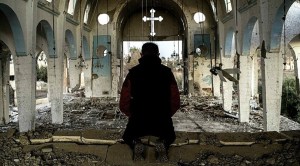
However, the terrible thing befalls our Church. The pandemic caused by the Covid-19 is basically reversing the movement of our faith. We are facing a reality that touching can mean illness, the gathering may bring disaster, and worship may mean death. For the good of the flock, our leaders are forced to close the churches. We now feel the pain of separation from the Body of Christ.
Perhaps, we are like Lazarus who are experiencing spiritual suffering and death. Perhaps, we are like Martha who is asking the Lord, “why are you not coming sooner?” Perhaps, we are like Mary who cannot do anything but mourns and is reduced into silence.
The Gospel of John tells us that Jesus loves Lazarus, Martha and Mary as His close friends. Yet, Jesus did not rescue Lazarus when he got gravely ill, and even Jesus visited them after Lazarus died four days. Jesus allowed terrible things to take place in the life of Lazarus, Martha, and Mary, not because He wanted to punish them, or He does not care, but because He loves them.
In His love, God allows us to endure the sense of losing God, and experience suffering and even death. God knows too well that through suffering, we may love even deeper, we grow in faith, and re-discover God, alive and even closer. After all, there is no true resurrection, unless we enter the darkness of the tomb.
My deepest gratitude and prayer for our medical personal who give their all in to fight the disease and save lives.
Valentinus Bayuhadi Ruseno, OP
 The Church has selected the story of Transfiguration as the reading of the second Sunday of Lent. We may ask how this kind of powerful story may fit into the entire season of Lent. The key is that the Transfiguration is fundamentally linked to the Cross of Jesus. In Luke’s version of the transfiguration, Jesus was talking to Moses and Elijah about His “exodus.” This reminds the ancient Israelites who exited Egypt, walked through the desert, and entered the Promised Land. Yet, the real end of the exodus is the city of Jerusalem, and eventually the holy Temple where God dwelled among His people. Just like the ancient Israelites, Jesus’ exodus has to end in Jerusalem.
 At the heart of Jesus’ teaching in the Mount is the formation of the heart. However, the heart in the Bible is not limited to our affective side or emotions. It also stands for the center of intellectual capacity and freedom. The heart is the seat of life itself, and thus, represents who the man or woman is.
 Jesus is accused of unfaithful to the Law of Moses and the traditions of the elders. He no longer requires His disciples to performs ceremonial washings and many traditions of the elders [Mat 15:2]. Jesus heals people even during the Sabbath [Mark 3:1-6]. Jesus declares that all food is clean [Mark 7:19]. The worst part is when Jesus commands His disciples to drink His blood [see Lev 17:14; Mat 26:27-28]. Is Jesus breaking and changing the Law of Moses?
 Reading carefully, we may wonder, “Is it possible if the salt loses it, saltiness?” In everyday experience, we never experience tasteless salt. However, when we go back to the time of Jesus, we will be surprised that a salt losing its taste is a daily reality. In ancient Israel, the people would go to the Dead Sea, the saltiest body of water on earth, and gathered the “pillar of salt” formed surrounding the lake. Then, they would put inside a small bag, like a teabag”, and when it was needed for seasoning, the bag would be dipped into the water or soup. After some repeated use, the salt would lose its saltiness due to the chemical impurities. It turned to be nothing but an ordinary pebble, and shall be thrown away and trampled underfoot.
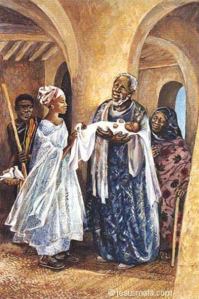 If we are given a chance to choose our parents, what kind of parents will be our choice? Perhaps, some will prefer billionaire parents so that we can sing like Bruno Mars, “I wanna be a billionaire… Buy all of the things I never had… I wanna be on the cover of Forbes magazine, and Smiling next to Oprah and the Queen.” Perhaps some of us want to become the children of a king. So, royal blood is flowing through our vein, and people call us as a prince, princess, or royal highness. Perhaps, we want to be born from Korean megastars, because we want to become the prettiest or the most handsome.
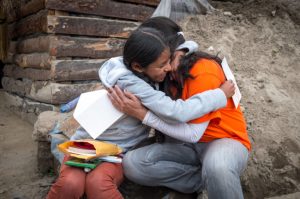 After the arrest of John the Baptist, Jesus begins His public ministry. Jesus left Nazareth, His hometown, and moved to a more crowded and bigger town, Capernaum. Crudely speaking, Jesus did urbanization. This strategic move of Jesus was to support His mission. With a dense population and with better access to neighboring towns, Jesus could minister to more people in a more efficient way.
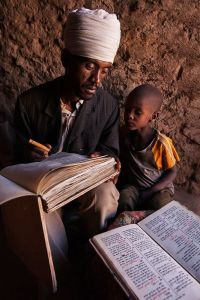 We begin the ordinary time of the liturgical year. In the Church, we have three cycles of the liturgical year: A, B, and C. every year, we have a different set of readings. In year A, the Gospel readings are mainly from the Gospel of Matthew, meanwhile, year B is from Mark and year C is from Luke. The Gospel of John does not have its separate year, but the readings from John are scattered through the years, especially in the Easter season.
 In Medio Ecclesiae