

Second Sunday of Easter/ Divine Mercy Sunday [April 28, 2019] John 20:19-31
 Today is the Divine Mercy Sunday. From the Gospel, Jesus institutes the sacrament of reconciliation as He bestows His Holy Spirit upon the Disciples. He grants them the divine authority to forgive (and not to forgive) sins and charges them to be the agents of Mercy. While it is true that only priests can minister the sacrament of confession, every disciple of Christ is called to be an agent of Mercy and forgiveness. Yet, how we are going to be the bearers of Mercy and Forgiveness? I think we need to understand first the dynamic of fear and peace.
Fear is one of the human most basic emotions. It makes us flee from impending danger and normally, it is good and necessary for our survival. Yet, what is unique with us humans is that the object of fear is not only physical real danger like an earthquake, fire, or venomous animals, but it extends to moral judgment. When we commit a mistake, we are afraid of the judgment as well as the consequences. Quite often too, fearful of the judgment and condemnation, we are run away and hide. In fact, the story of fear is a primordial story. We recall our first parents, Adam and Eve. After they violated the Law of God, they realized that they have terribly sinned against the Lord, and afraid of God’s judgment, they hid.
After the passion and death of Jesus we find out that Jesus’ disciples themselves are afraid and hiding. The disciples lock themselves inside the room because they are afraid. However, the real fear is not from the Jewish authority or the Roman troops, but from Jesus’ judgment. We remember that Judas handed over Jesus to the Jewish authority, Peter, the leader, denied Jesus three times, and most of the disciples were running away. Even before the crucial moments of Jesus, they have deserted their Master and Messiah. In a court martial, a soldier who deserts his army, especially during the pick of the battle, is considered a traitor not only to the army, but to the entire nation, and he deserves no less than capital punishment. The disciples are hiding because of fear that Jesus will bring His severe judgment, and get back on them. The disciples are afraid that Jesus may come anytime, condemn them, and throw a fireball on them.
Indeed, Jesus comes to them, but he brings not condemnation but the gift of peace, “Shalom”. This peace only ensues from forgiveness. This peace, however, is not the absence of judgment, but rather it presupposes one. Unless the disciples recognize and own up their terrible mistakes, they will not appreciate Jesus’ forgiveness and mercy. The peace will be just a mirage, and fear still reigns.
To become an agent of Mercy, we first dare to pronounce judgment. If we pretend that the sin never happens, and keep telling ourselves that everything is just fine, we deceive ourselves and never become sincerely peaceful. Indeed, it is difficult, but as we cannot heal unless there is prognosis, we cannot truly forgive unless there is judgment.
Just last week, several suicide bombers blew themselves up at several churches in Sri Lanka and killed hundreds of Christians. A religious sister, who lost several of her community members in the explosion, wrote an open letter to the perpetrators. She judged that what they did was an act of terrorism, pure evil. Yet, she reminds them that Christians will not be cowed and afraid because we know how to forgive. She said that the Catholic Church remains an open-door Church because she is not afraid to welcome everyone including those who tried to destroy her.
There is no peace without forgiveness, and there is no forgiveness and mercy without true judgment.
Deacon Valentinus Bayuhadi Ruseno, OP

 One of the greatest gifts to humanity is the gift of memory. It gives us a sense of identity. Biology teaches us that almost all our body parts are being replaced over the years. One-year-old Stephen is biologically different from thirty-year-old Stephen. All bodily cells, with the sole exception of his eyes’ lens, are changed. What unites thirty-year-old Stephen with his younger self as well as his future self is his memory.
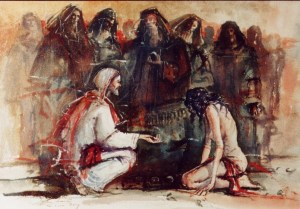 Adultery is a serious sin according to the Law of Moses. It is a violence against the Basic Law, the Ten Commandments. It is in fact, one of the few crimes that are punishable by death [Lev 20:10]. Why so cruel? It is a grave sin because adultery profanes the holiness of marriage and the gift of sexuality. In the Book of Genesis, God has willed that man and woman through marriage and their sexuality participate in God’s work of creation and caring of creation. Since marriage is a sacred calling, violation to this holy mission is an utmost insult to God who calls man and woman into marriage.
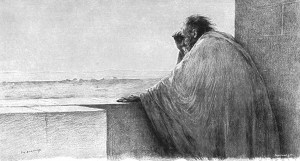 The Parable of the Prodigal Son is one of the most moving stories of Jesus and has been regarded as the all-time favorite. Why? I guess one of the reasons is the story of the Prodigal Son is also our story.
 It normally takes around three years for a fig tree to reach its maturity and fruition. If it does not produce fruit by that time, it is not likely to bear fruit at all. The owner has a reasonable right to cut the tree, but through the effort of the gardener, it is given another chance. Like the fig tree, through the effort of our Chief Gardener, the new Adam of eternal Eden, Jesus Christ, we are given another chance to change and be fruitful.
 One time, during a Bible class I facilitated, one of the participants asked me, “how was Peter able to recognize that it was Moses who stood beside Jesus during the Transfiguration?” It was a valid question, and yet I personally never thought of it. I thought of with several possible answers. Perhaps, Moses appeared bringing two stone tables of the Law. Perhaps, as Jesus was conversing with Moses and Elijah, Peter was able to pick up the names. Perhaps, the divine inspiration enlightened Peter’s mind on the identity of Moses. Eventually, I have to answer, “When you go to heaven, don’t forget to ask both Peter and Moses.”
 The Spirit leads Jesus to the desert and Jesus remains there for forty days. The questions are: why does the Holy Spirit bring Jesus to the desert? Why does it have to be forty days? If we are familiar with the Old Testament, we recall that the journey of the Israelites in the desert lasted for forty years – the great exodus. After the great escape from the slavery of Egypt, they needed to walk through the desert before entering the Promise Land. Yet, it is not simply about the story of greatest escape in the history, but how God formed Israel as His people. In desert, God made a covenant with Israel through the mediation of Moses. In desert, God gave the Law as the basic guide for the Israelites living as His people. In the desert, God provided them with water, manna from heaven, and protected them from their enemies. However, in the desert also, the Israelites rebelled against God. They made and worship the golden calf. They complained a lot, and they wanted to kill Moses. It was a foundational story that covered almost the four Books of Moses [Exodus, Leviticus, Numbers and Deuteronomy].
 In Medio Ecclesiae