

Feast of the Holy Family – December 29, 2019 – Matthew 2:13-23
If we were given the choice to choose our parents, what kind of parents would we like to have? Perhaps, some of us want to have rich parents. Some of us may desire to have beautiful or genius parents. Some of us may wish to be born in a royal and politically influential family. These are our usual dreams. Yet, surprisingly, these are not the options that God made when He chose His parents. In His beautiful wisdom, God selected Mary and Joseph of Nazareth.
Joseph was a descendant of acclaimed King David, but the Davidic Kingdom was the only thing of the past in the time of Joseph. He was also a carpenter and despite hardworking, this profession just gave enough to survive. Mary was an ordinary young woman from an unknown village called Nazareth. Joseph and Mary were simple if not poor people living within the time where most Israelites were suffering from the oppression of the Roman empire. In the eyes of the world, this couple was nothing.
However, our God is the God of surprises, and He has a hobby to upset “the established world’s order.” For God, the crucial criteria to be His parents are not wealth, popularity, or noble line. God has no need of these things. So, what is the basis of His choice?
The fundamental criterium is faith in God. Joseph and Mary possessed nothing of this world, but both are the man and woman of faith, or the man and woman of God. Joseph was called as the “righteous man,” meaning he was a man who knew the Torah by heart and obeyed them faithfully. Joseph loved God and His laws. Moreover, when Gabriel appeared to Joseph and revealed the plan of God, Joseph immediately got up and followed Angel’s instruction without any question asked. Mary did basically the same thing. When Gabriel told her about God’s plan that she would be the mother of God, Mary did not understand, but she did not simply give her nod, but she accepted God’s design as her own. Joseph and Mary knew well that the moment they participated in God’s way, they had to surrender their own plans, dreams, and hopes. Their lives were practically thrown into the unknown. Yet, their faith is bigger than their fear or pride, and they believed that God’s way is always the best way. These are the kind of parents whom God chose.
Like Joseph and Mary, I do believe that the first attitude that any parents have is faith in God. Every child is a gift, yet this gift will challenge and change the parents who receive them. As a child enters the life of their parents, husband and wife shall also enter the life of sacrifice. Sometimes, I am sudden by the decision of some Catholic couples who refuse to have children. We understand that it is difficult to raise children, but our refusal to accept a gift from God might point to our lack of faith, even to our selfishness, our obsessiveness to our plans, career, and ambitions.
God does not need a perfect couple to raise His Son, He rather chooses a man and woman of faith.
Valentinus Bayuhadi Ruseno, OP
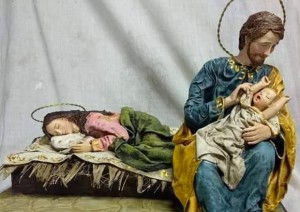 A few days ago, a nativity scene went viral. The image is called “Let Mom Rest”. The prominent character of this scene is that Joseph is taking care of the baby Jesus while Mary is resting. This image presents to us untouched yet powerful aspects of Jesus’ birth and thus, Christmas. Often, we focus our attention on Jesus with Mary, His mother. We honor Mary because of her willingness to carry Jesus on her womb despite so many dangers and difficulties and to remain a faithful disciple of Jesus till the end. However, the image brings us to another important character that we often overlook, St. Joseph, as the man of faith.
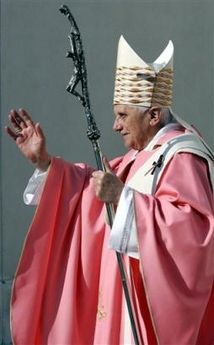 Today, we are going to see something different in the Church. Yes, the priests are not wearing a purple vestment, but a rose liturgical vestment. It is not because the priests are mistaken or want to make a fashion statement. It is because we are entering the third Sunday of Advent, also known as, the Gaudete Sunday. “Gaudete” is a Latin word meaning “rejoice!”. This color also symbolizes the joyful atmosphere. But, why do we need to celebrate Gaudete Sunday?
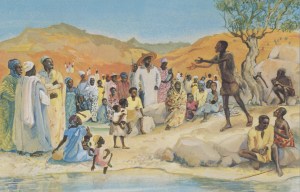 John the Baptist is a prominent figure in four Gospels, and he powerfully appears before Jesus begins His public ministry. But, who is this John the Baptist? His name is simply John, and the Church calls him the Baptist to distinguish him from other John in the Bible like John the son of Zebedee, one of Jesus’ disciples. John the Baptist is the miracle son of Zacharia and Elizabeth in their old days. And since Elizabeth and Mary, the mother of Jesus, are relatives, John and Jesus are closely related to each other.
 We are entering the season of Advent. This time marks the beginning of the new liturgical year of the Church. The season itself is a preparation for us to welcome the Christmas, the coming of Jesus Christ. The word Advent is coming from the Latin word “Adventus” that simply means “arrival.” The dominant liturgical color will be purple that signifies hope and joyful expectation of the coming of our Savior.
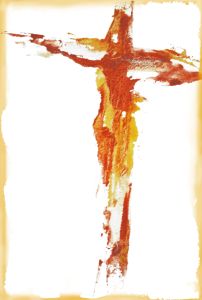 Often we take for granted the name Jesus Christ, without realizing the meaning behind it. The word “Christ” is neither part of the personal name of Jesus nor the family name of Jesus. Jesus earns the name Christ not because of His foster father, Joseph, otherwise, we also call him Joseph Christ and his wife, Mary Christ.
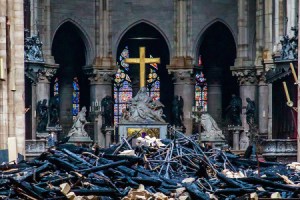 During the reign of Herod the Great, the Temple of Jerusalem was refurbished, adorned by gold and other precious metals, and expanded, and thus making it the crown jewel of the Jewish nation. However, the Temple was not merely a magnificent building, but primarily the center of Jewish religious worship and religion. Every morning and evening, sacrifices were offered, and every year, Jewish men from all over the world made their pilgrimage, and paid their homage the Lord God. It was the place where God chose to stay, the place where the Israelites meet their God, and the house of God.
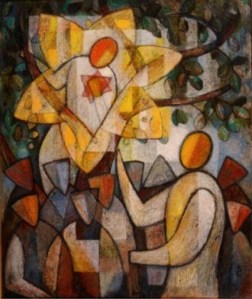 In the time of Jesus, there are at least two kinds of taxes. The first tax goes to the Temple of Jerusalem. This is a “sacred tax”. Those who collect them are performing a sacred duty, and those who pay are fulfilling their due to God. Yet, the second tax is exacted by the Roman government. In order to effectively get the taxes, the Romans employs the local collaborators. The Jews are heavily burdened by this tax because they are unjustly hefty, and often collected by coercion. The Jews understandably loathe those Jewish tax collectors who willingly betray their own people and are involved in greedy malpractices. These are the worst sinners, unclean, corrupt and traitors.
 In Jesus’ time, they were several Jewish religious groups and one of them is the Pharisees. These are the people who love the Lord and devoutly observe the Law of Moses and the traditions of the elders even in their daily lives. Thus, Jewish people regard them as righteous because they are faithful to the Law, and pious because they pray often. Many Pharisees turn to be the caretakers of the local synagogues and zealously teach the Law during Sabbath days. No wonders, the Jewish people offer the Pharisees the best places in the worship places and the parties. The leaders are called the Rabbis or teachers.
