

22nd Sunday in Ordinary Time. September 3, 2017 [Matthew 16:21-27]
“Get behind me, Satan!” (Mat 16:23)
 We come to one of the most heated exchange of words in the Gospel, and this occurs no less than between Jesus and Simon Peter. The apostle rebukes Jesus for revealing to the disciples that he has to go Jerusalem, suffer and die, but be raised on third day. In return, Jesus reproofs him and calls him Satan. Why does this harsh quarrel take place between Jesus, the most merciful Lord, and his trusted disciple, Simon whom he has just declared as the Rock?
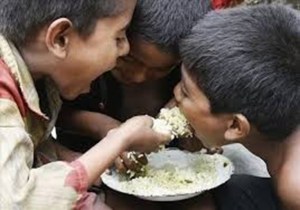
If we try to enter the shoes of Peter, we will understand that what Peter does is something very human. Peter loves his Master and he does not want something bad to happen to Jesus. As a friend, he is ready to prevent Jesus do silly things that will harm Him. Often, we act like Peter. We disagree with our good friend who wants to help the street children in a notorious depressed area in Manila. Parents often dismiss their young children’s wish to enter the seminary or convent. Despite being in need of financial stability, any family will lodge opposition against its member who wish to go and work abroad. To wish for safety and wellbeing of our loved ones is just part of our human psychological makeup.
It is just Peter’s human tendency to keep Jesus safe. Yet, why does Jesus need to harshly rebuke Peter and call him ‘Satan’? In the Bible, the word ‘Satan’ has several meanings. The first common understanding is that Satan is the chief evil spirit that wages war against God and humanity. Yet, ‘Satan’ may also mean a man, woman or entity who acts as an adversary or an enemy. In ancient court setting, ‘Satan’ plays the role of the fierce accuser. Literally, Peter may fall under Satan’s temptation in delaying the plan of God, but it may also mean that calling Peter ‘Satan’ Jesus perceives Peter as acting like ‘Satan’, an adversary to Jesus’ mission, and one who accuses Jesus of doing stupid things. By following human tendency, Peter is in opposition to God’s saving plan.
However, how do we know that we begin to act as an enemy to God’s will? Like Simon Peter, we must wrestle to discover God’s will in our lives. Perhaps, encouraging our friend to work with the poor is the right decision. Perhaps, supporting our children to enter seminary is the best option. Perhaps, staying behind with the family rather than going abroad is a better choice. We never know what the future brings. Yet, Jesus gives us a guideline. When we cling too much to our own lives, are obsessed to keep our space small, and gain the world just for ourselves, we must know that we have become ‘Satan’ to God’s ever-expanding love.
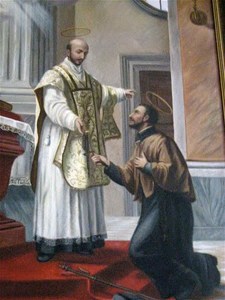
Ignatius of Loyola and Francis Xavier were among the first Jesuits. Both were close friends since they met in Paris as they shared the same room, table and books. As the general of the Society of Jesus, Ignatius had the authority to assign his friend close to him, yet this means to curtail Francis’ gift to love enormously. Ignatius eventually sent Francis as a missionary, and allowed him to spread the faith and expand his love for people of the Far East. Francis Xavier would be always remembered as one the greatest missionaries in the Church. It is when we deny ourselves, our selfish desires, and carry the cross of love, that we genuinely follow Jesus as His disciples.
Br. Valentinus Bayuhadi Ruseno, OP

 Today’s Gospel is well known as the Confession of Peter. Jesus asks the disciples who He is, and Simon confesses that Jesus is the Christ, the Son of the living God. He gets it right, and Jesus Himself reveals that his answer does not come from his human weakness, but from the heavenly Father. I used to think that this revelation is an instant inception of divine idea inside Simon’s mind. Right there and then, like Archimedes who discovered the Law of Hydrostatic, Simon also shouts “Eureka! I have found it!”
 Why does Jesus, the compassionate man and just God, have to “humiliate” the Canaanite woman? If we put ourselves in the context of Jesus’ time and culture, we will understand that what Jesus does is just expected of him. Jesus is dealing with a woman of gentile origin. Generally, Jews avoid contacts with the non-Jews, and a Jewish man does not engage in dialogue with a woman who is not his wife or family in public. Jesus does what every Jewish man has to do. However, in the end, Jesus praises the woman’s faith and heals her daughter. Eventually, mercy overcomes differences and love conquers all.
 Ocean is a gift to humanity. For many of us, ocean means a great variety of seafood, a place to spend our vacation. When we imagine a vast sea with beautiful beach, we are ready to enjoy swimming, snorkeling or diving. However, for millions of fishermen and seafarers, sea simply means life as they depend their lives and their families on the generosity of the sea, the resources it offers, and the works it generates. Unfortunately, the sea is not always merciful. The sea is home to powerful storms and with its giant waves that can even engulf the biggest of ships. With the effects of global warming, massive sea pollution and destructive ways of fishing, it is getting hard to get a good catch. Novelist Ernest Hemingway in his book “The Old Man and the Sea” narrates a life of fisherman who after risking his life to catch a giant fish, brings home nothing but a fishbone as his catch was consumed by other fishes. Majority of fishermen who continue struggling with lingering debt and difficulty to get fuel for their boats, become poorer by the day. These make fishermen and seafarers a perilous profession.
 This Sunday, the Church is celebrating the feast of Transfiguration. The word ‘transfiguration’ comes from Matthew who writes Jesus transfigures before the three disciples, Peter, James and John, his face shines like the sun and his clothes become white as light (17:2). The word “transfigure” is the direct transliteration of the Latin Vulgate Bible “transfigurare”. It is a combination of two words “trans” meaning to across, and “figura” meaning figure. Thus, transfiguration literally means the change of figure. It is a fitting word to describe what happens to Jesus.
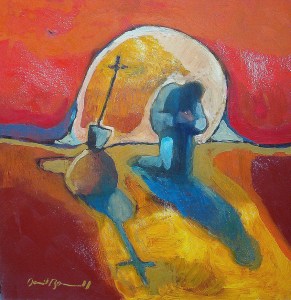 From today’s parables, we learn that Jesus appreciates human labor, the use of technology, and economic activities. The parables speak of men buying and selling land, merchants making transactions, and fisher folk catching and selecting the fish. Yet, the appreciation comes with a particular condition: the activities have to be honest and just.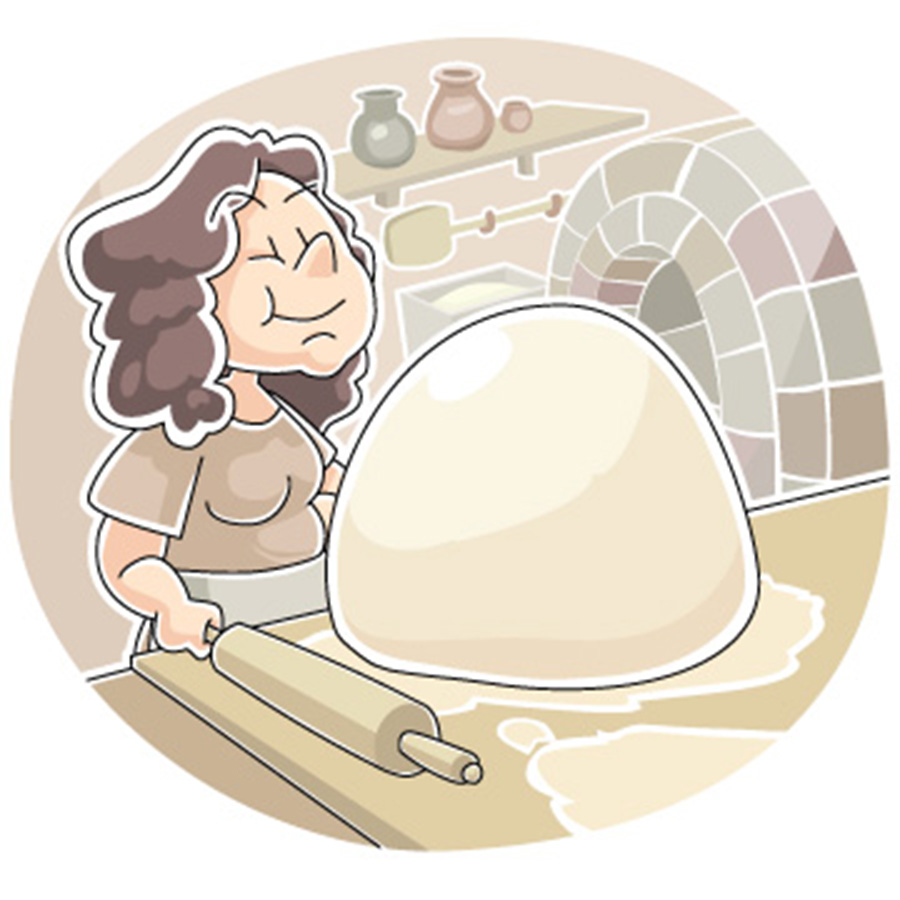
 From the several parables that Jesus tells us in today’s Gospel, we learn that Jesus is keen on how nature works. He observes how seeds of wheat and weed grow, and how the yeast would affect the dough in the process of baking. Jesus also is observant of human ingenuity in working with nature for the benefit of the human community. Men and women till the land, are observant to the cycle of nature, sow the well-prepared seeds, take care of the growth and then harvest the result for the good of community. The use of yeast for baking is a very ancient method of cooking. Women would place yeast in dough, and the microorganism would interact with the carbohydrate in the flour, creating carbon dioxide, and as an effect, the leaven dough would expand. Though unleavened bread will last longer, this yeast would make the bread softer and tastier, making it more enjoyable for human consumption.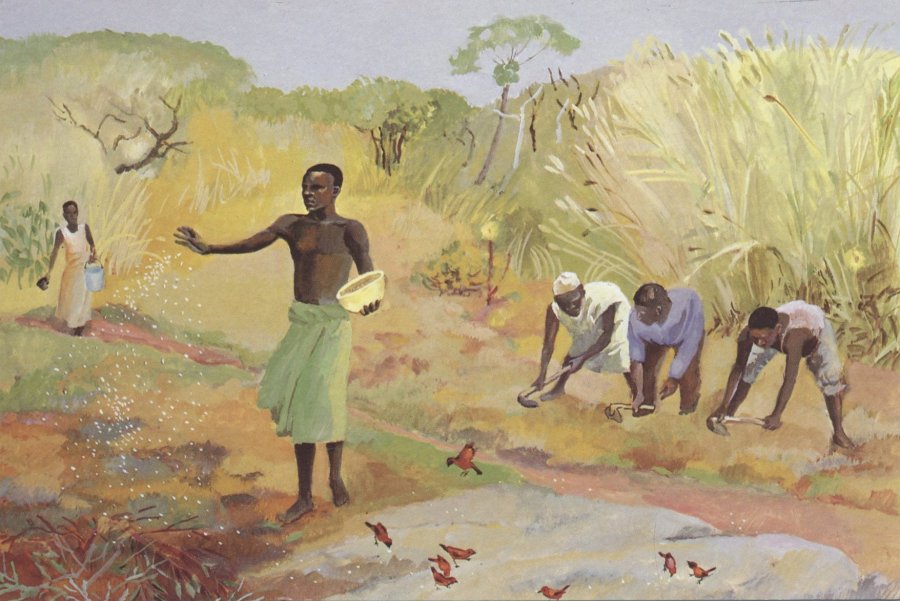
 Looking carefully into the parable, we find something strange. The agrarian land in Palestine was not as fertile and arable like many other countries like Indonesia and Philippines. It was expected that some seeds would fall into stony grounds, or be outgrown by the thorny plans. Yet, the Israelite farmers knew very well that seeds were their lifeline and wasting three-quarter of their seeds was just unthinkable. To add to this oddity, Jesus assured that this waste of seeds would be compensated with super abundant result of thirty to hundredfold harvest. A seasoned farmer recognized that an ordinary wheat seed planted in the Palestinian soil would yield just enough for the family. Thus, many of Jesus’ listeners would wonder, “What is he talking about? He is just a carpenter, and now he is talking to us from a boat about agriculture?” Even His disciples were puzzled and approached Him for clarification.
 Yoke is a device, usually of wood, placed on the shoulder of animals or persons to carry a burden. In agricultural settings, a yoke is used to pull a plow to make a furrow on the ground so that the soil will be ready for the seed planting. But, a yoke can be used also to drag a cart and transport various goods. Because its primary function is to carry a load or burden, a yoke turns to be a symbol of responsibility, hard work, and obligation. In our seminary in Manila, a leader among the brothers is called a decano. In the beginning of the formation year, we elect our decano, and as he assumes his responsibility, he ceremonially receives a wooden yoke from the outgoing decano. The yoke reminds him of responsibility and great task that he has to endure through the year.
 When God calls us, God does not only call us privately and individually. In the Bible, God also calls us with our family, our community. God created the first man and woman not only to complete each other, but also to “multiply” or to build a human family. Noah entered the ark together with his wife and children. They were saved as a family from the flood. Abraham and Sarah were called from the land of Ur, and establish their own family and clan in the land of Canaan. When God called Moses to deliver the Israelites from slavery, God also called Aaron and Miriam, Moses’ brother and sister, to assist him in his mission. Finally, the life of Jesus of Nazareth would not be complete without the family of Mary and Joseph of Nazareth.
 In Medio Ecclesiae