

3rd Sunday of Advent [December 17, 2017] John 1:6-8, 19-28
“John came as a witness to testify to the light , so that all might believe through him. (Joh 1:7)”
 In the Fourth Gospel, John the Baptist has an important role. It is not only to baptize, but to become a witness. He is to witness to the light, to the true Messiah, to Jesus Christ. When the priests, Levites, and Pharisees from Jerusalem, come to him , and interrogate him to clarify his identity, he makes it clear that he is not the Messiah, not even the prophet, but rather enigmatically saying “a voice that cries in the desert.” It seems it is an easy thing to do for John. Questions are thrown at him, and he simply gives straight and confident answers. Yet, looking deeper into the reality, it is actually the opposite.
John the Baptist is a highly popular and influential man. He is able to draw many people from all corners of Palestine. People listen to him and ask to be baptized. He is a charismatic preacher that changes many Jews’ lives. When afforded with so much success and praise, it is easier for John to see himself as the best and main actor. He could have said to the priests, “I am the light, the Messiah. See how many people follow and gather around me!” He has become the epitome of successful preacher and minister. Yet, he does not claim the praise to himself , but points to the true light and Messiah.
Our modern society may be scandalized by John the Baptist’s attitude. Our societies are driven by success and achievement. We are taught to think positive, to feel good about ourselves, to shun failures. We are trained to reach our dreams, to compete to become the best , and to believe in our abilities. Books, articles, and videos about self-help, success-coaching, positive thinking, effective leadership and efficient management are flooding in our book stores , televisions, and internet. I need to admit also that I am using a time-management method “Pomodoro” to help me finish this reflection. We are living in the world that is confident of itself and believe that we can achieve anything. The sky is the limit!
No wonder if the value of our contemporary society is in conflict with John’s. We might say John should not think himself too low, he should have more self-esteem, or he should not be too pessimistic. Yet, this is not about John having low self-esteem or being too shy. John’s humble act is prophetic, not only for his own time , but also to our days. His testimony points to a radical recognition that God is the source of all our goodness and to God alone, all these perfections shall go back. I am not saying that many motivational materials produced by our generation are not good. They are in fact helpful to bring out the best of us. Yet, the danger is when we begin to think that we can do things on our own. With so many achievements, the present world begins to believe that God is not necessary, and we start playing God. We destroy the environment, manipulate human lives, and abuse ourselves. At the bottom of all of these is pride.
John’s life becomes a witness to the true light, to the true source of all goodness. His prophetic action reminds us of what matters most in our lives. The invitation for us now is not only to become humble by recognizing God’s presence in all our achievements , and give thanks to Him. Yet, like John, we and our lives are to become a sign that points to God himself. It is no longer about us, but God who works in me.
Br. Valentinus Bayuhadi Ruseno , OP
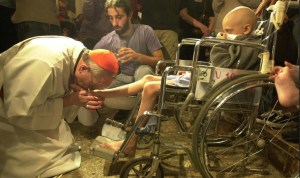 Today, we read the beginning of the Gospel according to Mark. Among the evangelists, only Mark explicitly introduces his work as the “Gospel”. The English word “Gospel” simply means the Good News, or in original Greek, “Evangelion.” Commonly, we understand a gospel as a written account of the life and words of Jesus Christ. The Church has recognized four accounts as canonical or true Gospel. We have Gospel according to Matthew, Mark, Luke, and John.
 Talent is one of the few biblical words that has become part of our modern language. Talent connotes a God-given ability or a natural unique skill, and yet it has not fully developed. Thus, we are called to use and harness our talents in order to achieve our full potentials and contribute to the progress of society. In fact, talents have become well-sought commodity in our society. Companies only hire the talented employees. Schools are marketed as venues of talents development. Our TV channels and social media outlets are filled by shows where we perform, compete and prove that we possess the best talent in singing, dancing, and the like. How our world is now obsessed with talents!
 Reading this Sunday’s Gospel, I feel that Jesus is reprimanding His priests and ministers for “preaching and yet not practicing.” Unfortunately, many of us are failing in this matter. We preach forgiveness, but some priests are having prolonged quarrels with other co-priests and some of their parishioners. We teach kindness and friendship of God, yet some of us appear to be aloof and snobbish. We proclaim justice, but sometimes we fail to be just to the simple people working in the parish or convent.
 What is love? If we ask young couple who are in love, love means more time together and be connected online even up to late hours of the night. For young priests, love may mean patiently listening to confessions for hours, and attending to sick calls. For a couple who have their newly-born baby, love is changing the baby’s diapers even at middle of the night. Love is passion, dedication and sacrifice.
 “In this world nothing can be said to be certain, except death and taxes.” Benjamin Franklin once said. Indeed, tax is an unpleasant and unavoidable fact in our lives as ordinary citizen. A portion of our hard-earned wage is suddenly taken away from us, and only God knows where it goes. In modern society, almost all we have, we gain, and we use are taxed. The practice of taxing people goes back to first known organized human societies. The basic idea is that tax will provide a common resource for the improvement of the community, like building roads, free education and quality health care. Yet, the ideal is often met with abuses. In olden time, the kings and chieftains taxed people so they could build their grand palaces and feed their wives. Unfortunately, the situation does not change much in our time.
 Jesus is already in Jerusalem. The confrontations between Jesus and the Jewish authorities have turned bitter, and Jesus is approaching His final days on earth. With this context, the parable may be understood easily. The invited guests stand for some elite Israelites who refuse Jesus, and thus, reject God Himself. The burning of their towns and cities may point to the invasion of the Roman Empire and the destruction of Jerusalem in 70 AD. The commoners who are later invited represent the people from all nations who accept Christ. Yet, some people who are already at the Wedding banquet do not wear the expected wedding garment. This proper dress decorum is a basic sign that the guests are honoring the host, and also becomes the symbol of our faith, our good works and our holy lives. For those who fail to honor the King through their garment are thrown out from the banquet.
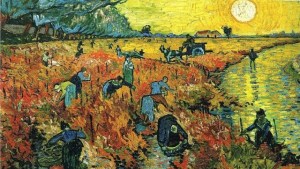 The image of a vineyard is close to Israelites’ hearts because this springs from their prophetic tradition. Isaiah uses this metaphor to describe Israel and God (see Isa 5:1-8). Consistent with this great prophet, Jesus crafts His parable of the vineyard to describe the relation between God and His people. God is the just and generous vineyard owner, and we are His workers. Now, it is up to us to work hard for the Lord in His vineyard and receive abundant harvest, or be lazy, and expelled from the vineyard.
