

26th Sunday in Ordinary Time. October 1, 2017 [Matthew 21:28-32]
“Which of the two did his father’s will?” (Mat 21:31)
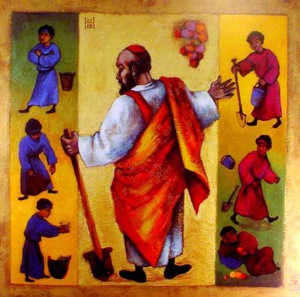 The road to hell is paved with good intentions. This old proverb attributed to St. Bernard of Clairvaux may sound rather morbid and threatening, but the truth remains. If we have only good intentions, marvelous plans, or great designs, but we never lift a finger to begin the first step, nothing will happen. We want to focus on our study, yet we are distracted by Facebook’s status and newsfeeds, our online chatting, or endless videos in YouTube, we will not make any progress. We wish to accomplish a lot of works, but our attentions and energy are consumed by so many other concerns. Then, our wish stays a wish.
The parable Jesus shares this Sunday speaks of a good intention or ‘yes’ that can be completely useless if it does not materialize in concrete actions. Yet, more than achieving the highest productivity, the parable teaches us some more primordial truth. At the end of the parable, Jesus asks the Jewish elders, “Which of the two did his father’s will?” The parable teaches us about doing the Father’s will.
From the two sons, we learn that doing God’s will can be tough and demanding. Once I had an exposure with poor farmers in Indonesia. I was staying with a family who tilled their own small and almost barren land, and every morning, they went to the field and make sure that their plants were still alive. Part of my exposure was that I had to help them. Used to the comfort of seminary life, I barely lasted for an hour working under the scorching summer heat, and then rested the entire day while looking at the family working so hard. I imagine that the two sons in the parable are aware of the challenges that they will endure working at the vineyard, and it is expected that the resistance will build up. The first son immediately declines his father’s wish, while the second son says yes.
We might wonder why the second son changes his mind. Perhaps, he has no plan to work there, and what he says is utter lie and deception. Yet, I tend to believe that he has actually a good intention to fulfill his duty, but he is discouraged by the looming hardship he will face in vineyard, and ends up doing nothing at all. Perhaps many of us are like this second son. We intend to help more our Church, yet we are always late going to the Mass, complaining about the priest’s homily, and not participating in the various activities or organizations in the parish. We wish to give glory to God, yet our lives do not manifest a good Christian life as we indulge in gossiping, are envious with other members of the Church, and become choosy in our services. No wonder for some, the Church feels like hell!
We remember that these two men are the sons of the vineyard’s owner and thus, the vineyard essentially belongs to them. If they refuse to work, they will lose their vineyard. The poor family where I stayed for exposure, were working extremely hard despite many difficulties. I realize that all this they did because their small land was what gave them life. Doing God’s will is often challenging, yet in the end, it is for our good. I believe it is not too late to act on our good intentions, and from the second son, we transform into the first son. We are working in the Lord’s vineyard because the vineyard is also ours.
Br. Valentinus Bayuhadi Ruseno, OP

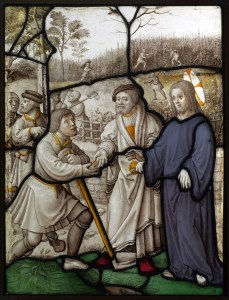 Jesus is the storyteller genius. The parable he shares to us today does not only surprise us with its unexpected ending, but it also creates a sense of puzzlement and wonder. We expect that the workers who labored the whole day would get the better wage compared to those who came late. Yet, it did not happen. All got the same wage regardless of their working hours. The vineyard owner was right to explain that he did not violate the agreement with his laborers, but deep inside us, there is something quite off. If we were militant enough, we would stage a rally to protest the vineyard owner’s decision.
 Why is it difficult to forgive? One of the reasons is that after we are wronged, the immediate reaction is to seek justice or even revenge. We want that the pain and the loss we experienced are also felt by those who inflicted them on us. We want “a tooth for a tooth, an eye for an eye”. Unfortunately, consumed by anger and hatred, our cry for justice can easily turn into an intense desire of revenge. If justice seeks to balance scale, revenge seeks to inflict a greater punishment, or even to destroy those who have harmed us. Unless we get what is due, unless they receive what they deserve, there is no forgiveness.
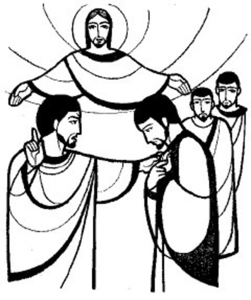 Jesus understands that in any human community, including His own community of disciples, or the Church, there are always members affected by human weakness and sinfulness. Even in the Christ-oriented communities like the religious convents, the parishes, and various ministries and groups in the Church, inevitably we are hurting each other. Thus, Jesus, the Just God and merciful man, outlines a procedure or ‘fraternal correction’ to deal with misunderstanding, quarrels, and conflicts. It begins with the individual and personal encounter, then when it does not work, we ask the help of a witness or mediator, and lastly it goes up to the community level.
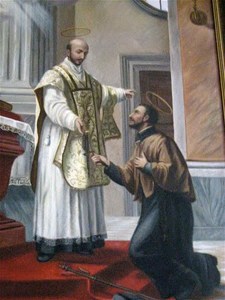 We come to one of the most heated exchange of words in the Gospel, and this occurs no less than between Jesus and Simon Peter. The apostle rebukes Jesus for revealing to the disciples that he has to go Jerusalem, suffer and die, but be raised on third day. In return, Jesus reproofs him and calls him Satan. Why does this harsh quarrel take place between Jesus, the most merciful Lord, and his trusted disciple, Simon whom he has just declared as the Rock?
 Today’s Gospel is well known as the Confession of Peter. Jesus asks the disciples who He is, and Simon confesses that Jesus is the Christ, the Son of the living God. He gets it right, and Jesus Himself reveals that his answer does not come from his human weakness, but from the heavenly Father. I used to think that this revelation is an instant inception of divine idea inside Simon’s mind. Right there and then, like Archimedes who discovered the Law of Hydrostatic, Simon also shouts “Eureka! I have found it!”
 Why does Jesus, the compassionate man and just God, have to “humiliate” the Canaanite woman? If we put ourselves in the context of Jesus’ time and culture, we will understand that what Jesus does is just expected of him. Jesus is dealing with a woman of gentile origin. Generally, Jews avoid contacts with the non-Jews, and a Jewish man does not engage in dialogue with a woman who is not his wife or family in public. Jesus does what every Jewish man has to do. However, in the end, Jesus praises the woman’s faith and heals her daughter. Eventually, mercy overcomes differences and love conquers all.
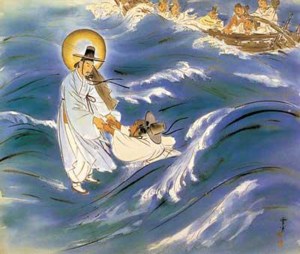 Ocean is a gift to humanity. For many of us, ocean means a great variety of seafood, a place to spend our vacation. When we imagine a vast sea with beautiful beach, we are ready to enjoy swimming, snorkeling or diving. However, for millions of fishermen and seafarers, sea simply means life as they depend their lives and their families on the generosity of the sea, the resources it offers, and the works it generates. Unfortunately, the sea is not always merciful. The sea is home to powerful storms and with its giant waves that can even engulf the biggest of ships. With the effects of global warming, massive sea pollution and destructive ways of fishing, it is getting hard to get a good catch. Novelist Ernest Hemingway in his book “The Old Man and the Sea” narrates a life of fisherman who after risking his life to catch a giant fish, brings home nothing but a fishbone as his catch was consumed by other fishes. Majority of fishermen who continue struggling with lingering debt and difficulty to get fuel for their boats, become poorer by the day. These make fishermen and seafarers a perilous profession.
 This Sunday, the Church is celebrating the feast of Transfiguration. The word ‘transfiguration’ comes from Matthew who writes Jesus transfigures before the three disciples, Peter, James and John, his face shines like the sun and his clothes become white as light (17:2). The word “transfigure” is the direct transliteration of the Latin Vulgate Bible “transfigurare”. It is a combination of two words “trans” meaning to across, and “figura” meaning figure. Thus, transfiguration literally means the change of figure. It is a fitting word to describe what happens to Jesus.
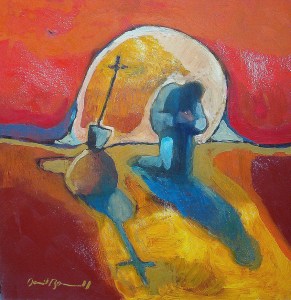 From today’s parables, we learn that Jesus appreciates human labor, the use of technology, and economic activities. The parables speak of men buying and selling land, merchants making transactions, and fisher folk catching and selecting the fish. Yet, the appreciation comes with a particular condition: the activities have to be honest and just.
