

16th Sunday in Ordinary Time. July 23, 2017 [Matthew 13:24-43]
“The kingdom of heaven is like a mustard seed that a person took and sowed in a field. (Mat 13:31)”
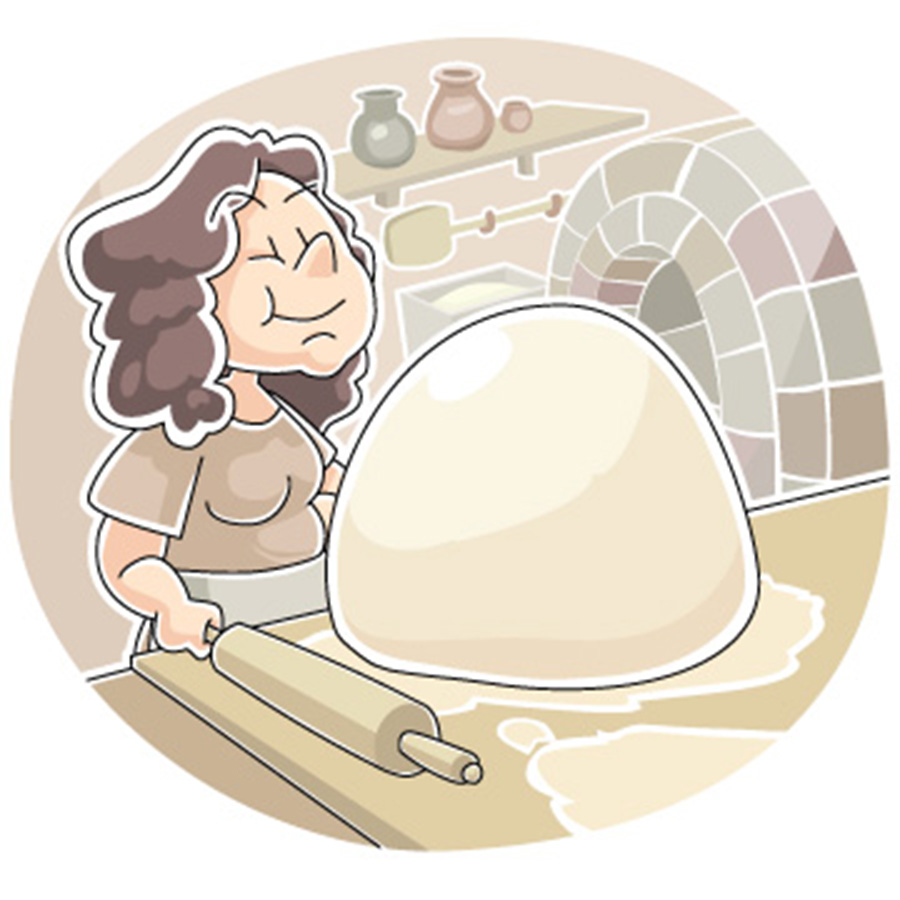
 From the several parables that Jesus tells us in today’s Gospel, we learn that Jesus is keen on how nature works. He observes how seeds of wheat and weed grow, and how the yeast would affect the dough in the process of baking. Jesus also is observant of human ingenuity in working with nature for the benefit of the human community. Men and women till the land, are observant to the cycle of nature, sow the well-prepared seeds, take care of the growth and then harvest the result for the good of community. The use of yeast for baking is a very ancient method of cooking. Women would place yeast in dough, and the microorganism would interact with the carbohydrate in the flour, creating carbon dioxide, and as an effect, the leaven dough would expand. Though unleavened bread will last longer, this yeast would make the bread softer and tastier, making it more enjoyable for human consumption.
By mentioning the beauty of nature and the human creativity, Jesus acknowledges the greatness of God, the creator of all as well as the goodness of creation. He sees harmony between nature and human, and when both work together, all will manifest the beauty of creation. Yet, Jesus also reminds that the evil one is working to destroy this harmony, by planting the seed of greed, hatred and injustice in our hearts. Instead of using our God-given talent and reason to nurture nature, we choose to manipulate it and exploit it for our own benefits and pleasures.
We are proud with our cellular phone. It has become a modern lifestyle, and we often keep changing for the latest and more advanced models. Yet, we are not aware that men, women and even children are working under terrible conditions somewhere in long chain of production. A single cellular phone is a complex combination of metals, and extracting these minerals from earth seems easy yet at the same time most problematic. For example, the greater part of a cellphone’s battery is made of cobalt, and the mining of cobalt does not only cause massive environmental problems, but also fuel arm conflicts in Congo, causing loss of human lives, and great refugee problems. Other materials are coming from developing countries like Indonesia, Chile and the Philippines. That is just a cellular phone; other gadgets like laptop, personal computers, and other electronic devices, require even more of these raw materials.
I myself am participating in this environmental problems, as I am writing this reflection in my old laptop, and sending this reflection through my cellphone. I do believe that many of us want to follow Jesus in preserving the harmony between nature and human creativity, and we are just caught up in this global web of disharmony. Yet, we must not be hopeless. We do not have to throw away our gadgets, but at least, we should be aware of the massive injustice done to nature and fellow human. We are also invited to be more conscious with what we have, like cloths, food and electricity, and how their creation often has upset nature. To have Jesus as our God, means following His example of being observant to nature’s work and appreciative of human ingenuity. Moreover, we are following His footsteps in caring for the creations which have been beautifully created by His Father as well as our Father.
Br. Valentinus Bayuhadi Ruseno, OP
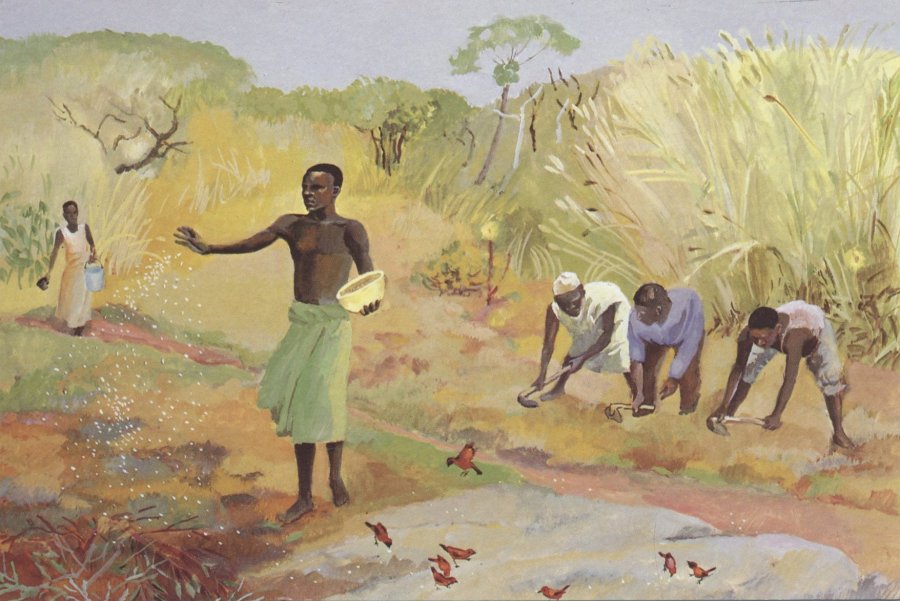
 Looking carefully into the parable, we find something strange. The agrarian land in Palestine was not as fertile and arable like many other countries like Indonesia and Philippines. It was expected that some seeds would fall into stony grounds, or be outgrown by the thorny plans. Yet, the Israelite farmers knew very well that seeds were their lifeline and wasting three-quarter of their seeds was just unthinkable. To add to this oddity, Jesus assured that this waste of seeds would be compensated with super abundant result of thirty to hundredfold harvest. A seasoned farmer recognized that an ordinary wheat seed planted in the Palestinian soil would yield just enough for the family. Thus, many of Jesus’ listeners would wonder, “What is he talking about? He is just a carpenter, and now he is talking to us from a boat about agriculture?” Even His disciples were puzzled and approached Him for clarification.
 Yoke is a device, usually of wood, placed on the shoulder of animals or persons to carry a burden. In agricultural settings, a yoke is used to pull a plow to make a furrow on the ground so that the soil will be ready for the seed planting. But, a yoke can be used also to drag a cart and transport various goods. Because its primary function is to carry a load or burden, a yoke turns to be a symbol of responsibility, hard work, and obligation. In our seminary in Manila, a leader among the brothers is called a decano. In the beginning of the formation year, we elect our decano, and as he assumes his responsibility, he ceremonially receives a wooden yoke from the outgoing decano. The yoke reminds him of responsibility and great task that he has to endure through the year.
 When God calls us, God does not only call us privately and individually. In the Bible, God also calls us with our family, our community. God created the first man and woman not only to complete each other, but also to “multiply” or to build a human family. Noah entered the ark together with his wife and children. They were saved as a family from the flood. Abraham and Sarah were called from the land of Ur, and establish their own family and clan in the land of Canaan. When God called Moses to deliver the Israelites from slavery, God also called Aaron and Miriam, Moses’ brother and sister, to assist him in his mission. Finally, the life of Jesus of Nazareth would not be complete without the family of Mary and Joseph of Nazareth.
 St. Francis of Assisi once said, “Preach the Gospel all time. When necessary, use words.” He correctly points out that preaching is not only the job of the priests in the pulpit, or lay preachers in the prayer meetings. Preaching the Gospel is the mission of all of us. The preaching can happen in the family, as we show our children the meaning of true love, fidelity and respect. Preaching can take place in our workplaces as we uphold honesty, hard work, and dedication. Preaching may manifest in our daily life as we do justice, service to the needy, and kindness to our neighbors.
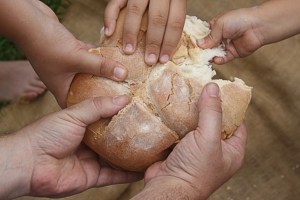 Eating is essential to our life. Nobody would deny that eating is a matter of life and death, but there is always significant different between a beggar sitting by the gate of St. Domingo church and most of us who can enjoy a full meal three times a day. The beggar will ask himself, “How can I eat today?” While, we will inquire ourselves, “Where am I going to eat today? Is the ambience of the restaurant welcoming? Is the food as tasty as Filipino delicacy? Is the food safe from any cancer-causing substance?” For some, eating is about survival, but for some other, this phenomenon has evolved into something mechanically sophisticated. The society provides us with almost unlimited options of what we are going to eat, and seemingly we are masters of these foods as we possess the authority to choose what we like and shun what we don’t. But, we actually are slowly turning to be slaves of our appetite as we shift our focus not on the essential but on the trivial, like how we satisfy our fickle cravings.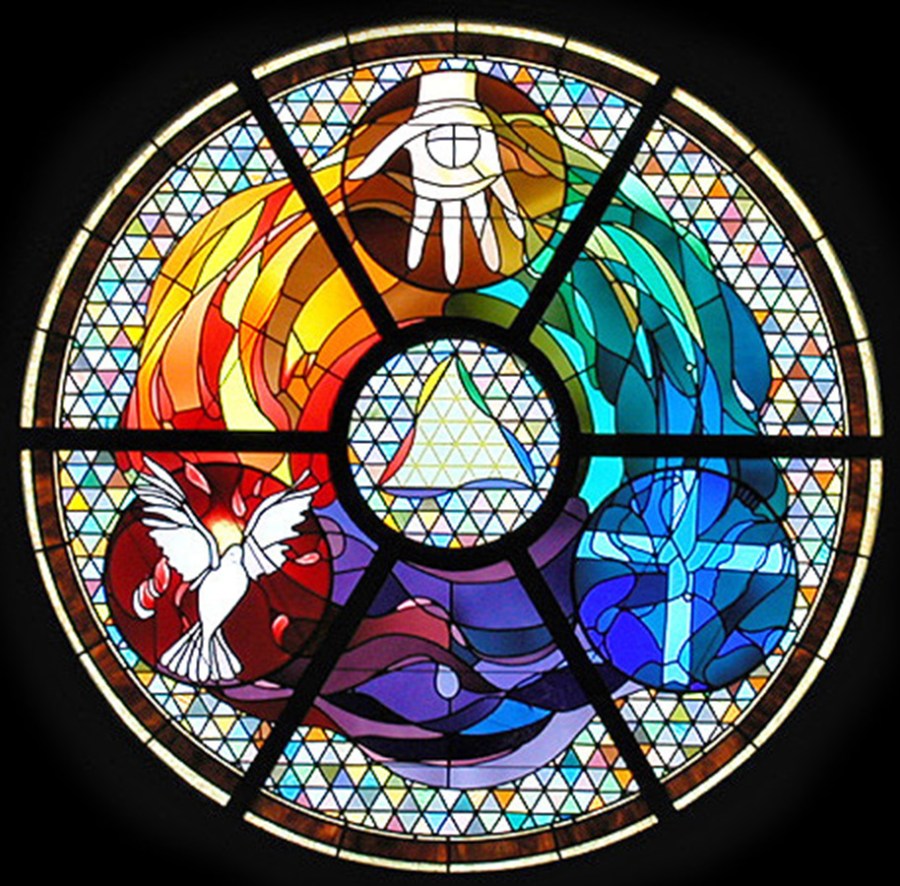
 Today, we are celebrating the Mystery of the Most Holy Trinity. This Mystery is rightly called the mystery of all the mysteries because the Holy Trinity is at the core of our Christian faith. Yet, the fundamental truth we believe is not only extremely difficult to understand, but in fact, it goes beyond our natural reasoning. How is it possible that we believe in three distinct Divine Persons, the Father, the Son and the Holy Spirit, and yet they remain One God? Many great minds have tried to explain, but at the face of such immense truth, the best explanations would seem like a drop of water in the infinite ocean. Yet, we believe it precisely because the mystery is not coming from the human mind, but is revealed to us by God Himself.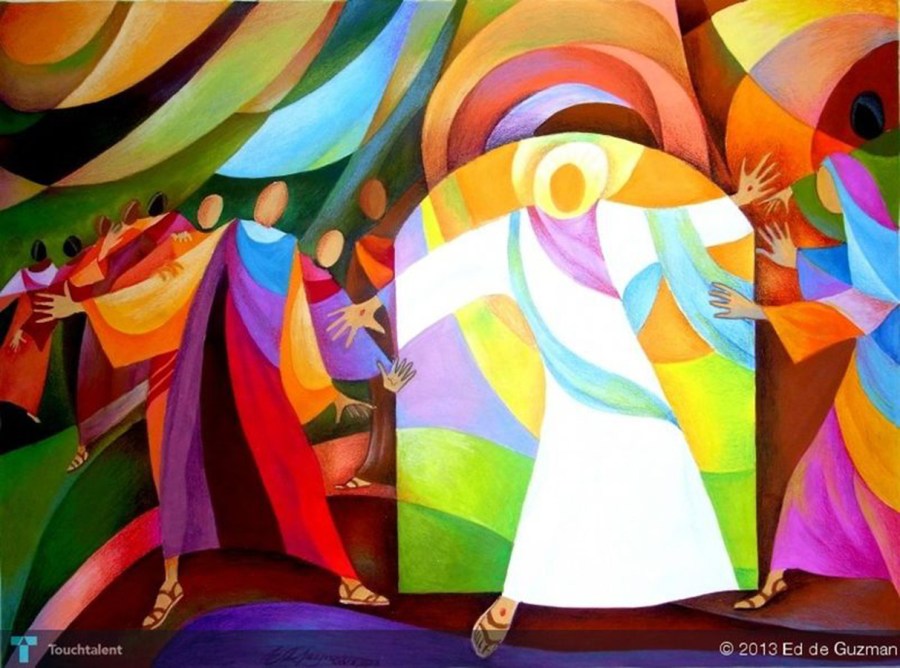
 Pentecost is the commemoration of the descent of the Holy Spirit upon the first disciples in the upper room. The usual images we have in our mind are usually dramatic and vivid. The disciples gathered in the upper room, suddenly the strong wind filled the room, followed by the appearance of the tongues of fire. Inspired by the Holy Spirit, the disciples began to speak various languages, and proclaimed the Gospel. This depiction of Pentecost comes from the Acts of Apostles (our first reading today). The same Acts tells us that Pentecost took place 50 days after Easter Sunday (Pentecost itself simply means ‘50’ in Greek).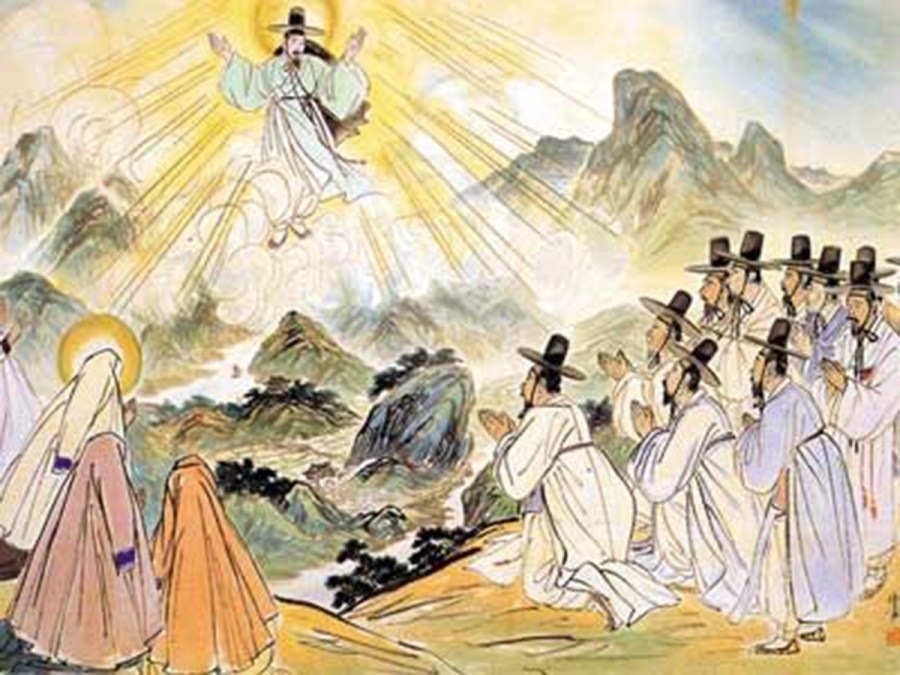


 Have you seen a spirit? When the word ‘spirit’ is mentioned, what image does appear in your mind? Perhaps, scary ghosts from some urban legends or Hollywood horror movies. The word ‘spirit’ conjures terrifying and often creepy images because it is related with the dead, the afterlife, and unexplained paranormal phenomenon. The Church herself warrants the existence of evil spirit or the demons, as the Church fights them through the ministry of exorcism.
