Access  


Fourth Sunday of Easter. May 7, 2017 [John 10:1-10]

 “I am the gate. Whoever enters through me will be saved, and will come in and go out and find pasture (Joh 10:1)”

gate of the sheep 1Jesus is not the gatekeeper, but Jesus is the gate Himself. A gate or a door gives a passage or access to a sheepfold, a house, a building or a room. It both separates and connects the insiders and the outsiders. In fact, the gate is as essential as the house itself. What is the building without a door or an entry point? It is either a construction error or it is not a sheepfold or a house at all. The gate is not only an accessory to the house, but it also defines the house itself. Is it an accessible house, locked house or not a house at all?
 Being part of the digital generation, we have our own ‘gateway’. In our familiar terms, this is the access, the connection or the networking. We use this access to communicate, to work and even to make important decisions. It turns to be part of who we are, as we crave for it, demand it, and fight for it. Sometimes, I get upset because the connection is poor inside the formation house that I cannot communicate with my family in Indonesia. A child as young as one year old knows how to manipulate an iPhone, and cries loudly when the parents try to take it away from him. Many researchers conclude that Facebook has become another new kind of addiction, as more and more millennials are spending more time on FB.  Lesley Alderman of The New York Times said that we check our cellular phone at an average of 47 to 82 times a day precisely because the access it gives us to almost everything.

Yet, it is not only about addiction or having fun. It is about our lives. A lot companies, jobs and workers are now dependent on this access, something which did not exist twenty years ago. Better connection means faster transaction, the richer the company becomes. The same access is used to control remotely unmanned machines, like drone. Some drones are used for photography, fun and researches, but others can be used to carry powerful explosives. Now, the access can either make us or destroy us.

In today’s Gospel, Jesus introduces Himself as the gate, the access or the connection to the fullness of life. Now, it is up to us whether we enter this gate and use this access, or refuse to enter and waste the connection. If we examine our daily lives, how many hours do we avail of this divine access? We might be upset if we lose our internet connection, but do we get the same feeling when we miss the connection with God? How many hours do we spend for browsing the internet, and eagerly chat with our online friends, compared to the time we use to read the Bible and worship Jesus in the Eucharist? We might be surprised that we actually only remember God on Sunday. And in fact, within the Mass, we are also preoccupied with what inside our phone!

It is one of the fundamental reasons why many of us are unhappy, restless, and at a lost despite the success, riches and other access we possess. Perhaps, it is good to disconnect first from the many connections we have, and connect to the true source of joy. If we are not finding lives meaningful, it is because we are not entering that gate that leads us to the fullness of life.

Br. Valentinus Bayuhadi Ruseno, OP


Journey to Emmaus and the Eucharist

Third Sunday of Easter. April 30, 2017 [Luke 24:13-35]

“…while he was with them at table, he took bread, said the blessing, broke it, and gave it to them. 31 With that their eyes were opened and they recognized him… (Luk 24:30-31)”

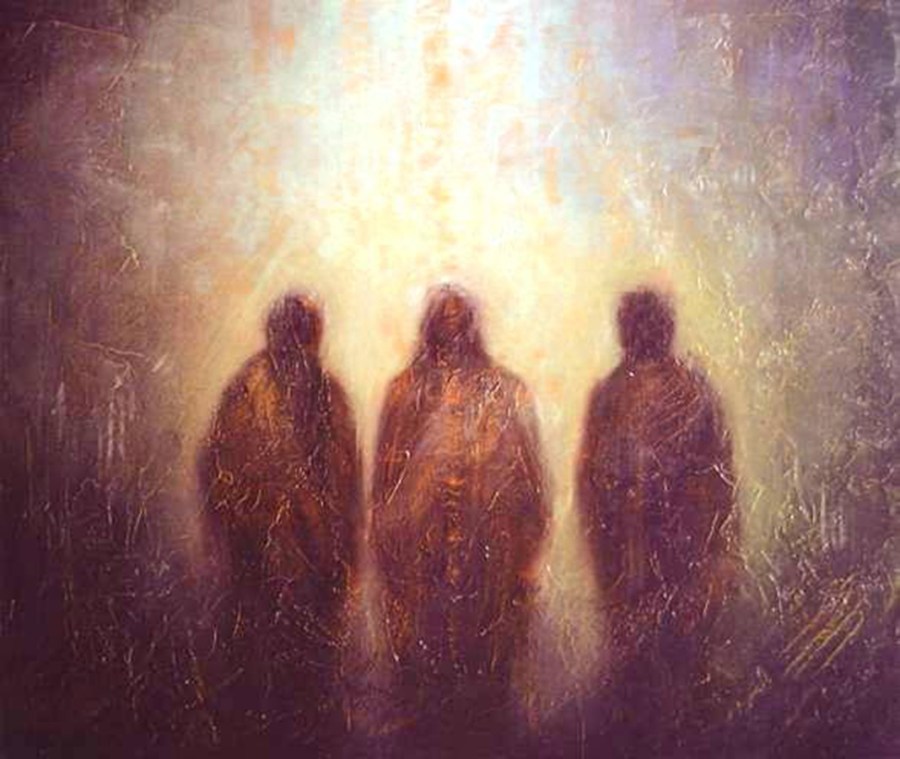
emmaus 2Luke wonderfully narrated the Journey to Emmaus in such a way that it became a catechetical instruction on the Eucharist. The two disciples were actually running away from Jerusalem. After the death of their master, the situation turned to be dangerous for their lives. They were afraid of the Jewish authorities and their hope and dream of having a Messiah were shattered. Better for them to go away and return to their former lives. Yet, Jesus surprisingly came, healed their wounds, and reappointed them as His apostles. However, let us see some details of today’s Gospel and how this narrative speaks of the Eucharist.
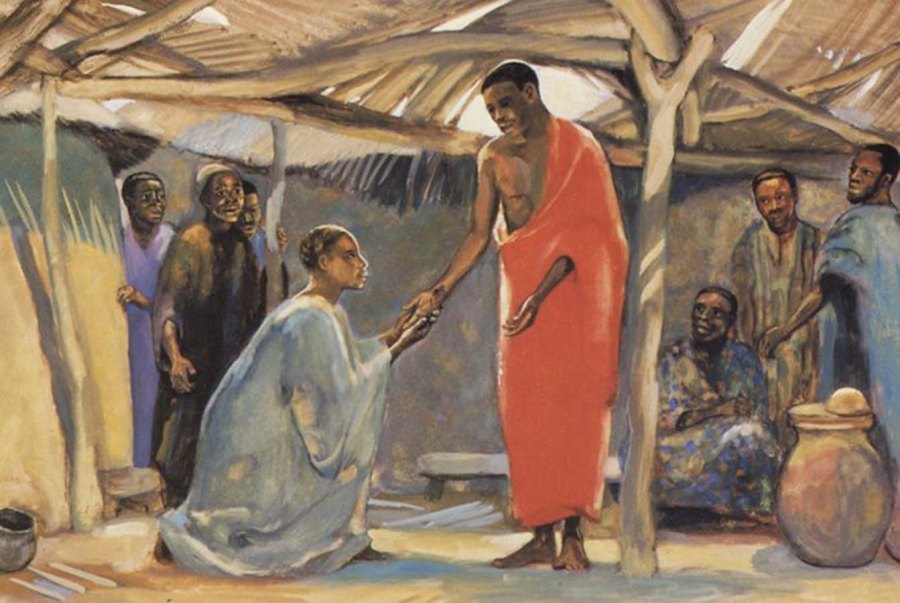
It begins with Jesus coming to the two disciples in their struggles, and inviting them to be with Him. He gathers and listens to all His disciples’ worries, failures and anxieties. The initiative is coming from Jesus. After listening to their stories, He starts to explain the Scriptures. He sheds light on how His life, death and resurrection have become the fulfillment of the scripture. This part is traditionally called ‘kerygma’ or proclamation. Then He connects the meanings of these events to His disciples’ lives. What is happening here is the first part of the Mass, the Liturgy of the Word: God gathers us His people with all our joys and sorrows and then, He nourishes us with His Word.

What follows is the breaking of the bread. Yet, before this takes place, the disciples have to do their part in inviting Jesus to stay with them. The initiative is from God, but we need to do our effort to participate in His work and make it fruitful. Then, Jesus takes the bread, blesses it, breaks it and shares it with the disciples. These very acts remind the disciples of Jesus in the Last Supper. In fact, the breaking of the bread is an ancient and biblical name for the Eucharist. The basic purpose of the Eucharist is to present the real Christ, and indeed, the disciples are able to recognize Him here. This is the first Eucharist after the Resurrection, and this brings healing and forgiveness. It gives meaning to the troubled lives and shattered hopes of the disciples. Then, after being nourished by His Word and His Body, the disciples’ hearts are burning and they go back to Jerusalem to proclaim the risen Jesus. The encounter with the risen Lord always leads to mission and preaching. These depict the second half of the Mass, the liturgy of the Eucharist.

Luke wrote his Gospel more than 1900 years ago, and it is amazing that the basic structure of the Eucharist remains even to this very day. Certainly, there are also many changes along the way, like for example the transformation from the old Latin Mass to the post-Vatican II mass, the ordinary form we have now. Yet, we are still faithful to what are truly essential and foundational: the reading and preaching of the Word and the breaking of the Bread. We are blessed and humbled that we are members of the Church who faithfully encounter Jesus, the Word and the Eucharist, just like the two disciples in the Gospel and like the first Christians in ancient time. It is now our challenge to continue living as the Eucharistic people in our daily lives, the men and women nourished by His Word and Body in the Eucharist.

Br. Valentinus Bayuhadi Ruseno, OP

The Paradox of Resurrection

Second Sunday of Easter. April 23, 2017 [John 20:19-31]

“Unless I see the mark of the nails in his hands and put my finger into the nailmarks and put my hand into his side, I will not believe (John 20:25).”

doubting thoms 1Thomas was looking for a proof that Jesus truly rose from the dead. Not only seeing Him in person, he required another sign: touching the crucifixion marks that Jesus bore.  He was one of the Twelve, the inner cycle of Jesus’ disciples, and being one, he had the privilege to walk with Jesus, dine with Him, and witness His mighty deeds. At a first glance, he would easily recognize Jesus, his Master, but still, he demanded the marks of the nails. Why did Thomas insist on searching the wounds?
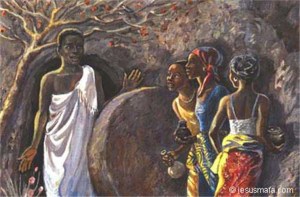
The reason is that Thomas wanted to make sure that he and other disciples were not seeing a ghost or just hallucinating. Moreover, he wanted to confirm that the person he was going to meet was truly Jesus and not an impostor. The crucifixion wounds of Jesus became a practical identification of the risen Christ. Though it is really practical, there is also a downside of it. Thomas identified Jesus primarily with His wounds. Thomas was not alone here. Often, not only doubting, we follow Thomas also in identifying other people with their wounds and weaknesses.

Napoleon Bonaparte was once a great general and he led his army to conquer Europe. Yet, in 1815, in the battle of Waterloo in present-day Belgium, Napoleon was defeated and it was sealed his fate. Waterloo gradually becomes not only the crucifixion mark of Napoleon but also a metaphor for the failures of many people. The same goes with Achilles who was a hero in Greek Mythology and the main protagonist of Homer’s epic, the Iliad. He was the most skillful warrior who brought the mighty Troy to its knees. He had only one vulnerable point in his body, his heel, and indeed, he died after the enemy shot an arrow to his heel. Even the greatest warrior has his weakness, and since then, the Achilles’ heel becomes a symbol of fatal weakness to everyone.

We have our own weaknesses, failures, and vulnerabilities. Often, we associate ourselves or other people with this wounds and marks. Bayu, who is always late; Alex, the jobless; Ram, the sickly; Andre, the obsessed; Francis, the ex-con; Peter, the impulsive denier; Thomas, the doubter; Mary, possessed by the seven demons; Judas, the betrayer; Jesus, the crucified. We are our wounds. We are as good as the mark we bear.

However, in today’s Gospel, Jesus did not rebuke Thomas for looking only for His marks. Jesus did not demand Thomas to focus on the best of Him. He even asked him to see and touch the wounds. Jesus embraced the very marks of His defeat and made it a sign of His resurrection. This has become the proof of God’s marvelous works, and the counter place between Thomas and God. It is not a ‘positive talk’ that goes “if you fail a hundred times, get up one hundred and one times!” It goes beyond it. The resurrection calls us neither to deny nor to hide our weaknesses, but to see the Lord even in these lowest situations of our lives. At times, when we are weak, our defenses are down, and it is the time, God enters our lives. At times, when we fail and lose, we fall to our knees and pray. This is the paradox of the resurrection!

Br. Valentinus Bayuhadi Ruseno, OP


The Resurrection and the Dominican Spirituality

(Easter special)

 Easter Sunday. April 16, 2017 [John 20:1-10]

“On the first day of the week, Mary of Magdala came to the tomb early in the morning, while it was still dark, and saw the stone removed from the tomb (Joh 20:1).”


women at the tombIf we read the Resurrection narrative in the four Gospels, we will discover that each Evangelist has his own distinct story. Yet, there are some common features in the Resurrection episode: the empty tomb, the presence of women, the appearance of angel followed by the risen Christ, and the women announcing the Good News to the other disciples. Let us focus on one particular feature that we usually miss. The first witnesses of the resurrection were not men, but women. Where were the male disciples? Where were those men who promised to sacrifice their lives for Jesus? They were in hiding. They were afraid. They were scattered.
When Jesus was betrayed and arrested, the male disciples ran for their lives, but the women faithfully followed Jesus. They were there at the foot of the cross. They witnessed Jesus’ death. They brought Him to the tomb. They returned to the tomb to give him proper burial rites at the first day of the week. Because of their fidelity, they were honored to be the first witnesses of the Resurrection. Not only witnesses, they were the first preachers of Resurrection.

This particular feature is an essential part of the Dominican spirituality. One of the patrons of the Order of Preachers is St. Mary Magdalene, and she was chosen because we honor her as the apostle to the apostles, the preacher to the preachers. By making her our patroness, we acknowledge that the task of preaching is not exclusively limited to the members of the clergy, but to lay men and women as well. The first convent St. Dominic established was in Prouille, France, and this was a convent for religious women. For us, Preaching is a family effort, all brothers and sisters take part and contribute in the mission of naming grace.

While it remains true that only the Dominican priests can give the homily in the Mass, it does not mean that non-clerical brothers and sister can not preach. We, the brothers in formation in Manila, are involved in facilitating retreats and recollections, producing video catechesis in the social media, and are coming up with the “Joyful Friars”, a preaching band group. Our sisters are involved in the teaching ministry. Some of them, like Mary Catherine Hilkert and Helen Alford are in fact professors in great universities in the US and Europe. Our lay Dominicans serve as lay preachers or campus ministers. Yet most importantly, they preach to their children and educate them to be mature and committed Christians.

Further more, for the Dominicans, preaching is not limited to verbal communication, but also takes flesh in various forms, depending on the needs of the people. Fr. Mike Deeb, OP is currently a permanent delegate of the Order to the United States in Geneva. He challenges countries that neglect various issues of injustice like human trafficking, violence, human rights abuses, and many more. James MacMillan is a lay Dominican and a renowned composer from Scotland. He composed mass songs when Benedict XVI visited the UK in 2010. Sr. Katarina Pajchel, OP is both a religious sister and a physicist. She is involved in ATLAS project, a particle physics experiment at the Large Hadron Collider. These names are just few of many Dominicans who preach in their own right.

At the core of Dominican spirituality is the belief that each of us is called to witness to His Resurrection and to bring this Good News. Even better the news is that this spirituality is not only for the Dominicans. Every man and woman, clergy or lay, a Dominican or not, are called to this mission. We are to preach the Resurrection in our unique way. We are called to preach as a redeemed people, a family of God.

Blessed Easter!

Br. Valentinus Bayuhadi Ruseno, OP

Eli, Eli, lema sabachthani?

Palm Sunday of the Lord’s Passion

April 9, 2017

Matthew 26:14—27:66

“Eli, Eli, lema sabachthani?” which means, “My God, my God, why have you forsaken me? (Mat 27:46)”

holy week 1Many theologians and ordinary Christians alike are baffled by these words of Jesus on the cross. If Jesus is God, how is it possible for Him to be separated from God? Why does the most compassionate God abandon His beloved Son? It simply does not make any sense. The Catechism of the Catholic Church tries to explain that it is a consequence of sin. Not that Jesus had committed any sin, but He endured the sin of the world on the cross. The greatest effect of sin is separation from God. Thus, carrying the heaviest burden of sin, Jesus could not but feel the chilling effect of alienation from His own Father.

However, for early Christians and Jews who listened to the last words of Jesus on the cross, they understood that Jesus was actually reciting the beginning line of Psalm 22. The tradition considers this as a psalm of lamentation. In fact, the Book of Psalms contains a lot of psalms of lament. Despite its sorrowful nature, this kind of psalm remains true to its form, which is a prayer inspired by the Holy Spirit. Reading closely Psalm 22, we discover that the psalmist tried to express his desperate situation because of the enemies’ assault. The attack was so intense and brutal that he felt that even God abandoned him. Yet, despite the feeling of abandonment, he kept lamenting to God as if He was just near. Indeed, the psalmist was frustrated and complaining, but even this, he turned it into a prayer. Though it was the only prayer he could utter, it was an authentic prayer, without any pretension and pride. This is the paradox: when the psalmist became honest with himself and sufferings, God was closest to him.

In the cross, Jesus felt an excruciating pain both on physical and emotional levels. His triumphal entrance to Jerusalem in which He was welcomed as the King, the Son of David and Prophet, was a jubilant event, yet in a matter of days, many people who had followed Him turned to be His enemies and shouted, “Crucify Him!”. All his great successes as a preacher, teacher and wonder maker, were scattered. He was about to die as a criminal, a shame to Himself and His family. In this extreme sorrow, He decided to pray. Not any prayer, but the prayer that is most fitting to a suffering faithful Jew: a Psalm of Lament. This is the paradox of the cross: He felt abandonment and frustration, but in this prayer, this was the moment Jesus was closest to His Father.

We share also this experience of the cross in our lives. We might face terrible financial situation and uncertainty in our works. We might have health conditions that drain our resources. We might fail in our marriages or friendships. We might just lose our beloved family member. We are misunderstood and accused of wrongdoings we never committed. We might be wronged unjustly. We suddenly lose the works or the ministries we have built on for years. It seems we cannot see any light at the end of the tunnel. Yet, even in the horrifying experiences of the cross, Jesus teaches us to pray. Not any prayer, but a prayer of lamentation, a sincere prayer that expresses deepest desires, angst and pains. It is true that our situations might not change at all, but as we articulate ourselves and our situations, we are helped to find meanings, consolation, and hope. This is the paradox: in the prayer of lament, as we strip our pride and pretentiousness, even when we are in the lowest pit of our lives, God is actually closest to us.

Br. Valentinus Bayuhadi Ruseno, OP


Weep

 Fifth Sunday of Lent. April 2, 2017 [John 11:1-45]

Raising-of-Lazarus-2 Today’s Gospel contains my personal favorite verse: Then, Jesus wept. It is the shortest verse in the Bible, yet it is also one of the most powerful. However, its strength does not rest on any superhuman power that can multiply bread or calm the storm, but on the humanity of Jesus.
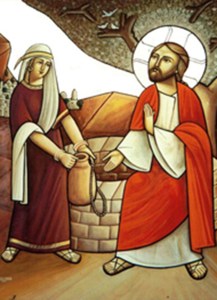
The death of Lazarus must have been overwhelming for the family. In the ancient Jewish society, man was responsible for the survival of the family. If presumably, Lazarus was the only bread winner, Martha and Mary would have a serious problem in surviving in that troubled and difficult times. But, more than any economic difficulty, a loss of a family member due to sickness and death had always crushed the entire family. Not only Martha and Mary were uncertain of their future, they also had to endure the terrible pain of losing someone they loved dearly, a brother with whom they shared a lot of good memories, and a friend to whom they could trust and rely on. Anyone of us who has lost a beloved family member can easily commensurate with Martha and Family.

When Jesus saw Martha and Mary were grieving and weeping, Jesus was groaned and was troubled. And when He saw the tomb, He began to shed tears as well. He did not pretend that He was Ok, or He did not appear as if nothing happened. He got affected by the overwhelming emotion and suffering, and He wept. We see today Jesus who is truly human and becomes one with our humanity with its all pains, sufferings, and grief. The revelation is that before Jesus does any miracle or sign, He first becomes part of our sorrow, our humanity. This very consoling.

We are living at a time where success and happiness are the determinants of a fulfilled life. No wonder, the books or seminars on ‘positive thinking’, ‘greatness’, ‘self-help’ or ‘success’ are mushrooming. Even we and some other churches follow suit and preach the ‘Gospel of Prosperity’. I guess there is nothing wrong with being successful and rich, all are a blessing of God. It becomes problematic when we tend to focus on the happy only emotions and suppress ‘negative’ emotions by reciting ‘positive thinking mantra’ or attending praise and worship. In the face of sufferings, failures, and loss of someone we love or we are crushed by burden of life, it is but natural to feel sorrow. Many psychologists would agree that suppression of this feeling will do more harm than good. In the animation film ‘Inside Out’, life of Riley, the main protagonist, turns to be a little mess when Sadness is pushed aside, and Joy is always at the helm. But, when Joy gives away to Sadness, things begin to fall in their places. God created Sadness also, and it is for a good purpose.

Certainly Jesus does not teach us to be melancholic, nor to dwell in our grief for eternity. He teaches us what it means to be fully and truly human, with all love, joy, sorrow, hope, fear, and anger. Our faith tells us that Jesus is not only fully divine, but also fully human, and this means that when we strive to know Jesus, not only we know more about God, but also about humanity. The more we love Jesus, the more we become truly human.

Br. Valentinus Bayuhadi Ruseno, OP


Jesus and the Samaritan Woman

Third Sunday of Lent. John 4:5-42 [March 19, 2017]

“Many of the Samaritans of that town began to believe in him because of the word of the woman (Jn 4:39)”

samaritan-woman-at-the-wellMany of us will see Jesus’ conversation with the Samaritan woman as something ordinary, a chat between a man and a woman. But, if we go back to the time of Jesus, we will discover it as unthinkable. This Samaritan woman embodied what the Jews hated most. Firstly, despite their common ancestry, the Samaritans and the Jews were excommunicating each other. Despite worshipping the same God, they condemned one another as religious heretics and they proclaimed their own religion as the true one. No wonder, sometimes, the encounter between the two turned violent and the Romans had to quell the riots.
Secondly, this Samaritan is a woman. The ancient Jewish society, just like many ancient cultures, placed women as second class citizens. They were treated as objects, either owned by the patriarch or the husband. They could be easily divorced by their husbands if they could not bear a child. Despite some outstanding and exceptional women due to their noble birth and wealth, women generally were discriminated from the public and religious sphere. Many could neither study the Torah nor have a voice of their own. No wonder, many Jews praised the Lord because they were born not as a woman!

However, in today’s Gospel, Jesus talked to a Samaritan woman. Not only talking, He asked for water. Not only did he asked for water, He revealed Himself for the first time as the Living Water as well as the Messiah. The conversation transformed her.  While many Jews refused to believe in Jesus, the Samaritan woman believed. Not only did she become a believer, she turned to be a preacher of faith. She spread the Good News to her townsfolk and they came to Jesus because of her. The Gospel of John narrates to us that even a Samaritan and a woman can be chosen by Jesus to be His preacher. The effects of her preaching were unprecedented. The Samaritans began to make peace with other Jews, the disciples who also believe in Jesus.

We are living in a better world. Women can enjoy the same rights that men enjoy almost in all aspects. Indonesia, a country with the largest Muslim population in the world, used to have a woman president. In the Philippines, many major positions are occupied by women, like Chief Justice, Senators, and even military general. Yet, still many women are subject to various forms of exploitation: human trafficking, prostitution, domestic violence, and abuses. Following Jesus means standing up against injustice against women.

The Gospel also points out to us that women are capable of preaching the faith. Surely, women cannot preach in the pulpit, but many of them are responsible for faith growth in many Christ-centered communities. I still remember how my mother taught me the basic prayers and the rosary. She also encouraged me as an altar server to love the Eucharist. In Indonesia, it is a practice in many parishes for priests to receive their daily meals from the people, and many women are doing their best to provide for the priests. Some religious sisters and lay women have contributed to my philosophical and theological formation, and they were great professors. Over and above these, many women have generously supported the Church and her Evangelization mission, through their resources, time, effort and prayer. From the depth of our hearts, we thank them.

Br. Valentinus Bayuhadi Ruseno, OP

The God of Transfiguration

Second Sunday of Lent (Year A). March 12, 2017 [Matthew 17:1-9]

“They were coming down from the mountain… (Mat 17:9)”

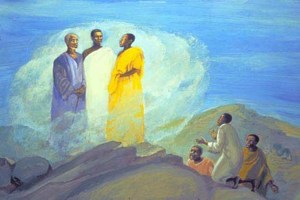
transfiguration-jesusmafa-438In the Bible, the mountain is the place where God meets His people. On Mount Horeb, Moses saw the burning bush and received his calling to lead Israel out of Egypt’s slavery (see Exo 3). On Mount Sinai, after the liberation of the Hebrews, Moses met the Lord and received the Law in the Mount Sinai (see Exo 19). Again on Mount Horeb, Elijah discovered the gentle presence of God (1 Kings 19:11-15).

Psalmists also considered the mountain as the Lord’s dwelling place (like Psa 3:5; 24:3). In fact, one of the titles of the Lord is El Shaddai, and one of its probable meaning is: the Lord, the strong mountain (Gen 17:1).

In today’s Gospel, Jesus led the three disciples up to the high mountain. There, he was transfigured. His face was shining like a sun and his cloth turned to be white as light. Then two great figures of Old Testament, Moses and Elijah appeared and conversed with Jesus. Finally, the bright cloud covered them and a voice was heard, “This is my beloved Son, with whom I am well pleased; listen to him.” The disciples were so terrified and overwhelmed. Turning back to the ordinary form, Jesus touched them and assured them, “Rise and do not be afraid.” Then they went down from the mountain and continued their journey to Jerusalem.

The Old Testament motif takes place once again in the New Testament, but looking closely, there are several striking differences. Firstly, people climb the Mountain to see God, but when the disciples were there, they saw Jesus transfigured instead. The episode becomes an early sign of Jesus’ divinity in the New Testament. Secondly, Moses and Elijah were representing the best of Old Testament: the Law and the Prophet. Yet, Moses and Elijah were also the very characters that encountered God on the mountain. They reappeared in the transfiguration because they wanted to tell us that Jesus was the God they had encountered in the mountains. Thirdly, Jesus did not stay forever on the mountain, but He went down and continued His life among His disciples and other Israelites. This is a life-changing revelation: our God does not stay and sit nicely on the high mountain, but He goes down and is staying with us, in our ordinariness of life.

Sometimes we are expecting to encounter the glorious God only on the high mountain. For some feel God in the charismatic worship meetings. Others encounter God in the great retreats and long recollections. Nothing’s wrong with these noble devotions and religious practices. Yet, the danger is that we begin to dichotomize the religious life that is limited to the church or rituals and our daily lives outside the church. We must not forget the point of transfiguration that our God is also dwelling among us. Jesus is with us in our family and our efforts in raising our children. The Lord is present in our workplaces as we toil for our daily bread. He embraces us in the moment of trials and pains. He is never far, and we are never alone. And He is our God.

 Br. Valentinus Bayuhadi Ruseno, OP

Why Temptation?

First Sunday of Lent (Year A). March 5, 2017 [Matthew 4:1-11]

“Then Jesus was led by the Spirit into the desert to be tempted by the devil. (Mat 4:1)”

jesus-temptation-2The reality of temptation has taken place even since the dawn of time. In the book of Genesis, we read that our first parents were tempted by the serpent and unfortunately, they were tricked, fell and sinned. Then one after another a biblical character was put into temptation and fell. Cain committed the first murder and fratricide. David was involved in adultery. Solomon worshipped and built temples for other pagan gods. Fortunately, not all fell during the time of trials. Job was pounded by all kinds of woes, but he never sinned and in fact, praised the Lord in the most miserable situation. And we have Jesus who triumphed over Satan and his temptations in the desert. Yet, why are we tempted? Why are we susceptible to this reality that lures us to sin?

The book of Genesis narrates to us that we were created on the sixth day (see Gen 1:24ff). We were the summit of creation as we were made in the image of God. Yet, the Bible says that we were not alone on the sixth day. God also fashioned the animals in this day. We were situated between the animals and the image of God. This is a symbolic narrative that we have both the animal side and the spiritual side. Yet, I am not saying that animals are bad. The animal-lovers will rally against me! This means we share what are common to animals: our physical body, emotions, and instinct. A Greek Philosopher, Aristotle correctly defined human being as ‘rational animal’. The purpose of creation is that we nurture all our humanity, both physical and spiritual, so that we may enter into the rest with God on the seventh day.

Unfortunately, that is not the end of the story. The evil forces also will not let us enter God’s rest effortlessly. They will continue to feed the ‘animal’ in us to the point that our spiritual aspect is neglected and overcome. The temptation is an attempt by the Satan and his cohorts to drag us way below the situation of an animal.

In the Gospel, we learn that Satan tempted Jesus to use His divine power to produce bread; to wield his might to amaze the crowd and draw praise to Himself; to submit to Satan so that He receives all glory and honor. Satan was tempting Jesus to yield to His physical, emotional and psychological needs by manipulating His spiritual power. As Satan did to Jesus, he will do to us. We all need food, security, and recognition, and the devil and his army will make sure that we will sacrifice our spiritual identity for these basic needs.

How to counter temptation? Jesus gives us the answer: the Word of God. We need to continue to feed our spiritual life with His Word. I am elated that more and more people, even the laity, study the Sacred Scriptures. Yet, we should be cautious as well since Satan also uses the Bible to deceive us and achieve his end. Thus, Lenten season calls us to intensify our efforts to study the Word of God together and within the Church. In Jesus, the Word of God, we shake off the devil and all his works.

Br. Valentinus Bayuhadi Ruseno, OP

Mammon

8th Sunday in Ordinary Time (Year A). February 26, 2017 [Matthew 6:24-34]

 “You cannot serve God and mammon (Mat 6:24)”

liberationMammon in Aramaic, the native language of Jesus, means riches, money or even properties. And nobody can serve both the true God and Mammon. In original Greek, Mathhew chose a stronger word than “to serve” Mammon, but it is to ‘become slave’ of Mammon. A slave is someone who no longer possesses freedom of his or her own; the lives are dependent on their master’s whim. Interesting to note is that the Mammon is not even a living being, and yet, people are freely laying their freedom to be its slave. It is irrational and in fact, unthinkable, but the reality narrates countless stories of people being possessed by riches and do inhuman things.

It is not an uncommon story that in many nations government officials are involved in large-scale corruptions, while ordinary citizens have to break their bones working and paying taxes. In Brazil, the Philippines and other countries, small farmers are violently evicted from their homes and lands by the greedy landowners. The grim reality of human trafficking is covert yet enormous. The children and women are abducted and traded as commodities, used as drug mules or sex objects. While others face immediate death as their bodily organs are harvested and sold in black market. Our beautiful forest and mountains are destroyed because of massive illegal logging and mining. This leads to nothing but ecological destruction, the animals are endangered, the rivers and seas become giant dumped sites of toxic waste, and our land is sorely barren and dead.

The mammon-worship does not only take place outside our fence, but without realizing it, it also plagues our own house and families. Who among us are addicted to work and begin to sideline our responsibilities in the family and neglect our health? Who among us start to think that giving money to our children is enough for their growth? Sometimes, the clergy and the religious are caught in the same mentality. We do our ministry as if there will be no tomorrow. We begin putting aside the basics like prayers, study, and community.

St. Thomas Aquinas makes it clear that riches and money cannot satisfy our deepest longing. He argues that wealth’s purpose is to meet our temporal human needs, but never to fulfill our spiritual and supreme desire. The real problem happens when we mistakenly accept riches as the fulfillment of our infinite desire for the infinite God. We make Mammon a god. We dethrone the true God and all serious problems start flooding in.

Jesus calls us to once again go back to true God. Other forms of gods, like wealth, money, gadgets, properties, cars, sex, prestige, works only drag us into slavery and misery. Just like the Hebrews in Egypt, only when they followed Yahweh, were they liberated from the slavery and marched toward the Promised Land. Yet, it was not easy. Like the Israelites who wanted to go back to Egypt after some time in the desert, we also cling to our Mammon firmly. It took 40 years for Israelites to struggle with their faithfulness to God, and perhaps we need years to before we rediscover the true God in your lives. Difficult indeed, yet, it is necessary because only God can bring us true happiness and liberation. We are liberated from the illusion of self-sufficiency, from the excessive ego-centrism. Not only we are freed, but also our family and our society, our environment and our earth. Want to make our world a better place? Let God be your God!

 Br. Valentinus Bayuhadi Ruseno, OP