


14th Sunday in Ordinary Time. July 3, 2016 [Luke 10:1-12, 17-20]
“Into whatever house you enter, first say, ‘Peace to this household (Luk 10:5).”
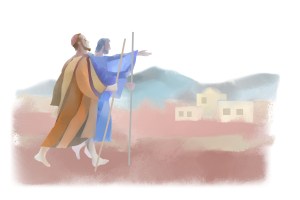 The life of Jesus’ disciples is difficult. It is all the more difficult because we are sent to preach peace. Nothing is harder to sell than peace. In the world intoxicated with fundamental ideologies and narrow-mindedness, violence has become daily food. In Syria and Iraq, the war seems far from an end, and every day, it claims countless of innocent lives. Suicide bombings and shooting rampage insanely become common occurrences. Just recently, some unidentified individuals detonated themselves inside a busy airport in Istanbul, Turkey, killing more than 40 people and injuring countless others. Few weeks back, a heavily armed guy opened fire inside a gay bar in Orlando, US, and murdered more 50 persons. It was the worst case in the US history.
Violence breeds violence. Fear of violence even fuels more violence. A couple days ago, I was able to have conversation with Prof. Steven Friesen from the University of Texas. We discussed a lot of things, but one thing that caught my attention was how fear has influenced many Americans. The law has been passed that now a student may carry a gun inside the campus and the classroom. Prof. Friesen could not find the logic in it. The students are not allowed to smoke inside the school, but they are permitted to bring a fire arm!
Sadly, the culture of violence is not far from us. It is in our daily midst. Physical violence is the most obvious one, but not the only one. Violence can take forms of bullying, verbal abuses, sexual harassment, discrimination and even indifference. Violence may happen in our workplace and our own house. We may do violence to our friends, family members and even our environment. The grimmer part is that often, we are not aware of doing this. Giving recollections and retreats to the youth, I am privileged to listen to their personal stories. It is saddening that some of these kids turn to be victims of domestic violence. Their intellectual and emotional growth was hampered, and they bear the traumatic experience for the entire of their lives. My fear is that they will embody their suppressed anger and hatred inside and turn to be the perpetrators of violence themselves.
We are the Disciples of Christ. This means we are sent to preach peace. We may join the anti-violence movement in our society. I myself supporting our bishops’ call to end vigilantism and uphold rule of law in the Philippine nation that has increasingly turned bloody in his fight against illegal drugs and crime. Yet, the best place to preach peace is within ourselves. We examine our own lives and we may be surprised with little violence we do every day. To preach peace means to stop doing subtle violence, to ask forgiveness, and to repair the damages. I have to admit that sometimes, I committed violence myself. Involved in the teaching and formation ministry, at times, I need to push people to their limit. Yet, instead helping them, I hurt them.
It is true preaching peace is difficult. At times, in promoting peace, we receive violence. At times, we are discouraged by the result. At times, despite our good effort, we do violence even to our beloved ones. Yet, we must not back down. Without preaching peace, we shall always be part of violence. Without preaching peace, we shall never attain peace in ourselves. Without preaching peace, we stop following Christ and his way of the cross.
Br. Valentinus Bayuhadi Ruseno,m OP
 Following Jesus is difficult. In today’s Gospel, He demands that we let go three things. The first is our concern for our enemies. It seems easy to ignore those people whom we don’t like, but in reality, they consume our attention and energy. My friend shared to me how he was bullied at his officemates, and this drained so much of his productivity and focus in work. Often, like James and John, our anger moves to seek revenge and even violence. “Lord, do you want us to call down fire from heaven to consume them (the Samaritans who rejected them)?” Yet, Jesus reminds us to leave these behind.
 What will be your answer to Jesus’ question “Who do you say that I am?” We may come up with multiple answers. He is my God, my savior, my friend or my brother. But, we seldom ask, “Do we really understand Jesus’ question? Do we get the right answer? Why is it that Peter would confess that Jesus is Christ of God in the first place?
 Apa yang akan menjadi jawaban kita saat Yesus bertanya “Menurut kamu, siapakah Aku ini?” Kita mungkin menjawab: Dia adalah Tuhan, Juruselamat, sahabat atau saudara. Tapi, apakah kita sudah mengerti dengan baik pertanyaan Yesus? Apakah jawaban kita inilah yang Yesus harapkan? Mengapa jawaban Petrus adalah Kristus dan bukan jawaban lainnya?
 Luke has a keen eye for the roles of woman in the life of Jesus and the Church. From the beginning of his Gospel to the end, he made sure that women have important role to play. Among the four Gospels, only Matthew and Luke wrote the infancy narrative. While Matthew had Joseph as the main character, Luke chose Mary as his protagonist. Thanks to Luke, we are able to mediate on the great stories of the Annunciation, the Visitation, and the Presentation. Due to Luke also, we may sing Mary’s Magnificat.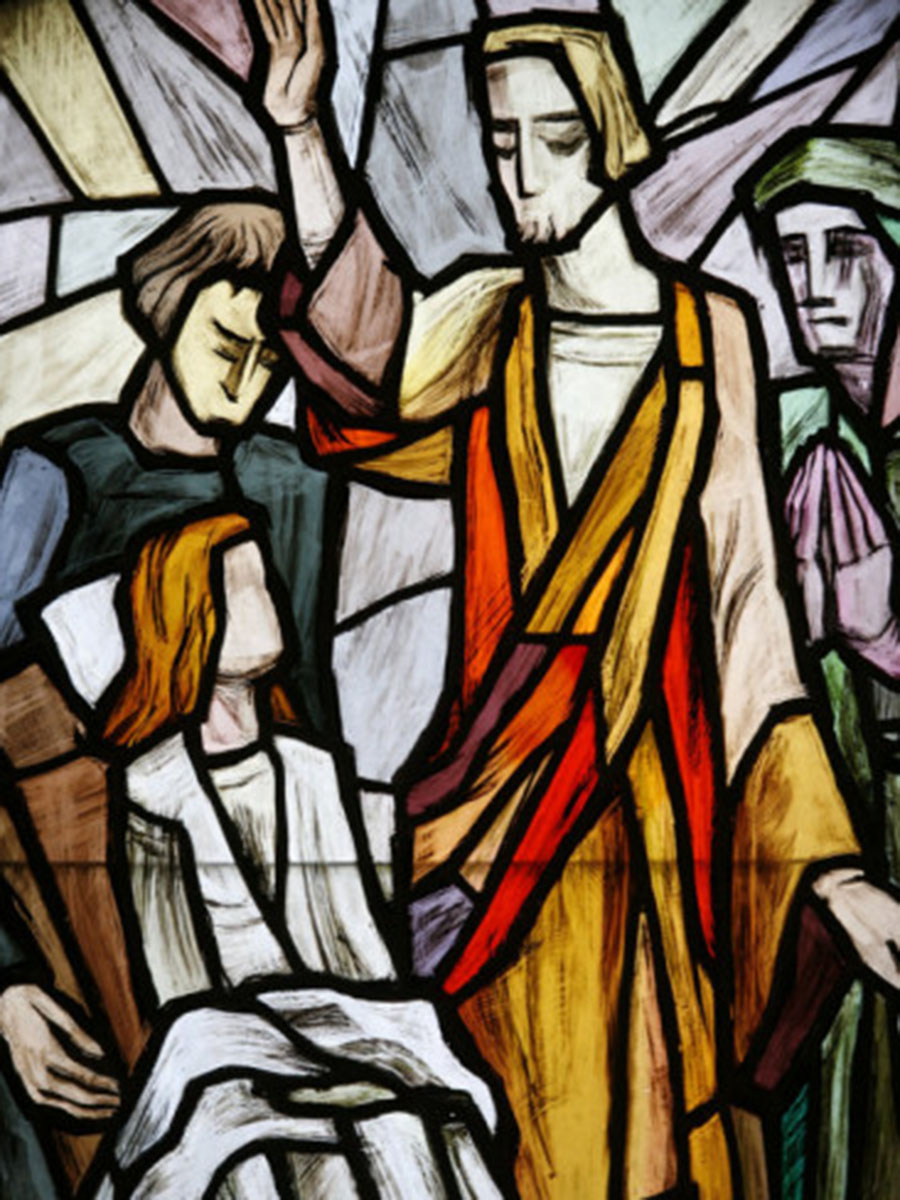
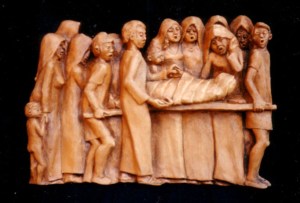 The bible seems to contain a lot of death. Almost all the characters in the Bible tasted death. Some were lucky and enjoyed peaceful end, like Abraham, David and Joshua. Yet, a lot more endured tragic one. Abel was murdered by his own brother. Moses passed away just at the doorstep of the Promised Land. James the son of Zebedee was beheaded, and countless unnamed individuals who were victims of wars, diseases and calamities. In today’s Gospel, a young man died presumably due to illness and left his widowed mother alone. The Bible time was bad period to live.
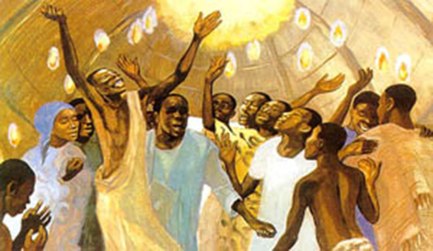 My first time to attend a Catholic Charismatic prayer meeting was around 10 years ago in Singapore. It was a gathering characterized by upbeat music and intensified prayers. As the prayer was getting intense, suddenly I witnessed some of participants began to experience kind of trance and utter unintelligible words. For a while I was dumbfounded, but soon realized that they may actually speak in tongue. This may refer to the one of the Holy Spirit’s charismatic gifts, described no less than St. Paul himself. “For one who speaks in a tongue does not speak to human beings but to God, for no one listens; he utters mysteries in spirit (1 Cor 14:2)”
 In Medio Ecclesiae