God’s Holiness

5th Sunday in Ordinary Time [C]
February 9, 2025
Isaiah 6:1-2a, 3-8

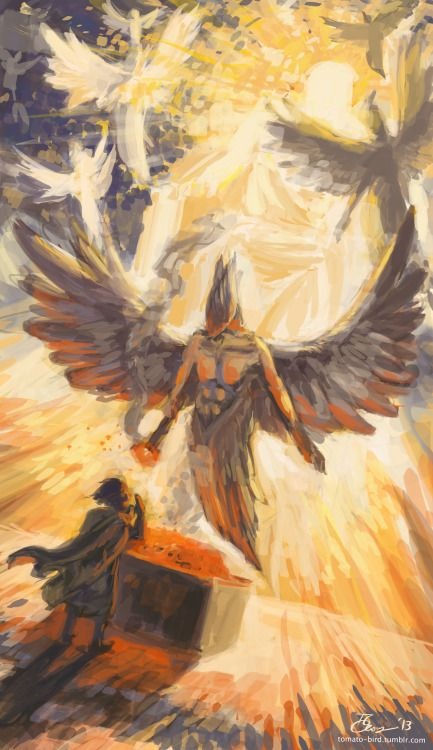
In the first reading, we encounter the story of Isaiah, who was called to be God’s prophet. Isaiah saw the heavenly Temple, where the Seraphim, the highest of angels, proclaimed: “Holy, holy, holy is the Lord of hosts!” Through the mouths of the Seraphim, the Bible reveals one of God’s most fundamental characteristics—His holiness. In another passage, God explicitly commands us: “Be holy, for I am holy” (Leviticus 19:2). But what does it mean to be holy? Why is the word repeated three times? And how can we achieve holiness?
In the Bible, the word “holy” (קָדוֹשׁ, read: kadosh) can be understood as something that belongs to God. Holy places, times, objects, and people are those set apart for the Lord. Since they belong to Him, they are separated from things that are not of God. The process of transitioning from the non-holy to the holy is often called consecration or sanctification.

But what does it mean when we say that God is holy? In Scripture, “holy” is the most frequently used word to describe the God of Israel. Often, it is repeated three times, as in Isaiah’s vision. This is a common Semitic way of expressing the superlative—in other words, saying “the holiest.” Holiness, when applied to God, means:

  1. Transcendence – God is completely different from His creation. He is perfect; we are not. He is all-powerful; we are weak. He is all-knowing; we understand only a fraction of reality.
  2. Immanence – Despite His transcendence, God is not distant. He is intimately involved in history, in our lives, and in our daily struggles. He is a God who gives life, cares for us, and loves His creation.
  3. Moral Perfection – God’s holiness also refers to His absolute justice and righteousness. Every action of His is good and just.

When God calls us to be holy as He is holy, He invites us to share in His perfection. But how can we, as imperfect beings, ever reach such a standard? At first glance, this command might seem impossible. And indeed, it is—if we rely solely on our own strength. But with God, nothing is impossible. Holiness is only achievable when we are united with Him and rely on His grace.

It is humanly impossible to love our spouse through sickness, trials, and economic hardship—but God’s grace strengthens us to love until the end. It is humanly impossible to remain faithful to one’s vocation—but with God’s grace, the impossible becomes possible. It is humanly impossible to forgive and do good to those who have hurt us—but God’s grace makes reconciliation and healing attainable.

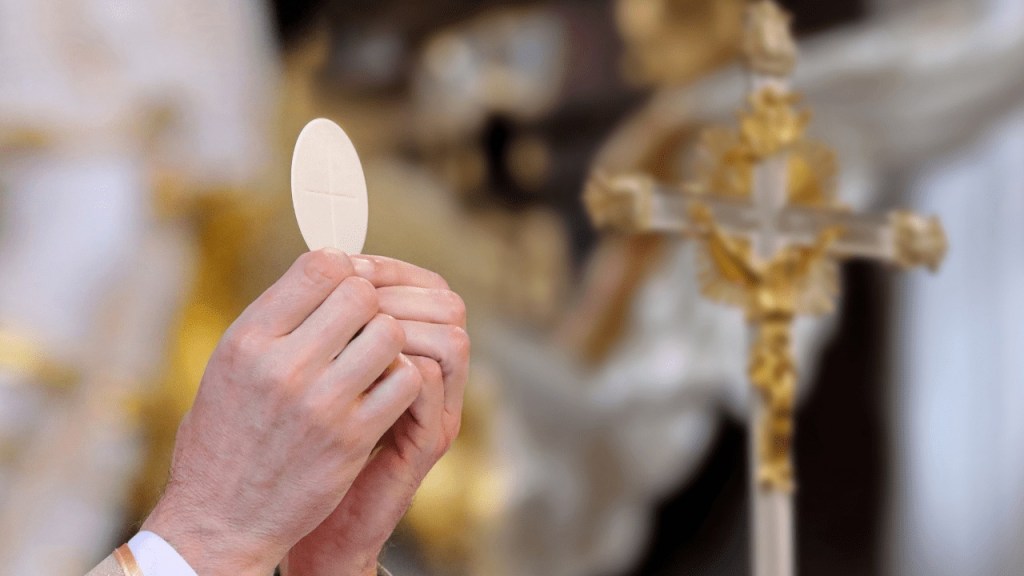
However, the life of grace is not automatic. We must do our part to allow God’s grace to transform us. This is why it is essential to: Pray faithfully, Read the Bible regularly, Participate in the Eucharist every Sunday with reverence, Go to confession frequently. These practices open our hearts to receive God’s grace, allowing us to grow in holiness. Indeed, holiness is impossible without God, but God also desires that we freely participate in His holiness.

Rome
Valentinus Bayuhadi Ruseno, OP

Reflection Questions
Do we truly desire to live a holy life? Do we freely invite God into our lives? How do we cultivate holiness in our daily routines? Have we experienced God’s grace in our lives? How?
Jesus and Mary, our Wedding Guests

Second Sunday in Ordinary Time [C}

January 19, 2025

John 2:1-12

In every wedding, we naturally expect the bridegroom and bride to take center stage. After all, it is their marriage—their happiest moment. However, the story of the wedding at Cana in Galilee offers us a different perspective, one that is often overlooked. What is it?

The wedding at Cana is not primarily about the bride and groom. Surprisingly, their names are never mentioned, and they barely feature in the story. The only time the bridegroom is mentioned is when he is praised for providing an abundant supply of high-quality wine. Instead, this Gospel account focuses on Jesus and His interaction with Mary, His mother. It reveals a deeper truth about Christian marriages that transcends the visible celebration.

The story begins with an introduction: Jesus’ mother, Jesus Himself, and His disciples are invited to the wedding. This detail carries profound significance. Whom do we invite to our wedding? Too often, we focus only on ourselves—preparing the venue, planning ceremonies and programs, selecting food, and choosing the perfect wedding attire. We become preoccupied with pleasing relatives, friends, and guests. But do we make it a priority to invite Jesus and His mother to our wedding?

Many of us might respond, “Yes! We invite Jesus to our wedding because it takes place in the Church!” Yet, is Jesus truly present in our hearts? For some, the wedding is held in a church simply because we happen to be Catholic. Others choose a church wedding for its beauty or prestige. Many attend pre-marriage catechetical courses merely out of obligation, complying with diocesan requirements to secure a church wedding. But how many of us make a conscious and heartfelt effort to truly invite Jesus to our wedding? Do we spiritually prepare for the sacrament through retreats or confession? Do we ask for His grace and guidance as we embark on this sacred journey?

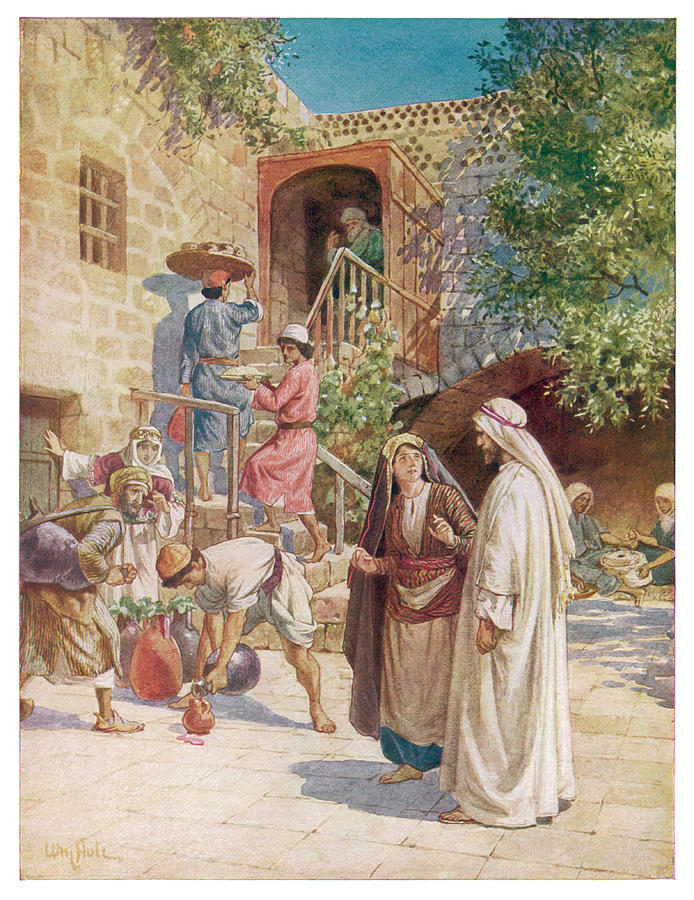
The story of the wedding at Cana also highlights Mary’s unique role. She notices the wine is running out and alerts Jesus to the problem. After a brief exchange, she instructs the servants: “Do whatever He tells you.” This leads to Jesus performing His first miracle. These events reveal Mary’s deep involvement in the wedding. She is not just an ordinary guest; she has access to the inner workings of the household and is aware of the practical needs, such as the shortage of wine. Instead of informing the bridegroom or his family, she turns to Jesus. Out of love for His mother, Jesus uses the simple resources available—water—and transforms them into the finest wine.

This truth is both profound and beautiful. If we want the “best wine” in our marriage, it is essential not only to invite Jesus and Mary to our wedding day but to welcome them into our “kitchen,” and to allow them to be involved in everyday moments of our lives. The Gospel reminds us that the best wine comes from ordinary water. In the same way, the greatest blessings in marriage often arise from simple, unseen acts of love for our spouse and children.

Rome

Valentinus Bayuhadi Ruseno, OP

Reflection Questions

Have we truly invited Jesus and Mary into our marriage, family, and daily lives? Do we recognize Jesus working miracles in our marriages? Have we entrusted our marriage and family to the care of Mary?

What is Baptism?

The Baptism of the Lord [C]

January 12, 2025

Luke 3:15–16, 21–22

Jesus began His public ministry after being baptized by John the Baptist. Similarly, we start our new lives as God’s children and begin following Jesus on His path of the cross through baptism. But what exactly is baptism, and why is it associated with the beginning of something so important?

Jewish Ritual Purity

The Greek word “βαπτίζειν” (baptizein) originally means “to dip into water” or “to wash with water.” In the Old Testament, particularly in the Septuagint (the Greek translation of the Old Testament), βαπτίζειν refers to the rite of purification (e.g., Judith 12:7). What is this rite of purification in the Old Testament? To understand it, we need to recognize that ancient Israel adhered to the concept of ritual purity or cleanliness.

Although not strictly moral in nature, the purity laws were integral to the Torah. These laws determined whether a Jew was ritually clean or unclean. When Jews were considered “pure,” they could enter holy places like the Temple in Jerusalem to offer sacrifices. Offering sacrifices enabled them to worship the Lord God and receive blessings, such as the forgiveness of sins and communion with God and fellow believers.

A Jew could become impure through physical contact with various things, such as: dead bodies, bodily discharges (e.g., menstrual blood, male semen), certain animals (e.g., pigs, camels, or specific insects), and skin diseases. If they became impure, they needed to perform a ritual cleansing, typically by washing with water (βαπτίζειν). Thus, the purity laws ensured that they approached the holy place worthily.

John’s Baptism

John the Baptist introduced a significant shift. His baptism was no longer a ritual of purification but a symbolic gesture of repentance. For John, what mattered was not being ritually clean but living morally upright lives before the Lord. Thus, it was meaningless to undergo ritual cleansing while continuing to live in sin.

John told his followers that he baptized with water as a symbol of repentance, but someone greater than him would come to baptize with the Holy Spirit and fire. What does it mean to be baptized “in the Holy Spirit and fire”? Throughout Church history, this phrase has been interpreted in various ways: St. John Chrysostom taught that Jesus’ baptism refers to Pentecost, where the Holy Spirit descended like fire and filled Jesus’ disciples with various graces. Origen, on the other hand, argued that baptism in the Holy Spirit is for those who believe and repent, while baptism in fire is for those who refuse to believe and repent.

The Church’s Teaching on Baptism

Although interpretations differ, it is important to receive Jesus’ baptism, and Jesus baptizes us through His body, the Church. Thus, sacramental baptism performed by the Church, comes from Jesus and is essential for salvation (1 Peter 3:21). It imparts sanctifying grace upon the soul (2 Peter 1:4) and transforms us, empowering us to live as children of God. Unlike John’s baptism, which was an external sign of repentance, Jesus’ baptism—administered through His Church—truly transforms our souls and enables us to live worthily in God’s grace.

Addendum: Does Baptism Always Mean Full Immersion?

The word βαπτίζειν in the Bible does not always imply full-body immersion. For instance, in Mark 7:4–8, βαπτίζειν is used to describe ritual washing of specific body parts, such as hands, or even the washing of utensils. The Catholic Church teaches that baptism is valid whether performed by full immersion or by pouring water on the head (Catechism of the Catholic Church 1239–1240).

Rome

Valentinus Bayuhadi Ruseno, OP

Reflection and Guide Questions

Have you received Jesus’ baptism performed through His Church? Do you encourage your family members, relatives, and friends to be baptized? Are you aware of the extraordinary graces we receive through baptism? Do you live out the spirit of your baptism in daily life?

The Tale of Two Mothers

4th Sunday of Advent [C]

December 22, 2024

Luke 1:39-45

Mary and Elizabeth are two of the most powerful women in the Bible. Yet, their power does not stem from physical strength. Mary is a young and tender woman, while Elizabeth is elderly. Their immense strength lies in their unwavering commitment to follow the will of God. But what is God’s will for these remarkable women? They are called to be mothers.

Motherhood is often seen as a natural progression in a woman’s life. After marriage, it is generally expected that a woman will bear children. The female body undergoes incredible transformations to create a nurturing environment for a growing baby. These physiological changes are not only numerous but also gradual, adapting to the baby’s needs during pregnancy. The activities of the heart, lungs, kidneys, and other organs increase significantly to support both mother and child. Additionally, the body produces new hormones that affect various organs, metabolism, and psychological states. Even after giving birth, the mother’s body doesn’t immediately return to its pre-pregnancy state; instead, it continues to transform to support the newborn. For example, the body produces breast milk, carefully adjusted in quantity and nutrients to meet the baby’s needs.

Despite the marvel of these processes, the pregnancy has taken place to billions of women and this has led some to view it as merely a biological or mechanical function necessary for the survival of the species. Some people reduce the female body to a mere reproductive tool or see pregnancy as nothing more than a temporary vessel for the baby. This mechanical perspective on the body and the mother-child relationship has driven some to make extreme decisions, including terminating pregnancies. The reasons for such decisions are varied—fears of overpopulation, concerns about increasing carbon emissions, economic challenges, or simply the perceived inconvenience of having children.

This is where Mary and Elizabeth stands as our examples. Both women recognized that their pregnancies were not just biological processes. They understood the risks involved in their unique situations. Mary, though betrothed to Joseph, was pregnant without any involvement of a man. She risked being accused of adultery, a crime punishable by stoning under the law (Deuteronomy 22:22-24). Elizabeth, on the other hand, faced the physical dangers of pregnancy in old age, which could have jeopardized her life. Despite these risks, both women embraced their roles as mothers. Why? Because they believed that motherhood was God’s will for them—a holy vocation. They trusted that the God who called them to this sacred mission would also sustain and provide for them.

Holiness is the key to true happiness. This is why the meeting between Mary and Elizabeth is marked by joy rather than fear or anxiety. In today’s world, where having children is often viewed as a burden rather than a blessing, an act of faith, or a source of joy, Mary and Elizabeth serve as beacons of hope. Their courage and faith inspire us to see motherhood as a divine calling and a profound source of happiness.

Rome

Valentinus Bayuhadi Ruseno, OP

Questions for Reflection:

  1. How do we perceive pregnancy? Is it merely a biological process, a socio-cultural event, an economic burden, or a divine calling to holiness?
  2. For mothers: How do you view your children? How do you nurture them and guide them in their journey through life?
  3. For men: What roles do you play in supporting pregnant mothers or mothers caring for their babies?

Rejoice, But Why?

3rd Sunday of Advent [B]

December 15, 2024

Luke 3:10-18

We are now in the third Sunday of Advent, also known as the Gaudete Sunday. “Gaudete” is a Latin word meaning “Rejoice!” This name comes from the introit or the opening antiphon of the Mass, taken from Phil 4:4-5, “Rejoice in the Lord always; again I will say, Rejoice. Let your gentleness be known to everyone. The Lord is at hand!” Yet, why should we rejoice in this season of Advent?

The coming of the Lord is, at its heart, a cause for great joy. On the first Sunday of Advent, we heard about the terrifying events surrounding the second coming of Jesus at the end of time, “the powers of heaven will be shaken (Luk 21:26).” Yet, this fear is only those who do not love Jesus, those who are afraid of His judgment. For those who love Jesus and live according to His commandments, His coming is a reason to rejoice, for we are confident that we will be with Him.

But why do we experience profound joy when we are with Jesus? Think about our relationship with those we love. When we love someone, we desire to be close and share time together. This bond brings us joy and peace. When we love our children, we desire to be together with them and spend time with them. The experience brings joy in our hearts. It is the same with Jesus. If we truly love Jesus, we long to be united with Him, and when we embrace Jesus, we receive the joy that our hearts desire. The more deeply we love Jesus, the deeper the joy we experience when He comes.

However, the opposite is also true. If we do not love Jesus as we should, or even we hate Jesus, then we will not rejoice at His coming. Instead, we fear His coming. But what does it mean to “hate” Jesus? It can be more subtle than we think.

  • Forsaking Jesus: We “hate” Jesus when we abandon Him or no longer trust in Him.
  • Loving other things more: We “hate” Jesus also when we prioritize other things like wealth, popularity, and pleasures more than Jesus.
  • Excessive self-love: Perhaps, most subtly, we “hate” Jesus when we love ourselves excessively and inordinately. The center of our lives is nothing but ourselves, in other words, being narcissistic. We need to be very careful with this inordinate love for ourselves because we may not be conscious about it. We are always going to the Church or active in many parish’s organizations, but the real motivation is that we can be seen by others as pious man or woman.

We rejoice because we love Jesus. Jesus understands how painful it is to be far from one we love dearly. Thus, He comes to us through His Word and in the Eucharist. While this is not a perfect union, it is enough for us to rejoice in the Lord.

Questions for reflection:

Do we love Jesus above all else? How do we love Jesus in our context as parents, spouses, children, professional, or students? What do we love ourselves more than Jesus? Do we teach other to love Jesus?

Why John the Baptist?

Second Sunday of Advent [C]

December 8, 2024

Luke 3:1-6

On the second Sunday of Advent, the Church presents St. John the Baptist as a model for preparing the way for Jesus. But why is John always chosen as the example? The answer lies in the fact that John is one of the most significant figures in the Bible, exemplifying how we should prepare for the coming of Christ. Especially in the Gospel of Luke, we see that John precedes Jesus and prepares His way in three important stages. So, what are these three stages?

1) Through John’s Birth. John was the son of Zechariah, a priest, and Elizabeth. Since Elizabeth and Mary of Nazareth were relatives, this makes John and Jesus family. In Luke’s account, John’s birth is portrayed as an answer to his parents’ prayers. His birth is a miracle, as it occurred when Zechariah and Elizabeth were old and considered barren. This miraculous birth prefigures an even greater one—the birth of Jesus. While John was conceived despite his parents’ old age, Jesus was conceived without the involvement of any man. John’s birth fulfils God’s promises in the Old Testament (such as to Abraham and Sarah, Gen 17-18; Elkanah and Hannah, 1 Sam 1:1-20), while the birth of Jesus inaugurates the New Testament era.

2) Through John’s Preaching. Today’s Gospel speaks of John preaching a baptism of repentance for the forgiveness of sins (Luke 3:3). This fulfills the prophecy of Isaiah, which foretold that a great prophet would prepare the way for the Lord (Isaiah 40:3). John teaches that the best way to prepare for the coming of the Lord is through repentance. Without repentance, our Advent and Christmas celebrations will be shallow. There’s little meaning in decorating our homes or enjoying festive meals with loved ones if we do not first seek to reform our lives.

3) Through John’s Death. John’s death comes at the hands of Herod’s executioners. He had condemned Herod, the ruler of Galilee, for living in sin—taking his brother’s wife and divorcing his own wife. This angered Herod and his wife. When the opportunity arose, Herod, to please his wife, ordered John’s execution (Luke 9:7-9; Mark 6:14-29; Matthew 14:1-12). John was beheaded because he faithfully preached the truth, calling for repentance. Jesus, too, would eventually be crucified for preaching the truth of the Gospel and calling the Jewish leaders in Jerusalem to repentance. The lesson is not just about how John died, but about how he lived—faithfully preaching the truth, even at the cost of his life. We are also invited not only to reform our own lives but to encourage others to repent, even in the face of rejection.

John is Jesus’ predecessor—in his birth, his preaching, and his death. Through his entire life, John prepared the way for Jesus. This is why John is one of the best models in the Bible for us to follow during this season of Advent.

Rome

Valentinus Bayuhadi Ruseno, OP

Reflection Questions:

  • Inspired by John the Baptist, how will you prepare yourself this Advent?
  • What lessons can you draw from John’s example?
  • Like John, are you willing to invite your family, relatives, and friends to repentance and help bring them closer to Jesus?

Advent: Are We Ready?

1st Sunday of Advent [C]

December 1, 2024

Luke 21:25–28, 34–36

The first Sunday of Advent marks the beginning of the new liturgical year of the Church. Advent, which means “the arrival,” is a time to prepare for the coming of Christ, both His first coming in Bethlehem, over 2000 years ago, and His second coming at the end of time. Basically, through this season, the Church teaches us to wait. Yet, how do we prepare ourselves to wait for Christ?

There are three key steps in this preparation:

First. Knowing who is coming. The most basic thing to prepare the arrival of someone is to know who they are. The preparation we make to welcome a close friend into our home is vastly different from the preparation to welcome a country’s president. The person coming will dictate overall planning, the resources needed, and the level of effort involved. The more important the person, the greater resources we commit. Advent reminds us that the one who is coming is Jesus! If Jesus is God, then all our lives, time, strength, and hearts are devoted to welcome Him.

Second. Knowing the reason of the coming. The nature of our preparations also depends on the reason of the visit. If a friend comes to borrow a book, we simply make the book available. But if a relative from another town is visiting for several days, we prepare the space for her stay, buy or cook necessary food, and ensure everything she may need. Advent teaches us that Jesus comes at the end of time to bring final judgement. He will be just both to the righteous and the wicked. Surely, we do not want to be numbered among evil-doers. So, our preparation is to become a righteous by faithfully doing what is pleasing to Him.

Third. Knowing the time of the coming. The timing of arrival also shapes our preparations. A mother who knows the expected date of her child’s birth can plan accordingly. Parents who are expecting the arrival of their daughter after study abroad, will go to the airport ahead of time, and perhaps bringing small, lovely gifts. However, Advent tells us a different story. While the Bible assures us that Jesus surely will come, it also makes clear that we are not to know when Jesus comes. Therefore, we must live as though Jesus is coming at any moment. Every second of our lives is an opportunity to make ourselves ready to stand before Him.

Advent season is rightly called as the time of expectation. Through this season, the Church teaches us how to expect Jesus’ coming in our lives.

Rome

Valentinus Bayuhadi Ruseno, OP

One crucial element in our preparation is the Eucharist. The Mass is often referred to as “Jesus’ third coming”.  Jesus is present sacramentally, and the way we approach the Mass is most likely how we will face Jesus in the final judgement. Do we receive Jesus worthily in the Eucharist? What kind spiritual preparation we do before we go the mass? Do we approach Jesus in the Eucharist with eagerness and devotion or do we feel lazy and uninspired?

Jesus, Our King

Solemnity of Christ the King [B]

November 24, 2024

John 18:33b-37

In today’s world, the concept of kingship might feel weird and even obsolete. Many of us live in democratic societies, where we elect persons we like to be our leaders and choose someone else when we feel they are no longer fit for the office. We value our freedom and ensure our leaders will not take our freedom. The pomp and grandeur of royalty—palaces, castles, robes, and noble ceremonies—are often viewed as relics of the past. Yet, as Christians, we are called to reflect on and embrace the kingship of Jesus. How can we truly appreciate Jesus’ identity as our King?

First, Jesus, the King who serves. Yes, Jesus is King, but unlike any other. Gabriel, the archangel, announced his royal birth, “He will reign over the house of Jacob forever, and of his kingdom there will be no end (Luk 1:33).” Yet, Jesus revealed how He was going to be a king, “For the Son of Man came not to be served but to serve, and to give his life a ransom for many (Mar 10:45).” Here, the roles are reversed. Instead of demanding service from His subjects, Jesus serves His people with unparalleled humility. His ultimate act of service was offering Himself on the cross for our salvation. Even now, as the risen King in heaven, Jesus continues to serve by interceding for us before the Father (Heb 7:25).

Second, Jesus, the King of the universe. Though Jesus was born as a Jew and prophesied as the Messiah of Israel, His dominion is universal. After His resurrection, Jesus told His disciples, “All authority in heaven and earth has been given to me. (Mat 28:18)” Jesus is not only King of all men but also of all things. From the biggest stars to the smallest sub-atomic particle and even realities that modern science has yet to discover, all are within His governance and providence. Not only visible realities but also invisible beings are under Jesus. Then again, since Jesus’ kingship is about service, Jesus also serves all things by sustaining their existence, otherwise, all things will collapse to nothingness.

Third, Jesus is our King. Jesus’ kingship is not distant or abstract—it is deeply personal. As the King of all creation, He governs everything for our good because He knows and loves each of us dearly. The intricate design of the universe, from the laws of physics to the fine-tuned conditions that allow life on earth, reflects His loving care. Our bodies, composed of countless atoms and cells, are held together under His command. The visible cosmos and even spiritual beings are under His commands to protect and lead us to true happiness.

While we are often consumed with our daily concerns, the King is taking care of us through His governance of the universe, both visible and invisible. His kingship is nothing but love, service and care.

Rome

Valentinus Bayuhadi Ruseno, OP

Questions for reflections:

What is your concept of a king? Do you see Jesus as a king? What kind of King? Or, are you more comfortable with other titles of Jesus, such as the good shepherd? Do we follow Jesus our King? How do we serve our King? Do we obey Him, or do we rebel against Him? Do we also care for other creations because they serve the same King as us? Do we thank the angels for guarding us?

We and the Saints

33rd Sunday in Ordinary Time [B]
November 17, 2024
Mark 13:24-32

When someone asks if we want to go to heaven, we quickly say, “Yes!” But if asked if we want to become saints, our enthusiasm often fades. This is surprising because everyone in heaven is a saint. To be a saint means to be in heaven. So why do we separate the idea of heaven from being a saint?

At least, there are three reasons:

  1. Misunderstanding the Catholic Faith: Some of us may not fully understand our faith. We might think there are two groups in heaven: well-known saints like the Blessed Mother, St. Joseph, St. Dominic, and St. Francis, and a second group of non-saints. We assume saints are only those who have been officially recognized and celebrated with feast days. But this is not true. All people in heaven are saints, even if we don’t know their names. That’s why we celebrate All Saints’ Day, honoring every person who by God’s grace has reached heaven. One of those saints could be a relative or ancestor!
  2. Thinking It’s Too Hard to Be a Saint: We read stories about saints and feel like we could never be as good as them. Saints seem perfect—extremely lovely, always praying, and some even performed miracles. And martyrs faced painful deaths for their faith. This level of holiness feels impossible for us because we are aware of our weaknesses and sins. But here’s the truth: saints didn’t become holy by their efforts alone; they depended on God’s grace. They were imperfect humans, like all of us, who allowed God’s love to transform them.
  3. Fear of Death: We might think that becoming a saint means we must die first, and we do not want to die! However, not all death is physical and biological. We need to die also to ourselves. This means letting go of worldly attachments and sinful desires.

In today’s Gospel, Jesus speaks about His return in glory and the signs that will come before it—darkened skies, a dim moon, and falling stars. This can mean the end of an era or even the end of the world. Yet, this can also tell us a deeper lesson: the world we know is temporary, destructible, and if we cling too tightly to it, we will lose everything. We need to choose: will we die to this world and live for God, or die with this world, and losing God.

We ask God to help us dying to ourselves, letting go of the world, and live more for Christ. Then, whenever Jesus comes, we will be ready to stand before Him, truly alive, just like the saints in heaven.

Rome

Valentinus B. Ruseno, OP

Questions for Reflection:

What do we think heaven is like? How do we view the saints and their roles in our lives? Do we want to become saints, or are we too attached to the world? What are the things we cling to in this life? How are we preparing for Jesus’ coming?

The Faith of the Poor Widow

32nd Sunday in Ordinary Time [B]

November 10, 2024

Gospel: Mark 12:38-44

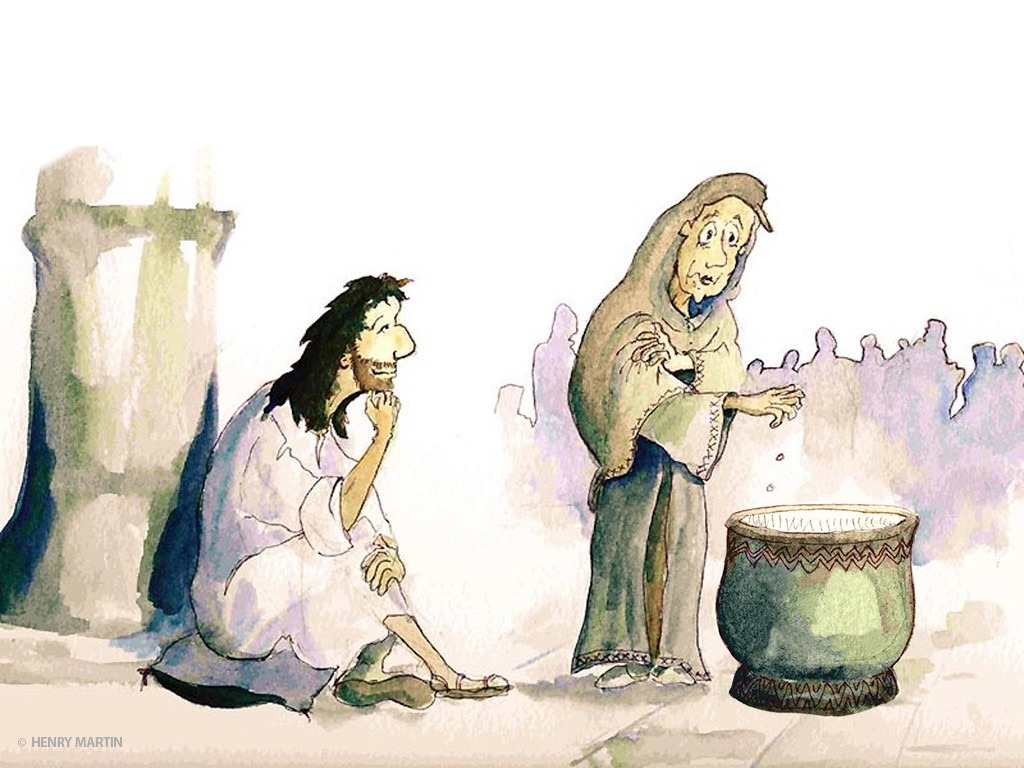
In the Gospel of Mark, Jesus commends a poor widow who gives her last two small coins to the Temple. He points out why her act is so remarkable: “Out of her poverty, she gave everything she had, all she had to live on” (Mark 12:44). Jesus admires her because, despite her extreme poverty, she displays extraordinary generosity. But there’s a deeper message here. What is it?

We need to ask, “Why is this widow poor?” In Jesus’ time, widows were among the most vulnerable, especially if they had no family to support and protect them. Because of this, God instructed the Israelites to care for widows (see Deu 14:29 and Isa 1:17). Yet, in this Gospel passage, there is a clue to why this widow has been pushed into poverty. Before praising the widow, Jesus condemns the scribes not just for seeking popularity, but for a more sinister reason, “They devour widows’ houses” (Mark 12:40).

How did the scribes take advantage of widows? There are a few possibilities:

Firstly, Abuse of Legal Authority. The scribes, experts in Jewish law, were trusted as legal advisors or trustees, especially for widows who needed help managing their affairs after their husbands’ death. Afterall, these scribes were men of God! Sadly, some of them abused this trust, using their legal knowledge to manipulate proceedings for personal gain, sometimes even committing fraud.

Secondly, Predatory Lending. Some scribes engaged in predatory lending practices. Under the guise of providing financial help, they would lend money to widows and gradually entrap them in severe debt. When the widows couldn’t repay these debts, they were forced to give up their homes and possessions, ultimately becoming destitute.

While we don’t know the exact way the widow in this story was exploited, we do know she suffered injustice. Despite this, her response is remarkable. Instead of feeling embittered or blaming God, she remains generous and devoted. Even in her suffering, she loves God with all her heart, strength, and life. Why? Because her faith rests in God Himself, not in flawed human representatives like the scribes. While people can fail or act unjustly, God does not. She believes God is watching her, and indeed, Jesus is watching her actions and recognizing her faith and sacrifice.

This story opens our eyes to harsh realities that can exist even within religious institutions. Yet, the widow’s example also teaches us how to respond to these challenges without losing our faith.

Reflection Questions:

Do we help bring people closer to God, or do we push them away? Do we use our position and knowledge to assist others or to take advantage of them? When bad things happen, do we blame God or maintain our trust in Him? Do we stand against injustice and wrongdoing within our communities and Church, or do we remain silent?

Rome

Valentinus Bayuhadi Ruseno, OP