

Sixth Sunday in Ordinary Time [B]
February 11, 2024
Mark 1:40-45
1 Cor 10:30 – 11:1
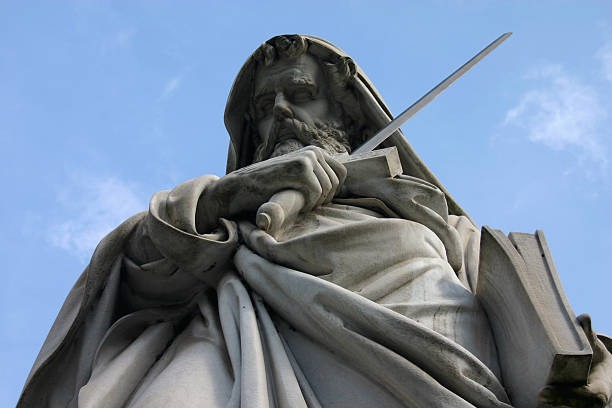
Towards the end of his letter to the Corinthians, St. Paul reminded us of two basic purposes of every disciple of Christ. The first one is, “…whatever you do, do all to the glory of God (1 Cor 10:31).” The second one is, “…in everything I do, not seeking my own advantage, but that of many, that they may be saved (1 Cor 10:33).” If we summarize these two verses, St. Paul said that in everything we do, we do for the glory of God and the salvation of others.
However, is it possible to do everything for God’s glory and others’ salvation? Many of us are busy working and occupied with many other things, and often, we just barely remember the presence of God, let alone praise and thank Him. Some of us even are struggling to attend Sunday Masses. Does it mean that we are failing in this regard?
We must remember that St. Paul did not instruct us to ‘say glory to Go’ but rather ‘do everything for God’s glory.’ It is not only about singing praise or uttering from our months “glory to God, glory to God” the whole day. But, fundamentally, it is to choose to do things pleasing to God, even the ordinary and routinary things. In our works, we give glory to God when we do honest jobs. Even as we watch something on the television or our gadgets, we can do it for God’s glory when we avoid seeing things that lead us to sins and choose to engage in what is truly beneficial. Certainly, we cannot give glory to God if we are idle or wasting our time on useless things.
The second purpose is to do everything so that others may find salvation. It is a wrong attitude if we are only focused on our salvation. Our faith is not selfish and individualistic but community-oriented and loving faith. Our salvation depends on the salvation of our neighbors, also. That is a Catholic faith, a faith for universal salvation. A man’s fundamental mission is to bring his wife closer to God. Parents’ salvation hinges on the growth of their children’s holiness.
But are we responsible for the salvation of all? Yes, we are called to preach the Gospel to all, but we are mainly responsible for those close to us, like family or community members. Yet, St. Paul also made a clear message, “Give no offense to Jews or to Greeks or to the church of God (1 Cor 10:32).” Though we are not actively responsible for the salvation of all, we are expected not to cause harms or scandals that may push people away from God. We are always witnesses and disciples of Christ in the world.
Lastly, these two basic missions instructed by St. Paul are the concretization of the most fundamental laws taught by Jesus: to love God and to love our neighbors (see Mat 22:37-38). In everything we do, we do it for the glory of God and the salvation of souls.
Rome
Valentinus Bayuhadi Ruseno, OP

 Leprosy in the time of Jesus is not only physically and mentally deadly, but also spiritually incapacitating. Leprosy or currently known as the Hansen’s disease is horrifying sickness because it does not kill the person slowly, but it gradually deforms and incapacitates the person. The bacteria cause terrible damage in peripheral nervous to the point that the person is no longer feeling the sensation, especially pain. Without this sensation, the person fails to recognize and avoid bodily injuries. Losing limbs is shared among the victims with advanced stages of leprosy.
 Yesus melakukan pengusiran setan atau eksorsisme pertama-Nya dalam Injil Markus. Membaca konteksnya, kita menemukan bahwa Yesus sedang mengajar di sinagoga dan orang-orang mengenali Dia mengajar dengan otoritas. Ketika Yesus mengajar dengan otoritas, ini tidak hanya berarti Dia berkhotbah dengan kefasihan dan krisma, tetapi ajaran-Nya dimanifestasikan dalam tanda-tanda yang nyata dan menakjubkan, seperti penyembuhan dan pengusiran setan.
 Christmas is fast approaching, and the Church is inviting us to reflect on the story of the Annunciation. Allow me to once more focus on the Blessed Virgin’s Fiat. To appreciate her answer to God’s will and plan, we need to see at least two things. Firstly, it is her historical and social context. Secondly, it is the language analysis of her response.
 Natal semakin dekat dan Gereja mengundang kita sekali lagi untuk merenungkan kisah Kabar Sukacita. Izinkan saya untuk sekali lagi fokus pada “Fiat” atau jawaban Ya Perawan Maria [Fiat sendiri berasal dari bahasa Latin, artinya “terjadilah”]. Untuk mengerti lebih dalam jawaban Maria atas kehendak dan rencana Tuhan, kita perlu melihat setidaknya dua hal. Pertama, konteks sejarah dan sosialnya, dan kedua adalah analisis bahasa dari tanggapan Maria.
 The original meaning of talent is not God’s given ability, but a unit of weight and value, normally gold and silver. More importantly, talent is a huge amount of money. One talent is equal to around six thousand denarii. If one denarius is the wage of ordinary daily labor, one talent means six thousand days of works or approximately seventeen to twenty years of work.
 Sejatinya talenta bukanlah bakat atau kemampuan yang diberikan Tuhan, tetapi sebuah unit bobot dan nilai, biasanya dari emas dan perak. Mudahnya, talenta adalah jumlah uang yang sangat besar. Satu talenta setara dengan sekitar enam ribu dinar. Jika satu dinar adalah upah kerja satu hari, satu talenta berarti enam ribu hari kerja atau sekitar tujuh belas hingga dua puluh tahun kerja.
 The story of Jesus walking on water is a well-known account being shared by three gospels: Matthew 14:22-33, Mark 6:45–52 and John 6:15–21. However, unique to Matthew is the part of Peter who also walked on water, but sank after a few steps. Let us focus our attention on this unique moment in the life of Simon Peter.
 Kisah Yesus berjalan di atas air adalah kisah terkenal yang ditulis oleh tiga Injil: Matius 14: 22-33, Markus 6: 45–52 dan Yohanes 6: 15–21. Namun, yang unik dari Matius adalah bagian dari Petrus yang juga berjalan di atas air, namun tenggelam setelah beberapa langkah. Mari kita fokuskan perhatian kita pada momen unik dalam kehidupan Simon Petrus ini.
 In Medio Ecclesiae