

Palm Sunday of the Lord’s Passion [B]
March 24, 2024
Mark 14:1 – 15:47
Jesus’ defining moment just before His Passion is His agony in the garden of Gethsemane. This year, we are fortunate to hear from the Gospel of Mark because Mark is not shy to express the inner life of Jesus in this crucial time. For some, this is embarrassing because Jesus was expressing His great sorrow, and thus, Jesus is seen to be too human and weak. However, we believe that God inspired Mark to write God’s words, and thus, we are to learn something precious in Jesus’ desperate moment.
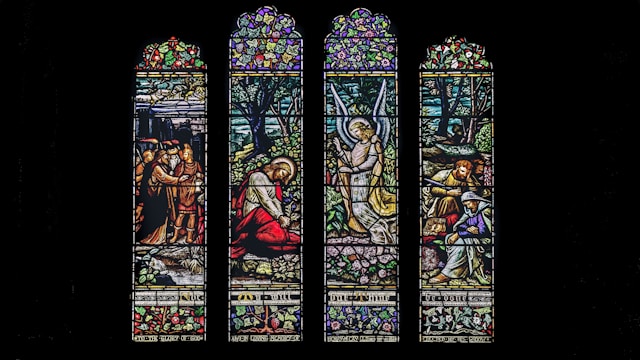
Jesus was aware of what would happen to Him. He would soon face the betrayal of his disciple, a clandestine arrest, unjust trials from His haters, dreadful torture, and humiliating and most painful death. Thus, Jesus who is not only fully divine but also fully human, was experiencing the full weight of human emotions. Mark gave us some important details. Jesus was ‘troubled and distressed’ and then expressed what He felt, “My soul is sorrowful even to the death.”
St. Irenaeus once said, ‘God’s glory is a man truly alive. Here, Jesus teaches us how to be truly human and, thus, become God’s glory. He avoided two dangerous extremes in dealing with His emotions. The first extreme is neglecting or suppressing His emotions. Jesus did not act tough and pretend to be ‘the stoic man’. He did not say, ‘I am okay’, ‘everything will be alright.’ Jesus named the emotions and was frank about it. The second extreme is not to be consumed by emotions. When the emotion is extremely strong, the emotions easily engulf us and, thus, control us. Though recognizing His feelings, Jesus did not yield to them. He stood His ground.
Jesus further gave us two ways to face these overwhelming emotions. The first one is to seek good companions. Jesus invited the three closest disciples in the garden, Peter, James and John. He expressed His grave sorrow and asked them to accompany Him in this crucial moment. Unfortunately, they fell asleep, but the three were there for Jesus in His agony. The second way is to pray. Jesus bent His knees and talked to His Father. Here, we have extremely rare content of Jesus’ prayer.
Jesus said, “Abba, Father, all things are possible to you. Take this cup away from me, but not what I will but what you will (Mk 14:36).” This prayer is short but extraordinarily rich. One can say that this prayer is a short form of Our Father. Here, Jesus expressed and offered His wish that He would have been spared from suffering and violent death, but He also recognized that it is His Father’s will that Jesus would offer Himself up as the sacrifice of love for the world. In this prayer, Jesus reaffirmed His mission and did not allow the emotions to blur His vision.
Gethsemane is the precious moment that Jesus teaches us to fulfil God’s will despite difficulties and, at the same time, to become truly human. It is not God’s will to destroy our humanity but rather to perfect it, and Jesus is our model of a perfect man.
Rome
Valentinus Bayuhadi Ruseno, OP




 Leprosy in the time of Jesus is not only physically and mentally deadly, but also spiritually incapacitating. Leprosy or currently known as the Hansen’s disease is horrifying sickness because it does not kill the person slowly, but it gradually deforms and incapacitates the person. The bacteria cause terrible damage in peripheral nervous to the point that the person is no longer feeling the sensation, especially pain. Without this sensation, the person fails to recognize and avoid bodily injuries. Losing limbs is shared among the victims with advanced stages of leprosy.
 Yesus melakukan pengusiran setan atau eksorsisme pertama-Nya dalam Injil Markus. Membaca konteksnya, kita menemukan bahwa Yesus sedang mengajar di sinagoga dan orang-orang mengenali Dia mengajar dengan otoritas. Ketika Yesus mengajar dengan otoritas, ini tidak hanya berarti Dia berkhotbah dengan kefasihan dan krisma, tetapi ajaran-Nya dimanifestasikan dalam tanda-tanda yang nyata dan menakjubkan, seperti penyembuhan dan pengusiran setan.
 Christmas is fast approaching, and the Church is inviting us to reflect on the story of the Annunciation. Allow me to once more focus on the Blessed Virgin’s Fiat. To appreciate her answer to God’s will and plan, we need to see at least two things. Firstly, it is her historical and social context. Secondly, it is the language analysis of her response.
