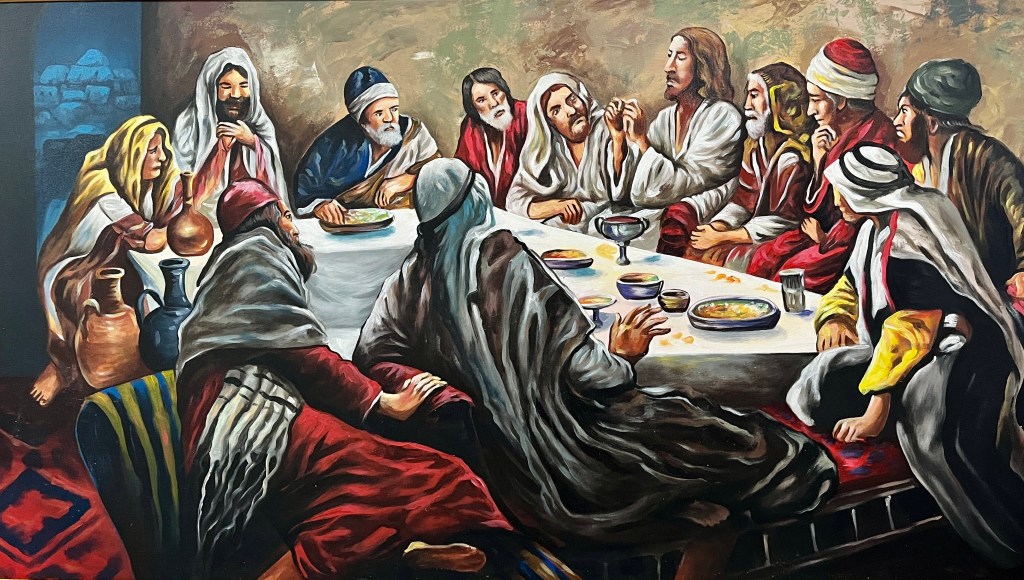
The Empty Tomb 

Easter Vigil – Easter Sunday [B]

March 31, 2024

Mark 16:1-7

Jesus is either everything or nothing at all. Why? Because He made an extraordinary claim that He is divine. C.S. Lewis responded to this claim with three possible answers, ‘Lunatic, Liar or Lord.’ Either Jesus was a delusional man believing that He was God, or Jesus was an evil man who wanted to deceive the world for His profit, or He is the Lord because what He claimed is true. If Jesus’ claim is true, then He deserves all our worship, our love and adoration. Yet, if Jesus’ claim is false, then He is just nobody who happened to be a lunatic or liar. Then, what is the evidence of His claim?

The answer is the resurrection of Jesus. And what is the proof of His resurrection? The empty tomb! Yes, this is the first evidence we have. If we read the four gospels, we will find a resurrection story with slight variations, but all agree with the reality of the empty tomb. If I were Jesus, I would have chosen a more dramatic and visible way of resurrection. I would have even appeared to Pilate and the chief priests to make a bold statement. Yet, Jesus chose to show an empty tomb and later appeared to the women. But, these women? These women were the same women who stood near the cross of Jesus, and they went back early in the morning to anoint the body of Jesus to give a proper burial to Jesus. These women exhibited their faithfulness and love to Jesus. 

The evidence for Jesus’ resurrection has been discussed extensively by many scholars, and I would not have enough time to cover it here. Jesus did not appear to Pilate or Annas and Caiaphas because they had decided to reject Jesus as a lunatic or liar. Thus, Jesus’ resurrection is nothing but useless. They even spread lies that the body was stolen. One scholar said, ‘For disbelievers, no proofs are ever sufficient.’

However, we are here, just like the women who visited the tomb early in the morning. We are here because we believe in Jesus, and we love Him. Jesus’ choice for an empty tomb, rather than a grandeur showoff of His resurrection, invites us to enter the empty tomb and make decisions for ourselves. Pope Francis once said that Jesus did not need to remove the stone to go out from the tomb, but for us to enter the tomb. Do we still love Jesus even when we only see emptiness? Are we still faithful even if we did not find the Lord?

Yes, we believe in Jesus, and yes, we love Him. Yet, faith, hope and love are not static, but rather something that grows. God allows us to experience crosses and even empty tombs because, through these events, we may grow in our faith and love. We must not forget that when we carry a cross, we may be like Simon of Cyrene, who carried the cross of Jesus. We must not forget that Jesus was few steps away from the empty tomb, waiting to bless us.

Celebration of Easter is not just a annual ritual, with different fancies symbols, but an invitation for us to renew and deepen our faith and love for God. Afterall, Jesus is everything to us. Blessed Easter!

Valentinus Bayuhadi Ruseno, OP

Being Truly Human

Palm Sunday of the Lord’s Passion [B]

March 24, 2024

Mark 14:1 – 15:47

Jesus’ defining moment just before His Passion is His agony in the garden of Gethsemane. This year, we are fortunate to hear from the Gospel of Mark because Mark is not shy to express the inner life of Jesus in this crucial time. For some, this is embarrassing because Jesus was expressing His great sorrow, and thus, Jesus is seen to be too human and weak. However, we believe that God inspired Mark to write God’s words, and thus, we are to learn something precious in Jesus’ desperate moment.

Jesus was aware of what would happen to Him. He would soon face the betrayal of his disciple, a clandestine arrest, unjust trials from His haters, dreadful torture, and humiliating and most painful death. Thus, Jesus who is not only fully divine but also fully human, was experiencing the full weight of human emotions. Mark gave us some important details. Jesus was ‘troubled and distressed’ and then expressed what He felt, “My soul is sorrowful even to the death.”

St. Irenaeus once said, ‘God’s glory is a man truly alive. Here, Jesus teaches us how to be truly human and, thus, become God’s glory. He avoided two dangerous extremes in dealing with His emotions. The first extreme is neglecting or suppressing His emotions. Jesus did not act tough and pretend to be ‘the stoic man’. He did not say, ‘I am okay’, ‘everything will be alright.’ Jesus named the emotions and was frank about it. The second extreme is not to be consumed by emotions. When the emotion is extremely strong, the emotions easily engulf us and, thus, control us. Though recognizing His feelings, Jesus did not yield to them. He stood His ground.

Jesus further gave us two ways to face these overwhelming emotions. The first one is to seek good companions. Jesus invited the three closest disciples in the garden, Peter, James and John. He expressed His grave sorrow and asked them to accompany Him in this crucial moment. Unfortunately, they fell asleep, but the three were there for Jesus in His agony. The second way is to pray. Jesus bent His knees and talked to His Father. Here, we have extremely rare content of Jesus’ prayer.

Jesus said, “Abba, Father, all things are possible to you. Take this cup away from me, but not what I will but what you will (Mk 14:36).” This prayer is short but extraordinarily rich. One can say that this prayer is a short form of Our Father. Here, Jesus expressed and offered His wish that He would have been spared from suffering and violent death, but He also recognized that it is His Father’s will that Jesus would offer Himself up as the sacrifice of love for the world. In this prayer, Jesus reaffirmed His mission and did not allow the emotions to blur His vision.

Gethsemane is the precious moment that Jesus teaches us to fulfil God’s will despite difficulties and, at the same time, to become truly human. It is not God’s will to destroy our humanity but rather to perfect it, and Jesus is our model of a perfect man.

Rome

Valentinus Bayuhadi Ruseno, OP

Is Faith Enough?

4th Sunday of Lent [B]

March 10, 2024

Ephesians 2:4-10

St. Paul wrote in his letter to the Ephesians, “For by grace you have been saved through faith, and this is not from you; it is the gift of God; it is not from works, so no one may boast (Eph 2:8-9, first reading).” Does it mean that what we need to do is to believe? Do we still have to receive the Eucharist and other sacraments like the Catholic Church instructs? Are we still required to do good works and acts of charity?

Often, the Catholic teaching of salvation is comically understood as ‘faith and work,’ which means that to be saved, Catholics must both believe in God and do various works prescribed by the Church, like receiving the sacraments and performing acts of mercy. Yet, this is frankly not the authentic teaching of the Church. Council of Trent decreed that “none of those things that precede justification, whether faith or works, merit the grace of justification (Decree on Justification).” The grace of God that brings us salvation, the forgiveness of sins, and holiness is always a gift from God. Nothing we do can earn it.

Since grace is a gift, just like any other gift, we either freely accept or refuse the gift. Thus, Catechism states, “God’s free initiative demands man’s free response, for God has created man in his image by conferring on him, along with freedom, the power to know him and love him (CCC 2002).” Here comes the role of faith. We say ‘yes’ to God through faith and embrace His grace. But does it mean having faith is enough, and we no longer do anything? If we believe, can we do anything we want, even evil things?

St. Paul indeed says that the grace is not from our works (verse 9), but in the next verse, St. Paul adds, “For we are his handiwork, created in Christ Jesus for the good works that God has prepared in advance, that we should live in them (Eph 2:10).” Is St. Paul contradicting himself? To understand this, we must distinguish the two ‘works’ that St. Paul uses. The first work (verse 9) refers to our efforts to get salvation outside of grace, which is futile. Meanwhile, the second work (verse 10) points to our good works in grace that are pleasing to God.

Yes, grace is freely given, but it does not mean a cheap one. Grace is not something static but active and dynamic. Grace gives us the capacity to do good works, and when we respond to it faithfully, we grow spiritually and open ourselves to more grace. The more good works in grace we offer, the more grace we receive, and the more extraordinary grace we receive, the greater capacity we have to do good works. 

We do not see our involvement in the Eucharist and other sacraments as our efforts to bribe God and get grace, but rather our ways of growing in grace. Our acts of mercy in the family and community are not our works but participation in God’s love for His people. 

(For a deeper understanding of grace, please read CCC paragraph 1987-2006)

Rome

Valentinus Bayuhadi Ruseno, OP

The Ten Commandments

3rd Sunday of Lent [B]
March 3, 2024
Exodus 20:1-17

On the third Sunday of Lent, the Church invites us to reflect on the Ten Commandments (our first reading). However, if we read the original Hebrew text, we may find something exciting.
God did not say that He handed down ‘the commandments,’ but instead, He gave ‘the words’ (הַדְּבָרִ֥ים – read: a-debarim). Why did God choose ‘words’ rather than ‘commandments’? After all, the content of what he said was really about laws.

The first answer may return to the creation account (Gen 1). God created the world and humanity with His ‘word,’ and now, in Mount Sinai, God formed Israel as His people with the laws given through His ‘word.’ This parallel points to us that the ‘laws’ passed in Sinai were not new, but God had placed them since the beginning. The ‘ten laws’ were not imposed from outside but an integral part of creation and human persons. God’s design is that by obeying the ‘commandments,’ the Israelites may return to Eden, where they may find their true happiness.

The second answer is that the choice of ‘words’ rather than ‘commandment’ shows the nature of the laws that God gave in Sinai. God did not treat Israelites (and also all of us) like slaves under the regime of terror. He did not force His rules upon us and punished us severely when we disobeyed Him. Yet, God treated us as adult children who can freely embrace these laws because we realize that these ‘laws’ are indeed beneficial for us.

The ‘laws’ are not externally imposed upon us but are following out from our being. Like gravity, it is not something externally added but an integral part of our universe, and so are the ‘ten words.’ We can use our natural reason to discover the laws. Our correct thinking will agree that killing, stealing, and adultery are wrong. Our right mind will support our efforts to honor our parents. And our logical thinking will lead us to one and true God. Since the ‘laws’ are integral to our nature, violating them means we bring harm to ourselves.

The third answer is that ‘words’ are a means of communication. The ten commandments are His words; thus, through them, we may communicate and understand Him better. And, as we get to know God better, we become closer to Him. The Ten Commandments are not a mighty wall to keep us away from God but a bridge connecting us to His immense love.

In this season of Lent, we are invited to reflect deeper into these ‘Ten Words .’We can reflect on each commandment: What is its purpose? What benefits do they bring us? What harm does it cause us when we violate it? What does it tell us about God, who created them?

Rome
Valentinus Bayuhadi Ruseno, OP

Isaac’s Faith

2nd Sunday of Lent [B}

February 25, 2024

Gen 22:1-18

Isaac’s binding is one of the Bible’s most dramatic and intense stories. From this story, the Church sees that Isaac is the type of Christ. Isaac and Jesus were both the sons of the fulfillment of God’s promise. Both were born in the miraculous conditions. Isaac and Jesus were the sacrifices of their fathers. Yet, Isaac’s sacrifice was halted because his sacrifice would be fulfilled in Jesus on the cross. However, though typological analysis is beautiful, some questions remain unanswered. How did Isaac feel when he knew that he was about to sacrifice? Was he forced or freely giving himself? What was his motive?

Whether or not Isaac was forced as a sacrifice revolves around this age during the event. Many imagine that Isaac was still a small child, and thus, Abraham forcibly tied him and made him ready for the sacrifice. Yet, the text suggests that he was no longer a small child because he carried on his shoulder the wood for the sacrifice. Since wood was not for simple fire but a ritual sacrifice, Isaac must have brought a significant amount. Indeed, it was a job for a strong young man. Thus, we can conclude that Isaac was not forced because, as a young man, he had the physical power to resist the aging Abraham. Isaac was freely giving himself as a sacrifice and, perhaps, asked Abraham to bind him.

Yet, the question remains: Why did Isaac feel? Why did he offer himself? Unfortunately, the text of the Bible does not give us a window into Isaac’s heart. Yet, putting ourselves in the place of Isaac, it is not difficult to feel the great distress, sorrow, and fear. He was a young man with many years to come, and yet he was about to lose his life at that moment. He was not only facing death but a violent death. In fact, unlike his father, he had little to ponder about God’s will since he knew about it just a few moments before the sacrifice. Why?

The story usually focuses on the faith of Abraham, who obeyed God’s will and gave up his only son. God Himself blessed Abraham for his steadfast faith (see Gen 22:16-17). Yet, the story is also about Isaac’s faith. In the Bible, Isaac is considered a minor character among Israel’s patriarchs compared to Abraham and Jacob. He has fewer stories and often takes a more passive role. Yet, the story has proved that Isaac is a man of great faith. In fact, without his faith, Abraham would not have received the blessing.

Isaac’s faith is mature and profound. Amid extreme anguish and debilitating fear, he remained steadfast and believed that God would eventually turn things well. His faith also helped him to recognize that his life was a sacrifice to God. As he offered himself as a sacrifice, God’s blessing came to Abraham. Isaac’s faith is not only about ‘believing in God’s existence, not only about passive reception of situations but actively participating in God’s will.

How do we react in the face of uncertain situations and suffering? Fear, anxiety, or anger? What is faith to us? A mere belief in God, a passive surrender to avoidable situations, or proactively seeking God’s will? Do we also offer our lives as sacrifices to God so that others may receive blessings?

Valentinus Bayuhadi Ruseno, OP

The Desert

1st Sunday of Lent [B]

February 18, 2024

Mark 1:12-15

What do we imagine when we hear the word ‘desert’? The image in our mind may vary depending on our experience and knowledge of the desert. Yet, we agree that the desert is barren, plagued by an unfriendly climate, and not a suitable place for humans to live. Then, why does the Spirit lead Jesus to the desert? Why do we need to experience desert moments?

When we have an image of a desert, we can think of a fertile garden as its opposition. The Bible gives us these two images, a garden, and a desert, as two contrasting places. Adam and Eve originally lived in the perfect garden, with everything provided. They had the best food and safest place; most of all, God was with them. Yet, they fell, and they had to leave the garden. They began their journey in a ‘desert’ where they had to work hard to earn their livings, where many dangers lurked, and death was their final destination.

Then, why did Jesus follow the Spirit to the desert? The answer is that Jesus is in the desert for us to find Him. Even the desert may become a holy place because our Saviour is there and blesses this place. Yes, the desert is a dangerous place, and even the evil spirits are lurking to snatch us away from God, yet Jesus is also there. His presence makes even the ugliest place on earth a beautiful and holy ground.

The presence of God in the desert is not even something new. Interestingly, the word desert in Hebrew is מדבר (read: midbar) and can be literally translated as ‘the place of the word.’ Indeed, the desert is where the Israelites endured many hardships and were tested, yet it is also where God manifested Himself and made a covenant with Israel through Moses. In fact, through the desert experience, God disciplined and formed His people.

Our natural inclination is to avoid a desert, whether a natural geographical place or a symbol of our difficult moments in life. We don’t want to experience pain and sickness, we hate to endure financial and economic difficulties, and we detest difficult relationships in our family or community. We want to be blessed, to be in the Paradise. Yet, we must not fear to walk through our deserts because Jesus is there. Indeed, our hardships can exhaust us and become the devil’s opportunity to tempt us hard, yet with Jesus, these experiences can be a means of holiness.

In the season of Lent, the Church teaches us to fast, to pray more frequently, and to increase our acts of charity. These practices invite us into the desert to feel hunger, experience discomfort, and enjoy fewer things that give us pleasure. Yet, paradoxically, when we enter voluntarily and faithfully this difficult desert of Lent, we may find Christ even there, and we are renewed in holiness.

Rome

Valentinus Bayuhadi Ruseno, OP

For God’s Glory and Human Salvation

Sixth Sunday in Ordinary Time [B]

February 11, 2024

Mark 1:40-45

1 Cor 10:30 – 11:1

Towards the end of his letter to the Corinthians, St. Paul reminded us of two basic purposes of every disciple of Christ. The first one is, “…whatever you do, do all to the glory of God (1 Cor 10:31).” The second one is, “…in everything I do, not seeking my own advantage, but that of many, that they may be saved (1 Cor 10:33).” If we summarize these two verses, St. Paul said that in everything we do, we do for the glory of God and the salvation of others.

However, is it possible to do everything for God’s glory and others’ salvation? Many of us are busy working and occupied with many other things, and often, we just barely remember the presence of God, let alone praise and thank Him. Some of us even are struggling to attend Sunday Masses. Does it mean that we are failing in this regard?

We must remember that St. Paul did not instruct us to ‘say glory to Go’ but rather ‘do everything for God’s glory.’ It is not only about singing praise or uttering from our months “glory to God, glory to God” the whole day. But, fundamentally, it is to choose to do things pleasing to God, even the ordinary and routinary things. In our works, we give glory to God when we do honest jobs. Even as we watch something on the television or our gadgets, we can do it for God’s glory when we avoid seeing things that lead us to sins and choose to engage in what is truly beneficial. Certainly, we cannot give glory to God if we are idle or wasting our time on useless things.

The second purpose is to do everything so that others may find salvation. It is a wrong attitude if we are only focused on our salvation. Our faith is not selfish and individualistic but community-oriented and loving faith. Our salvation depends on the salvation of our neighbors, also. That is a Catholic faith, a faith for universal salvation. A man’s fundamental mission is to bring his wife closer to God. Parents’ salvation hinges on the growth of their children’s holiness.

But are we responsible for the salvation of all? Yes, we are called to preach the Gospel to all, but we are mainly responsible for those close to us, like family or community members. Yet, St. Paul also made a clear message, “Give no offense to Jews or to Greeks or to the church of God (1 Cor 10:32).” Though we are not actively responsible for the salvation of all, we are expected not to cause harms or scandals that may push people away from God. We are always witnesses and disciples of Christ in the world.

Lastly, these two basic missions instructed by St. Paul are the concretization of the most fundamental laws taught by Jesus: to love God and to love our neighbors (see Mat 22:37-38). In everything we do, we do it for the glory of God and the salvation of souls.

Rome

Valentinus Bayuhadi Ruseno, OP

Preaching the Gospel

5th Sunday in Ordinary Time [B]

February 5, 2024

Mark 1:29-39

Often, we believe that the task of preaching the Gospel is only for the bishops, the priests, and the deacons, or for the religious brothers and sisters or lay catechists. Yet, this is only partially true. The truth is that each baptized person has a responsibility. Yes, you and me! But How do we preach if we don’t have the talents or capacity to do that?

Firstly, we must recognize that to preach the Gospel is an essential part of our identity as Christians. To be Christian means we become the image of Christ, or ‘the other Christ’. In today’s Gospel, Jesus made it clear that His mission is to preach the Gospel. He refused to stop in one town and enjoy the praises of the people, but rather, He had to go to other places and preach. If Jesus is committed Himself in announcing the Good News, then we, as His image, are called to reflect this commitment also. A true Christian is one who faithfully preaches the Gospel.

Jesus recognizes this mission as part of His identity and hands it down to His Church as a commandment. After His resurrection, He instructed His disciples, “Go therefore and make disciples of all nations, baptizing them in the name of the Father and of the Son and of the Holy Spirit, and teaching them to obey everything that I have commanded you (Mat 28:19-20).” Again, this mission is not optional but a must for every disciple of Jesus.

The Church understands this mission, and thus, she teaches us, “Lay people also fulfill their prophetic mission by evangelization, “that is, the proclamation of Christ by word and the testimony of life… (CCC 905).” St. Thomas Aquinas, a theologian, wrote, “To teach to lead others to faith is the task of every preacher and of each believer (STh. III,71,4 ad 3).”

Yet, how do we preach if we do not have a talent and gift? Firstly, we recognize that they are kinds of preaching particularly entrusted to the clergy, like in the liturgy. The reason is that the Church wants to ensure that preaching in this sacred venue will be done solemnly and according to orthodoxy. However, there are many other opportunities for lay people to preach, and even, in fact, there are contexts in which only lay people can bring the Gospel: marriage and family.

In the family context, men and women are bound not only by their baptism to preach the Gospel but also by their marriage’s promises. Husband and wife bring each other closer to God, and parents educate their children to love God and train them in holiness. This mission requires no special talent or training but time and commitment. We spend time praying together as a family at home or in the church. We teach our children basic prayers. We offer a good role model to our children. We bring our children to our parish for baptism and other sacraments and receive various faith instructions from the priests and catechists.

The mission to preach the Gospel is not only essential to our identity as disciples of Christ, and even our salvation depends on it. Let St. Paul’s words be our motto, “Woe to me if I don’t preach the gospel (1 Cor 9:16).”

Rome

Valentinus Bayuhadi Ruseno, OP

Leprosy

Sixth Sunday in Ordinary Time [B]

February 14, 2021

Mark 1:40-45

Leprosy in the time of Jesus is not only physically and mentally deadly, but also spiritually incapacitating. Leprosy or currently known as the Hansen’s disease is horrifying sickness because it does not kill the person slowly, but it gradually deforms and incapacitates the person. The bacteria cause terrible damage in peripheral nervous to the point that the person is no longer feeling the sensation, especially pain. Without this sensation, the person fails to recognize and avoid bodily injuries. Losing limbs is shared among the victims with advanced stages of leprosy.

Since the sickness was incurable and highly contagious in ancient time, it was a natural reaction for the people to exclude the infected persons from the community. We can imagine the effects of exclusion suffered by the victims. They were cut from the bare necessities, separated from their family and friends, and aware that they will die a horrible death. People could quickly become insane. This awareness that they would not survive outside society pushes the people with leprosy to gather and form their community. Thus, lepers’ colonies were deemed a practical solution to support one another in the face of the bleak reality of life.

In the Jewish context, skin diseases, especially leprosy, are about biological and mental problems, but it is a religious issue. The Book of Leviticus states that people with certain skin diseases, including leprosy, have to present themselves to the priest and have their bodies examined. The priest may declare that persons as unclean. After the verdict, the persons have to go out from the community, wear rent cloth, and let their hair dishevel. These become visible signs that they are with contagious diseases and unclean. Yet, if a person remains going closer to them, they shall shout, “Unclean! Unclean!” This is to make sure healthy and clean persons will not come nearer. Being declared unclean means the person is not fit for the religious service and cannot enter the holy ground like the temple. Thus, for a Jew who contracted leprosy, he was excluded physically and mentally and religiously. The sickness also cut them from God they serve and worship.

In the Gospel, we see the leper who took the initiative to approach Jesus, thus breaking the most fundamental prohibition to stay away from people and God. The leper’s request was not to be healed, but rather to be ‘clean.’ The deepest desire of this leper is not physical healing, but to worship his God. The real healing comes only when we can approach and worship the true God. Looking at his courage and deepest longing, Jesus was moved by pity and made him clean.

The leper in the Gospel teaches us a lot about the genuine desire for healing. Perhaps, many of us look for God because we wish to be cured of diseases, seek financial success, or free from other problems. Yet, we seldom desire to see God because we want to be healed spiritually, liberated from sins, and be one with Him. The Gospel teaches us that true healing is more than physical health and economic stability, but the union with God.

Valentinus Bayuhadi Ruseno, OP

Photocredit: Claudio Schwartz

Yesus dan Eksorsisme

Minggu Keempat di Masa Biasa [B]

31 Januari 2021

Markus 1: 21-28

Yesus melakukan pengusiran setan atau eksorsisme pertama-Nya dalam Injil Markus. Membaca konteksnya, kita menemukan bahwa Yesus sedang mengajar di sinagoga dan orang-orang mengenali Dia mengajar dengan otoritas. Ketika Yesus mengajar dengan otoritas, ini tidak hanya berarti Dia berkhotbah dengan kefasihan dan krisma, tetapi ajaran-Nya dimanifestasikan dalam tanda-tanda yang nyata dan menakjubkan, seperti penyembuhan dan pengusiran setan.

Kata eksorsisme biasanya diartikan sebagai mengusir roh-roh jahat dari seseorang yang kerasukan atau tempat yang terjangkiti. Sayangnya, karena pengaruh yang datang dari film-film Hollywood, pemahaman tentang eksorsisme telah terdistorsi, dan bahkan menjadi bahan lelucon. Namun, bagi Gereja Katolik, eksorsisme berakar di dalam pribadi Yesus Kristus sendiri, dan sebuah misi yang mulia.

Arti harafiah dari ‘eksorsisme’ adalah ‘mengikat dengan sumpah.’ Lalu, bagaimana kata ini bisa akhirnya berhubungan dengan roh jahat? Ketika kita bersumpah, kita perlu memanggil seseorang yang lebih tinggi dari diri kita sebagai penjamin janji kita. Secara sederhana, sumpah adalah mengucapkan janji dengan memanggil Tuhan sendiri sebagai saksi kita. Dalam konteks eksorsisme, imam yang bertugas sebagai eksorsis akan memanggil nama Tuhan untuk mengikat setan, dan mengirim mereka ‘ke kaki salib Yesus’ untuk menerima penghakiman. Kita tidak bisa mengusir setan dengan menggunakan otoritas kita sendiri karena setan adalah makhluk yang juah lebih kuat dari kita. Hanya dalam nama Tuhan yang benar, eksorsisme yang sejati dan efektif dapat terjadi.

Satu hal yang menarik dari Injil adalah Yesus mengusir setan tanpa menyebut nama Tuhan. Dia hanya berkata, “Diam, keluarlah dari dia!” Yesus mengusir dengan otoritas-Nya sendiri dan setan-setan mematuhi-Nya karena mereka mengenali kuasa ilahi-Nya. Setan juga mengenali Yesus bukan hanya sebagai Mesias atau sebagai raja orang Yahudi, tetapi sebagai ‘Yang Kudus dari Tuhan.’ Jika kita kembali ke Perjanjian Lama, gelar khusus ini mengacu pada imam agung Israel, secara khusus Harun. “… Harun, Yang Kudus dari Tuhan… [Mzm 106: 16].” Melalui mulut setan, Injil mengungkapkan dimensi lain dari identitas Yesus: Dia adalah sang Imam Agung. Dari kebenaran ini, kita dapat menyimpulkan bahwa eksorsisme adalah bagian dari tugas imamat.

Berpartisipasi dalam identitas Yesus sebagai imam agung, para uskup adalah eksorsis utama di keuskupan mereka. Kita ingat bahwa uskup adalah imam agung di keuskupan masing-masing. Setiap uskup kemudian dapat menunjuk dan mendelegasikan beberapa imam yang terlatih untuk menjadi eksorsis di keuskupan mereka. Waktu saya di Manila, saya beruntung bisa bertemu dan berdiskusi banyak hal, dengan Romo Jose Syquia, seorang eksorsis dari Keuskupan Agung Manila.

Namun demikian, kita tidak boleh lupa bahwa karena pembaptisan kita, kita juga mengambil bagian dalam imamat Yesus Kristus. Jadi, kita juga memiliki otoritas atas roh-roh jahat. Sebagai orang awam, kita diizinkan untuk mengucapkan doa-doa pembebasan tertentu ketika kita merasakan kehadiran dan aktivitas roh-roh jahat yang luar biasa. Doa kepada St. Michael, sang malaikat agung, adalah salah satu contoh doa pembebasan yang bisa digunakan kaum awam. Namun, kita tidak boleh lupa bahwa sebenarnya roh-roh jahat bekerja dengan cara yang sangat halus, terutama melalui godaan untuk berbuat dosa. Seringkali, tanpa disadari, kita sudah di bawah kendali iblis saat kita menjalani hidup yang penuh dengan dosa dan kejahatan. Sebagai pengikut Kristus, kita perlu menghadapi perang kita sehari-hari melawan kerajaan Setan, dan kita tidak bisa menang tanpa menyebut nama Yesus, tanpa doa yang konstan, tanpa sakramen, dan tanpa bantuan Gereja.


Valentinus Bayuhadi Ruseno, OP