

The Commemoration of All the Faithful Departed (All Souls)
November 2, 2025
John 6:37-40
St. Joseph, the foster father of Jesus, is celebrated as a holy model for husbands, fathers, and workers. Yet, he also holds a more poignant title: the patron saint of a happy death. But what does this mean? How can death, so often shrouded in fear and sorrow, ever be considered happy?
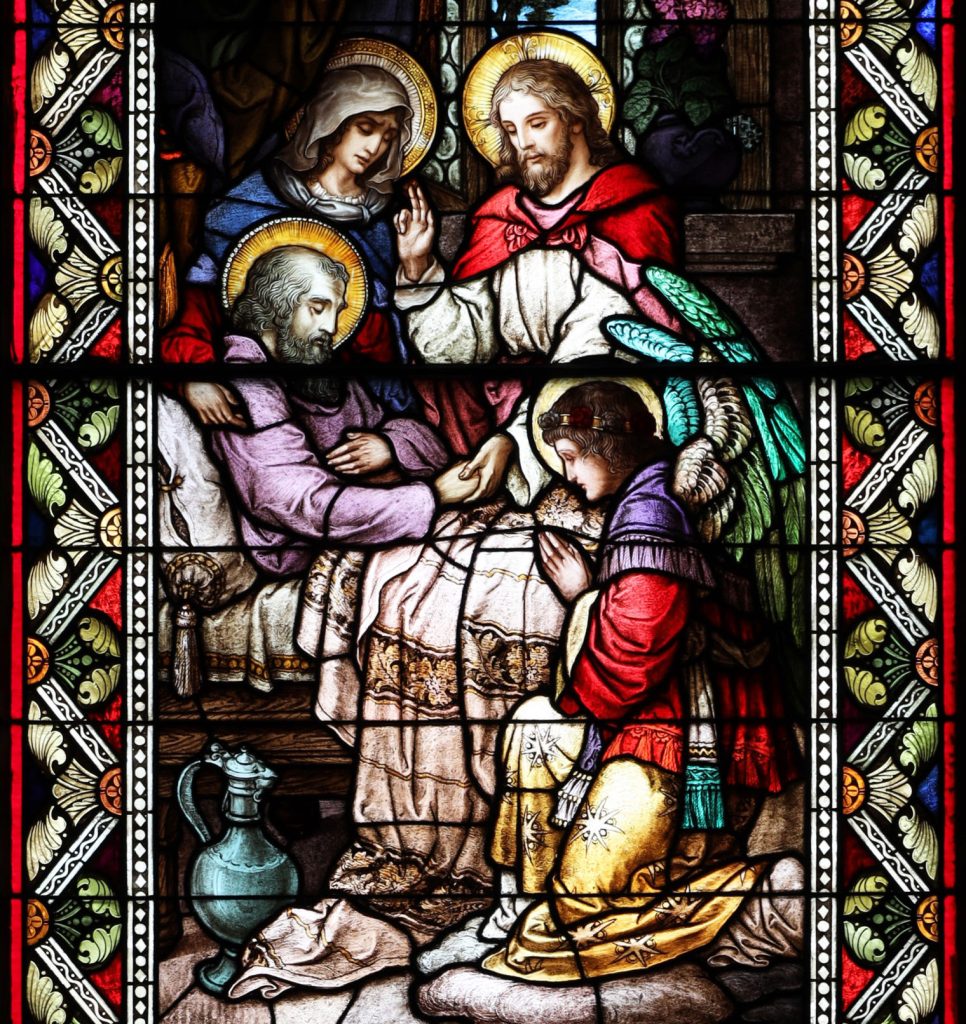
To understand this, we must first ask a more fundamental question: What constitutes a happy death? Does it mean being surrounded by family at a ripe old age, free from pain? Or a beautiful funeral in a well-kept cemetery? At first glance, happiness and death seem to be irreconcilable opposites. We are hardwired for life; we instinctively recoil from the suffering that reminds us of our mortality. So, how can we find happiness in the very event our entire being resists? To seek a happy death can feel like trying to capture the wind.
It is here that St. Joseph comes to our aid. His life provides the answer to this profound puzzle. Catholic tradition holds that at his dying moment, Joseph was not alone. He was cradled in the presence of Jesus and Mary. This sacred companionship at life’s end was simply the culmination of a life lived in constant communion with God. The key to a happy death is a life lived with God.
In the Catholic faith, death is the final and decisive act of life, eternally sealing our choice for or against God. St. Joseph embodies the ideal: on his deathbed, he turned to Jesus, his adopted son and the Lord of Mercy, and to Mary, his wife and the Mother of God. His was a happy death because the Jesus he embraced with his final breath was the same Jesus who welcomed him into the eternal joy of heaven.
Yet, St. Joseph’s lesson is not merely about how to die, but fundamentally, about how to live. The Gospel describes him as a “righteous man” (Matt 1:19). His entire life was a faithful “yes”—a dedication to God’s will, often at great personal cost. He faced uncertainty, exile, and hardship for the sake of his family. Because he spent his life seeking the Lord in every circumstance, it was the most natural thing in the world for him to seek Jesus at his final moment. His good death was the fruit of a faithful life.
As we pray for our dearly departed, St. Joseph offers us a profound hope. He reminds us that for those who live faithfully with Christ, death does not destroy life but perfects it. It is not an end, but a gateway to unquenchable joy. This is the happy death.
St. Joseph, patron saint of a happy death, pray for us!
Guide Questions for Reflection:
Are we cultivating a life with Christ that prepares us to face our death with peace? Do we see death as a terrifying end, or as a passage to eternal life? In our daily choices, are we building the habit of turning to Jesus, as Joseph did? Do we seek the intercession of St. Joseph, asking him to pray for a holy death for ourselves and for all those who need it most?







 In Medio Ecclesiae