Transfiguration and the Tent

2nd Sunday of Lent [C]

March 16, 2025

Luke 9:28b-36

The second Sunday of Lent presents the story of the Transfiguration, where Jesus is described as shining, literally becoming light itself. Two of the greatest figures from the Old Testament, Moses and Elijah, appeared and conversed with Jesus. Then, Peter made an interesting offer to Jesus: a tent. But why did Peter suddenly offer a tent?

The obvious reason might be that Jesus and His disciples had planned to pray, and they may have needed to stay on the mountain for a longer period. It’s possible that Jesus had instructed the three disciples to bring tents. Therefore, Peter’s offer should not surprise us, as they were likely already prepared with tents. The only difference is that the tents were now meant for Moses and Elijah, rather than for the disciples. But is there a deeper meaning to this offer beyond simply extending their stay on the mountain?

A tent is a temporary and portable dwelling, typically used when traveling. In ancient times, people travelled for various reasons, including trade, military campaigns, and pilgrimages. During these journeys, they did not have buses, cars, or airplanes. Land travel was mostly done on foot, and travellers often needed to rest, especially when far from nearby towns or villages. In such circumstances, tents were a necessity.

In the Old Testament, the Israelites journeyed from Egypt to Canaan and spent approximately forty years in the desert, living most of their lives in tents. However, among all the tents of Israel, there was one special tent at the center of the encampment: the tent where the Lord dwelt among His people. This was traditionally called the “Tabernacle.” The word “tabernacle” itself comes from Latin, meaning “tent,” and in Hebrew, the tent of the Lord is called מִשְׁכָּן  (miškān), which literally means “dwelling place” and is derived from the root שָׁכַן  (šākan), meaning “to dwell.” From this root, we get the word Shekinah (שְׁכִינָה), meaning “the Dwelling”—God’s presence among His people. God chose to dwell in the tent so that He could walk among His people, and the Israelites could come close to their God.

Now, returning to the Gospel, it seems that Jesus declined Peter’s offer of a tent, but in reality, He only postponed it. Jesus knew that one day, He would indeed dwell in a tent among His people. In the Catholic Church, the Lord walks with His people until the end of time as He is present in the Eucharist. We also have a “tent,” the Tabernacle, where the risen and transfigured Lord makes His temporary dwelling among us, allowing us to visit and be close to Him. However, we understand that this tent is only a temporary dwelling; His true dwelling is in heaven.

We must also remember that we are pilgrims in this world, pitching our tents here temporarily. We may have beautiful and spacious tents, but they are still just tents. Our stay here on earth is temporary, and we must not treat this temporary dwelling as our final, permanent home. Our true home is with the Lord in heaven.

Rome

Valentinus Bayuhadi Ruseno, OP

Guide Questions:

Do we realize that we are just pilgrims on this earth? How do we prepare ourselves to reach our true home? Do we visit the Lord in His tent? How do we receive the Lord into our “tents”?


Words from the Hearts

8th Sunday in Ordinary Time [C]

March 2, 2025

Luke 6:39-45

The Book of Sirach tells us, “Praise no one before he speaks, for it is then that people are tested (27:7).” This means that to truly know someone, we must listen to their words, as their words reveal much about who they are. Indeed, our words unveil many aspects of our lives. From the choice of our words, others can gauge our knowledge and intellectual capacity. The way we speak can also reveal some of our dominant characteristics. Furthermore, our words express our beliefs and what we hold dear.

However, expressing words is just one side of the story, for words can also be used to deceive and manipulate. We can use words to lead people to believe something about us that might not be true. We can say things that hide parts of ourselves. We can utter words that are pleasing and encouraging, with the aim of gaining favor from others.

Ancient people long recognized the power of words and developed an art called “rhetoric” (literally, the art of speaking or the art of persuasion). Aristotle wrote his classic manual on rhetoric around 350 BC, while teaching at his school, the Lyceum, in ancient Athens. His manual became the standard for many orators who sought to convince, persuade, and influence people. Aristotle identified three elements of rhetoric: ethos (credibility of the speaker), logos (logical argument), and pathos (emotional appeal to the audience). A good orator must incorporate all three elements in their speech.

Unfortunately, many people are easily persuaded by pathos alone, since we enjoy hearing dramatic, even bombastic words—those that are pleasing to us. We tend to avoid painful or unpleasing words. Naturally, we dislike people who speak critically about us, regardless of their ethos, logos, or even veritas (truth). At times, we follow and even idolize someone because we are “hypnotized” by their words, assuming they are credible, truthful, and even “saintly.” We may then refuse to acknowledge evidence that their words are not truthful or even harmful for us.

In today’s Gospel, Jesus teaches us that “from the fullness of the heart, the mouth speaks (Luk 6:45).” What is in our hearts is reflected in our words. If our hearts are filled with evil, our words may sound sweet, but they can be manipulative and self-serving. If our hearts are filled with genuine love for others, our words may not always be easy to hear, but they will be for the authentic good of those we love. Jesus’ words to His disciples are not always sweet and often difficult to accept. Phrases like “love your enemies (Luk 6:27),” “Do not murder, do not commit adultery, do not steal, do not give false testimony, honor your father and mother (Mat 19:18),” “sell your goods and give to the poor (Luk 18:22),” and “unless you eat my body, you will not have life (John 6:53)” are hard to digest, but they are meant for our ultimate good—our salvation.

Rome

Valentinus Bayuhadi Ruseno, OP

Guiding Questions:

What is in our hearts? Are our thoughts good, pure, and noble, or are they selfish, malicious, and evil? How do we use our words? Do we use words that encourage or discourage? Do we build people up or tear them down? Do we follow Jesus, even when His words are difficult?

Love and Power

7th Sunday in Ordinary Time [C]

February 23, 2025

Luke 6:27-38

Jesus teaches us to “love our enemies,” but what does this mean? Does it mean we must endure their evil deeds without fighting back? Does it mean we must always give in to their demands? Does it mean we should forget what they do to us? Thankfully, the Church provides us with an answer through our first reading: the story of David and Saul.

Saul, the first king of Israel, initially supported David as one of his commanders, especially after David defeated Goliath. However, as time passed and after various wars, David became more successful than Saul and even gained greater fame. Feeling threatened by David’s growing popularity, Saul declared him his enemy and sought to kill him. David was forced to flee, and with his supporters, he waged guerrilla warfare against Saul. One day, when Saul and his army were in pursuit of David, they camped for the night. David noticed Saul’s camp nearby, and when the guards were asleep, David quietly entered Saul’s tent and had the opportunity to kill him. David’s companion even urged him to take action, knowing that Saul had caused much suffering for him and his men. Moreover, if Saul were killed, David could claim the throne and become the new king of Israel. Yet, David refused to kill Saul, recognizing that Saul was still God’s anointed king. He knew it would be cowardly to deal the final blow. Ultimately, God blessed David for showing mercy to his enemy, Saul.

The story of David and Saul illustrates how we can love our enemies. To love does not simply mean to like someone, but rather to choose to do good to them. Yes, we may feel hatred toward our enemies, but we can still decide to love them by not harming them. From David’s story, we also learn that loving our enemies presupposes that we have power over them. In David’s case, he had the power to end Saul’s life. To love someone, including our enemy, requires power.

This truth about love and power is crucial. It is not true love if we merely condone the wrongdoing of our enemies because we lack the power to defend ourselves. I often tell spouses who are victims of domestic abuse that simply giving in to the demands of an abusive partner is not true love, but a misunderstanding of Jesus’ commandment to love our enemies.

Loving others, even our enemies, is for the strong and powerful. Only through the exercise of power and authority can we do something that is genuinely good. Without power, we may deceive ourselves into thinking that we love our enemies, when in reality, we are just giving in to their wrongdoing.

Rome

Valentinus Bayuhadi Ruseno, OP

Guide questions:

How do we understand Jesus’ commandment to love our enemies? Who are our enemies? Are we willing to love our enemies? How can we love our enemies? Are we sure that we love our enemies, or are we simply giving in to their wrongdoings?

God’s Holiness

5th Sunday in Ordinary Time [C]
February 9, 2025
Isaiah 6:1-2a, 3-8

In the first reading, we encounter the story of Isaiah, who was called to be God’s prophet. Isaiah saw the heavenly Temple, where the Seraphim, the highest of angels, proclaimed: “Holy, holy, holy is the Lord of hosts!” Through the mouths of the Seraphim, the Bible reveals one of God’s most fundamental characteristics—His holiness. In another passage, God explicitly commands us: “Be holy, for I am holy” (Leviticus 19:2). But what does it mean to be holy? Why is the word repeated three times? And how can we achieve holiness?

In the Bible, the word “holy” (קָדוֹשׁ, read: kadosh) can be understood as something that belongs to God. Holy places, times, objects, and people are those set apart for the Lord. Since they belong to Him, they are separated from things that are not of God. The process of transitioning from the non-holy to the holy is often called consecration or sanctification.

But what does it mean when we say that God is holy? In Scripture, “holy” is the most frequently used word to describe the God of Israel. Often, it is repeated three times, as in Isaiah’s vision. This is a common Semitic way of expressing the superlative—in other words, saying “the holiest.” Holiness, when applied to God, means:

  1. Transcendence – God is completely different from His creation. He is perfect; we are not. He is all-powerful; we are weak. He is all-knowing; we understand only a fraction of reality.
  2. Immanence – Despite His transcendence, God is not distant. He is intimately involved in history, in our lives, and in our daily struggles. He is a God who gives life, cares for us, and loves His creation.
  3. Moral Perfection – God’s holiness also refers to His absolute justice and righteousness. Every action of His is good and just.

When God calls us to be holy as He is holy, He invites us to share in His perfection. But how can we, as imperfect beings, ever reach such a standard? At first glance, this command might seem impossible. And indeed, it is—if we rely solely on our own strength. But with God, nothing is impossible. Holiness is only achievable when we are united with Him and rely on His grace.

It is humanly impossible to love our spouse through sickness, trials, and economic hardship—but God’s grace strengthens us to love until the end. It is humanly impossible to remain faithful to one’s vocation—but with God’s grace, the impossible becomes possible. It is humanly impossible to forgive and do good to those who have hurt us—but God’s grace makes reconciliation and healing attainable.

However, the life of grace is not automatic. We must do our part to allow God’s grace to transform us. This is why it is essential to: Pray faithfully, Read the Bible regularly, Participate in the Eucharist every Sunday with reverence, Go to confession frequently. These practices open our hearts to receive God’s grace, allowing us to grow in holiness. Indeed, holiness is impossible without God, but God also desires that we freely participate in His holiness.

Rome
Valentinus Bayuhadi Ruseno, OP

Reflection Questions
Do we truly desire to live a holy life? Do we freely invite God into our lives? How do we cultivate holiness in our daily routines? Have we experienced God’s grace in our lives? How?

Consecrated

The Feast of Presentation of the Lord [C]

February 2, 2025

Luke 2:22-40

Today, we are celebrating the Feast of the Presentation, commemorating the biblical event when Mary and Joseph presented the newborn Jesus at the Temple in Jerusalem. But why must Jesus be presented at the Temple in the first place?

Joseph and Mary brought Jesus to the Temple because He was Mary’s firstborn. According to the Law of Moses, all firstborn males, whether human or animal, must be consecrated to the Lord (see Exodus 13:1-2; 11-16). The word “consecrated” here means to be made holy (Hebrew: kados), and to be holy means to belong to the Lord. The most common way to consecrate something is through sacrifice, signifying a transition from the ordinary realm to the divine realm.

Certainly, blood sacrifice was only required for livestock animals, such as sheep or goats. These animals were slaughtered and burned at the altar, signifying their transition from this world to the divine realm. However, not all things had to be killed. In the case of working animals, like donkeys, and firstborn humans, they were brought to the Temple and presented to the priest. Then, the owner or parents were required to redeem their firstborn by offering animals to be sacrificed in their place. To redeem Jesus, Joseph and Mary offered a pair of turtledoves or pigeons, a sacrifice commonly offered by the poor.

Why must the firstborn child be consecrated to the Lord? The Book of Exodus (chapter 12) tells us that, just before the Israelites left Egypt, the tenth plague that killed the Egyptian firstborns took place. The Israelite firstborns were spared because of the Passover sacrifice—the unblemished lamb that was slain, its blood placed on the doorposts, and its flesh roasted and eaten. In this way, the Passover lamb was sacrificed to redeem the firstborn Israelites from death.

What is interesting is that Luke never tells us that Jesus was redeemed. Yes, He was presented, and Mary and Joseph did offer sacrificial animals, but the word “redeem” is absent from the story. It seems that Luke deliberately omits this word to emphasize that Jesus is presented as the true firstborn—the Passover Lamb—who will be sacrificed so that we may be redeemed from sin and death.

As Christians, we no longer follow the ritual of consecrating firstborns as outlined in Exodus 13. The reason is that we are all consecrated, or set apart, for the Lord through our baptism. Through His sacrifice on the cross, Jesus is the Passover Lamb (1 Cor 5:7) who saves us from sin and death and redeems us for God. Now, we belong to the Lord, and as God’s possession, we are holy. This is why St. Paul, in his letters (1 Cor 1:2; Eph 1:1; Phil 1:1), does not refer to the Church’s members as Christians but as the “holy ones” or the “saints.” As people consecrated to God, we are called to live holy lives, for God is holy (Lev 11:44).

Rome

Valentinus Bayuhadi Ruseno, OP

Questions for Reflection:

Are we aware that we have been consecrated to the Lord? What does holiness mean? Do we live as holy people of God? How do we live a holy life in our daily routines? Do we help others grow in holiness? If so, how?

Hidden Life, a Holy Life

Feast of the Holy Family [C]

December 29, 2024

Luke 2:41-52

Jesus did not appear in the world as a fully grown man out of nowhere, nor did He descend from the sky like an alien. Instead, He chose to be born as a little child into the family of Joseph and Mary. Interestingly, most of the events within this family, spanning more than 30 years, remain hidden. What did Jesus do during this time? Why did He choose to remain hidden during these years?

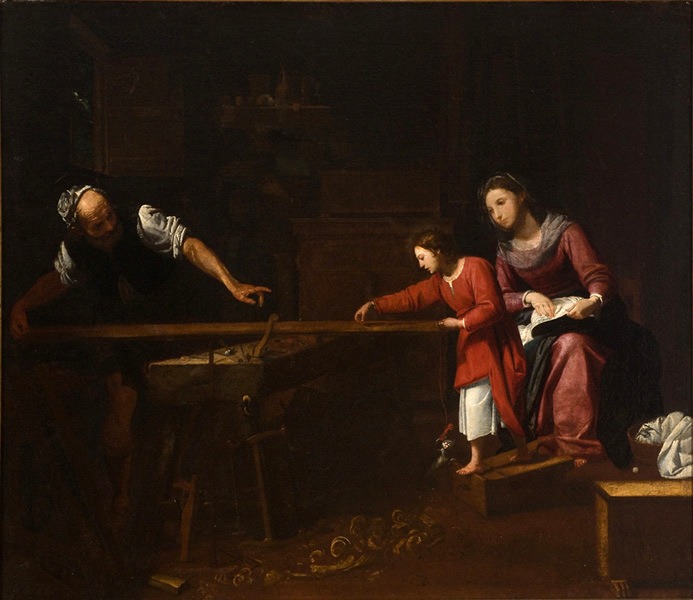
The little information we have comes from St. Luke, who tells us that Jesus submitted to the authority of Joseph and Mary and grew in age and wisdom, much like any other child (Luke 2:52). This implies that Jesus experienced and acted as any Israelite boy or man would in His time. As a baby, Jesus received constant nourishment from Mary. He learned to speak, walk, and play. As a young child, He likely helped Mary with household chores and played with His peers and relatives. When He became strong enough, He helped Joseph with his work and learned the family trade of carpentry. Being a descendant of David, Joseph was likely responsible for teaching Jesus to read, especially the Torah.

As a young man, Jesus continued to assist Joseph in his work. From time to time, they may have travelled to nearby major cities, such as Sepphoris, to work on various building projects. It’s reasonable to believe that Jesus not only learned to read the Torah but also to interpret and teach the Law of Moses under Joseph’s guidance. Young Jesus likely observed His foster father discussing and debating the precepts of the Law with local Pharisees and scribes. Perhaps He even listened as Joseph preached in the synagogue in Nazareth.

From this account, we see that there was nothing outwardly remarkable about the hidden lives of Jesus, Mary, and Joseph. Everything seemed ordinary. Had Jesus been born in our time, He would have grown up doing many of the things we commonly do. However, it would be a mistake to think that what Jesus did in Nazareth was insignificant. Jesus is not only fully human but also fully divine. His divinity sanctifies every aspect of His humanity, including the most ordinary moments of His life. Whatever Jesus did—whether working, eating, or even resting—was holy and salvific.

Through the mystery of the Incarnation, Jesus shared in our humanity. Because of this, we may share in His divinity through grace. Many of us live ordinary lives, punctuated by occasional exceptional moments. Yet, through Jesus and His hidden life, everything we do—even the smallest and most mundane tasks—can become a means of sanctification and salvation when done out of love for God and our neighbors. The little, unseen things we do in our families, schools, and workplaces can sanctify us if we offer them with love. The sufferings and pains we endure can also make us holy when we bear them patiently and without sin. Ultimately, the holiness of ordinary things is made possible when we unite everything we do, endure, and live with the living sacrifice of Jesus in the Eucharist.

Rome

Valentinus Bayuhadi Ruseno, OP

Guide questions:

Do we recognize that Jesus is present even in our daily and ordinary lives? Do we realize that even simple things we do in our lives contribute to our holiness? Do we know that God see even little and hidden acts of love we do for our parents, children and even strangers?

Cold Yet Blessed Christmas

Nativity of Our Lord [C]
December 25, 2024
Luke 2:1–14

One privilege I had as a priest was the opportunity to study in Rome, and one unforgettable experience was celebrating Christmas in this eternal city. A striking difference from my home country was immediately apparent: Christmas in Rome is cold. Coming from a country near the equator, where the temperature remains relatively constant throughout the year, experiencing December as winter (with temperatures ranging from 8°C to -1°C) was a stark contrast. As I celebrated Christmas in this chilly season, my first thought was that it must have been a similarly cold winter in Bethlehem when Jesus was born.

Some skeptics argue that it’s unlikely Jesus was born in December, claiming it would have been too cold for shepherds to keep watch over their sheep in the open fields. While December is indeed winter in Israel, it’s not so cold as to prevent people from staying outside. A quick online search reveals that nighttime temperatures in Bethlehem-Jerusalem average around 7–8°C. After all, sheep are typically kept outdoors, and the shepherds, familiar with these conditions, would have been well-prepared to endure the chilly environment.

The shepherds may have been prepared for the cold, but what about the baby Jesus? While winters in Israel are milder than in many European countries, the fact remains that winter in Bethlehem is cold and chilling. The first sensation baby Jesus likely felt upon leaving the warmth of Mary’s womb was the cold. Certainly, Mary and Joseph would have done their utmost to protect and keep Him warm, but the low temperatures could not be completely avoided. This chill would have been even more pronounced given that Jesus was not born in a modern, comfortable maternity ward but in a humble place for animals – a cave, as tradition tells us.

Yet, this very humility is at the heart of Christmas: Emmanuel, God-with-us. Our God is not a distant deity hidden away in the heavens, occasionally sending angels to interact with us. He is intimately present, becoming one of us, human. From the moment of His conception, He felt, experienced, and endured everything we are and do. The coldness of that Christmas night was only the beginning. Jesus would come to know hunger and thirst, pain and sorrow, just as we do. He also embraced the warmth and love of Mary and Joseph. He grew and learned to live as we do. He knows who we are because He has become one of us.

It’s true that we often pray for the Lord to remove our suffering, pain, and sorrow, yet it seems these struggles persist. In His divine wisdom, God allows our suffering, though we may not always understand the reasons. However, through the mystery of Christmas, we are assured of one profound truth: Jesus knows our pain. He shares in it and bears it with us. This is our Gospel, this is our Christmas.

Rome

Valentinus Bayuhadi Ruseno, OP

Merry and Blessed Christmas!

Why John the Baptist?

Second Sunday of Advent [C]

December 8, 2024

Luke 3:1-6

On the second Sunday of Advent, the Church presents St. John the Baptist as a model for preparing the way for Jesus. But why is John always chosen as the example? The answer lies in the fact that John is one of the most significant figures in the Bible, exemplifying how we should prepare for the coming of Christ. Especially in the Gospel of Luke, we see that John precedes Jesus and prepares His way in three important stages. So, what are these three stages?

1) Through John’s Birth. John was the son of Zechariah, a priest, and Elizabeth. Since Elizabeth and Mary of Nazareth were relatives, this makes John and Jesus family. In Luke’s account, John’s birth is portrayed as an answer to his parents’ prayers. His birth is a miracle, as it occurred when Zechariah and Elizabeth were old and considered barren. This miraculous birth prefigures an even greater one—the birth of Jesus. While John was conceived despite his parents’ old age, Jesus was conceived without the involvement of any man. John’s birth fulfils God’s promises in the Old Testament (such as to Abraham and Sarah, Gen 17-18; Elkanah and Hannah, 1 Sam 1:1-20), while the birth of Jesus inaugurates the New Testament era.

2) Through John’s Preaching. Today’s Gospel speaks of John preaching a baptism of repentance for the forgiveness of sins (Luke 3:3). This fulfills the prophecy of Isaiah, which foretold that a great prophet would prepare the way for the Lord (Isaiah 40:3). John teaches that the best way to prepare for the coming of the Lord is through repentance. Without repentance, our Advent and Christmas celebrations will be shallow. There’s little meaning in decorating our homes or enjoying festive meals with loved ones if we do not first seek to reform our lives.

3) Through John’s Death. John’s death comes at the hands of Herod’s executioners. He had condemned Herod, the ruler of Galilee, for living in sin—taking his brother’s wife and divorcing his own wife. This angered Herod and his wife. When the opportunity arose, Herod, to please his wife, ordered John’s execution (Luke 9:7-9; Mark 6:14-29; Matthew 14:1-12). John was beheaded because he faithfully preached the truth, calling for repentance. Jesus, too, would eventually be crucified for preaching the truth of the Gospel and calling the Jewish leaders in Jerusalem to repentance. The lesson is not just about how John died, but about how he lived—faithfully preaching the truth, even at the cost of his life. We are also invited not only to reform our own lives but to encourage others to repent, even in the face of rejection.

John is Jesus’ predecessor—in his birth, his preaching, and his death. Through his entire life, John prepared the way for Jesus. This is why John is one of the best models in the Bible for us to follow during this season of Advent.

Rome

Valentinus Bayuhadi Ruseno, OP

Reflection Questions:

  • Inspired by John the Baptist, how will you prepare yourself this Advent?
  • What lessons can you draw from John’s example?
  • Like John, are you willing to invite your family, relatives, and friends to repentance and help bring them closer to Jesus?

Jesus, Our King

Solemnity of Christ the King [B]

November 24, 2024

John 18:33b-37

In today’s world, the concept of kingship might feel weird and even obsolete. Many of us live in democratic societies, where we elect persons we like to be our leaders and choose someone else when we feel they are no longer fit for the office. We value our freedom and ensure our leaders will not take our freedom. The pomp and grandeur of royalty—palaces, castles, robes, and noble ceremonies—are often viewed as relics of the past. Yet, as Christians, we are called to reflect on and embrace the kingship of Jesus. How can we truly appreciate Jesus’ identity as our King?

First, Jesus, the King who serves. Yes, Jesus is King, but unlike any other. Gabriel, the archangel, announced his royal birth, “He will reign over the house of Jacob forever, and of his kingdom there will be no end (Luk 1:33).” Yet, Jesus revealed how He was going to be a king, “For the Son of Man came not to be served but to serve, and to give his life a ransom for many (Mar 10:45).” Here, the roles are reversed. Instead of demanding service from His subjects, Jesus serves His people with unparalleled humility. His ultimate act of service was offering Himself on the cross for our salvation. Even now, as the risen King in heaven, Jesus continues to serve by interceding for us before the Father (Heb 7:25).

Second, Jesus, the King of the universe. Though Jesus was born as a Jew and prophesied as the Messiah of Israel, His dominion is universal. After His resurrection, Jesus told His disciples, “All authority in heaven and earth has been given to me. (Mat 28:18)” Jesus is not only King of all men but also of all things. From the biggest stars to the smallest sub-atomic particle and even realities that modern science has yet to discover, all are within His governance and providence. Not only visible realities but also invisible beings are under Jesus. Then again, since Jesus’ kingship is about service, Jesus also serves all things by sustaining their existence, otherwise, all things will collapse to nothingness.

Third, Jesus is our King. Jesus’ kingship is not distant or abstract—it is deeply personal. As the King of all creation, He governs everything for our good because He knows and loves each of us dearly. The intricate design of the universe, from the laws of physics to the fine-tuned conditions that allow life on earth, reflects His loving care. Our bodies, composed of countless atoms and cells, are held together under His command. The visible cosmos and even spiritual beings are under His commands to protect and lead us to true happiness.

While we are often consumed with our daily concerns, the King is taking care of us through His governance of the universe, both visible and invisible. His kingship is nothing but love, service and care.

Rome

Valentinus Bayuhadi Ruseno, OP

Questions for reflections:

What is your concept of a king? Do you see Jesus as a king? What kind of King? Or, are you more comfortable with other titles of Jesus, such as the good shepherd? Do we follow Jesus our King? How do we serve our King? Do we obey Him, or do we rebel against Him? Do we also care for other creations because they serve the same King as us? Do we thank the angels for guarding us?

The Faith of the Poor Widow

32nd Sunday in Ordinary Time [B]

November 10, 2024

Gospel: Mark 12:38-44

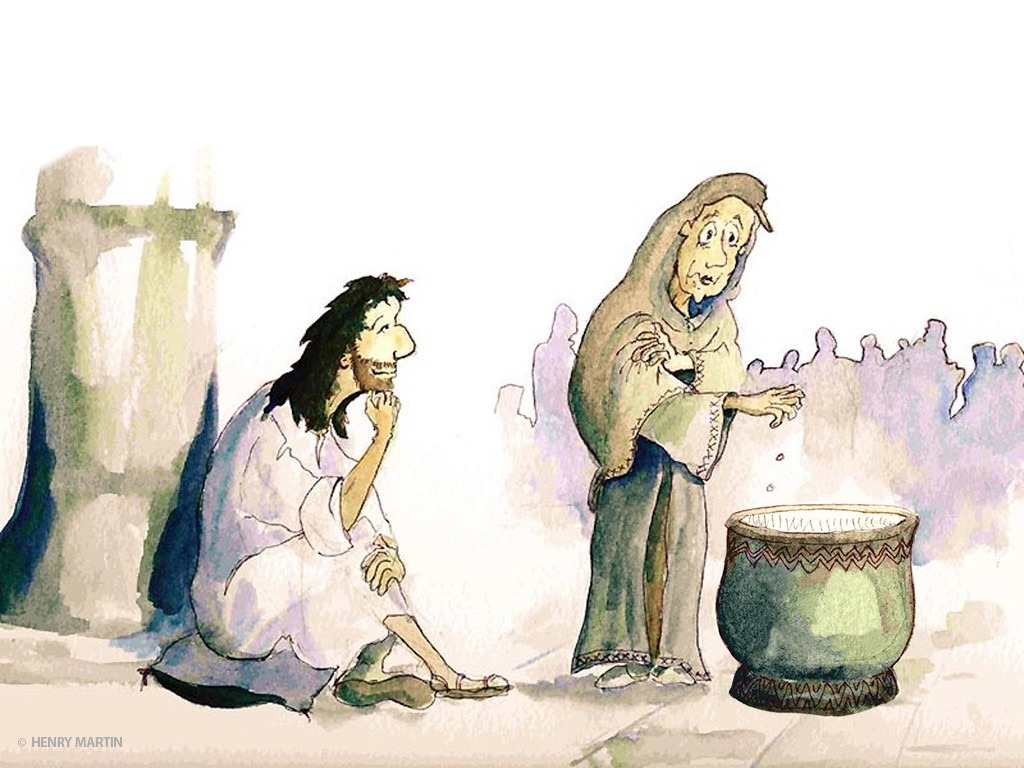
In the Gospel of Mark, Jesus commends a poor widow who gives her last two small coins to the Temple. He points out why her act is so remarkable: “Out of her poverty, she gave everything she had, all she had to live on” (Mark 12:44). Jesus admires her because, despite her extreme poverty, she displays extraordinary generosity. But there’s a deeper message here. What is it?

We need to ask, “Why is this widow poor?” In Jesus’ time, widows were among the most vulnerable, especially if they had no family to support and protect them. Because of this, God instructed the Israelites to care for widows (see Deu 14:29 and Isa 1:17). Yet, in this Gospel passage, there is a clue to why this widow has been pushed into poverty. Before praising the widow, Jesus condemns the scribes not just for seeking popularity, but for a more sinister reason, “They devour widows’ houses” (Mark 12:40).

How did the scribes take advantage of widows? There are a few possibilities:

Firstly, Abuse of Legal Authority. The scribes, experts in Jewish law, were trusted as legal advisors or trustees, especially for widows who needed help managing their affairs after their husbands’ death. Afterall, these scribes were men of God! Sadly, some of them abused this trust, using their legal knowledge to manipulate proceedings for personal gain, sometimes even committing fraud.

Secondly, Predatory Lending. Some scribes engaged in predatory lending practices. Under the guise of providing financial help, they would lend money to widows and gradually entrap them in severe debt. When the widows couldn’t repay these debts, they were forced to give up their homes and possessions, ultimately becoming destitute.

While we don’t know the exact way the widow in this story was exploited, we do know she suffered injustice. Despite this, her response is remarkable. Instead of feeling embittered or blaming God, she remains generous and devoted. Even in her suffering, she loves God with all her heart, strength, and life. Why? Because her faith rests in God Himself, not in flawed human representatives like the scribes. While people can fail or act unjustly, God does not. She believes God is watching her, and indeed, Jesus is watching her actions and recognizing her faith and sacrifice.

This story opens our eyes to harsh realities that can exist even within religious institutions. Yet, the widow’s example also teaches us how to respond to these challenges without losing our faith.

Reflection Questions:

Do we help bring people closer to God, or do we push them away? Do we use our position and knowledge to assist others or to take advantage of them? When bad things happen, do we blame God or maintain our trust in Him? Do we stand against injustice and wrongdoing within our communities and Church, or do we remain silent?

Rome

Valentinus Bayuhadi Ruseno, OP