


14th Sunday in the Ordinary Week. July 9, 2017 [Matthew 11:25-30]
“Take my yoke upon you and learn from me, for I am meek and humble of heart; and you will find rest for your selves. (Mat 11:29)”
 Yoke is a device, usually of wood, placed on the shoulder of animals or persons to carry a burden. In agricultural settings, a yoke is used to pull a plow to make a furrow on the ground so that the soil will be ready for the seed planting. But, a yoke can be used also to drag a cart and transport various goods. Because its primary function is to carry a load or burden, a yoke turns to be a symbol of responsibility, hard work, and obligation. In our seminary in Manila, a leader among the brothers is called a decano. In the beginning of the formation year, we elect our decano, and as he assumes his responsibility, he ceremonially receives a wooden yoke from the outgoing decano. The yoke reminds him of responsibility and great task that he has to endure through the year.
In the Bible, a yoke often symbolizes a means of oppression and slavery. The yoke reminds the Israelites how they lived as slaves in Egypt. The yokes were placed upon their shoulders and they have to carry heavy materials, and to work for the construction of Egyptian colossal buildings. At the time of Jesus, the yoke has slightly evolved to symbolize tedious religious obligation. When Jesus criticized some of the Pharisees and Jewish religious leaders for putting so much emphasis on the details of the Law and rituals, and forgetting what truly the essentials, Jesus called this practice as the yoke of the Pharisees.
However, in today’s Gospel we learn that Jesus asks us to carry His yoke. Wait! Does it mean like the Pharisees, Jesus also wants us to carry a yoke of burden? Jesus clarifies further that His yoke is easy and my burden is light. So, Jesus’ yoke is just less burdensome compare to that of the Pharisess, yet it is still a yoke, a load. How then we can be truly restful if it is just a matter of changing of yoke?
To understand Jesus’ yoke, we need to know that in ancient Israel, like in our time, there are different kinds of yokes. There is a yoke for a single animal, but there is also a yoke that unites two animals together in pulling the burden. When Jesus speaks about His yoke, He is referring to this yoke for two animals or persons. When we carry the yoke of Jesus, it does not mean that Jesus simply gives us the yoke for us alone to shoulder, but we carry it together with Jesus. It is not a transferring of responsibility, but sharing of the burden. And when we feel tired and exhausted because of the heavy burden, we can rest a while since Jesus is the one who now carries the burden for us. In fact, as a carpenter, He knows best how to make a yoke more convenient to carry. That is the yoke of Jesus.
We are carrying the yoke of life with Jesus. And indeed it is a great consolation for us. We are burdened by so many problems in life and often it is too heavy to bear. Yet, we are never alone. Jesus is bearing the yoke for us, the Church is working together with us, our family and friends are one with us. This gives us rest in trial time, yet when others’ life are heavy, like Jesus, we are also helping in carrying others’ yoke, because it is only one yoke, the yoke of Jesus.
Br. Valentinus Bayuhadi RUseno, Op
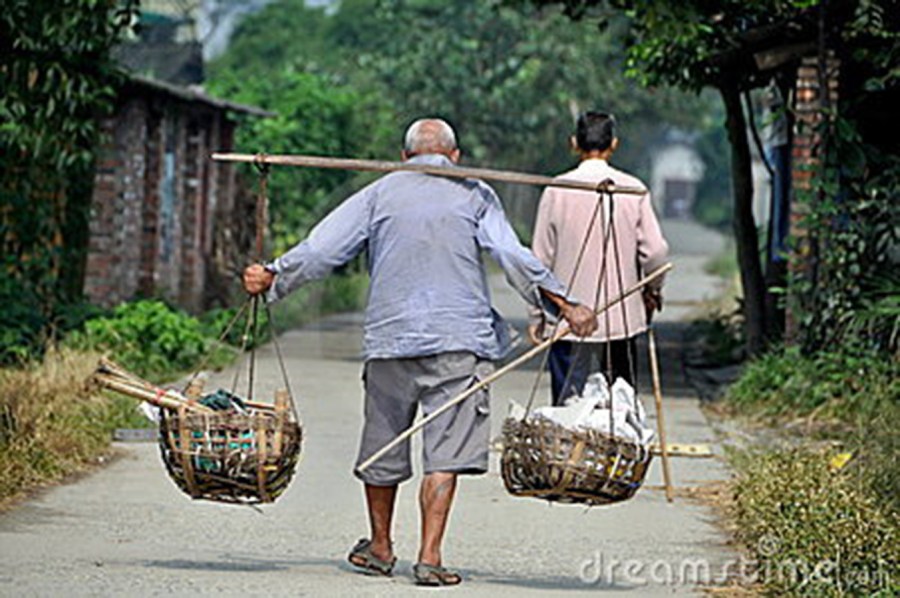
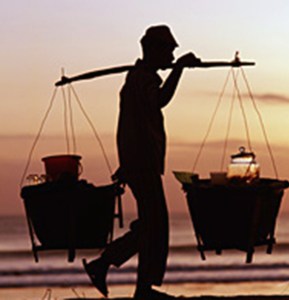 Kuk adalah sebuah alat, biasanya terbuat dari kayu, yang diletakkan di bahu hewan atau orang untuk membawa beban. Di lingkungan pertanian, kuk digunakan untuk menarik bajak untuk membuat alur di tanah sehingga tanah siap untuk penanaman benih. Tapi, kuk bisa digunakan juga untuk menarik gerobak dan mengangkut berbagai barang. Karena fungsi utamanya adalah untuk membawa beban, kuk pun menjadi simbol tanggung jawab, kerja keras, dan kewajiban. Di seminari kami di Manila, pemimpin di antara para frater disebut sebagai “dekano”. Pada awal tahun formasi, kami memilih dekano, dan saat dia memulai mengembang tanggung jawabnya, dia secara seremonial menerima kuk kayu dari dekano yang lama. Kuk itu mengingatkannya akan tanggung jawab dan tugas besar yang harus dia tanggung sepanjang tahun dalam memimpin komunitas para frater.
 When God calls us, God does not only call us privately and individually. In the Bible, God also calls us with our family, our community. God created the first man and woman not only to complete each other, but also to “multiply” or to build a human family. Noah entered the ark together with his wife and children. They were saved as a family from the flood. Abraham and Sarah were called from the land of Ur, and establish their own family and clan in the land of Canaan. When God called Moses to deliver the Israelites from slavery, God also called Aaron and Miriam, Moses’ brother and sister, to assist him in his mission. Finally, the life of Jesus of Nazareth would not be complete without the family of Mary and Joseph of Nazareth.
 Ketika Tuhan memanggil kita, Tuhan tidak hanya memanggil kita secara individual. Dalam Alkitab, Tuhan juga memanggil kita dengan keluarga kita dan komunitas kita. Tuhan menciptakan pria dan wanita pertama yang tidak hanya untuk saling melengkapi, tapi juga “berkembang biak” atau membangun keluarga manusia. Nuh masuk ke dalam bahtera bersama istri dan anak-anaknya. Mereka diselamatkan sebagai keluarga dari banjir besar. Abraham dan Sarah dipanggil dari tanah Ur untuk membangun keluarga dan klan mereka sendiri di tanah Kanaan. Ketika Tuhan memanggil Musa untuk membebaskan orang Israel dari perbudakan, Tuhan juga memanggil Harun dan Miriam, saudara laki-laki dan perempuan Musa, untuk membantu dia dalam misinya. Akhirnya, kehidupan Yesus dari Nazaret tidak akan lengkap tanpa keluarga Maria dan Yusuf dari Nazaret.
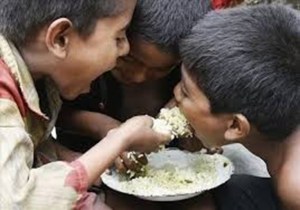
 Eating is essential to our life. Nobody would deny that eating is a matter of life and death, but there is always significant different between a beggar sitting by the gate of St. Domingo church and most of us who can enjoy a full meal three times a day. The beggar will ask himself, “How can I eat today?” While, we will inquire ourselves, “Where am I going to eat today? Is the ambience of the restaurant welcoming? Is the food as tasty as Filipino delicacy? Is the food safe from any cancer-causing substance?” For some, eating is about survival, but for some other, this phenomenon has evolved into something mechanically sophisticated. The society provides us with almost unlimited options of what we are going to eat, and seemingly we are masters of these foods as we possess the authority to choose what we like and shun what we don’t. But, we actually are slowly turning to be slaves of our appetite as we shift our focus not on the essential but on the trivial, like how we satisfy our fickle cravings.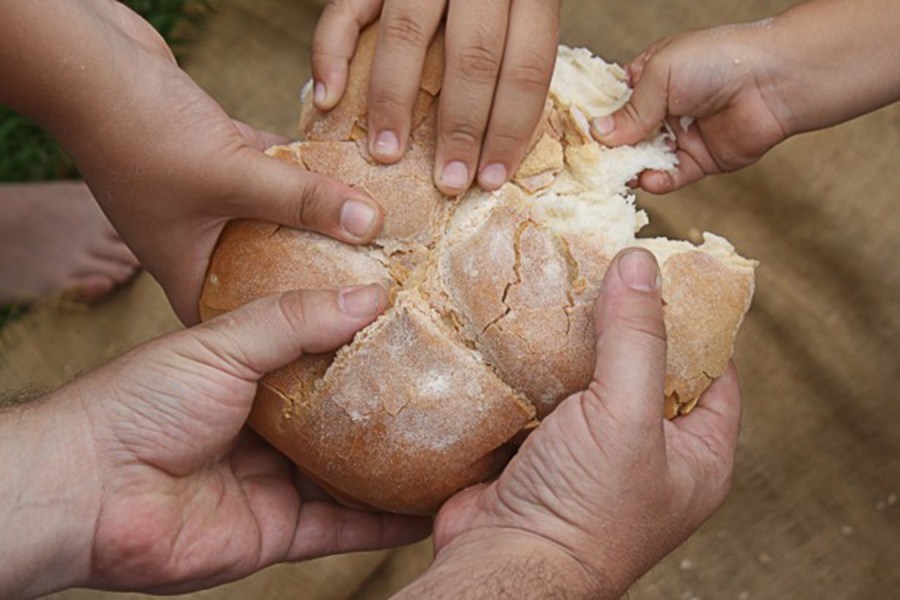
 Tidak ada yang menyangkal bahwa makan adalah masalah hidup dan mati, tapi selalu ada perbedaan yang signifikan antara seorang pengemis yang duduk di gerbang gereja dan kebanyakan dari kita yang dapat menikmati makanan lengkap tiga kali sehari. Pengemis itu akan bertanya pada dirinya sendiri, “Bagaimana saya bisa makan hari ini?” Sementara, kita akan bertanya kepada diri sendiri, “Ke mana saya akan makan hari ini? Apakah suasana restoran nyaman? Apakah makanannya lezat sesuai cita rasa Indonsia? Apakah makanannya aman dari zat penyebab kanker?” Bagi sebagian orang, makan adalah tentang kelangsungan hidup, namun untuk beberapa dari kita, fenomena ini telah berkembang menjadi sesuatu rumit. Pasar memberi kita pilihan yang hampir tak terbatas tentang apa yang akan kita makan, dan tampaknya kita adalah raja dari makanan ini karena kita memiliki kekuasaan untuk memilih apa yang kita sukai. Tapi, kita sebenarnya perlahan berubah menjadi budak nafsu makan kita saat kita mengalihkan fokus bukan pada hal yang esensial tapi pada hal-hal sepele seperti bagaimana kita memuaskan hasrat kita yang terus berubah-ubah.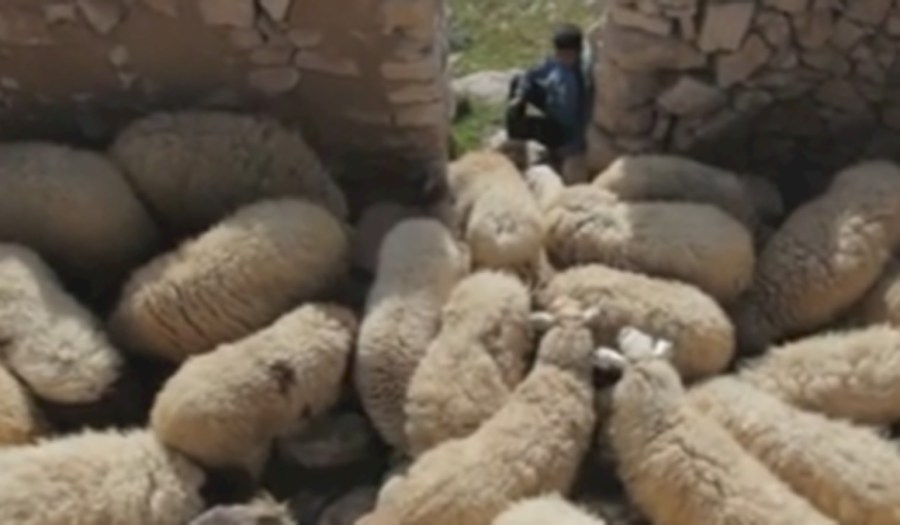
 Jesus is not the gatekeeper, but Jesus is the gate Himself. A gate or a door gives a passage or access to a sheepfold, a house, a building or a room. It both separates and connects the insiders and the outsiders. In fact, the gate is as essential as the house itself. What is the building without a door or an entry point? It is either a construction error or it is not a sheepfold or a house at all. The gate is not only an accessory to the house, but it also defines the house itself. Is it an accessible house, locked house or not a house at all?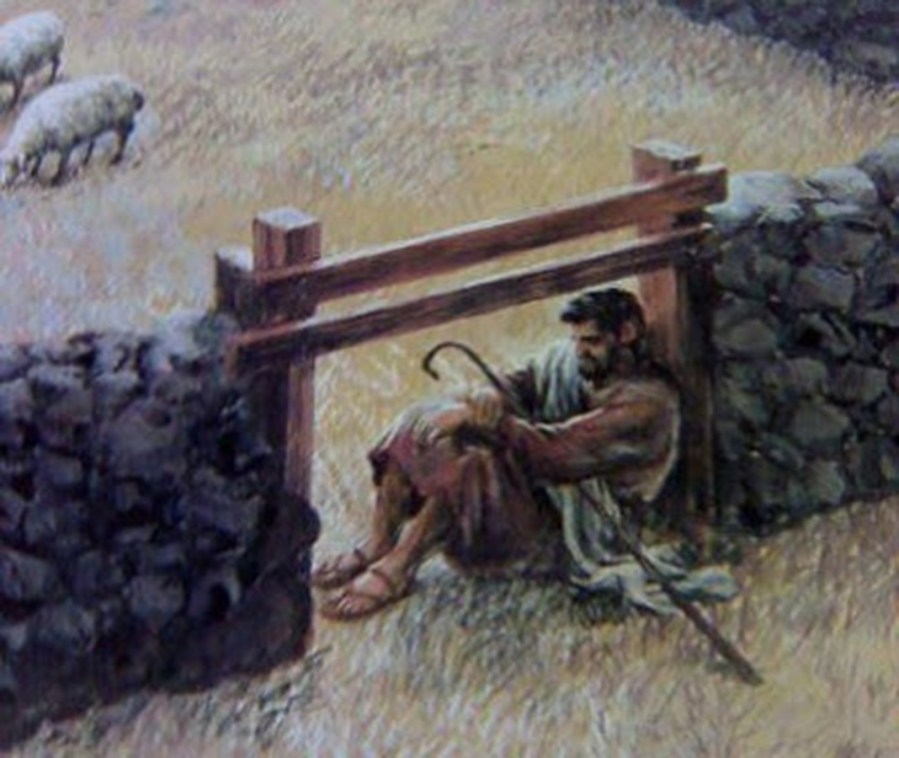
 Yesus bukanlah sekedar penjaga pintu gerbang, tetapi Yesus adalah sang pintu gerbang. Pintu gerbang atau pintu memberi jalan atau akses ke kandang domba, rumah, bangunan atau ruangan. Pintu memisahkan sekaligus menghubungkan orang dalam dan orang luar. Pintu sama pentingnya dengan rumah itu sendiri. Apa jadinya jika bangunan tanpa pintu masuk? Ini adalah kesalahan konstruksi atau bukan sebuah gedung sama sekali. Pintu bukan hanya aksesori dari sebuah rumah, tapi adalah definisi sebuah rumah. Melalui pintunya, kita bisa menilai apakah rumah ini yang mudah diakses, rumah terkunci atau bukan rumah sama sekali?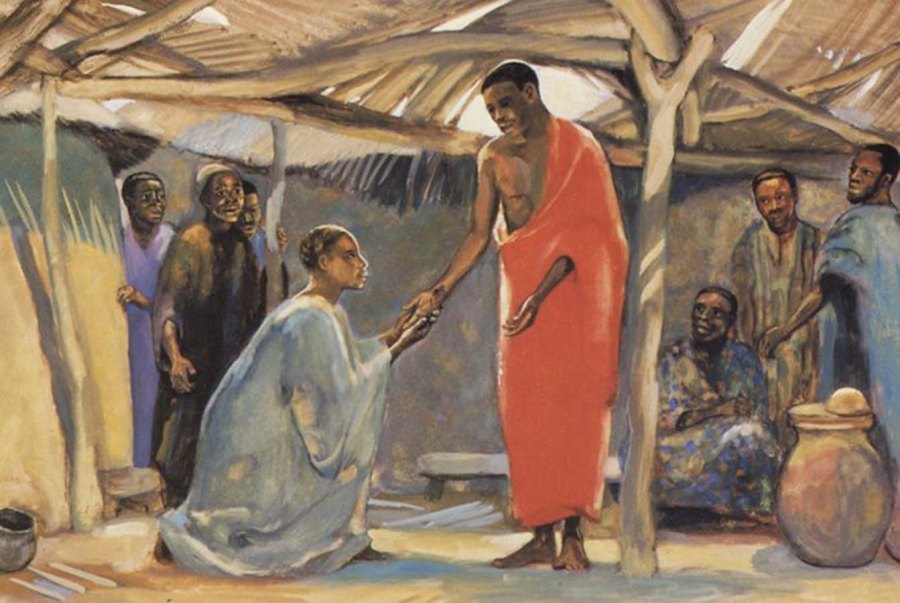
 Thomas was looking for a proof that Jesus truly rose from the dead. Not only seeing Him in person, he required another sign: touching the crucifixion marks that Jesus bore. He was one of the Twelve, the inner cycle of Jesus’ disciples, and being one, he had the privilege to walk with Jesus, dine with Him, and witness His mighty deeds. At a first glance, he would easily recognize Jesus, his Master, but still, he demanded the marks of the nails. Why did Thomas insist on searching the wounds?

 In Medio Ecclesiae