What is Gospel?

Third Sunday in Ordinary Time [B]

January 21, 2023

Mark 1:14-20

Jesus began His ministry by preaching, “The time has been fulfilled, the kingdom is at hand; repent and believe in the Gospel!” Yet, the question is, ‘What is the Gospel we need to believe in?’ Indeed, it is not the four written Gospels (Matthew, Mark, Luke, and John) since these were written years after Jesus’ death and resurrection. So, what is the Gospel here?
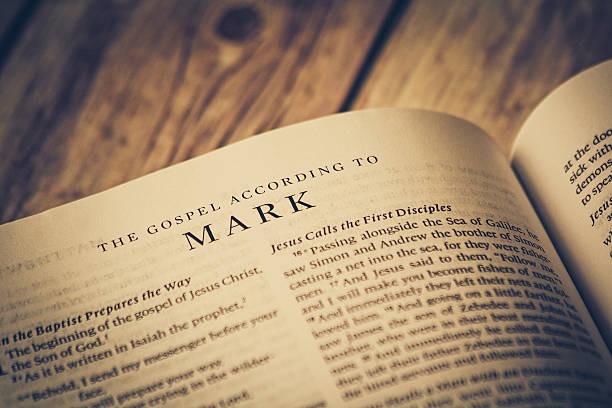
The most basic understanding of the Gospel is ‘the good news.’ It comes from the Greek word ‘ευαγγελιον’ (read: Evangelion). This word itself is composed of two elements: ‘ευ’ meaning ‘happy’ or ‘good,’ then ‘αγγελιον’ meaning ‘news.’ In the time of Jesus, the word ‘ευαγγελιον’ is not just any good news like “I passed the exam” or “I received a bonus.” The word is an imperial technical term to point to the emperor’s major victory or to the emperor’s birthday celebration. Every time ‘ευαγγελιον’ was announced, there would be great joy among the people because the enemy had been defeated, and now the residents of the empire may live in peace.

Jesus used the same imperial vocabulary but adjusted its content to His purpose. It was no longer about the good news about the Roman empire but about the Kingdom of God. It was no longer about the emperor’s glory but now about Jesus. Those living at that time may respond differently to Jesus’ Gospel. One could consider Jesus insane, delusional, or a liar, and thus, His Gospel was nothing but a laughable lie. Others might see Jesus as subversive; thus, His Gospel was a call to rebellion against the Roman empire. We recall also that this subversive understanding of the Gospel was later used to accuse Jesus before Pilate. Jesus was ‘the king of the Jews’ against the Roman emperor.

However, Jesus proved these assumptions were simply incorrect. Jesus did not preach empty words; He taught with authority and performed mighty miracles. Even the demons were obedient to His words. He was not also a revolutionary political fighter because His Kingdom is not of this world (see John 18:36), and how He refused to be made king by his supporters (see John 6:15). Jesus’ Kingdom is the Kingdom of God of holiness. The only way to enter is repentance (metanoia). The word metanoia presupposes a change of ‘mind’ or ‘lifestyle’ from a life of sins and far from God into a life according to God’s law and, thus, life with God.

Thus, from this perspective, we can say that ‘believe in the Gospel’ means that we believe in the Kingdom of God and Jesus, the king of the Kingdom, who saves us from sins and brings us back to God. And the way to believe is none other than repentance. To say, “I believe in Jesus,” yet we keep stealing other people’s money, is just nonsense. To say, “I trust in God,” but we keep breaking His laws and commandments, is useless. ‘

Another interesting fact! The actual Greek Mark used for ‘believe’ is ‘πιστεύετε’ (pisteuete), and grammatically, it is imperative mode in the present tense. In ancient Greece, this imperative presence means a command to do something, not one time but continuously. Thus, Mark wants to emphasize that belief is a continuous process rather than a one-time action. Belief in Jesus is something that is growing and dynamic rather than static.

Rome

Valentinus Bayuhadi Ruseno, OP

Name and Holiness

2nd Sunday in the Ordinary Time [B]

January 14, 2024

John 1:35-42

At the beginning of John’s Gospel, we encounter three acts of naming. Firstly, when John the Baptist saw Jesus, he called Him ‘The Lamb of God’. Then, after staying for a day with Jesus, Andrew called Him the ‘Messiah’ or ‘Christ’ [meaning: the anointed one]. Lastly, after Jesus encountered Simon, Andrew’s brother, He named him ‘Cephas’ in Aramaic, or ‘Petros’ in Greek [meaning: rock]. Why the act of naming is important in the Gospel?

We recall that the act of naming fundamentally belongs to God. God is omnipotent, and so, with every name God uttered, that name became a reality, from nothing to something. “God said, ‘Let there be light!’ And, there was light.” Every time God named and created something, the ever-greater goodness took place. On the final day, God named ‘the seventh day’ as ‘holy.’ Holiness is when a name becomes a reality and that reality reaches its fullness and perfection according to God’s plan.

The Holy Spirit inspired John the Baptist to name Jesus as the Lamb of God. This brings forth the reality that Jesus would be ‘slaughtered’ and ‘consumed’ to save His people from the slavery of sin, like the Passover lamb that was slaughtered and eaten to protect the Israelites from death and liberate them from slavery in Egypt. The Holy Spirit also inspired Andrew to name Jesus as the Messiah. This reveals the reality that Jesus is the promised Anointed one who would fulfill the promises and prophecies of the Old Testament, especially as the King of the New Israel. Jesus’ name is holy because precisely in His name, God’s redemption plan reached its full reality. After all, He is the Word that was made flesh (see John 1:14).

When Jesus called Simon and gave him a new name, ‘Cephas,’ the new reality came into existence. Simon would become the rock where Jesus’ Church rested. Obviously, Simon was impulsive, short-tempered, and even cowardly. Yet, since Jesus named him, the name was part of Jesus’ divine plan. Jesus knew Simon was weak; Jesus allowed Simon to falter, yet Jesus also transformed and empowered him. The name that Jesus had planted at their first encounter finally became a full reality when Simon offered his life as a martyr of Christ in the city of Rome.

We believe that we exist not because of random chance, utterly unplanned, but because of God’s divine plan. We are in the world not only because of biological processes but because God gives us a name, from nothingness to reality. Indeed, God allows us to experience suffering and even failures, yet this is also part of His plan to make us holy.

Holiness is when the names God gave us become more and more reality. How? Like Simon, we do our best to follow His will in our lives, be more patient in suffering, and avoid anything that strays from Him.

Rome

Valentinus Bayuhadi Ruseno, OP

The Magi and the Truth

The Epiphany of the Lord
January 7, 2024
Matthew 2:1-12 [B]

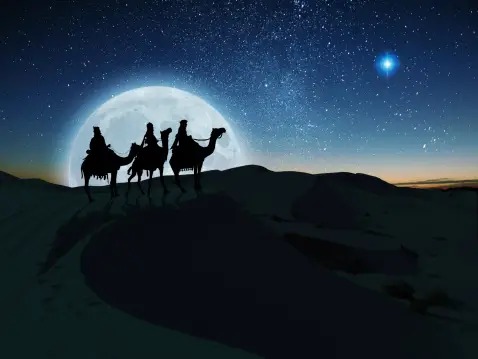
The Christmas season ends with the feast of Epiphany. This ancient feast is associated with the story of the Magi from the East who visited the child Jesus in Bethlehem. The story is a fitting conclusion to the Christmas season since the Magi represented the nations of the world who came and worshiped the newborn king. Jesus was born not only to be the Messiah of the Jews but also the Savior of the nations.

The identity of the Magi remains largely a mystery. The earliest depiction in the Basilica of the Nativity in Bethlehem presented them dressed in Persian clothes (presently Iran). But, some fathers of the Church believed that they were Chaldeans (now Iraq). Others still argued that they were coming from northern Syria because they were thought to be the descendants of Baalam (see Num 22). Finally, we are not really sure. The Bible describes them as ‘Magos’; in the Bible itself, ‘Magos’ has ambiguous meanings. The word Magos can be negatively associated with a sorcerer, one who practiced magic and even to earn money and fame (see Acts 13:6). Yet, the term can also be translated as a sage or wise man, one who dedicated himself in search of Truth.

The Church’s traditions tend to see the Magi as the wise men from the East. These were people who offered their lives in search of the Truth. Yet, living two millennia before us, they did not enjoy the fruits of scientific revolutions and methods. They had to rely on limited resources and information, often mixed with myths and superstitions. They did not have chemistry yet, but rather alchemy (protoscience that aims to transform one material into something else like gold or medicine). They did not yet understand astronomy principles but contended with astrology (a pseudo-science that reads the celestial bodies and how they relate to human fates). The majority of their literature probably dealt with magic rather than true science.

However, despite their limitations, God recognized their sincere effort and thus led them to the Truth himself through the star. After all, God placed in their hearts the profound thirst for Truth. They proved their commitment as they left their palaces’ comfort and embarked on a long, dangerous journey. We are also not sure what Baltazar, Melchior, and Gaspar (as the tradition calls them) truly experienced when they discovered Jesus, the Truth. We are confident that the Magi are the symbols of humanity in search of Truth for God Himself.

Like the Magi, God also created us as beings that possess a fundamental hunger for Truth. Unfortunately, this hunger for Truth does not find its fulfillment because of sins. The sin of laziness poisons our desire for Truth and chains us in our comfort zones. The sin of lust turns our desire for Truth into carnal desire. The sin of pride makes us believe that we already possess the Truth and we do not need God’s grace. Learning from the Magi, we recognize that sciences are also parts of God’s providence to lead us into ultimate Truth to Himself.

Rome
Valentinus Bayuhadi Ruseno, OP
The Joy of Christmas

The Nativity of our Lord (Christmas)

December 25, 2023

Luke 2:1-14

Merry Christmas!

The Lord is born, and there is a great joy in heaven and earth. However, what is the reason behind this joy of Christmas? There is joy not because we can gather with our family and relatives and have a good Christmas party. The joy is not because we have gifts and bonuses, nor because we travel and have our vacations. So, what is behind this joy?

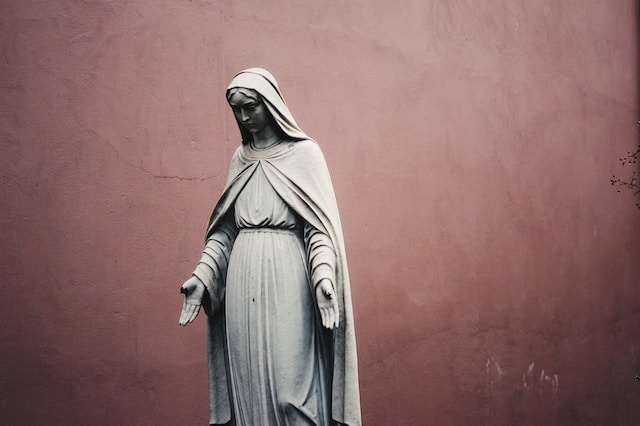
Christmas is the day that our Savior is born. This birth is not just a natural biological process involving a man and a woman. This birth is a supernatural event that takes its root from God’s love for us, pitiful sinners. God had countless options to redeem us, yet He chose the most intimate way. God the Father sent His Son, and the Son took His second nature, that is, human nature in the Virgin Mary. In this way, God becomes intimately close to us, thus, His title, Immanuel, God-with-us. He is with us not only in spiritual or mystical manners but in the most humanly possible. He is a baby Mary could feed, Joseph could embrace, and shepherds could see.

However, Christmas is the cause of rejoicing not only in a theological sense but also because it is a strong reminder for all of us. We are living in a changing culture and mindset. Many couples no longer want to have children. Indeed, there are some valid reasons, such as economic hardship that makes it impossible to raise children or certain medical conditions that can be dangerous for the mothers. Yet, many also consider having children a burden, and thus, want only to have the fun things in marriage but get away with the difficult parts, including raising children.

However, Christmas reminds us that while it is true that having children carries its own hardship, it also brings joy. It is true that after receiving Jesus, Mary and Joseph did not get a better life; in fact, they had to endure more suffering. Yet, Mary and Joseph celebrated the birth of the Son of God. We must not forget that the countless angelic community sang glory to the Lord in heaven, and on earth, the shepherds rushed to joyfully greet Mary and Joseph [see Luk 2].

Getting pregnant is indeed a painful and laborious process, and educating our children can often be economically and emotionally challenging. Yet, God also provides abundant joy for parents. There is immense and indescribable joy when the mother sees her newborn baby for the first time. When the parents lovingly interact with their babies, the bodies intensely produce ‘positive’ hormones like oxytocin and dopamine. A friend who recently had a baby recounted her joy every time she noticed simple yet significant growth in her baby. There is joy when the baby begins to pronounce words clearly. There is joy when the baby starts recognising and distinguishing her parents’ faces from others.

Christmas teaches us that there is great joy in heaven when a baby is conceived and born because this baby is a potential citizen of heaven. Now, it is our joy to bring our children entrusted to us to God and share the fullness of life with Him.

Rome

Valentinus Bayuhadi Ruseno, OP

Full of Grace

4th Sunday of Advent [B]

December 24, 2023

Luke 1:26-38

‘Full of Grace’ is the most iconic title of the Blessed Virgin Mary. Every time we recite ‘Hail Mary,’ we immediately recognize that the first title after the name of Mary is full of grace. Not only is it her most recognized title, but it is also the most ancient. Even it goes back to the Bible, the first chapter of Luke’s Gospel. The angel Gabriel appeared and greeted Mary, ‘Hail, full of grace!’ (Luk 1:28). However, if we carefully read this passage, the title ‘Full of Grace’ is not there. What did the angel say to Mary? Why do we have ‘Full of Grace’ in the first place?

The title ‘Full of Grace’ appears in the Vulgate version of the Bible. Vulgate is the Latin Bible translation done by St. Jerome in the early fifth century. In Latin, it is ‘gracia plena’. Since Latin is the official language of the Roman Catholic Church, ‘gracia plena’ became the standard title of Blessed Virgin Mary and got translated into different languages. When ‘Hail Mary’ and the holy rosary became the most popular devotion in the Catholic world, the title ‘full of grace’ could no longer be separated from Mary, the mother of Jesus. But what is written in the Bible?

What St. Luke wrote in Greek is ‘κεχαριτωμένη’ (read: kecharitomene), and it literally means ‘one who has been graced’ or ‘one who has received grace.’ So, is St. Jerome mistaken? Not really. St. Jerome decided not to make a literal translation but rather a more poetic one, and by this choice, St. Jerome wanted to draw our attention to the total and continuous presence of grace in the life of Mary. Yet, why is the title ‘κεχαριτωμένη’ extremely important for Mary and us?

Firstly, we need to understand the meaning of the word ‘grace .’In Greek, it is ‘χάρις’ (read: Charis), and its most fundamental meaning is ‘gift’ or ‘favor .’Yet, in the New Testament, the word grace does not simply mean any gift, like birthday or graduation gifts, but it is the ultimate and the most important gift. Grace refers to God’s gift of salvation. The salvation is not only from sins and death but also for God. When we are saved, not only are our sins forgiven, but we are also enabled to share the divine life of the Holy Trinity. Grace is the gift of salvation, the gift of holiness, and the gift of heaven. (for a fuller discussion, see CCC 1996-2007)

Mary is wholly unique because she is the first person who has received grace even before our Lord was crucified and resurrected, and in fact, before He was born. The reality of grace perfectly manifested in her. It is not that Mary was worthy but that she was chosen. She did not earn it, but grace was given freely. It is not because of Mary’s plan but God’s providence. Yet, the moment of Annunciation also shows us that grace is free but never cheap. Though grace has filled her since the beginning, Mary still has to make the free choice to accept the grace and make it fruitful in her life. Thus, she said, “May it be done to me according to your word!” Mary’s yes to God’s grace is not only a one-time action but a lifetime commitment, even in the face of the cross.

Our Savior has died, risen for us, and poured out His grace for our redemption. Yet, like Mary, we must choose freely to accept the grace in our lives; through it, we flourish in God’s friendship. This is why we avoid sins, go to the mass regularly and devoutly, or do works of mercy. Not because we want to earn salvation, but to grow in God’s grace and express our thanks for the grace freely given.

Rome

Valentinus Bayuhadi Ruseno, OP