When is the Birthday of the Church?

Pentecost [B]

May 19, 2024

John 20:19-23

The solemnity of the Pentecost is usually called the birthday of the Church. But is this really true, or is it just a popular myth?

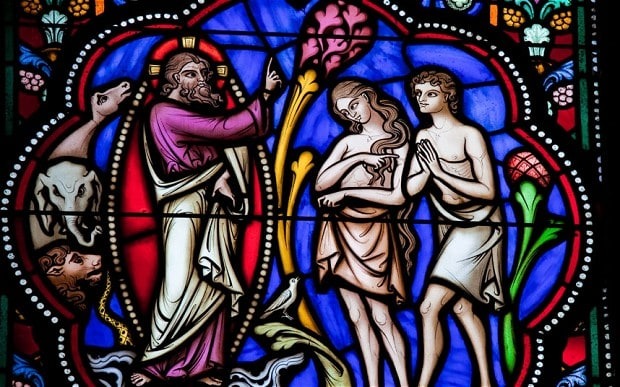
If we try to go into the official teaching of the Church, we will discover a passage from the Catechism of the Catholic Church, especially paragraph 766. Here, I quote, “The Church is born primarily of Christ’s total self-giving for our salvation, anticipated in the institution of the Eucharist and fulfilled on the cross. “The origin and growth of the Church are symbolized by the blood and water which flowed from the open side of the crucified Jesus.” “For it was from the side of Christ as he slept the sleep of death upon the cross that there came forth the ‘wondrous sacrament of the whole Church.’ ” As Eve was formed from the sleeping Adam’s side, so the Church was born from the pierced heart of Christ hanging dead on the cross.”

In short, the Church’s birthday is on Good Friday. The Church recognizes herself as the new Eve, born from the heart of Christ to be His bride. Consequently, calling the feast of Pentecost the birthday of the Church seems to be false. Yet, the truth is more profound than it seems.

Suppose we carefully observe the liturgy of the Pentecost, especially in the preface of Pentecost (a prayer said by the priest just before the Eucharist prayer). We will discover an interesting piece of information. I quote, “[We] give you thanks, Lord, holy Father… you bestowed the Holy Spirit today on those you made your adopted children uniting them to Your Only Begotten Son. This same Spirit, as the Church came to birth, opened to all people the knowledge of God…” In short, the liturgy of Pentecost is also celebrating the Church’s birthday.

So, how do we make sense of these seemingly conflicting pieces of information? Why does the official teaching of the Church seem to contradict the liturgy? To understand this, we need to see the birth of the Church not as one single instantaneous happening but rather as a process of giving birth. As the baby’s head is the first to come out, and then the rest of the body, we can see the ‘head of the Church’ came to being first under the cross of Christ and then the rest of ‘the body’ in the Pentecost. John, the beloved apostle, and Mary, the mother of Jesus, represented the head. While in the Pentecost, under the influence of the Holy Spirit, Peter, and other disciples began to proclaim God’s great things to all nations.

Another way to see this truth is that the Church was indeed born twice, first from Christ and second from the Holy Spirit. Following St. Paul, the Church is the body of the Church (Eph 1:22; CCC 792), and the Church also is the temple of the Holy Spirit (1 Cor 6:16, CCC 797). As the body of Christ, we are an organic unity between us and Christ, the source of our salvation. As the temple of the Holy Spirit, we are united to the Holy Spirit, the source of our holiness and our reason to sanctify others.

Happy birthday to the Catholic Church!

Rome

Valentinus Bayuhadi Ruseno, OP

Where is Heaven?

The Ascension of Our Lord

May 9, 2024

Mk 16:15-20

The Church is celebrating the Ascension of our Lord, Jesus Christ. After around forty days since His resurrection, Jesus went up into heaven before the eyes of His disciples. Through Ascension, Jesus wanted to show His disciples that the heavens were real, and He was there. Yet, where is heaven? What is heaven?

In the Old Testament, the word heavens in Hebrew is ‘שָׁמַיִם (samayim), and this term primarily refers to the sky, atmosphere, or realm above the earth. Yet, the Bible points out that ‘שָׁמַיִם (samayim) is also the dwelling place of the Lord and His angels. God is often described as ‘going down from heavens’ (Gen 11:5, 19:24), or angels of God moved up to and down from heavens (Gen 28:12). Heavens are also generally restricted to God and His angels, while humans belong to the earth. After death, men were buried and ‘moving down’ to the realm of the dead, the Gehenna (with Elijah as an extremely rare exception, 2 Kg 2:11).

Now, with the advance of science, technology, and theology, we recognize that God does not literally stay in the sky, atmosphere, or outer space. So, where are the heaven? Is it in another universe? Is it in another dimension? Is it in a realm without time and space? With all honesty, we have very little knowledge about heaven’s whereabouts. Yet, this does not change the basic truth: Heaven is the dwelling place of God and His angels. Then, does Jesus’ ascension make any difference?

Jesus’ ascension now bridges the heaven and earth. He is the way to the Father (John 14:6), and as the Good Shepherd (John 10:14), He leads His flock to a green heavenly pasture. Jesus’ ascension creates a significant difference between the heavens of the Old Testament and those of the New Testament. When Isaiah had a vision of the heavens, he saw God and His angels singing ‘holy, holy, holy!’ (Isa 6:1-3). Then, a hundred years later, apostle John saw the same vision of God and His angels singing ‘holy, holy, holy!’ Yet, there is one big difference. In that heaven, John discovered Jesus, the lamb of God, surrounded by holy people!  Heaven is now filled with people. Jesus fulfilled His promise to go to heaven to prepare dwelling places for us (John 14:2-3).

Lastly, what does it feel like to live in the heavens? Again, as long as we are alive here on earth, we may not fully understand the reality of heaven. The Bible often speaks of heaven metaphorically, like a wedding feast (Isa 25:6; Rev 19:9), a new world, a new promised land, and Jerusalem (Isa 66:17-19; Eze 40; Rev 21).  It is where we find perfect happiness because we are in perfect unity with God and His saints (CCC 1024). However, we are not that far from experiencing heaven. Christ, who was able to go up to heaven, has the same power to go down again to the earth, albeit in a different manner. Unlike His first coming in a lowly place in Bethlehem, now He comes down with His heavenly glory in the Eucharist.

Every time we celebrate the holy mass and receive Jesus worthily in the Eucharist, we are experiencing heaven on earth.

Rome

Valentinus Bayuhadi Ruseno, OP

God’s Word Prunes Us

5th Sunday of Easter [B]

April 28, 2024

John 15:1-8

Jesus is the vine, and we are His branches. He then declares that unfruitful branches will be cut, and healthy ones shall be ‘pruned.’ In fact, Jesus says, “You are already pruned because of the word that I spoke to you (John 15:3).” What does it mean? How does His word prune us? What is Jesus’ purpose?

If we have the opportunity to visit a vineyard, we will see how the vinedressers work. Among the things that they do is to cut the unhealthy and dead branches and prune the healthy ones. Pruning itself may include removing dead or unhealthy parts of the plant so that the vine may supply its nutrients to healthy branches. But also, the vinedressers would trim and slim down some overgrown branches since these branches typically don’t yield good grapes and suck up nutrients from their neighbour branches. All are done for one purpose: to produce a good quality grape.

Then, how does Jesus’ word prune us, the branches? Firstly, we recognize that we are creatures of language. The language we listen to and learn form who we are. Children who used to hear violent words tend to grow to be violent persons. Children who are fed with discouraging words tend to have low self-esteem. Yet, children who are never told words of proper corrections and discipline may become weak characters who always blame others. Children need to hear both encouraging and loving words as well as words of constructive corrections. Good words will make them grow confident, and proper discipline will make them avoid failures and dangers in the future.

It is the same with the Word of God. Listening to God’s word in the Bible, we discover many affirming words and heart-warming stories. Yet, the same Bible contains words, instructions, and stories that are strong and even demanding. The Gospel has lovely stories like those of Jesus, who blessed children and embraced sinners. Yet, the same Bible narrates Jesus, who said, “repent from our sins and believe in the Gospel.” Jesus, who opens the heavens for all of us, is also the same Jesus who teaches the reality of hell.   

Listening to the holy Scriptures every Sunday in the Eucharist, or even every day in our personal reading, allows God’s word to prune us. If we also do our parts to meditate on the words and internalize them, we are growing in holiness. In times of trials, God’s words strengthen us to hope. When in doubt, God’s words give clarity of faith. When we do wrong, God’s words correct us and invite us to repentance. When in fear, God’s words encourage us to love more and do good works. This is spiritual fruitfulness.

Another exciting thing also is that John used the word ‘καθαίρω’ (kathairo, I clean). This word can mean the act of pruning in the context of a vineyard, but the same word is used to describe Jesus’ act in healing the leper (see Mark 1:40-41). God’s words do not only prune our characters but also directly heal and purify our souls. The Church teaches us that we receive indulgences when we read the Bible for at least 30 minutes in a prayerful way. Have you read God’s words today?

Rome

Valentinus Bayuhadi Ruseno, OP

Vocation and Profession

4th Sunday of Easter [B]

April 21, 2024

John 10:11-18

Profession and vocation look similar and can even be interchanged. A woman, feeling a calling to heal others, chooses to pursue a career as a doctor. After years of training, she begins to work at a hospital or clinic, serve her patients, and earn a living. In this example, there is no significant difference between a profession and a vocation. But, looking deeper, the two are fundamentally different. However, what are the differences? How does this affect our faith and lives?

Simply put, professions are what we do, and vocations are who we are. The former is about ‘doing,’, and the latter is about ‘being.’ We do professions for a living, whereas vocations are our lives. The professions remain as long as we work or are employed, but when we are no longer working, we lose that profession or change to another. However, vocations define who we are. We do not lose our vocations when we stop working; in fact, our vocation gives identity to our actions. Some vocations only stop when we die, but some go into eternity.

Jesus, the Good Shepherd, is the best example we have. Jesus distinguishes Himself from ‘the hired men’ who do the same stuff as the shepherd but for profit. Thus, they will prioritize themselves, run, and abandon the flock when dangers come. Jesus’ vocation is shepherd; consequently, the sheep are an integral part of Jesus’ identity. Without sheep, a shepherd cannot be a shepherd. Yet, it is not enough to accept one’s vocation; we must live fully our vocations fully. Like Jesus, it is not enough to be any shepherd; Jesus chooses to be the ‘good’ shepherd, one who sacrifices his life for the salvation of his sheep.

There are different types of vocations in the Catholic Church. Firstly, our vocation is to be Christians. Then, we have those called to married lives, as husbands and wives, to families, fathers, and mothers. Some are also called to become religious women and men, as well as ordained ministers. These are vocations because they tell us about our identity, mission, and life. As a father, one does not simply do the fatherly stuff; in everything he does, he does it as a father. The same goes for other vocations.

One day, a parishioner came and told me that she had just had a miscarriage. She was distraught. Losing her baby daughter was extremely painful, and without a child, she believed that she had failed to be a mother. Then, I told her that she did not fail, and once she was a mother, she was always a mother. Even though she lost her daughter on earth, she still had her in the afterlife. The Catholic faith teaches that she must keep loving and caring for her daughter, albeit in different ways, spiritually. Her vocation as a mother is everlasting.

We all have our vocations, but it is not enough to accept them. Like Jesus, the good shepherd, we must choose to live our vocations fully.

Valentinus Bayuhadi Ruseno, OP

The Church and the Gospel

3rd Sunday of Easter [B]
April 14, 2024
Acts 3:13-15, 17-19

The first reading gives us St. Peter’s first preaching at the Pentecost. After the Holy Spirit descended upon the disciples, they began speaking about the great wonders God had performed in different languages. Some people who witnessed the event thought that they were drunk. However, St. Peter, as the leader of the apostles, denied this allegation and went further to preach the Gospel (see Acts 2). This was the first Gospel proclaimed by the Church. What is this Gospel, and what is its content?

Gospel (εὐαγγέλιον, euangelion) originally refers to the imperial announcement of great news that affects many lives in the Roman empire, like the ascension of the new emperor or the major war victories. Jesus adopted the term as He proclaimed the ‘Gospel of God’ (see Mar 1:14). Then, guided by the Holy Spirit, the Church, through her leaders, especially Peter, embraced the same vocabulary in his preaching.

The Gospel that the primitive Church proclaimed focuses on Jesus and what God of Israel did to Him. Peter said that out of ignorance, some Jewish leaders handed Jesus to the Roman authority to be crucified. By doing that, the author of life was denied and put to death. Yet, God raised Him from the dead. Through this great twist of events, God has fulfilled what he had announced through the prophets. The summary of the Gospel is the death and resurrection of Jesus Christ as the fulfillment of God’s plan (see also 1 Cor 15:1-6).

Yet, the good news does not stop there. Though the Jews, the Romans, and all of us, through our sins, have a share in the death of Christ, it does not mean that we are all forever condemned. In fact, through His death and resurrection, He has brought the grace of salvation. Yet again, to make this grace effective in our lives, we must open ourselves and accept it. How to do that? St. Peter explicitly says, “Repent and be converted!”

‘I repent’ in Greek is ‘μετανοέω’ (metanoeo), and this word suggests a transformation (meta) of mindset (nous). While ‘I convert’ in Greek is ‘ἐπιστρέφω’ (epistrepho), and this verb indicates a physical movement of turning back or away. Therefore, two words point both to internal renewal and external manifestation of repentance. To believe in the Gospel is not enough to mentally say, “I accept Jesus Christ in my heart” or “I believe in His resurrection,” but we continue to live in our sinful ways. On the other hand, if we perform many services and attend many prayers but do not enthrone Jesus in our hearts, it is mere showoff or even narcissistic.

This is the Gospel that the Church preaches, and since we are part of the Church, we are also responsible for sharing and living the Gospel. We announce to our families, friends, neighbors, and indeed all people. Yet, the Gospel is never a burden but rather a proof of love. If we love our brothers and sisters, then we desire the best for them, that is their salvation. Thus, preaching the Gospel is necessary to offer them this gift of salvation.

Rome
Valentinus Bayuhadi Ruseno, OP

Holiness and Mercy

2nd Sunday of Easter – Divine Mercy [B]

April 7, 2024

John 20:19-31

The second Sunday of Easter is also known as the Divine Mercy Sunday. Though the title is relatively recent (St. John Paul II established this celebration on April 30, 2000), the truth about divine mercy is essential part of God’s characteristics revealed in the Bible.  How do we understand divine mercy and how do we practice mercy to others?

Mercy is related to the word ‘rahamim,’ which is rooted in the word ‘Rahim’ meaning ‘womb.’ Thus, ‘rahamim’ implies a mother’s natural feelings and attitude toward her children. Our good mothers keep accepting and loving us as their children, despite our stubbornness and pains we gave them. Some mothers even will not hesitate to sacrifice themselves for their children’s lives.

Another perspective to understand mercy is its indispensable connection with justice. Justice is ‘to give someone’s due,’ while mercy is to give someone that is not his due (in positive way). Good fathers generally exemplify this point. A father is a figure of justice in the family. He imposes discipline to his children, and sometimes inflict punishments if his children fail to behave properly. Yet, a good father know that justice he establishes is also an act of mercy. Aside from the fact that father’s discipline tend to be more gentle, his tough education is actually a form of tough love that shapes his children’s characters. Failure to perform justice might result in his children’s bad attitudes, and bad personality is never good for our children’s future. Thus, justice in wider perspective is mercy.

Going deeper into the divine mercy in the Bible, we also discover the intimate connection between mercy and holiness. In Sinai, God instructed the newly established Israel to be holy as God is holy (see Lev 11:44-45; 19:2; 20:26). How to be holy like God? In Sinai, God gave His laws for Israel. These laws were to form Israel as God’s nation, and by observing these laws, they separated themselves from other nations. Therefore, to be holy, to be separated from others and for God, the Israel had to obey God-given laws.

However, in the Gospel of Luke, Jesus taught, “Be merciful as your Father is merciful (Luk 6:36).” Jesus deliberately translated holiness into mercy. In Luke 6, Jesus taught beatitudes and chartered new laws just like God had done in Sinai. However, Jesus’ laws are not to make His disciples ‘exclusively separated’ from other people, but rather to touch other with acts of mercy. Holiness definitely is separation from sins and for God, but being holy is also being merciful. Holiness is to allow others to experience the divine mercy in their lives. And as our neighbours are touched by mercy, they may come closer to God.

How do you experience divine mercy in our lives? How do we express mercy to others? Do we do justice as the foundation of our mercy? Do our acts of mercy lead us closer to God?

Rome

Valentinus Bayuhadi Ruseno, OP

The Empty Tomb 

Easter Vigil – Easter Sunday [B]

March 31, 2024

Mark 16:1-7

Jesus is either everything or nothing at all. Why? Because He made an extraordinary claim that He is divine. C.S. Lewis responded to this claim with three possible answers, ‘Lunatic, Liar or Lord.’ Either Jesus was a delusional man believing that He was God, or Jesus was an evil man who wanted to deceive the world for His profit, or He is the Lord because what He claimed is true. If Jesus’ claim is true, then He deserves all our worship, our love and adoration. Yet, if Jesus’ claim is false, then He is just nobody who happened to be a lunatic or liar. Then, what is the evidence of His claim?

The answer is the resurrection of Jesus. And what is the proof of His resurrection? The empty tomb! Yes, this is the first evidence we have. If we read the four gospels, we will find a resurrection story with slight variations, but all agree with the reality of the empty tomb. If I were Jesus, I would have chosen a more dramatic and visible way of resurrection. I would have even appeared to Pilate and the chief priests to make a bold statement. Yet, Jesus chose to show an empty tomb and later appeared to the women. But, these women? These women were the same women who stood near the cross of Jesus, and they went back early in the morning to anoint the body of Jesus to give a proper burial to Jesus. These women exhibited their faithfulness and love to Jesus. 

The evidence for Jesus’ resurrection has been discussed extensively by many scholars, and I would not have enough time to cover it here. Jesus did not appear to Pilate or Annas and Caiaphas because they had decided to reject Jesus as a lunatic or liar. Thus, Jesus’ resurrection is nothing but useless. They even spread lies that the body was stolen. One scholar said, ‘For disbelievers, no proofs are ever sufficient.’

However, we are here, just like the women who visited the tomb early in the morning. We are here because we believe in Jesus, and we love Him. Jesus’ choice for an empty tomb, rather than a grandeur showoff of His resurrection, invites us to enter the empty tomb and make decisions for ourselves. Pope Francis once said that Jesus did not need to remove the stone to go out from the tomb, but for us to enter the tomb. Do we still love Jesus even when we only see emptiness? Are we still faithful even if we did not find the Lord?

Yes, we believe in Jesus, and yes, we love Him. Yet, faith, hope and love are not static, but rather something that grows. God allows us to experience crosses and even empty tombs because, through these events, we may grow in our faith and love. We must not forget that when we carry a cross, we may be like Simon of Cyrene, who carried the cross of Jesus. We must not forget that Jesus was few steps away from the empty tomb, waiting to bless us.

Celebration of Easter is not just a annual ritual, with different fancies symbols, but an invitation for us to renew and deepen our faith and love for God. Afterall, Jesus is everything to us. Blessed Easter!

Valentinus Bayuhadi Ruseno, OP

Being Truly Human

Palm Sunday of the Lord’s Passion [B]

March 24, 2024

Mark 14:1 – 15:47

Jesus’ defining moment just before His Passion is His agony in the garden of Gethsemane. This year, we are fortunate to hear from the Gospel of Mark because Mark is not shy to express the inner life of Jesus in this crucial time. For some, this is embarrassing because Jesus was expressing His great sorrow, and thus, Jesus is seen to be too human and weak. However, we believe that God inspired Mark to write God’s words, and thus, we are to learn something precious in Jesus’ desperate moment.

Jesus was aware of what would happen to Him. He would soon face the betrayal of his disciple, a clandestine arrest, unjust trials from His haters, dreadful torture, and humiliating and most painful death. Thus, Jesus who is not only fully divine but also fully human, was experiencing the full weight of human emotions. Mark gave us some important details. Jesus was ‘troubled and distressed’ and then expressed what He felt, “My soul is sorrowful even to the death.”

St. Irenaeus once said, ‘God’s glory is a man truly alive. Here, Jesus teaches us how to be truly human and, thus, become God’s glory. He avoided two dangerous extremes in dealing with His emotions. The first extreme is neglecting or suppressing His emotions. Jesus did not act tough and pretend to be ‘the stoic man’. He did not say, ‘I am okay’, ‘everything will be alright.’ Jesus named the emotions and was frank about it. The second extreme is not to be consumed by emotions. When the emotion is extremely strong, the emotions easily engulf us and, thus, control us. Though recognizing His feelings, Jesus did not yield to them. He stood His ground.

Jesus further gave us two ways to face these overwhelming emotions. The first one is to seek good companions. Jesus invited the three closest disciples in the garden, Peter, James and John. He expressed His grave sorrow and asked them to accompany Him in this crucial moment. Unfortunately, they fell asleep, but the three were there for Jesus in His agony. The second way is to pray. Jesus bent His knees and talked to His Father. Here, we have extremely rare content of Jesus’ prayer.

Jesus said, “Abba, Father, all things are possible to you. Take this cup away from me, but not what I will but what you will (Mk 14:36).” This prayer is short but extraordinarily rich. One can say that this prayer is a short form of Our Father. Here, Jesus expressed and offered His wish that He would have been spared from suffering and violent death, but He also recognized that it is His Father’s will that Jesus would offer Himself up as the sacrifice of love for the world. In this prayer, Jesus reaffirmed His mission and did not allow the emotions to blur His vision.

Gethsemane is the precious moment that Jesus teaches us to fulfil God’s will despite difficulties and, at the same time, to become truly human. It is not God’s will to destroy our humanity but rather to perfect it, and Jesus is our model of a perfect man.

Rome

Valentinus Bayuhadi Ruseno, OP

The Covenant

5th Sunday of Lent [B]

March 17, 2024

Jeremiah 31:31-34

 In the bible, the word covenant (in Hebrew בְּרִית (Berit), in Greek διαθήκη (diatheke)) is an agreement between individual, families, tribes or nations. It is commonly used to bind the overlord king and his vassals. The supreme lord was obligated to give protection in times of need, while the vassals must be loyal and pay tributes. At the individual level, a covenant forged a familial bond between the parties. They become brothers, and thus, they must protect and help one another. Or, when the covenant involves man and woman, they become husband and wife, a new family.

Though covenant is a complex reality and even still debated by scholars, one thing is sure: that covenant is an agreement about the ‘exchange of people’ rather than the ‘exchange of items.’ A radical change of their identities is expected for those who enter the covenant. 

The term covenant is a key to understanding the bible because God took the initiative to bind Himself to Israel through covenant. There are several moments where God formed a covenant with Israel, but the most famous one is the covenant at Mount Sinai through the mediation of Moses. The Lord said, “Now, therefore, if you will obey my voice and keep my covenant, you shall be my own possession among all peoples; for all the earth is mine, and you shall be to me a kingdom of priests and a holy nation (Exo 19:5-6).”

The covenant created Israel as a nation under God’s leadership. Thus, Israelites, as citizens of God’s nation, must obey and be faithful to one God alone, that is, the Lord, and follow His Laws. However, the covenant does not only form a king-people relationship but also a family. Often, Israelites are addressed as ‘sons of God’ (see Exo 4:22 and Deu 14:1). And what is even more intriguing is that a marriage relationship is also established through this covenant. Prophet Hosea famously describes the relationship between God and Israelites as husband and wife.

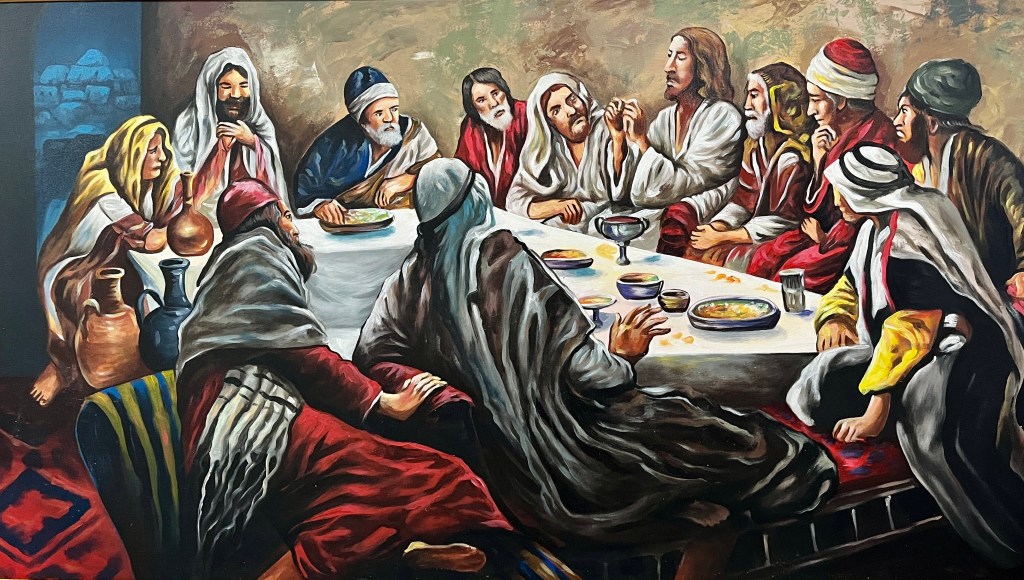
Prophet Jeremiah prophesized that there would be a new covenant (Jer 31:31, first reading). This is fulfilled in Jesus Christ. In the last supper, Jesus said, “This cup that is poured out for you is the new covenant in my blood (Luk 22:20).” One of the main purposes Jesus offered up himself at the cross is to forge and ratify this new covenant. Since the divine blood of Christ ratifies it, the covenant is everlasting and unbreakable.

Jesus offers us a covenant despite our unworthiness. Through faith and baptism, we enter the covenant, and our identity is radically transformed. The Lord is our God, and we become the people of the Kingdom of God. Yet, because of the same covenant, we are also His children, and we have a right to call God ‘our Father’. Moreover, a marriage is established. The Church is the spouse of Christ, and Christ loves His spouse so much to the point of giving His life for her. As the people of the new covenant, constantly renewed in the Eucharist, do we need to behave ourselves as obedient and loving children to our Father? Do we act as a faithful and loving spouse to Christ, our bridegroom?

Rome

Valentinus Bayuhadi Ruseno, OP

Is Faith Enough?

4th Sunday of Lent [B]

March 10, 2024

Ephesians 2:4-10

St. Paul wrote in his letter to the Ephesians, “For by grace you have been saved through faith, and this is not from you; it is the gift of God; it is not from works, so no one may boast (Eph 2:8-9, first reading).” Does it mean that what we need to do is to believe? Do we still have to receive the Eucharist and other sacraments like the Catholic Church instructs? Are we still required to do good works and acts of charity?

Often, the Catholic teaching of salvation is comically understood as ‘faith and work,’ which means that to be saved, Catholics must both believe in God and do various works prescribed by the Church, like receiving the sacraments and performing acts of mercy. Yet, this is frankly not the authentic teaching of the Church. Council of Trent decreed that “none of those things that precede justification, whether faith or works, merit the grace of justification (Decree on Justification).” The grace of God that brings us salvation, the forgiveness of sins, and holiness is always a gift from God. Nothing we do can earn it.

Since grace is a gift, just like any other gift, we either freely accept or refuse the gift. Thus, Catechism states, “God’s free initiative demands man’s free response, for God has created man in his image by conferring on him, along with freedom, the power to know him and love him (CCC 2002).” Here comes the role of faith. We say ‘yes’ to God through faith and embrace His grace. But does it mean having faith is enough, and we no longer do anything? If we believe, can we do anything we want, even evil things?

St. Paul indeed says that the grace is not from our works (verse 9), but in the next verse, St. Paul adds, “For we are his handiwork, created in Christ Jesus for the good works that God has prepared in advance, that we should live in them (Eph 2:10).” Is St. Paul contradicting himself? To understand this, we must distinguish the two ‘works’ that St. Paul uses. The first work (verse 9) refers to our efforts to get salvation outside of grace, which is futile. Meanwhile, the second work (verse 10) points to our good works in grace that are pleasing to God.

Yes, grace is freely given, but it does not mean a cheap one. Grace is not something static but active and dynamic. Grace gives us the capacity to do good works, and when we respond to it faithfully, we grow spiritually and open ourselves to more grace. The more good works in grace we offer, the more grace we receive, and the more extraordinary grace we receive, the greater capacity we have to do good works. 

We do not see our involvement in the Eucharist and other sacraments as our efforts to bribe God and get grace, but rather our ways of growing in grace. Our acts of mercy in the family and community are not our works but participation in God’s love for His people. 

(For a deeper understanding of grace, please read CCC paragraph 1987-2006)

Rome

Valentinus Bayuhadi Ruseno, OP