

Third Sunday of Lent [March 4, 2018] John 2:13-25
“Take these out of here, and stop making my Father’s house a marketplace.” (Jn. 2:16}
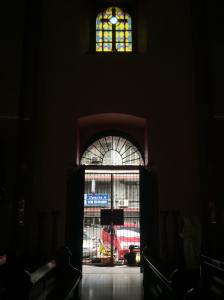
The presence of the animal vendors and money-changers in the Temple of Jerusalem comes out of practical necessity. When Jews from all over Palestine come to Jerusalem, especially during the important days like Passover, they will fulfill their religious obligation to offer their sacrifices in the Temple. Since it is impractical to bring a sacrificial animal like oxen, lambs, or turtledoves from their hometowns, the Jews prefer an easier solution by buying them in Jerusalem. It does not only save those Jewish pilgrims the hassle, but it gives the assurance also that the animals will be unblemished as the Law of Moses has prescribed. Therefore, many vendors have the authorization from the Temple elders that their animals are unblemished and ready for sacrifice. The Jews are also required to support the upkeep the Temple and the priests through so-called “Temple tax.” Yet, they are not allowed to pay the Temple tax with the Roman money because it bears the image of Caesar as a god, a blasphemy. Thus, they need to change their money with more acceptable currency. Here the role of money-changers comes in. It is a kind of win-win solution for the pilgrims, the vendors, and the Temple authorities. We could imagine that with so many people visiting the Temple, the business must be buzzing and thriving.
When Jesus comes and drives them all out of the Temple, surely it angers not only the vendors and the money-changers but also the Jewish authority and even ordinary Jewish pilgrims. The disappearance of this vendors and money-changers may mean that some people lose their earnings, some people find their profit disappear, and most people are irked by the inconveniences it causes. Jesus tells the reason behind his action, “the Jews making His Father’s house a marketplace.” The very core of the Temple of Jerusalem is the encounter between God and his chosen people, between God the Father and His children, but with so many activities, trading, and noise, this essence of the Temple is lost. The Temple means usual business. The priests certify the sacrificial animals for the vendors, the vendors sell them to the pilgrims, and the pilgrims give the animals to the priests for the slaughter. Everyone goes home happy! Jesus’ action is to break this vicious cycle of “normalcy” that makes people’ worship shallow. Jesus criticizes the structure that exploits the Temple for mere profit and superficial fulfillment of religious obligation, and for making God’s house into the marketplace.
In this season of Lent, we ask ourselves, if Jesus comes to our church, diocese, parish, congregation, religious organization, and even our family, what will Jesus do? Will He drive us out like He drives out the vendors from the Temple? Or, will He make His home among you? Financial resources are important in helping our Church grow but do we not make the Church an income-generating institution? While the leadership structure is essential in the Church and our smaller groups, do we serve others, or exploit people? Do we find peace and joy in our communities, or are they full of intrigues, gossips, unhealthy competitions? Do encounter God in our Church, or simply find ourselves? We thank the Lord if we discover God, our Father, in our Church and community, but if we do not, we better call on Jesus to drive us away from His Father’s house.
Br. Valentinus Bayuhadi Ruseno, OP
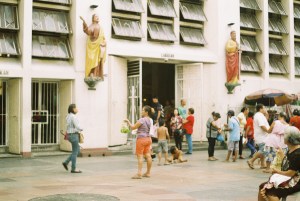


 The practice of fasting is as old as humanity itself. People from different cultures and religions have included fasting in their customs and traditions. The Brahmin and gurus of Hindu tradition fast and mortify their bodies. The Buddhist monks are known to abstain from eating any meat and fast regularly. Our Muslim brothers and sisters fast even from drinking water from before the dawn to sunset during the month of Ramadan. Scientists have proven that fasting has a lot of health benefits.
 Berpuasa merupakan praktek yang sangat tua dalam sejarah umat kehidupan. Orang-orang dari berbagai budaya dan agama memiliki kegiatan puasa dalam tradisi mereka. Kaum Brahmana dan para pertapa di India tekun berpuasa dan bermati raga. Para biksu Buddha tidak makan daging dan berpuasa secara teratur. Saudara-saudari kita Muslim berpuasa dari sebelum fajar menyingsing sampai matahari terbenam selama bulan Ramadhan. Ilmuwan juga telah membuktikan bahwa puasa memiliki banyak manfaat kesehatan.
 Ash Wednesday is the beginning of the liturgical session of Lent in the Catholic Church. Its name derives from an ancient tradition of the imposition of the ashes. Every Catholic who attends the mass on this day will receive a sign of the cross made of ashes on his or her forehead. The ashes are ordinarily coming from the burned palm leaves blessed at the Palm Sunday of the previous year.
 Rabu Abu adalah awal dari Masa liturgi Pra-paskah di Gereja Katolik. Nama ini berasal dari tradisi kuno di mana setiap orang Katolik yang menghadiri misa pada hari ini akan menerima tanda salib abu di dahinya. Abu ini biasanya berasal dari daun palma yang telah diberkati pada Minggu Palma tahun sebelumnya, dan kemudian dibakar.
 Today’s Gospel contains my personal favorite verse: Then, Jesus wept. It is the shortest verse in the Bible, yet it is also one of the most powerful. However, its strength does not rest on any superhuman power that can multiply bread or calm the storm, but on the humanity of Jesus.
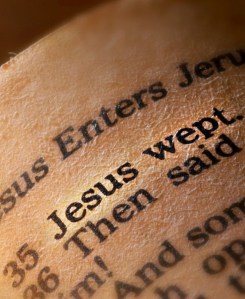 Pada Injil hari ini ada ayat favorit pribadi saya: Maka Menangislah Yesus. Ini adalah ayat terpendek dalam Alkitab, namun juga salah satu yang paling kuat. Namun, dayanya tidak terletak pada kekuatan super Yesus yang dapat memperbanyak roti atau menenangkan badai, tetapi justru pada kemanusiaan Yesus.
 In Medio Ecclesiae